Complete Care Guide for Rhipsalis | Enjoying Cascading Epiphytic Cacti in Hanging Baskets
Learn how to care for Rhipsalis, prized for its thornless cascading stems. This guide covers placement, watering, and propagation by cuttings—essential tips for cultivating Rhipsalis in hanging baskets.
Key Takeaways
Learn how to care for Rhipsalis, prized for its thornless cascading stems. This guide covers placement, watering, and propagation by cuttings—essential tips for cultivating Rhipsalis in hanging baskets.
Related Species
What Kind of Succulent is Rhipsalis?
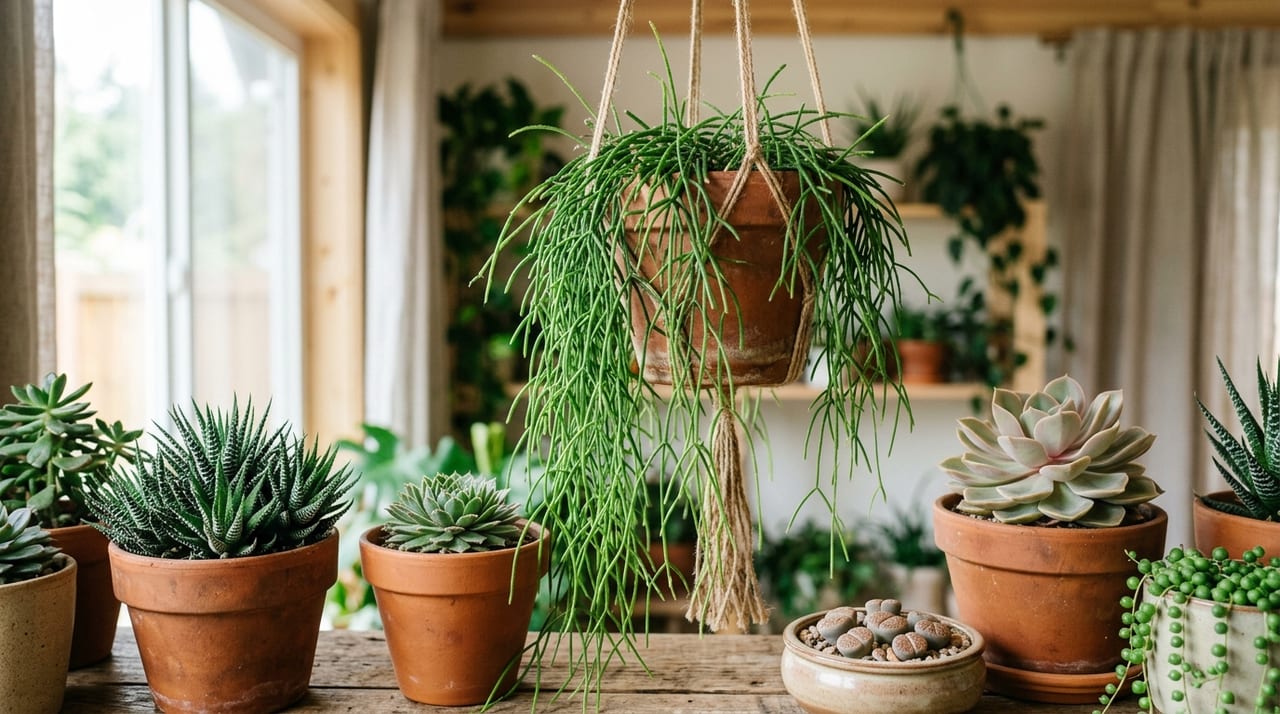
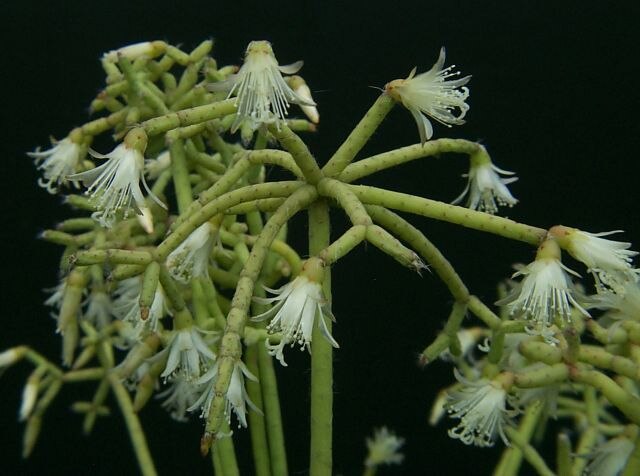
Rhipsalis is an epiphytic, forest-dwelling cactus with thin, branching stems that extend downward in cascading formations. Unlike the spiny cacti commonly imagined, Rhipsalis has virtually no spines, with soft, continuous stems creating a distinctive silhouette. It's popular to cultivate Rhipsalis in hanging baskets, enjoying its curtain-like cascading appearance, and as a plant that blends well with both traditional and modern interiors, it stands out among succulents. Different varieties vary in stem thickness, branching patterns, and texture, and can be combined in mixed plantings for added enjoyment. Because it lacks spines, it is easy to handle, and its ability to be displayed three-dimensionally—not just on shelves but also hung from ceilings and walls—is a major feature unique among other succulents. Its growth rate is also relatively gentle, making it a plant where you can slowly enjoy the gradual lengthening of its stems.
Placement and Light
Rhipsalis naturally grows as an epiphyte on tree trunks and branches, preferring locations with soft, diffused light—similar to light filtered through lace curtains—over environments with strong, continuous direct sunlight. Changes that tend to occur based on light conditions are as follows.
| Light Conditions | Likely Changes |
|---|---|
| Prolonged exposure to direct sunlight outdoors | Stems discolor or become damaged |
| Insufficient light | Stem color fades, growth becomes leggy |
| Soft light from an indoor window | Cascading stems grow healthy and full |
The basic approach is to maintain the plant in bright shade to partial shade, finding a location like a window with sheer curtains that provides brightness while avoiding direct sunlight—this is key to proper care. Since the sun's angle changes seasonally, fine-tuning the placement between summer and winter helps maintain consistent conditions throughout the year.
Watering and Humidity Management
As a forest-dwelling cactus, Rhipsalis is not as drought-tolerant as typical desert cacti. When it comes to watering and humidity management, consider these key points:
- When the soil surface dries out, water thoroughly
- If you space out watering intervals excessively like with other succulents, stems may wilt
- Continuously wet soil causes root rot, so maintain a balance of wet and dry periods in the pot
- During dry seasons, misting provides humidity and helps maintain stem firmness
- Locations with direct air conditioning airflow dry out quickly, so check this when choosing placement
- During winter's cooler temperatures, growth slows, so slightly increasing watering intervals and keeping soil drier reduces stress on roots and stems
Soil, Repotting, and Training
As an epiphytic plant, Rhipsalis prefers well-draining soil with adequate organic matter. Key points for soil selection, repotting, and training are as follows:
- A convenient soil mix combines succulent potting soil with perlite or bark compost
- Repot when roots fill the pot or at the beginning of the growing season
- Once stems elongate and cascade, repotting into a hanging basket brings out the plant's natural character
- Overgrown stems can be pruned to desired length, and the cuttings can be used for propagation
- As an epiphyte, it can also be enjoyed by mounting on porous materials like terracotta or tree fern fiber, creating a different, more natural aesthetic than potting
- During repotting, roots are fine and delicate, so work gently—loosening old soil carefully without pulling forcefully
Propagation
Rhipsalis is relatively easy to propagate by cuttings. The basic steps are as follows:
- Cut healthy stems to appropriate lengths
- Allow cut ends to dry for a few days
- Insert into well-draining soil, where they will root
- Until roots form, avoid intense direct sunlight, maintain bright indirect light, and keep soil moderately moist (not drying out completely)
By inserting multiple stems into the same pot, you can develop a full, voluminous plant form quickly, allowing you to enjoy the cascading green curtain effect of hanging basket cultivation in a relatively short time. Propagated plants inherit the same texture and branching character as the parent plant, so building up a collection based on a favored specimen makes it easy to create a cohesive, aesthetically unified display—another appeal of this method.
Selection and Enjoyment
Key points for selecting Rhipsalis are as follows:
- Check that stems are firm and free of discoloration or wilted sections
- Different varieties vary in stem thickness, branching density, and cascading length, so choose one that suits the aesthetic of your display space
- If you can directly purchase plants cultivated by a grower, you can easily select your preferred specimen while inspecting its condition
While Rhipsalis is relatively easy to incorporate among succulents thanks to its spineless, manageable nature, selecting placement with its sensitivity to direct sunlight and dryness in mind is key to maintaining a healthy plant long-term. In your daily living space, savor the cascading beauty of Rhipsalis in its hanging basket while watching its stems gradually lengthen over time.