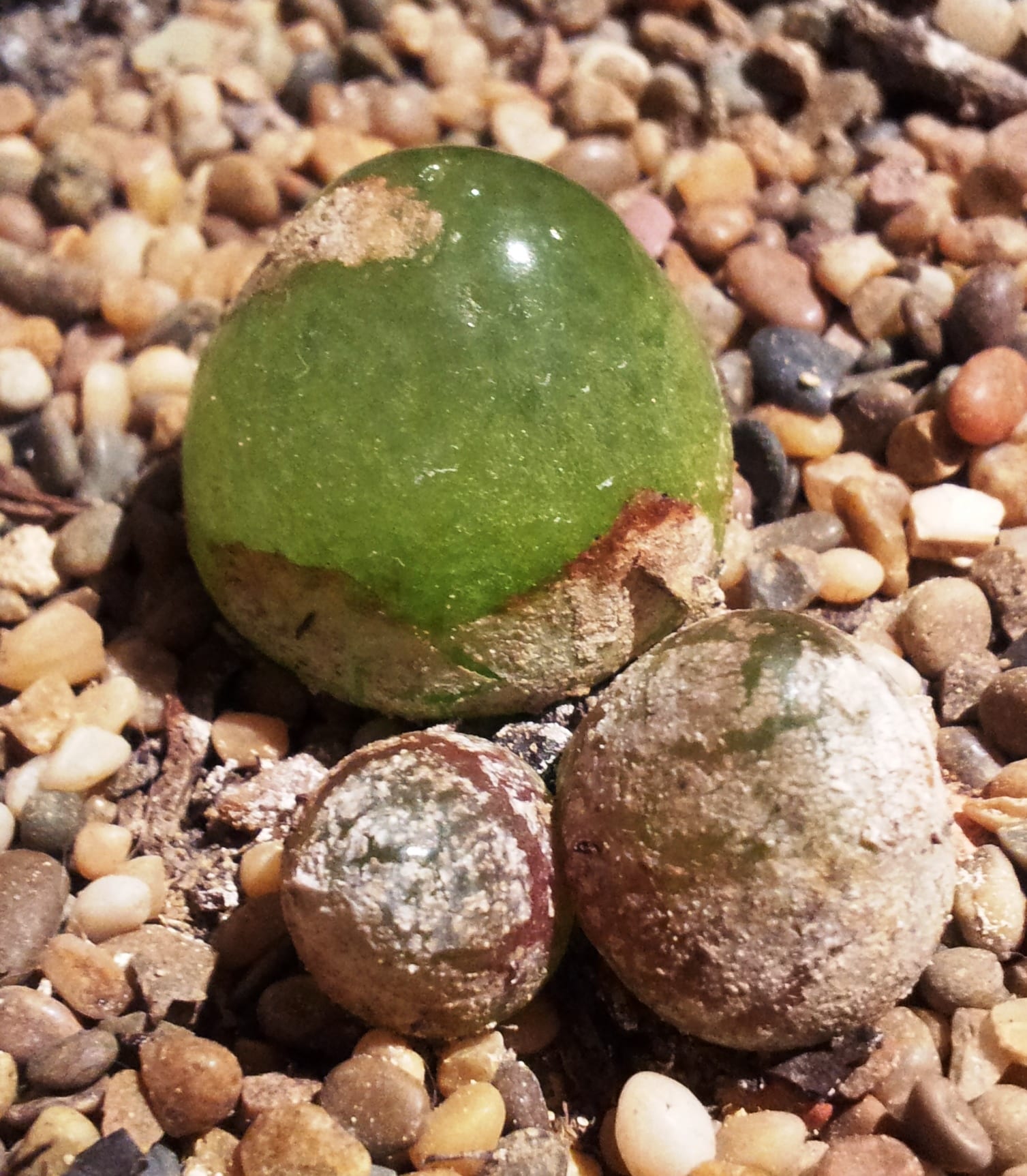
Source: Wikimedia Commons
Conophytum burgeri
AdvancedConophytum burgeri
A single-headed, onion-shaped Conophytum with glossy, translucent skin and only a tiny slit at the top. It blushes pink to reddish-purple in cold weather or strong sun.
About
Conophytum burgeri is a mesemb (Aizoaceae) endemic to the Aggeneys valley in Bushmanland, Northern Cape, South Africa, where it grows on exposed flats of rocky clay strewn with white quartz pebbles; it is named after the Burger family who farmed there. The single, onion-shaped body has only a tiny fissure at the top. Its smooth, glossy, translucent skin is light green, turning purple to red in direct sun or cold. It divides far less readily than most conophytums and rarely forms clumps, though solitary heads can approach 5 cm across. During dormancy the outer leaves dry into a thin white sheath, from which the new body emerges in autumn. Pink flowers appear in autumn. It differs from close relatives such as C. ratum and C. achabense by its stigma over 10 mm long and skin that colours in sun. In cultivation it is treated as a winter grower, active from early autumn to spring and sheathed and dormant through summer. It is among the conophytums least tolerant of heat and humidity, so summering is difficult, and it is propagated almost only from seed. Supply is very limited: seedlings raised by specialists and collectors appear from autumn to spring.
Source: Wikipedia (CC BY-SA 4.0)
Size of the Conophytum burgeri
The Conophytum burgeri grows to Solitary heads can approach 5 cm across.
Basic Info
Origin
Northern Cape, South Africa (Aggeneys, Bushmanland)
Lifespan
Perennial; renews its body once a year by shedding the old leaves
Size
Solitary heads can approach 5 cm across
Temperature
5〜35℃
Humidity
30〜50%
Watering & Fertilizer
Little; a mix with base fertiliser, or weak liquid feed in the growing season
Growing Tips
Light & Placement
Except in the coldest weeks, keep it outdoors in sun and good air, out of the rain. In the summer rest give partial shade and keep it as cool as possible.
Watering
A winter grower. From autumn to spring water thoroughly once the pot is completely dry and keep it airy. When the skin loosens and the sheath forms, keep it almost dry until autumn nights cool.
Temperature & Overwintering
It is among the least heat- and humidity-tolerant conophytums, so summer is the main hurdle. A Japanese reference gives 3°C as the minimum survival temperature.
Fertiliser
A mix with slow-release base fertiliser is recommended; otherwise give liquid feed once or twice a month in spring and autumn, or a measured slow-release top dressing.
Propagation
It seldom divides, so propagation is from seed.
Pests & Cautions
The translucent skin marks easily. Do not peel the white dormant sheath; let the new body break through naturally.
Conophytum burgeri FAQ
QWhat is the growing difficulty level for Conophytum burgeri?
Advanced. A variety suitable for advanced growers. Requires advanced cultivation techniques and specialized equipment, with careful environmental adjustments needed.
QHow large does Conophytum burgeri get?
The mature size of Conophytum burgeri is Solitary heads can approach 5 cm across. This may vary slightly depending on cultivation environment and individual differences.
QHow should I water and fertilize Conophytum burgeri?
Conophytum burgeri: watering & fertilizer — Little; a mix with base fertiliser, or weak liquid feed in the growing season. Aim for appropriate frequency and amount.
QWhat is the typical price for Conophytum burgeri?
The price of Conophytum burgeri varies significantly by variety, characteristics, size, and lineage. Please check GrowerDirect's price guide for the latest market information.
Last updated: September 23, 2026
References & Sources
Edited & verified by: GrowerDirect Editorial Team
The classifications, regulations, and growing data on this page are created and verified based on the primary information database below.
Taxonomy & Authority
Regulations & Conservation Status
Listed in CITES Appendix III (South Africa listed the genus Conophytum in 2023). International trade requires export documentation from the country of origin, but no registration is needed to transfer plants within Japan. It is not regulated under Japan's Invasive Alien Species Act.
Sources: Species+ (CITES): Conophytum burgeri / Ministry of the Environment: list of Invasive Alien Species
Regulations may change. Always verify the latest information with the relevant authorities.
Related Species
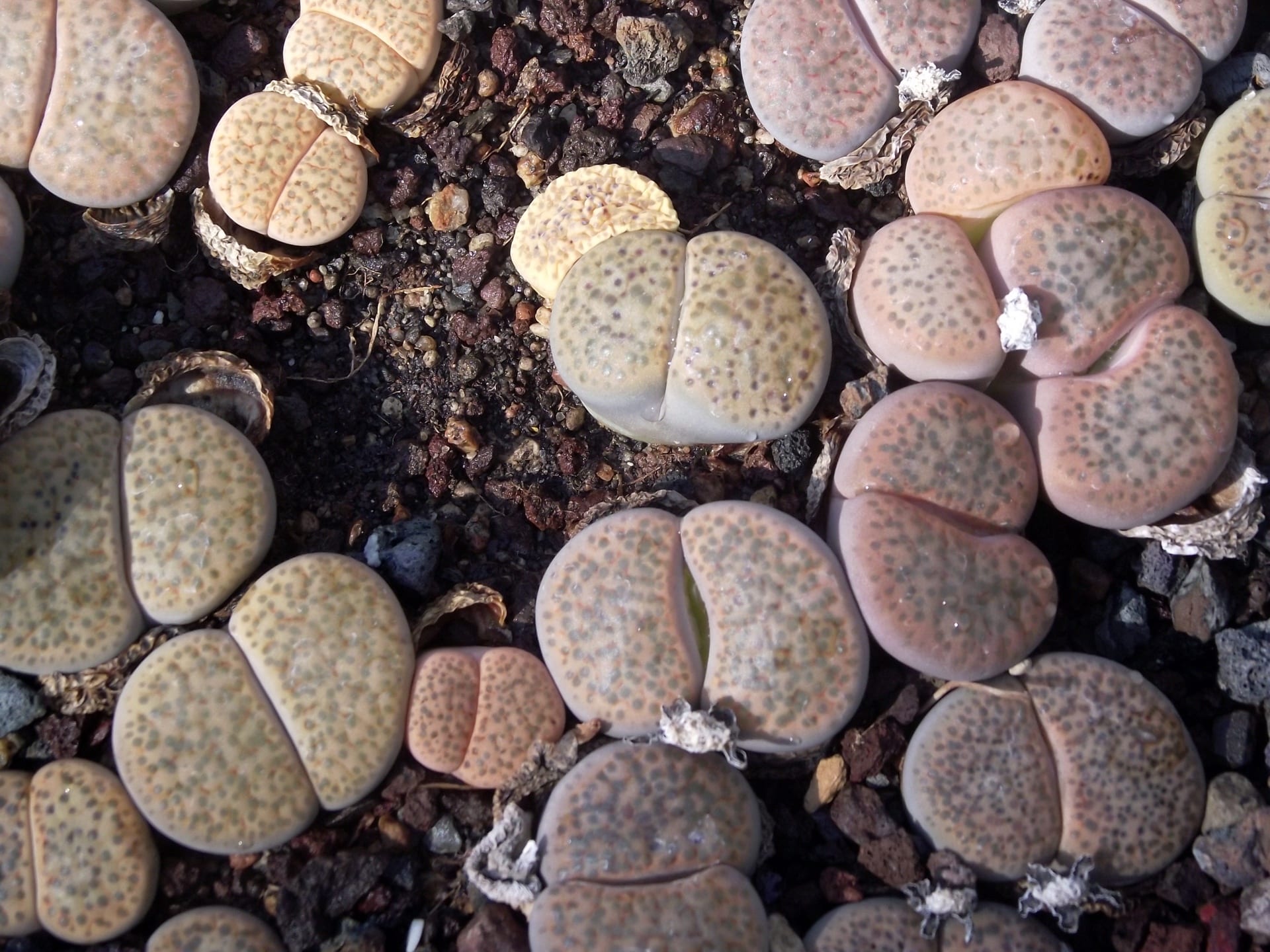
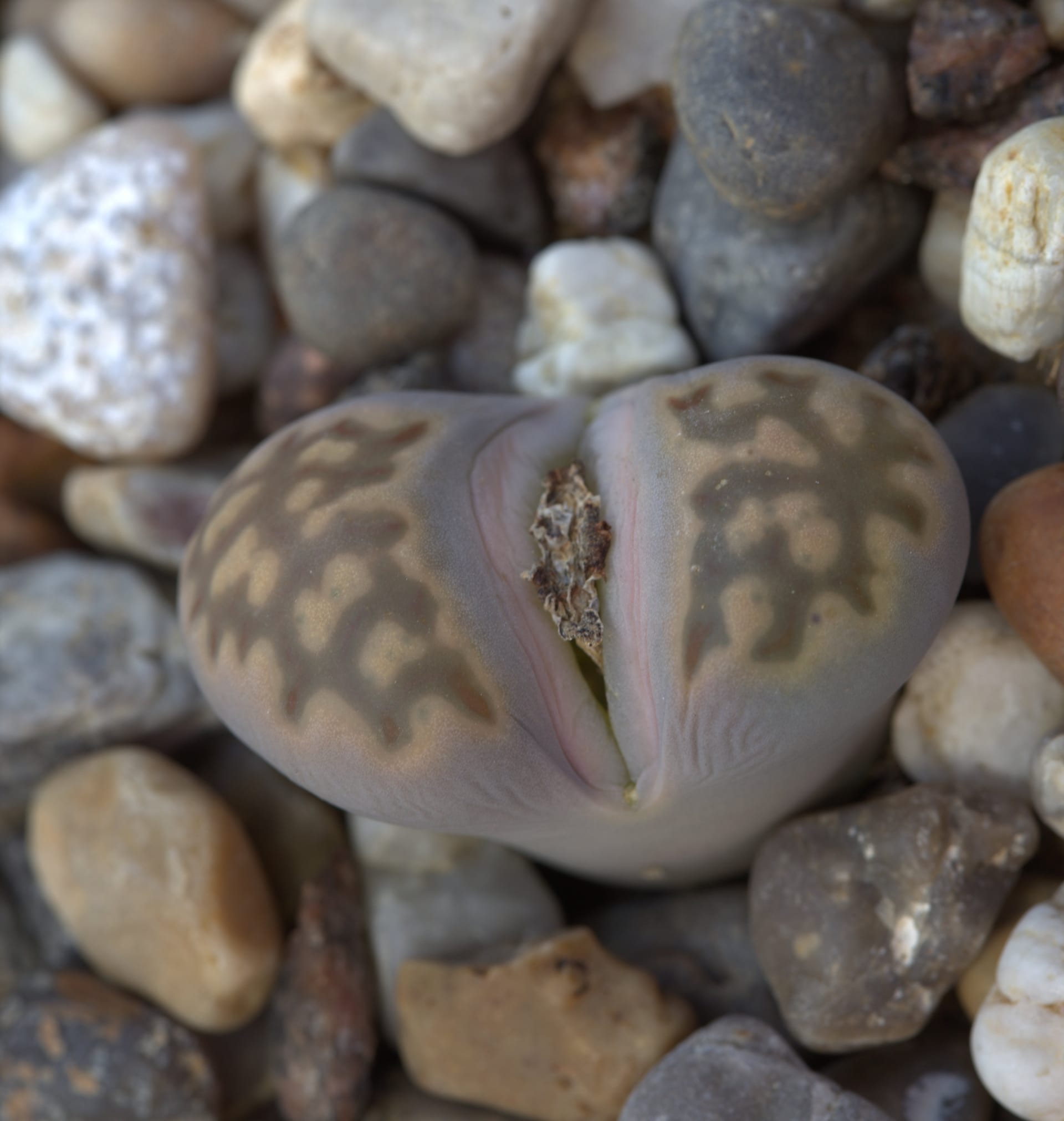
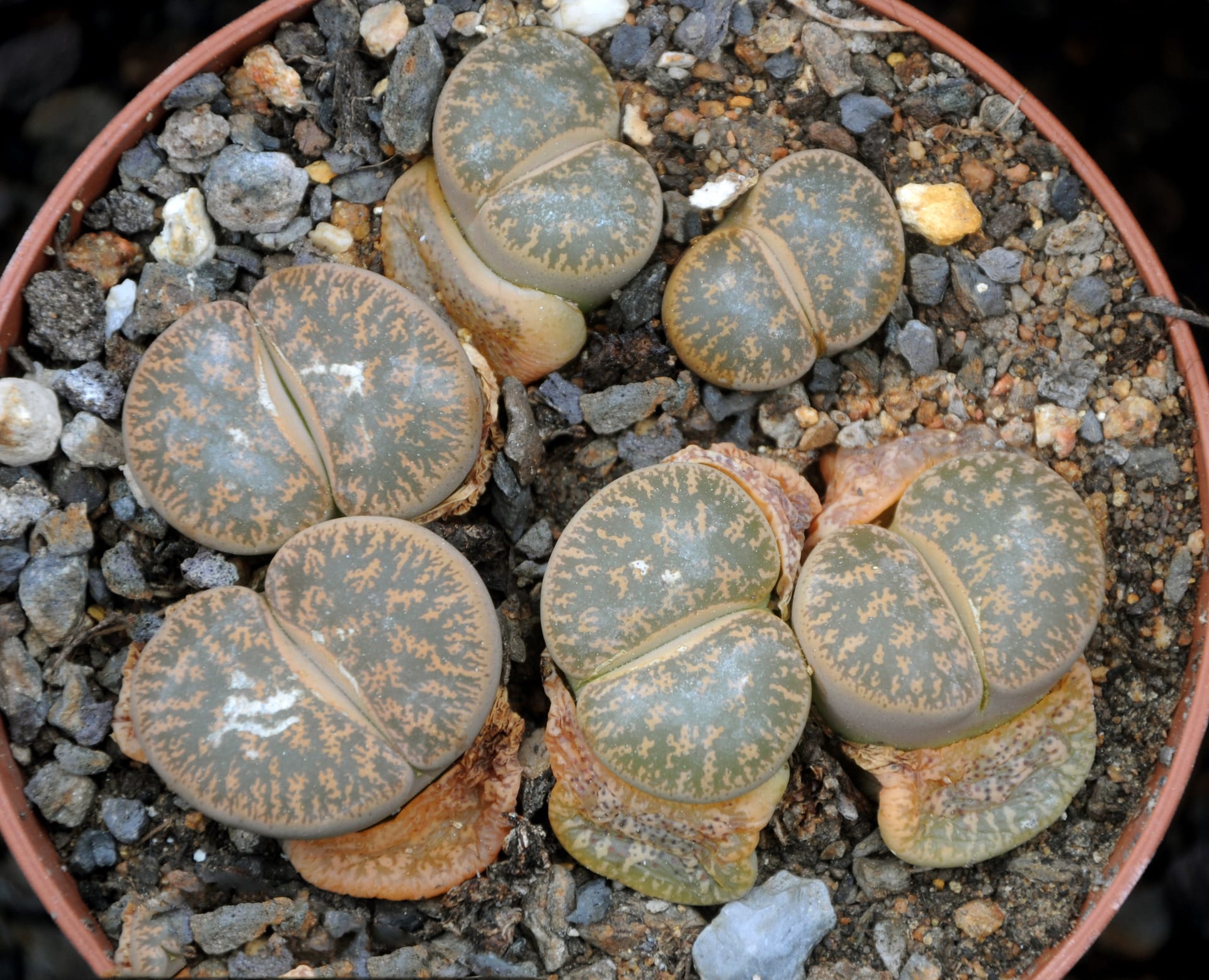
Find listings for this species
Related Articles
Complete Guide to Growing Conophytum | Thorough Explanation of Shedding Mechanism, Summer Management, and Variety Selection
Explains the basic cultivation of the popular Mesembryanthemaceae genus Conophytum. Covers the unique shedding mechanism, summer dormancy management, autumn and winter watering and how to enjoy flowering, and includes recommended varieties for beginners.
Autumn Preparation Management for Summer-Type Succulents
A guide to autumn care for summer-type succulents, covering plant changes from September to November, timing for gradual watering reduction, placement and temperature management for transitioning plants indoors, autumn fertilizing and pest control, variety-specific care checkpoints, and preparation for winter dormancy.
Mealybug Control on Succulents | Complete Guide to Early Detection, Removal, and Prevention
Mealybugs hide easily at the base of succulent leaves and on new growth. This guide covers their characteristics, the environments where they thrive, tips for early detection, removal methods using cotton swabs and alcohol, and daily care practices to prevent recurrence.
Summer and Winter Type Succulents: Growth Cycles and Watering Management Strategy
This article explains the differences in growth types of succulent plants, their annual growth cycles, seasonal watering management strategies, common failures, and countermeasures.
🩺 Common diseases
Can't find the plant you're looking for?
Post your wishes for free and growers with matching plants will contact you with introductions.