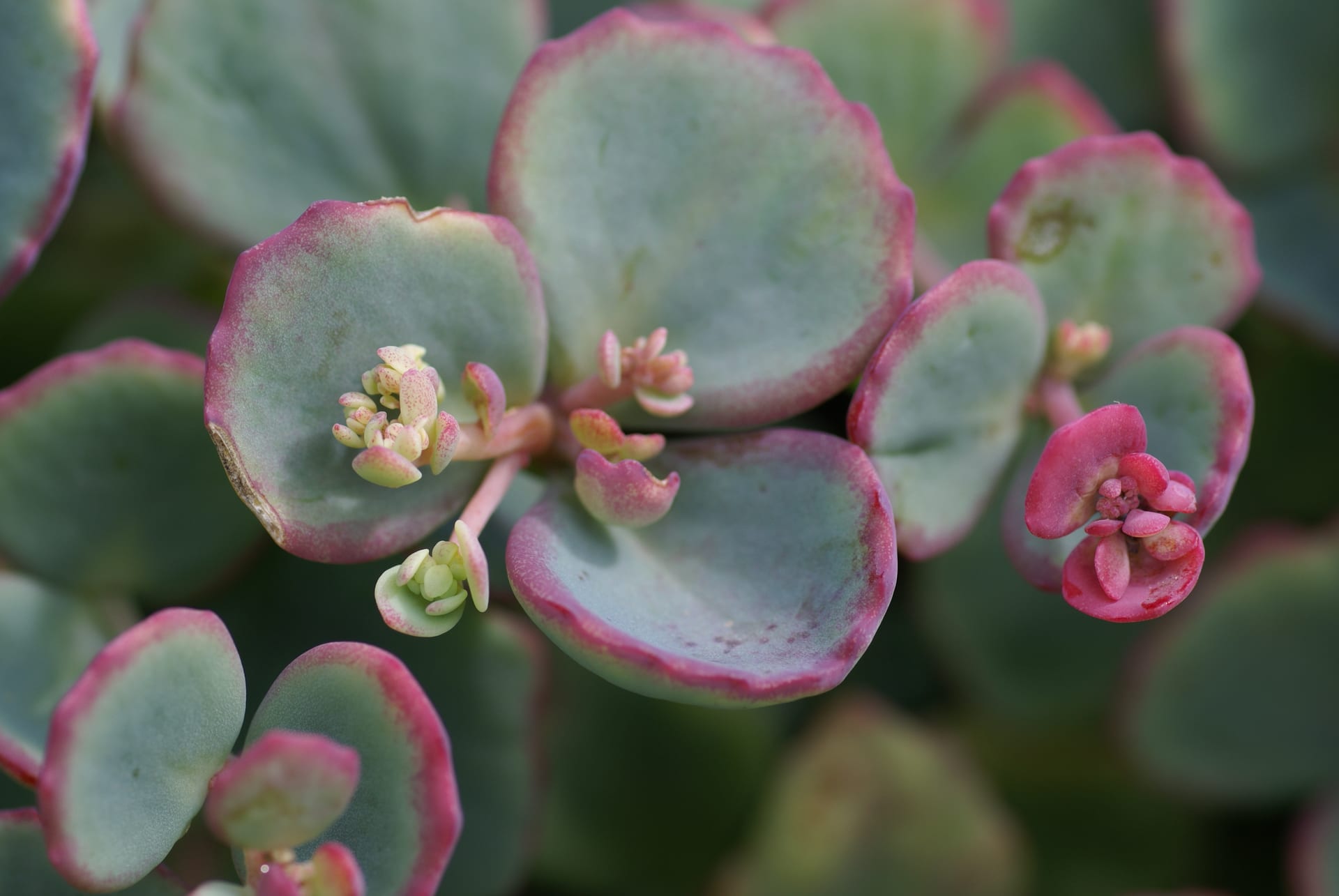
 © Rolf Engstrand / CC BY-SA 3.0
October daphne
Misebaya, known in English as October daphne, is a succulent native to Japan. It carries round, blue-gray leaves edged in crimson, arranged in whorls of three, and in autumn it produces clusters of small pink-red flowers. Long valued as a traditional horticultural plant in Japan, it is also called 玉緒 (Tamao). The stems reach 20 to 30 cm in length, while the leaves are just 1 to 1.5 cm long. It is rated beginner-friendly: give it a bright spot and well-drained soil, and in a pot water often enough that it never dries out completely, and it is easy to keep. As a perennial, its aboveground growth dies back in winter and it survives on buds at the base, sprouting again in spring.
View October daphne encyclopedia →0% commission on your first sales!Register by September 30, 2026 and your first 2 plants are commission-free!
Grower Wanted!
List your plants on GrowerDirect and sell directly to customers nationwide!
6 Transparency Commitments from GrowerDirect
Grower disclose this information for Succulents & Cacti. We guarantee transparency in variety, origin, light requirements, and difficulty level.
- Variety Disclosed
- Real Photos
- Color Details
- Origin Disclosed
- Light Requirements
- Difficulty Level
Browse all 131 varieties
Light Requirements
Difficulty Level
Verified growers wanted for Succulents & Cacti
Growers are signing up now ahead of launch. Subscribe to be notified when new listings go live.
Getting alerts is free with a member account. When new listings match your saved search, we'll notify you by email and in-app.
Browse other categories
Verified growers (preview)
Are you growing succulents & cacti?
Register as a grower and connect with buyers directly.
Apply as a growerOctober daphne key facts
- Growing Difficulty
- Beginner-friendly
- Lifespan
- Perennial (dies back to winter buds at the base)
- Size
- Stems 20-30 cm long; leaves 1-1.5 cm
- Watering
- A little slow-release fertiliser at planting; for pots, liquid feed about twice a month in spring and autumn
- Light & Placement
- It likes sun and good airflow all year and grows outdoors through hot summers and cold winters without trouble. The stems trail, so tall pots or hanging baskets show it off well.
- Watering
- Water pots regularly so they do not dry out, but as it is also drought-tolerant, hold back in rainy periods.
- Temperature & Overwintering
- It is hardy to both heat and cold. In winter the top growth dies back to buds at the base; tidy the dead stems and wait for spring growth.
- Soil & Repotting
- Use an alpine-plant mix or roughly 6:3:1 small Kanuma soil, akadama and pumice. Roots grow quickly, so repot every two years from late March to late April.
- Propagation
- Propagate by division at repotting, stem cuttings with about three nodes (early May to early June), or seed; seedlings reach flowering size in about two years.
- Pests & Cautions
- Aphids appear from bud break, and slugs and caterpillars eat the leaves. Remove debris left by millipedes and pillbugs, which harbours germs. In humid conditions soft rot can attack the base, so pick off dead lower leaves promptly.
About October daphne
Misebaya (October daphne) is a beginner-friendly Japanese succulent with crimson-edged leaves and autumn pink blooms. Care tips, how to choose a plant, and FAQs.
7 things to know before growing October daphne
1Light and placement
It prefers a sunny, well-ventilated spot. With too little light the stems stretch out and the crimson leaf edges may color less well. In midsummer, move it to bright partial shade to avoid harsh direct sun and stuffy, humid air.
2Don't let potted plants dry out
In a pot, water often enough that it never dries out completely. It is also quite drought-tolerant, so cut back during rainy spells. In winter the top growth dies back and it goes dormant, so water sparingly, but avoid letting the soil dry out completely so the buds at the base do not shrivel.
3Soil and pots
Choose a fast-draining mix. A mix for wild or alpine plants, or one based on small-grain kanuma with akadama and pumice added, works well. Pick a pot with drainage holes; because the stems hang down, a tall pot or a hanging planter shows off the trailing habit nicely.
4When to repot
Repot when the roots fill the pot or the clump becomes crowded. Spring, when new shoots start to move, is a good time; shake off the old soil gently and work quickly so the buds are not damaged. Wait a few days after repotting before watering to reduce root damage.
5Winter dieback is normal
Misebaya is a perennial: in winter the aboveground growth dies back and the plant survives on buds at its base. Brown stems and leaves do not necessarily mean the plant is dead. Wait until buds start growing in spring before cutting back dead growth, and keep the pot where the soil will not stay waterlogged.
6Autumn flowers and color
In autumn, clusters of small pink-red flowers open and the leaf edges turn crimson, giving the plant its best display. To encourage flowering, give it plenty of sun from spring through summer so the plant builds strength. Keep fertilizer light, applied sparingly during the growing season.
7How to choose a plant
Look for plants with compact growth and plump blue-gray leaves. Avoid ones with thin, stretched stems, yellowing or translucent leaves, or a wobbly base. In winter a plant may have its top growth already dead, so check the listing details or ask the grower by message if anything is unclear.
Frequently asked questions about October daphne
- Q.Can a beginner grow Misebaya?
- A.Yes, it is rated beginner-friendly. Give it a bright, airy spot and well-drained soil, and in a pot water often enough that it doesn't dry out completely. It helps to know beforehand that its top growth dies back in winter.
- Q.Its stems and leaves died back in winter. Is it dead?
- A.Not necessarily. Misebaya is a perennial that overwinters from buds at the base even when the aboveground parts die back. If the buds remain, it should sprout in spring, so water sparingly and wait.
- Q.Why won't it flower or color up?
- A.Insufficient light is a common cause. Without enough sun the plant does not build strength, and flowering and the crimson leaf edges tend to weaken. Grow it in a bright place from spring through summer and avoid too much water or fertilizer.
- Q.How can I propagate it?
- A.Stem cuttings are the usual method and are easiest during the growing season. Let the cut end dry, insert it into well-drained soil, and keep the soil from getting too wet until roots form.
- Q.Can it be grown indoors?
- A.A bright window can work, but with too little light the stems stretch. It generally does best outdoors in a sunny, airy spot, and a not-too-warm place in winter helps it keep its seasonal growth rhythm.
Handy Growing Tools for October daphne
Learn more about October daphne in the encyclopedia
View October daphne encyclopedia entry →
Care difficulty, size, origin and light needs — all basics covered.
More in this category
Can't find the plant you're looking for?
Post your wishes for free and growers with matching plants will contact you with introductions.