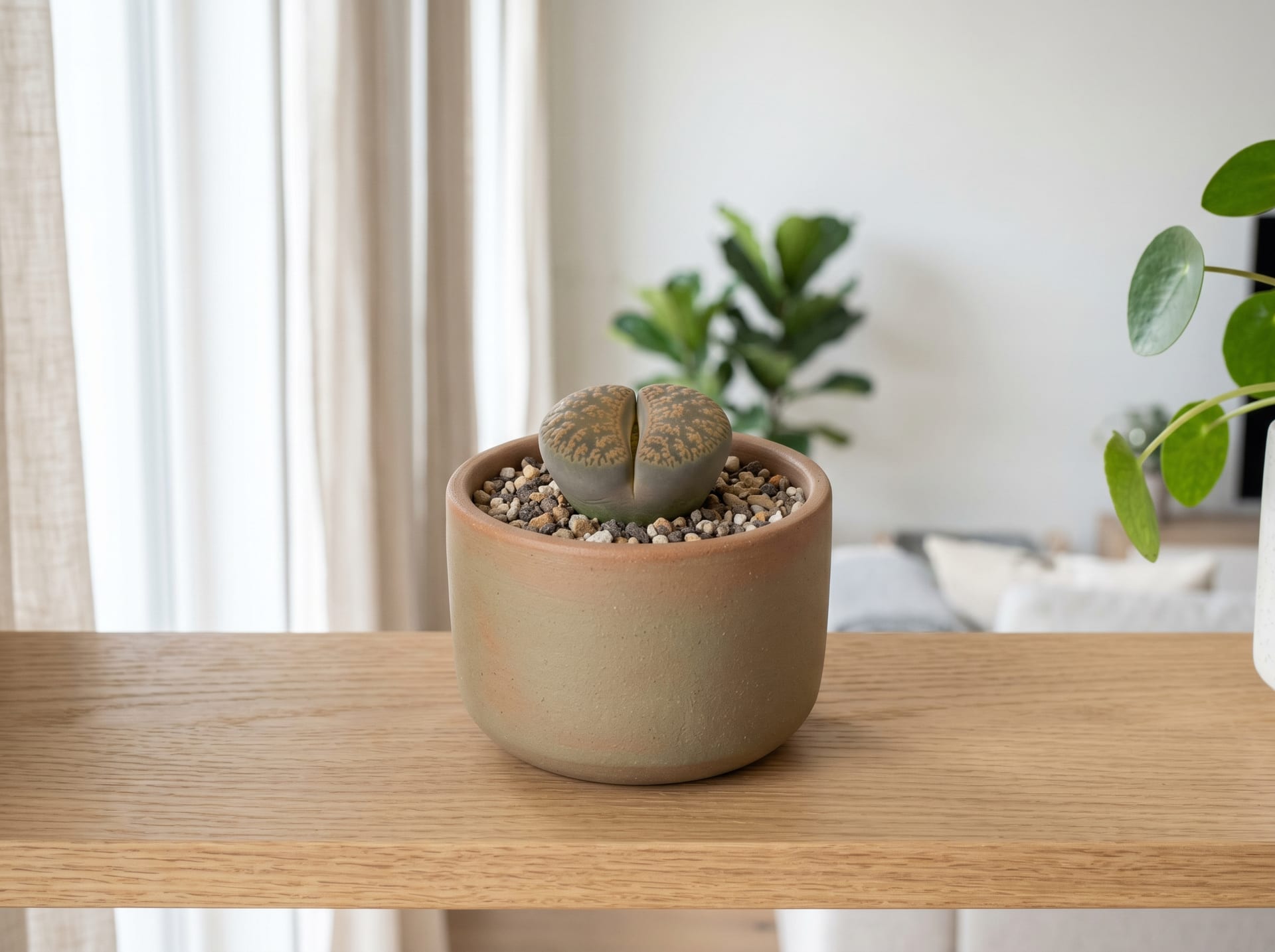
Lithops
The 'Living Stone' from South Africa. Tiny succulents with two fused leaves that shed their outer skin to grow. Unique watering schedule makes them an advanced choice.
View Lithops encyclopedia →0% commission on your first sales!Register by September 30, 2026 and your first 2 plants are commission-free!
Grower Wanted!
List your plants on GrowerDirect and sell directly to customers nationwide!
6 Transparency Commitments from GrowerDirect
Grower disclose this information for Succulents & Cacti. We guarantee transparency in variety, origin, light requirements, and difficulty level.
- Variety Disclosed
- Real Photos
- Color Details
- Origin Disclosed
- Light Requirements
- Difficulty Level
Browse all 131 varieties
Light Requirements
Difficulty Level
Verified growers wanted for Succulents & Cacti
Growers are signing up now ahead of launch. Subscribe to be notified when new listings go live.
Getting alerts is free with a member account. When new listings match your saved search, we'll notify you by email and in-app.
Browse other categories
Verified growers (preview)
Are you growing succulents & cacti?
Register as a grower and connect with buyers directly.
Apply as a growerLithops key facts
- Growing Difficulty
- Advanced
- Size
- 1-5cm
- Temperature
- 5〜35℃
- Watering
- Water: 1-2x monthly fall-spring / completely withhold in summer and during shedding
- Light
- Full sun essential. Insufficient light causes elongation and poor form
- Watering
- From after flowering in autumn until the spring shedding period, give a small amount of water once or twice a month. Withhold water completely in summer and during shedding.
- Temperature & Overwintering
- Manageable between 5 and 35°C, with an ideal range of 15 to 25°C. Winter is part of the watering season, so keep it in a bright spot above 5°C.
- Soil
- Ultra-fast-draining mix. Pumice and Kiryu sand dominant
- Shedding
- Old leaves split open for new growth in spring. No watering during this period
- Notes
- Overwatering is the #1 killer. When in doubt, don't water
About Lithops
Lithops are members of the Aizoaceae family, native to the gravel plains and rocky outcrops of Namibia and South Africa. Their genus name derives from the Greek words for "stone-like appearance," a fitting description for plants that have evolved to blend seamlessly into their pebble-strewn surroundings. First formally described by British botanist William John Burchell in the early 19th century, the genus now encompasses around 30 to 40 or more recognized species. Their defining feature is a pair of leaves almost entirely fused at the base, with only the flat or slightly convex tops exposed above ground. These upper surfaces contain semi-transparent "windows" that allow light to reach internal tissues for photosynthesis, even when the plant is mostly buried in sand. Colors and patterns vary widely across species, ranging from gray and green to russet and cream, each with its own distinctive stone-like markings. The true appeal of growing Lithops lies in witnessing their extraordinary life cycle—autumn flowering, winter-to-spring molting, and summer dormancy—a rhythm unlike any other houseplant, which invites a uniquely attentive kind of care.
7 things to know before growing Lithops
1Understand the Molting Cycle
Lithops undergo an annual "molting" where new leaves grow from within the old ones. During this period—typically autumn through spring—withhold water entirely until the old leaves have fully shriveled. Watering during molting is the most common cause of rot.
2Water Sparingly and Deliberately
Water only during the growing season (autumn) and after molting in spring, waiting 1–2 weeks after the soil fully dries. In summer, withhold water almost entirely—even small amounts can cause rot. When in doubt, err on the side of drought.
3Full Sun and Airflow Are Essential
Lithops thrive with 4–6+ hours of direct sunlight daily. Insufficient light causes etiolation, distorting their distinctive shape. A south-facing windowsill or outdoor spot is ideal. Good air circulation also helps prevent fungal issues in humid climates.
4Use Fast-Draining Soil
Mix cactus/succulent soil with 50–60% coarse sand or perlite for fast drainage. Standard potting mix retains too much moisture and promotes root rot. Terracotta pots with drainage holes, or deep pots to accommodate the long taproot, work best.
5Beware of Summer Heat and Humidity
Lithops go dormant in summer and are sensitive to heat combined with humidity. During the rainy season and peak summer, move them to a covered outdoor spot or indoors. Provide shade cloth and ventilation if temperatures consistently exceed 35°C (95°F).
6Enjoy Clumping and Division
Over time, Lithops form multi-headed clumps. When they become crowded, divide them after molting, letting the roots dry briefly before repotting. Growing from seed is also popular—collect seeds after flowering and sow the following spring for a rewarding propagation project.
7Huge Variety in Pattern and Color
With over 100 recognized varieties, Lithops range from grey and brown to green and pink, each with unique surface patterning. Their collectibility makes them popular among enthusiasts who curate multi-variety displays. Checking the Latin name (e.g., Lithops lesliei) at purchase helps tailor care to the specific variety.
Frequently asked questions about Lithops
- Q.How often should I water my Lithops?
- A.Water only during the spring growing period and around autumn flowering, and only after the soil has been completely dry for several days. Withhold water entirely during summer dormancy and the winter-to-spring molting period. About 10 waterings per year is a reasonable guideline.
- Q.Can Lithops be grown entirely indoors?
- A.Yes, Lithops can be grown indoors if placed in a spot that receives sufficient direct sunlight, such as a south-facing windowsill. However, they etiolate easily without enough light, so a grow light can be a helpful supplement. During the rainy season and summer, good ventilation is essential to prevent humidity buildup.
- Q.My Lithops are wrinkling — is something wrong?
- A.Wrinkling during the growing seasons (spring and autumn) is a sign of water stress, and a proper watering should help the plant recover. However, wrinkling during the molting period in winter is completely normal — the new inner leaves are drawing moisture from the outer pair. Do not water during molting; simply observe and wait.
- Q.Can I peel off the old leaves during molting?
- A.It is generally best to let the old leaves wither and dry naturally without intervention. Forcing them off too early risks damaging the new leaves beneath. Once the old pair has dried out almost completely and become thin and papery, you can carefully remove them without harm.
- Q.My Lithops won't flower — what can I do?
- A.Flowering requires a mature plant (generally 3 or more years old), adequate direct sunlight, and adherence to the correct watering cycle. The most common reasons for failure to bloom are insufficient light and overwatering during summer and autumn. Start by improving sun exposure and reviewing your watering schedule.
Handy Growing Tools for Lithops
Learn more about Lithops in the encyclopedia
View Lithops encyclopedia entry →
Care difficulty, size, origin and light needs — all basics covered.
Lithops related articles
Complete Guide to Growing Lithops | Mastering Shedding and Dormancy Management
A detailed explanation of how to grow Lithops, known as living jewels. We cover the mechanism and management of shedding, watering during dormancy, and common pitfalls and their solutions.
Succulent Plant Guide | Characteristics and Growing Tips for Popular Species
Featuring Echeveria, Haworthia, Sedum, Lithops, Astrophytum, and other popular succulents, we introduce carefully selected species. We provide detailed explanations of each type's characteristics, difficulty level, light requirements, and watering guidelines.
More in this category
Can't find the plant you're looking for?
Post your wishes for free and growers with matching plants will contact you with introductions.