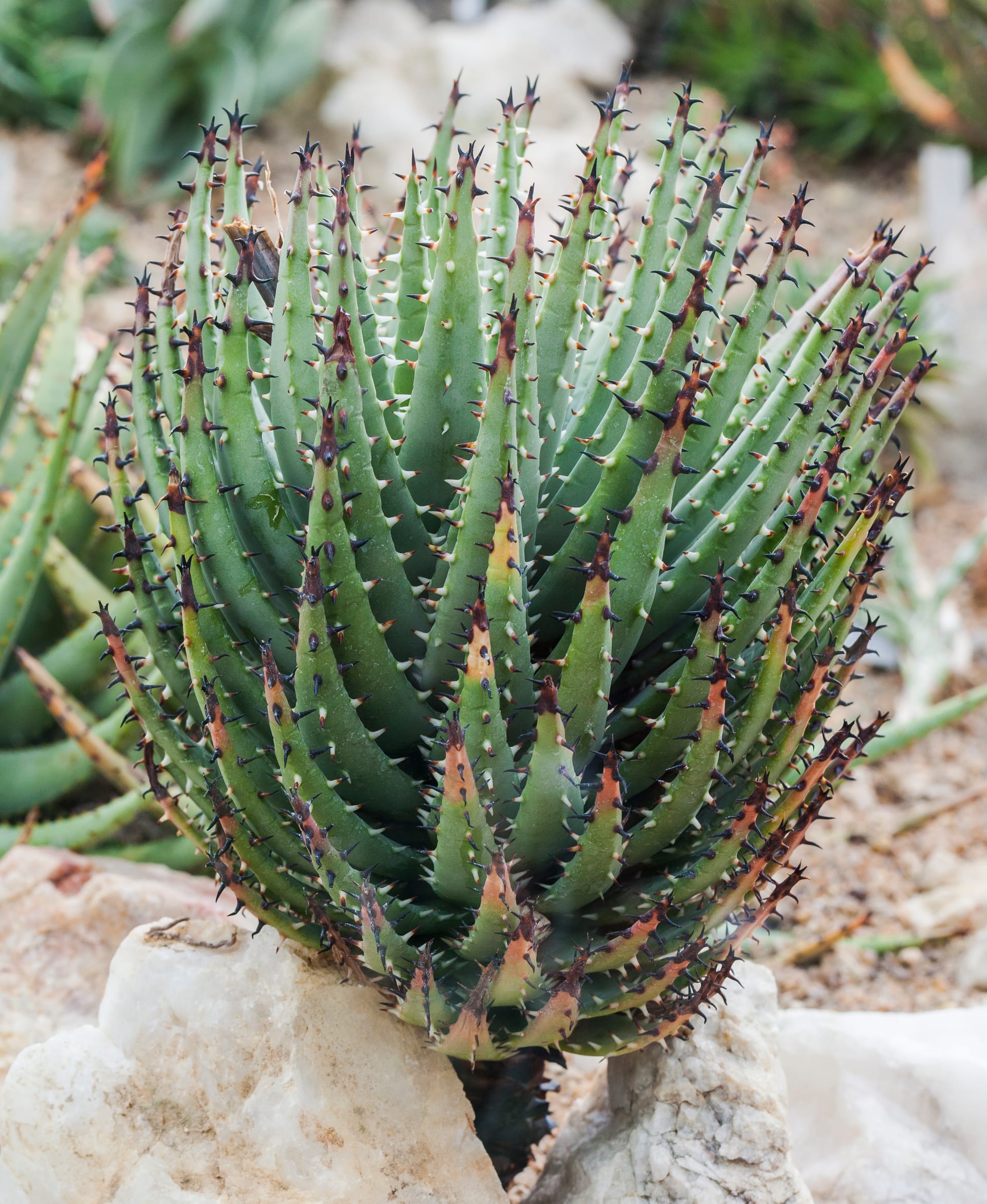
 © Diego Delso / CC BY-SA 3.0
Aloe erinacea
Aloe erinacea is a small aloe species native only to the arid mountains of Namibia. Its blue-green leaves curve gently inward to form a tight rosette, densely lined along the edges with long, creamy-white spines. The species name erinacea means hedgehog, a fitting nod to its spine-covered silhouette. This slow-growing perennial can, under the right conditions, form offsets and grow into a small cluster over time. Because its growth is unhurried and its care calls for some finesse, Aloe erinacea is generally considered better suited to growers who already have some aloe experience.
View Aloe erinacea encyclopedia →0% commission on your first sales!Register by September 30, 2026 and your first 2 plants are commission-free!
Grower Wanted!
List your plants on GrowerDirect and sell directly to customers nationwide!
6 Transparency Commitments from GrowerDirect
Grower disclose this information for Succulents & Cacti. We guarantee transparency in variety, origin, light requirements, and difficulty level.
- Variety Disclosed
- Real Photos
- Color Details
- Origin Disclosed
- Light Requirements
- Difficulty Level
Browse all 133 varieties
Light Requirements
Difficulty Level
Verified growers wanted for Succulents & Cacti
Growers are signing up now ahead of launch. Subscribe to be notified when new listings go live.
Getting alerts is free with a member account. When new listings match your saved search, we'll notify you by email and in-app.
Browse other categories
Verified growers (preview)
Are you growing succulents & cacti?
Register as a grower and connect with buyers directly.
Apply as a growerAloe erinacea key facts
- Growing Difficulty
- Intermediate
- Lifespan
- Perennial; slow-growing
- Size
- Small rosettes, sometimes clumping
- Watering
- Very little; a small amount of base fertiliser at repotting
- Light & Placement
- Keep it in a well-ventilated place all year. Grow it outdoors in full sun during the growing season and give 20–40% shade in summer.
- Watering
- In spring and autumn water thoroughly when the pot dries. During the summer rest water only once or twice a month, avoiding muggy days.
- Temperature & Overwintering
- It keeps growing slowly in winter, almost like a winter grower. When lows fall below 10°C, protect it from frost and cold wind and bring it indoors at night. A Japanese reference gives 2°C as the minimum survival temperature.
- Soil & Repotting
- Use a free-draining mix. Repot in March–May or mid-September.
- Fertiliser
- It grows slowly, so a little slow-release fertiliser mixed in at repotting is enough; avoid heavy feeding.
- Propagation
- Mainly raised from seed; offsets, when produced, can be removed and rooted.
- Pests & Cautions
- Summer humidity is the main danger; prioritise air movement in hot weather and handle the sharp spines with care.
About Aloe erinacea
A growing guide to Aloe erinacea, a small Namibian aloe with inward-curving blue-green leaves and dense white spines. Learn key care tips for this slow-growing, intermediate-level succulent, plus answers to common questions.
7 things to know before growing Aloe erinacea
1Light and Placement
Aloe erinacea thrives in bright light and benefits from good air circulation, which helps keep its rosette tight and compact. If grown indoors, place it near the sunniest window available, and if kept outdoors, watch how sunlight intensity shifts with the seasons.
2Watering
Water thoroughly only after the soil has fully dried out. Because this species grows slowly, overwatering is a common cause of root rot, so it's best to lean toward underwatering rather than overdoing it.
3Soil
A well-draining succulent or cactus mix works best. Adding pumice or perlite to a commercial succulent soil helps prevent root rot while supporting healthy root growth.
4Repotting
Because growth is slow, repotting once every year or two is usually enough. It's best done when roots start to fill the pot, or just before the active growing season begins, to minimize stress on the plant.
5Seasonal Care
While Aloe erinacea tolerates strong light well, it can be sensitive to intense midsummer sun combined with poor airflow. In winter, keep it on the dry side and protect it from cold and excess moisture to help it get through the season safely.
6Handling the Spines
The creamy-white spines lining the leaf edges are part of the plant's charm, but they can be sharp enough to prick your skin. Wearing gloves during repotting or general handling is a simple way to avoid direct contact with them.
7Choosing a Healthy Plant
A healthy specimen has leaves that curve firmly inward with spines lined up densely along the edges. Avoid plants with discolored or wrinkled leaves or noticeably missing spines, and look instead for one with a well-formed, tidy rosette.
Frequently asked questions about Aloe erinacea
- Q.Is Aloe erinacea suitable for beginners?
- A.It's generally considered an intermediate-level plant because its slow growth and watering needs require a bit of finesse. Growers who already have some experience with succulents or other aloes will likely find it more manageable.
- Q.How large does it grow?
- A.Aloe erinacea forms a small rosette and stays a manageable size even as it matures. Depending on conditions, it may also produce offsets and grow into a small cluster.
- Q.Why does it grow so slowly?
- A.As a species native to the harsh, arid mountains of Namibia, Aloe erinacea is naturally a slow-growing perennial. It's best enjoyed with a patient, long-term approach rather than expecting quick changes.
- Q.Can it be grown as a cluster?
- A.Under favorable conditions, Aloe erinacea can produce offsets and grow into a small cluster over time. Rather than forcing this to happen, focusing on keeping the plant healthy tends to encourage natural clustering.
- Q.Is it safe to touch the spines?
- A.The spines along the leaf edges are sharp and can prick your skin if touched directly. It's a good idea to wear gloves during repotting or handling to avoid unnecessary contact with them.
Handy Growing Tools for Aloe erinacea
Learn more about Aloe erinacea in the encyclopedia
View Aloe erinacea encyclopedia entry →
Care difficulty, size, origin and light needs — all basics covered.
More in this category
Can't find the plant you're looking for?
Post your wishes for free and growers with matching plants will contact you with introductions.