 © Diego Delso / CC BY-SA 3.0
Sea urchin cactus / Star cactus
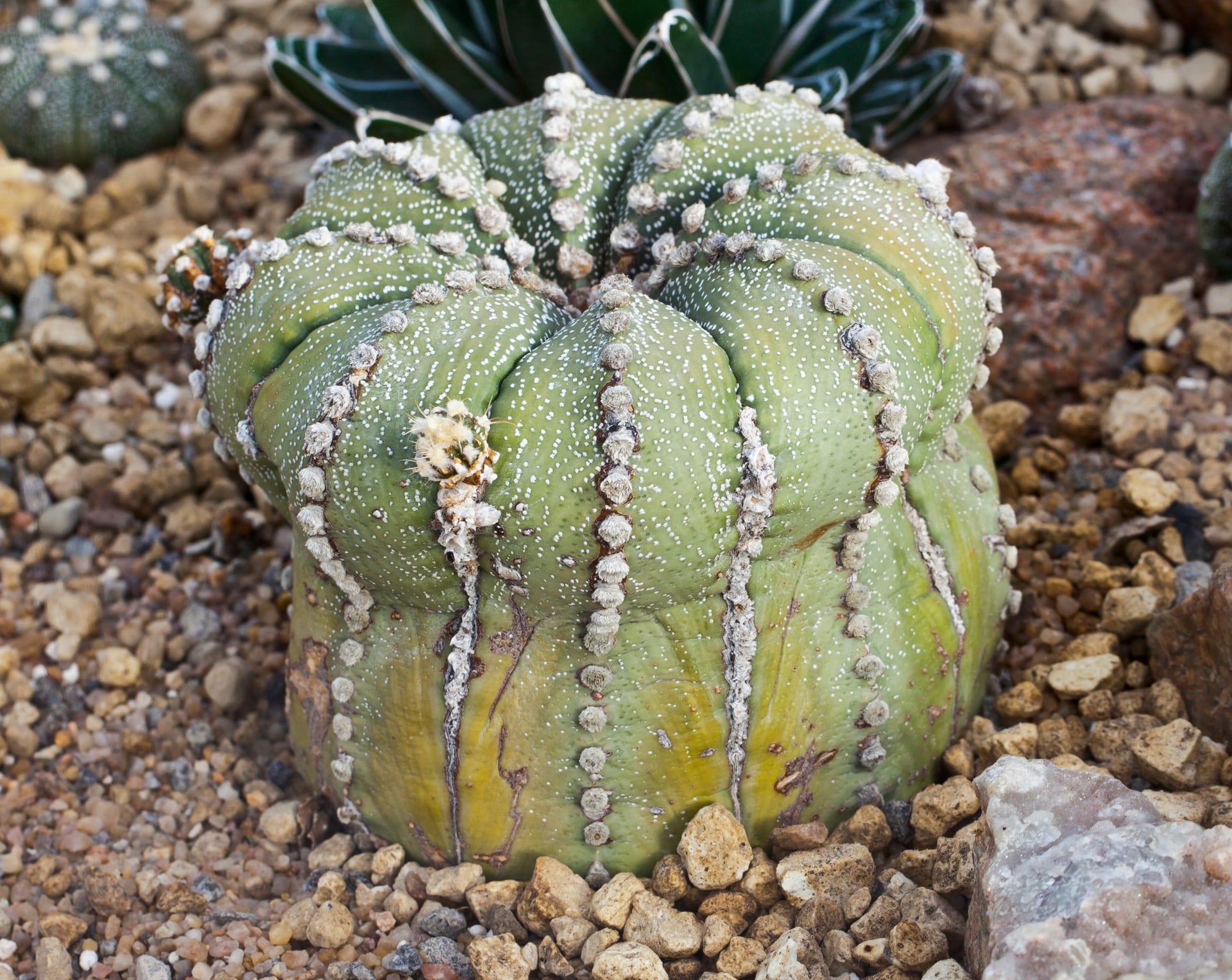
Kabuto-maru is a spineless, flattened, dome-shaped cactus. About eight ribs divide its body, and woolly areoles run down the center of each rib. Its scattering of white star-like flecks gives it the look of a sea urchin. It is also the original species behind Super Kabuto, a form developed in Japan. This perennial grows 2.5 to 6 cm tall and 5 to 15 cm across. It is rated intermediate to grow, so careful watering and good airflow go a long way. It is listed in CITES Appendix I and designated an Internationally Endangered Species under Japan's Act on Conservation of Endangered Species (種の保存法), so transferring a plant by sale or gift, or displaying or advertising it for sale, requires an individual registration certificate. This applies to plants propagated in Japan too, including selections such as Super Kabuto. Plants without a certificate cannot be bought or sold, so always confirm the certificate when buying.
View Sea urchin cactus / Star cactus encyclopedia →0% commission on your first sales!Register by September 30, 2026 and your first 2 plants are commission-free!
Grower Wanted!
List your plants on GrowerDirect and sell directly to customers nationwide!
6 Transparency Commitments from GrowerDirect
Grower disclose this information for Succulents & Cacti. We guarantee transparency in variety, origin, light requirements, and difficulty level.
- Variety Disclosed
- Real Photos
- Color Details
- Origin Disclosed
- Light Requirements
- Difficulty Level
Browse all 131 varieties
Light Requirements
Difficulty Level
Verified growers wanted for Succulents & Cacti
Growers are signing up now ahead of launch. Subscribe to be notified when new listings go live.
Getting alerts is free with a member account. When new listings match your saved search, we'll notify you by email and in-app.
Browse other categories
Verified growers (preview)
Are you growing succulents & cacti?
Register as a grower and connect with buyers directly.
Apply as a growerSea urchin cactus / Star cactus key facts
- Growing Difficulty
- Intermediate
- Lifespan
- Perennial; reaches flowering size at 2–3 cm across
- Size
- 2.5–6 cm tall, 5–15 cm across
- Watering
- Light feeder; a little slow-release fertiliser at each annual repotting
- Light & Placement
- Keep it in a sunny, airy spot outdoors or in a cold frame all year. It likes strong light, but the skin is delicate and burns easily after a move or a sudden sunny spell.
- Watering
- A summer grower, growing most strongly from spring to summer. Water thoroughly when the surface dries from early spring to early autumn. Total winter dryness makes the base shrink, so mist it about twice a month on warm days.
- Temperature & Overwintering
- It likes heat, and day–night temperature swings keep it compact. When lows drop below 15°C move it to a sunny greenhouse or windowsill, and keep it above 5°C.
- Soil & Repotting
- Use a free-draining cactus mix and add a little slow-release fertiliser at each annual repotting. Persistent humidity and low light brown the areoles and invite root rot.
- Propagation
- Raised from seed; it needs cross-pollination between two plants to set seed.
- Pests & Cautions
- As a CITES Appendix I and Japanese Internationally Endangered Species, transfers require a registration certificate, including for plants propagated in Japan; selected strains such as 'Super Kabuto' are treated the same way.
About Sea urchin cactus / Star cactus
Kabuto-maru (Sea urchin cactus) is a spineless, flattened cactus with about eight ribs and white star-like flecks. This perennial grows 2.5 to 6 cm tall and 5 to 15 cm wide, and it is rated intermediate. Care tips and FAQs inside.
7 things to know before growing Sea urchin cactus / Star cactus
1Bright, airy spot
Kabuto-maru likes a spot with plenty of light and moving air. Strong midsummer sun can scorch the body, so shade it or move it to bright partial shade at that time. Rain can cause stuffiness and root rot, so if you keep it outdoors, choose a place under eaves where rain does not reach.
2Water well from early spring to early autumn
Kabuto-maru is a summer grower, with spring through summer as its main growing season. From early spring to early autumn, water thoroughly whenever the topsoil has dried, until water runs from the bottom of the pot. Cut back in winter, but don't stop completely in midwinter or the lower body can sink in; mist it about twice a month on warm days. Prolonged damp and poor light make root rot more likely.
3Fast-draining soil
A fast-draining cactus and succulent mix is the basic choice. Blending in pumice or coarse sand improves drainage and helps prevent root rot. Choosing a pot that is not too large for the plant makes it easier to gauge how quickly the soil dries.
4When to repot
Repot in spring or autumn when the roots are crowded or the soil has broken down, roughly once every few years. Do not water right after repotting. Wait a few days so any root damage can settle before you start watering again, which helps avoid rot.
5Summer and winter care
Summer is its peak growing season, so water thoroughly whenever the topsoil dries. Its skin is delicate and can sunburn during sudden sunny spells or after a move, so take care when changing its location. In winter, once night lows fall below 15°C, move it to a sunny greenhouse or indoor windowsill and keep it above 5°C. Water sparingly, misting about twice a month on warm days.
6Choosing a healthy plant and the registration certificate
Look for a firm body with no wrinkles, discoloration or soft spots. The pattern of flecks differs from plant to plant, so part of the fun is picking the one you like best. As an Appendix I species, it must come with a registration certificate under Japan's Act on Conservation of Endangered Species (種の保存法), so always confirm the certificate when buying; this applies to selections such as Super Kabuto as well.
7Getting it to flower
The flowers are yellow with red centers and appear from March to June in the wild. It likes warmth and grows compact with a good day-night temperature swing, so keep it in a bright, airy spot. Because it is a perennial, you can enjoy it for many years with steady seasonal care.
Frequently asked questions about Sea urchin cactus / Star cactus
- Q.Can beginners grow Kabuto-maru?
- A.It is rated as intermediate. Beginners can try it if they get the watering timing and airflow right, but root rot from too much moisture is the main risk. It helps to get into the habit of checking how dry the soil is before each watering.
- Q.How big does Kabuto-maru get?
- A.It reaches about 2.5 to 6 cm in height and 5 to 15 cm in diameter. It is a perennial that grows over a long period. When choosing a pot, keep its eventual size in mind to reduce how often you need to repot.
- Q.How often should I water it?
- A.Rather than following a fixed schedule, water based on how dry the topsoil is. As a summer grower, it should be watered thoroughly from early spring to early autumn whenever the topsoil dries, and less in winter. Even in midwinter, don't stop entirely; mist it about twice a month on warm days.
- Q.When does Kabuto-maru flower?
- A.Its flowers are yellow with red centers and appear from March to June in the wild. Whether it blooms depends on light and the condition of the plant, so keep it in a bright, airy spot and see how it does.
- Q.How is it related to Super Kabuto?
- A.Kabuto-maru is the original species behind Super Kabuto, which was developed through breeding in Japan. Appearance varies from plant to plant, so it is a good idea to check the actual photos for the fleck pattern and rib shape when choosing.
Handy Growing Tools for Sea urchin cactus / Star cactus
Learn more about Sea urchin cactus / Star cactus in the encyclopedia
View Sea urchin cactus / Star cactus encyclopedia entry →
Care difficulty, size, origin and light needs — all basics covered.
More in this category
Can't find the plant you're looking for?
Post your wishes for free and growers with matching plants will contact you with introductions.