 © Susomoinhos / CC0
Tiger jaws
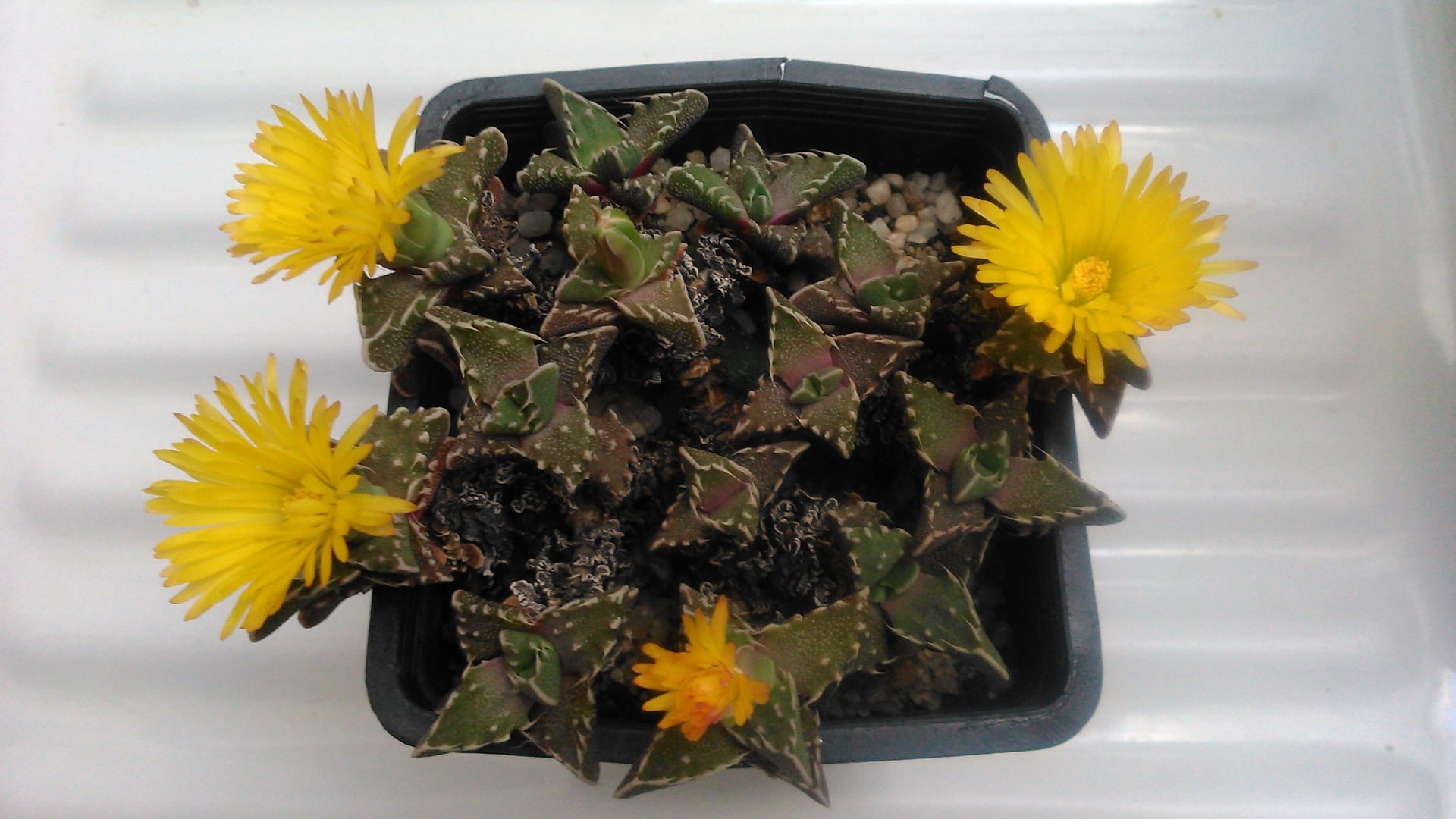
Tiger jaws (Shikaiha in Japan) is a mesemb succulent with pairs of thick, triangular leaves. Soft, thread-like teeth along the leaf edges look like the fangs of an open mouth, yet they are gentle to the touch. The leaves are dotted with white speckles, and in autumn to winter the plant produces large yellow flowers between them. It is a beginner-friendly perennial that forms clumps about 8 cm across, and it grows well on a bright windowsill, which makes it a good first succulent.
View Tiger jaws encyclopedia →0% commission on your first sales!Register by September 30, 2026 and your first 2 plants are commission-free!
Grower Wanted!
List your plants on GrowerDirect and sell directly to customers nationwide!
6 Transparency Commitments from GrowerDirect
Grower disclose this information for Succulents & Cacti. We guarantee transparency in variety, origin, light requirements, and difficulty level.
- Variety Disclosed
- Real Photos
- Color Details
- Origin Disclosed
- Light Requirements
- Difficulty Level
Browse all 131 varieties
Light Requirements
Difficulty Level
Verified growers wanted for Succulents & Cacti
Growers are signing up now ahead of launch. Subscribe to be notified when new listings go live.
Getting alerts is free with a member account. When new listings match your saved search, we'll notify you by email and in-app.
Browse other categories
Verified growers (preview)
Are you growing succulents & cacti?
Register as a grower and connect with buyers directly.
Apply as a growerTiger jaws key facts
- Growing Difficulty
- Beginner-friendly
- Lifespan
- Perennial; old plants form a short stem of dead leaves
- Size
- About 8 cm across (clumping)
- Watering
- Light feeder
- Light & Placement
- Likes full sun, which tints the leaves reddish-purple. Keep it in a dry, airy position.
- Watering
- Classed as a winter grower in Japan. It dislikes staying wet, so in the growing season water lightly once the mix has dried a little; give very little while dormant.
- Temperature & Overwintering
- It does not tolerate freezing, so keep it frost-free in winter; a Japanese reference gives 0°C as its limit. In hot, humid summers rest it in a well-ventilated place.
- Soil & Repotting
- South African growers recommend a peat-free mix of two parts loam, one part coarse sand and one part pumice.
- Propagation
- Propagate by division or from seed sown in autumn and barely covered. Seedlings form a taproot, so keep it straight when transplanting.
- Pests & Cautions
- Red spider mites appear in dry conditions; keep the air moving and cut away any rotting parts before rot spreads.
About Tiger jaws
Tiger jaws is a beginner-friendly mesemb succulent with thick, triangular leaves edged in soft, tooth-like fringes. It forms clumps about 8 cm across and bears large yellow flowers in autumn to winter.
7 things to know before growing Tiger jaws
1Sun and airflow
Grow it where it gets plenty of light and fresh air. With too little light, the leaves stretch and lose their compact shape, and the white speckles become less noticeable. Move it to bright shade during the strongest midsummer sun to prevent leaf scorch.
2Water when dry
Wait until the soil has dried out completely, then water thoroughly until it runs from the drainage hole. The thick leaves store water, so constantly damp soil invites root rot. Let the dryness of the soil, not a fixed number of days, decide when to water.
3Soil and pot
A succulent and cactus mix, or a free-draining blend such as akadama and pumice, suits it well. Choose a pot with a drainage hole and avoid one far too large for the plant, so the soil dries out quickly and is easier to manage.
4Seasonal care
It grows best from autumn to spring, so give it good light and regular watering then. In hot summer, growth slows, so keep the air moving and water sparingly. In winter, protect it from frost and freezing by keeping it under eaves or in a bright spot indoors.
5Encouraging blooms
In autumn to winter, large yellow flowers appear from between the leaves. Plants that get plenty of sun and stay sturdy are more likely to bloom well. The flowers tend to open when the sun hits them, so a bright windowsill makes them easier to enjoy.
6Repotting and old plants
The plant multiplies into a clump, so repot it once the pot becomes crowded, ideally in autumn or spring during the growing season. Older plants build up dead leaves that form a short, stem-like base. Remove damaged leaves to prevent stuffiness and rot.
7Choosing a plant
Look for plump, thick leaves with clearly visible white speckles. Avoid plants with blackened or soft, shrunken leaves, or a base that wobbles. After it arrives, keep it in bright shade for a few days, then gradually move it into full sun.
Frequently asked questions about Tiger jaws
- Q.Can beginners grow Tiger jaws?
- A.Yes, it is a beginner-friendly succulent. If you provide good light and airflow and water only after the soil has dried, it is easy to grow. Take particular care not to overwater.
- Q.When does it flower?
- A.It flowers in autumn to winter, producing large yellow blooms between the leaves. Giving it plenty of sun so the plant stays sturdy improves its chances of blooming.
- Q.How often should I water it?
- A.Rather than following a fixed schedule, check whether the soil has dried out completely. When it has, water until it drains from the pot, and cut back during hot summer weather.
- Q.Are the teeth on the leaves sharp?
- A.The teeth are soft and thread-like, not hard enough to prick. Still, handling can damage the leaves, so it is best to admire them without touching too often.
- Q.How big does it get?
- A.A plant is about 8 cm across and grows into a clump as new offsets form. When the pot gets crowded, repot it in autumn or spring during the growing season.
Handy Growing Tools for Tiger jaws
Learn more about Tiger jaws in the encyclopedia
View Tiger jaws encyclopedia entry →
Care difficulty, size, origin and light needs — all basics covered.
More in this category
Can't find the plant you're looking for?
Post your wishes for free and growers with matching plants will contact you with introductions.