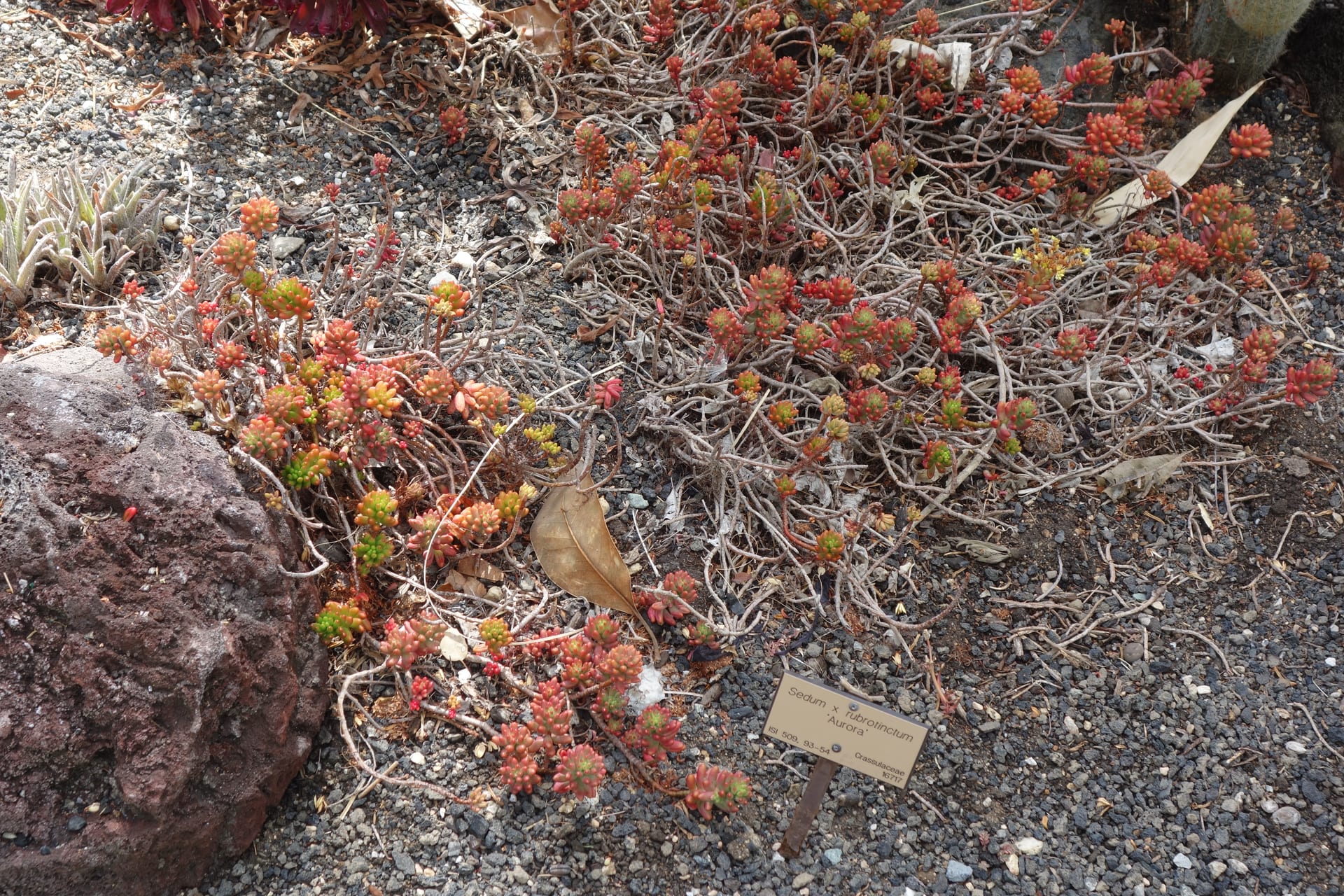
 © Daderot / CC0
Sedum rubrotinctum 'Aurora'
Aurora is the variegated form of Sedum rubrotinctum, known in Japan as Niji no Tama Nishiki. Plump, bean-shaped leaves line its stems, and the variegated leaves start to take on color as the weather cools in autumn, so one plant shows different looks through the year. It is an evergreen perennial and is rated beginner-friendly. Leaf cuttings rarely take, so it is propagated from stem cuttings instead. Even in a small pot it has real presence, which makes it an approachable first succulent.
View Sedum rubrotinctum 'Aurora' encyclopedia →0% commission on your first sales!Register by September 30, 2026 and your first 2 plants are commission-free!
Grower Wanted!
List your plants on GrowerDirect and sell directly to customers nationwide!
6 Transparency Commitments from GrowerDirect
Grower disclose this information for Succulents & Cacti. We guarantee transparency in variety, origin, light requirements, and difficulty level.
- Variety Disclosed
- Real Photos
- Color Details
- Origin Disclosed
- Light Requirements
- Difficulty Level
Browse all 131 varieties
Light Requirements
Difficulty Level
Verified growers wanted for Succulents & Cacti
Growers are signing up now ahead of launch. Subscribe to be notified when new listings go live.
Getting alerts is free with a member account. When new listings match your saved search, we'll notify you by email and in-app.
Browse other categories
Verified growers (preview)
Are you growing succulents & cacti?
Register as a grower and connect with buyers directly.
Apply as a growerSedum rubrotinctum 'Aurora' key facts
- Growing Difficulty
- Beginner-friendly
- Lifespan
- Evergreen perennial (little published data on lifespan)
- Size
- Little published data on size
- Watering
- A little slow-release or liquid fertiliser in spring and autumn
- Light & Placement
- Grow it outdoors in full sun in spring and autumn. It dislikes heat and humidity, so from the rainy season through summer keep it in airy partial shade out of the rain. Colour develops as autumn cools.
- Watering
- It is a spring-autumn grower (March-June and September-November). Water thoroughly when the surface dries in these periods; from the end of the rainy season through the summer rest hold back and keep it out of the rain.
- Temperature & Overwintering
- The parent is fairly cold-tolerant if kept from frost; overwinter it where frost cannot reach.
- Soil & Repotting
- Use a free-draining mix and repot every 1-2 years just before or early in a growing season, cutting back leggy stems at the same time.
- Propagation
- Propagate from stem cuttings, which root readily; leaf cuttings almost never succeed. Keep new cuttings on the dry side rather than watering freely. Best in March-May or September-October.
- Pests & Cautions
- Scale insects and aphids may attack stems and leaves, and root mealybugs the roots. The parent is said to cause irritation if eaten or touched, so keep it away from children and pets and wash your hands after handling.
About Sedum rubrotinctum 'Aurora'
Sedum rubrotinctum 'Aurora' is a variegated jelly bean succulent with plump, bean-shaped leaves. A beginner-friendly evergreen perennial, with care tips and FAQ.
7 things to know before growing Sedum rubrotinctum 'Aurora'
1Bright spot, good airflow
A sunny spot outdoors or a bright windowsill suits it best. With too little light the stems stretch and the leaf color fades, so give it as much sun as you can. The variegated leaves scorch more easily, though, so shade it from harsh midsummer sun.
2Water after it dries
Water only after the soil has dried out completely, then soak it until water runs from the drainage hole. The leaves store water, so constantly damp soil invites root rot. Cut back in summer and winter, when growth slows.
3Free-draining soil
A ready-made succulent and cactus mix works well. If you blend your own, use plenty of free-draining material such as akadama or pumice. Choose a pot with a drainage hole, which helps prevent overwatering.
4When to repot
Repot in spring or autumn, when the plant is actively growing. Do it when the pot is full of roots or the stems have grown long and untidy. Hold off watering right after repotting and start again after a short pause, which helps protect the roots.
5Summer heat, winter frost
Hot, humid summers can cause stuffiness, so move it to a bright, airy spot with partial shade and out of the rain. Frost and freezing damage it in winter, so keep it under eaves or in a bright room. As the weather cools from autumn into winter, the leaves take on more red.
6Choosing a plant
Look for plump, firm leaves with no dark patches, wrinkles or translucent areas. Check that the stems are compact rather than stretched, and that the variegation is to your taste. The leaves drop easily, so handle the plant gently once it arrives.
7Propagate by stem cuttings
Leaf cuttings rarely take, so propagate by cutting a stem and planting it. Let the cut end dry before setting it in free-draining soil. Occasionally a plain green shoot appears as the variegation fades, so choosing well-variegated stems for cuttings helps keep the plant's look.
Frequently asked questions about Sedum rubrotinctum 'Aurora'
- Q.Can a beginner grow it?
- A.It is rated as beginner-friendly. The basics are good light, airflow, and watering only once the soil has dried. If you watch out for summer stuffiness and winter frost, it is an easy succulent to keep.
- Q.Why do the leaves keep falling off?
- A.The bean-shaped leaves are loosely attached and can drop with a light touch or bump. Overwatering or too little light can make it worse, so check its spot and watering. Fallen leaves rarely grow into new plants.
- Q.Are red leaves a sign of disease?
- A.Turning red in cool weather or bright light is a natural change often seen in this group of plants. If instead the color fades to green and the stems stretch, it may be a sign of too little light.
- Q.How does it differ from Niji no Tama?
- A.Aurora is the variegated form of Niji no Tama (Sedum rubrotinctum), and its variegated leaves set it apart from the plain form by color. The biggest practical difference is propagation: Niji no Tama grows easily from leaf cuttings, but Aurora rarely does, so it is propagated from stem cuttings.
- Q.How do I get it through winter?
- A.The key is to keep it away from frost and freezing. In cold weather, move it under eaves or into a bright room and water sparingly so the soil stays on the dry side. Adjust its spot to suit the winters where you live.
Handy Growing Tools for Sedum rubrotinctum 'Aurora'
Learn more about Sedum rubrotinctum 'Aurora' in the encyclopedia
View Sedum rubrotinctum 'Aurora' encyclopedia entry →
Care difficulty, size, origin and light needs — all basics covered.
More in this category
Can't find the plant you're looking for?
Post your wishes for free and growers with matching plants will contact you with introductions.