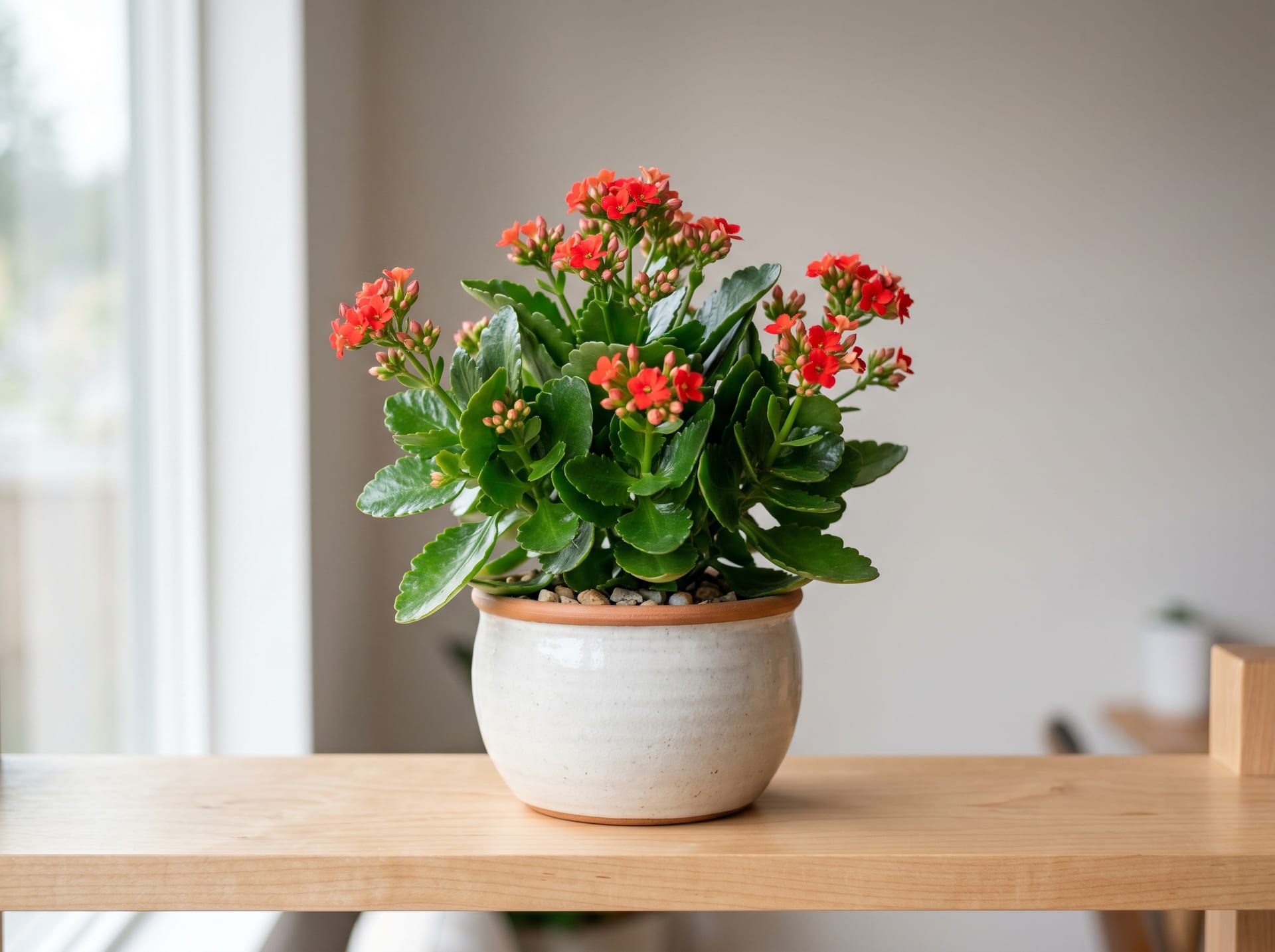
AI-generated image
Kalanchoe
BeginnerFlowering succulent with rich flower colors. Popular as gifts. Many unique species like Mother of Thousands.
About
Kalanchoe is a genus of about 125 tropical succulent plants in the family Crassulaceae, predominantly native to Madagascar and tropical Africa. The genus is best known horticulturally for K. blossfeldiana and its hybrids, which produce long-lasting clusters of small flowers in red, orange, yellow, pink, or white and are among the best-selling potted plants worldwide. As short-day plants, they require extended periods of darkness to initiate flowering. Other notable species include K. daigremontiana (Mother of Thousands), which proliferates by producing tiny plantlets along leaf margins. Kalanchoes prefer bright indirect light and well-draining soil, with watering only when the substrate has dried.
Source: Wikipedia (CC BY-SA 4.0)
Lifespan of the Kalanchoe
The Kalanchoe lives 5+ years.
Size of the Kalanchoe
The Kalanchoe grows to 10-50cm.
Temperature & humidity for the Kalanchoe
The ideal temperature for the Kalanchoe is 5〜30℃.
They are sensitive to overwatering and frost, but can be overwintered easily indoors above 5°C.
Basic Info
Origin
Madagascar and tropical Africa
Lifespan
5+ years
Size
10-50cm
Temperature
5〜30℃
Humidity
30〜50%
Growing Tips
Light & Placement
Prefers a bright spot but not direct sun, so place it in bright indirect light. As a short-day plant, it sets flower buds as days shorten.
Watering
When soil dries. Keep slightly on dry side
Temperature & Overwintering
Keep between 5 and 30°C; as long as the minimum stays above 5°C it overwinters easily indoors. Place it by a bright window in winter.
Flowers
Short-day treatment (12+ hours dark daily) promotes blooming
Propagation
Propagate by stem cuttings. Species that form plantlets along the leaf margins can be multiplied simply by setting those plantlets on soil.
Notes
Mother of Thousands species spread via aerial plantlets — invasive
Kalanchoe FAQ
QWhat is the growing difficulty level for Kalanchoe?
Beginner. A variety suitable for beginners. No special equipment or experience is required—you can grow it without problems by setting up a basic cultivation environment.
QWhat is the ideal temperature for Kalanchoe?
The ideal temperature for Kalanchoe is 5〜30℃. Avoid sudden temperature changes and maintain a stable environment.
QWhat is the lifespan of Kalanchoe?
The average lifespan of Kalanchoe is 5+ years. With proper cultivation environment and nutrient management, you can keep it healthy for a long time.
QHow large does Kalanchoe get?
The mature size of Kalanchoe is 10-50cm. This may vary slightly depending on cultivation environment and individual differences.
QWhat is the typical price for Kalanchoe?
The price of Kalanchoe varies significantly by variety, characteristics, size, and lineage. Please check GrowerDirect's price guide for the latest market information.
Last updated: September 18, 2026
References & Sources
Edited & verified by: GrowerDirect Editorial Team
The classifications, regulations, and growing data on this page are created and verified based on the primary information database below.
Primary sources
Regulations & Conservation Status
Sources: CITES Appendices — taxon not listed
Regulations may change. Always verify the latest information with the relevant authorities.
Related Species
Find listings for this species
Related Articles
Complete Guide to Growing Kalanchoe tomentosa (Panda Plant) | Tips for Keeping Fuzzy Leaves and Edge Markings Beautiful
Kalanchoe tomentosa (Panda Plant), popular for its leaves covered with fuzzy hairs that resemble rabbit ears. This guide explains how to care for it, including placement, watering, soil, and propagation methods, while keeping its fuzzy leaves and leaf-tip markings beautiful.
Autumn Preparation Management for Summer-Type Succulents
A guide to autumn care for summer-type succulents, covering plant changes from September to November, timing for gradual watering reduction, placement and temperature management for transitioning plants indoors, autumn fertilizing and pest control, variety-specific care checkpoints, and preparation for winter dormancy.
Mealybug Control on Succulents | Complete Guide to Early Detection, Removal, and Prevention
Mealybugs hide easily at the base of succulent leaves and on new growth. This guide covers their characteristics, the environments where they thrive, tips for early detection, removal methods using cotton swabs and alcohol, and daily care practices to prevent recurrence.
Summer and Winter Type Succulents: Growth Cycles and Watering Management Strategy
This article explains the differences in growth types of succulent plants, their annual growth cycles, seasonal watering management strategies, common failures, and countermeasures.
🩺 Common diseases
Can't find the plant you're looking for?
Post your wishes for free and growers with matching plants will contact you with introductions.