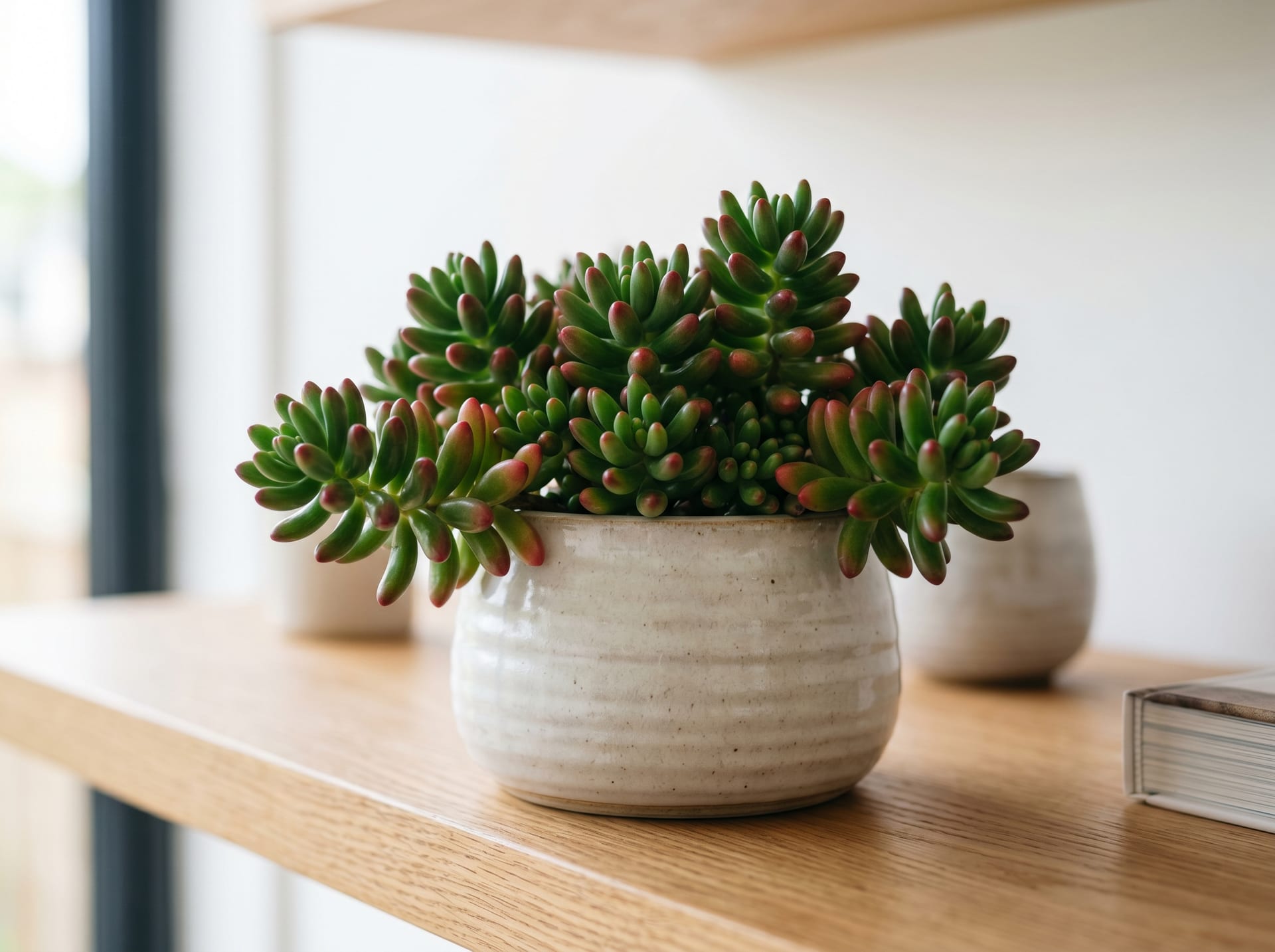
AI-generated image
Sedum
BeginnerMost species-rich succulent genus. Hardy enough for ground cover. Jelly Bean and Aurora are popular varieties.
About
Sedum is a large genus of succulent plants in the family Crassulaceae, commonly known as stonecrops, with 400–500 species distributed primarily across the Northern Hemisphere and extending into Africa and South America. Plants range from low-growing creepers to small upright shrubs, with fleshy water-storing leaves varying greatly in shape and color. Many species and cultivars develop vivid red, orange, or purple tones during cool temperatures and under intense sunlight. Sedums are among the hardiest succulents, tolerating a wide range of climates and thriving in outdoor gardens as well as containers. They prefer well-draining soil and full to partial sun, with infrequent watering once established. Propagation by leaf cuttings, stem cuttings, or division is straightforward, making them popular for beginners, mixed plantings, and ground cover.
Source: Wikipedia (CC BY-SA 4.0)
Lifespan of the Sedum
The Sedum lives 10+ years.
Size of the Sedum
The Sedum grows to 5-30cm (varies by variety).
Temperature & humidity for the Sedum
The Sedum tolerates temperatures of -5〜35℃.
Basic Info
Origin
the Northern Hemisphere
Lifespan
10+ years
Size
5-30cm (varies by variety)
Temperature
-5〜35℃
Humidity
30〜50%
Growing Tips
Sunlight
Loves sunlight. Can grow outdoors
Watering
When soil fully dries. Less is fine
Temperature & Overwintering
Manageable between -5 and 35°C, and many species are very hardy. Some can overwinter outdoors as they are.
Soil & Repotting
Use a well-draining mix. It dislikes wet conditions and is prone to rotting in the muggy rainy season, so keep it where air circulates well.
Propagation
Easy propagation by leaf or stem cuttings
Sedum FAQ
QWhat is the growing difficulty level for Sedum?
Beginner. A variety suitable for beginners. No special equipment or experience is required—you can grow it without problems by setting up a basic cultivation environment.
QWhat temperatures can Sedum tolerate?
Sedum tolerates temperatures of -5〜35℃. This is the tolerated range, not the ideal growing temperature. Keep conditions well inside it and avoid sudden temperature changes.
QWhat is the lifespan of Sedum?
The average lifespan of Sedum is 10+ years. With proper cultivation environment and nutrient management, you can keep it healthy for a long time.
QHow large does Sedum get?
The mature size of Sedum is 5-30cm (varies by variety). This may vary slightly depending on cultivation environment and individual differences.
QWhat is the typical price for Sedum?
The price of Sedum varies significantly by variety, characteristics, size, and lineage. Please check GrowerDirect's price guide for the latest market information.
Last updated: September 18, 2026
References & Sources
Edited & verified by: GrowerDirect Editorial Team
The classifications, regulations, and growing data on this page are created and verified based on the primary information database below.
Primary sources
Regulations & Conservation Status
Sources: CITES Appendices — taxon not listed
Regulations may change. Always verify the latest information with the relevant authorities.
Related Species
Find listings for this species
Related Articles
Autumn Preparation Management for Summer-Type Succulents
A guide to autumn care for summer-type succulents, covering plant changes from September to November, timing for gradual watering reduction, placement and temperature management for transitioning plants indoors, autumn fertilizing and pest control, variety-specific care checkpoints, and preparation for winter dormancy.
Mealybug Control on Succulents | Complete Guide to Early Detection, Removal, and Prevention
Mealybugs hide easily at the base of succulent leaves and on new growth. This guide covers their characteristics, the environments where they thrive, tips for early detection, removal methods using cotton swabs and alcohol, and daily care practices to prevent recurrence.
Summer and Winter Type Succulents: Growth Cycles and Watering Management Strategy
This article explains the differences in growth types of succulent plants, their annual growth cycles, seasonal watering management strategies, common failures, and countermeasures.
Selecting Pots for Succulents: The Relationship Between Root Development and Pot Choice | A Complete Guide to Pot Size, Material, and Drainage
Essential guide to pot selection for succulent growth. From choosing the right size to comparing terracotta vs. plastic, and optimizing drainage—practical tips for developing healthy root systems.
🩺 Common diseases
Can't find the plant you're looking for?
Post your wishes for free and growers with matching plants will contact you with introductions.