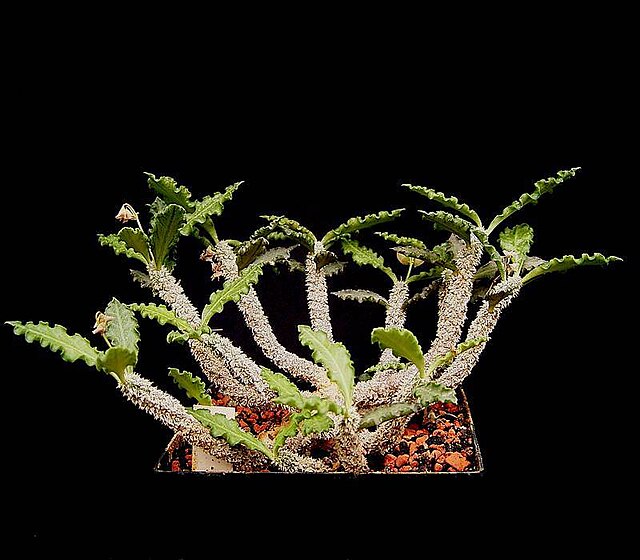
Source: Wikimedia Commons
Euphorbia Ambovombensis
IntermediateEuphorbia ambovombensis
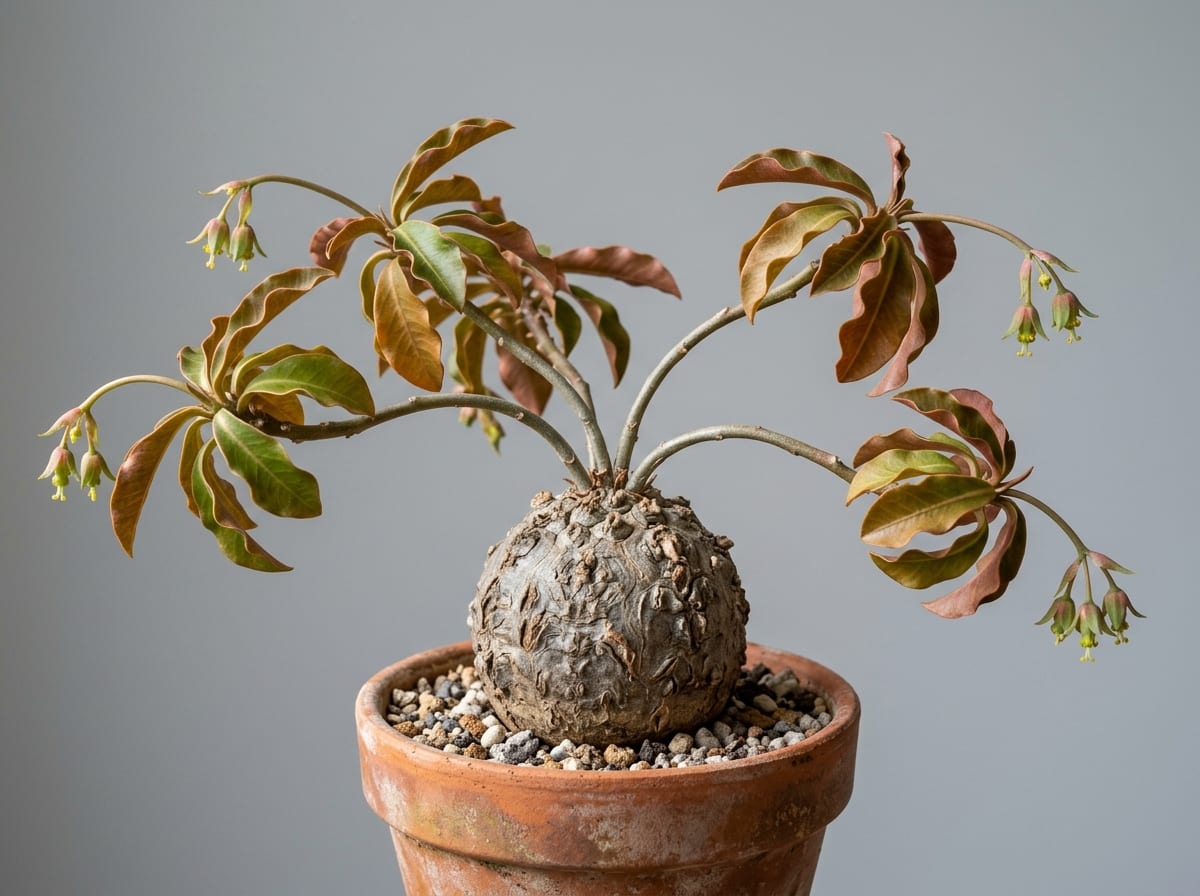
A small caudex Euphorbia from Madagascar with a plump caudex and small leaves.
Overview
Euphorbia ambovombensis is a small caudex euphorbia endemic to limestone areas around Ambovombe in southern Madagascar. It develops a flat to spherical caudex exposed above the soil surface, from which slender branches bearing small leaves emerge. Even mature specimens remain compact at around 15 cm, making it ideal for collectors with limited space. Flowers are small and yellow-green. Like all euphorbias, it produces toxic white latex when damaged and should be handled with care. Growth is slow. It thrives in bright direct to indirect light with highly porous, well-aerated soil. Watering should be restrained during the growing season (spring to autumn), with complete drought in winter. Excess moisture readily causes root rot. Its compact size, distinctive caudex form, and manageable care requirements make it a popular small-statured choice for caudex enthusiasts.
Lifespan of the Euphorbia Ambovombensis
The Euphorbia Ambovombensis lives 20+ years.
Size of the Euphorbia Ambovombensis
The Euphorbia Ambovombensis grows to 5-15cm.
Temperature & humidity for the Euphorbia Ambovombensis
Minimum temperature should be maintained above 10°C.
Basic Info
Origin
Southern Madagascar
Lifespan
20+ years
Size
5-15cm
Temperature
10〜35℃
Growing Tips
Light & Placement
It adapts from bright direct sun to indirect light. Keep it in a bright, airy spot with the flattened caudex exposed above the soil.
Watering
From spring to autumn, water sparingly and only after the soil is completely dry. Wet soil causes root rot, so withhold water in winter.
Temperature & Overwintering
Cold tolerance is low; it needs to stay above 10°C. Bring it into a warm, bright room for winter and keep it unwatered.
Soil & Repotting
Use an airy, extremely fast-draining mix. Growth is slow and the plant stays small, so repotting every few years at the start of the growing season is enough.
Pests & Cautions
Cut surfaces exude a toxic white latex. Wear gloves when handling and keep it away from eyes and mouth. Also watch for root rot from wet soil.
Euphorbia Ambovombensis FAQ
QWhat is the growing difficulty level for Euphorbia Ambovombensis?
Intermediate. A variety suitable for intermediate growers. Requires some cultivation experience and knowledge of environment management. Pay careful attention to temperature and humidity control.
QWhat is the lifespan of Euphorbia Ambovombensis?
The average lifespan of Euphorbia Ambovombensis is 20+ years. With proper cultivation environment and nutrient management, you can keep it healthy for a long time.
QHow large does Euphorbia Ambovombensis get?
The mature size of Euphorbia Ambovombensis is 5-15cm. This may vary slightly depending on cultivation environment and individual differences.
QWhat is the typical price for Euphorbia Ambovombensis?
The price of Euphorbia Ambovombensis varies significantly by variety, characteristics, size, and lineage. Please check GrowerDirect's price guide for the latest market information.
Last updated: September 17, 2026
References & Sources
Edited & verified by: GrowerDirect Editorial Team
The classifications, regulations, and growing data on this page are created and verified based on the primary information database below.
Taxonomy & Authority
Regulations & Conservation Status
Madagascar succulent Euphorbia is listed as CITES Appendix I.
Sources: CITES Appendix I species list / CITES Appendices (valid from 2023)
Regulations may change. Always verify the latest information with the relevant authorities.
Related Species
Find listings for this species
Related Articles
Top 15 Popular Euphorbia Ranking 2026: Valida, Obesa, White Ghost & More Compared
A ranking guide to popular Euphorbia species. Compare 15 species favored by collectors—including Valida, Obesa, White Ghost, Lactea, Neriifolia, and Suzannae—by characteristics, ease of care, and price range.
How to Grow Uncarina | Differences Between the Madagascar Endemic Species Grandidieri and Roeoesliana
An explanation of the appeal and cultivation methods of the Madagascar endemic caudex plant Uncarina genus. We introduce the differences between Uncarina grandidieri and roeoesliana, seedling cultivation, and repotting timing.
Complete Guide to Choosing Caudex Plants as Gifts | Recommended Varieties by Occasion and How to Include Care Notes
A guide to choosing caudex plants as gifts organized by occasion. We introduce how to select varieties based on the recipient's cultivation experience and how to include care notes for long-term enjoyment.
Diagnosing and Treating Poor Root Development in Caudex Plants | Causes and Solutions for Roots That Won't Emerge or Won't Grow
A detailed guide to root emergence problems in caudex plants. From diagnosis methods to solutions, practical techniques for promoting healthy root development are introduced.
🩺 Common diseases
Can't find the plant you're looking for?
Post your wishes for free and growers with matching plants will contact you with introductions.