Complete Operculicarya Species Guide | Characteristics and Care Methods for Pachypus, Decaryi, Borealis, and Paucifolia
Comprehensive guide to all major Operculicarya species (Pachypus, Decaryi, Borealis, and Paucifolia). Compares each species' morphological characteristics, growth rate, difficulty level, cultivation methods in Japan, and price ranges, providing systematic information to help with variety selection.
Key Takeaways
Comprehensive guide to all major Operculicarya species (Pachypus, Decaryi, Borealis, and Paucifolia). Compares each species' morphological characteristics, growth rate, difficulty level, cultivation methods in Japan, and price ranges, providing systematic information to help with variety selection.
Related Species
About Operculicarya
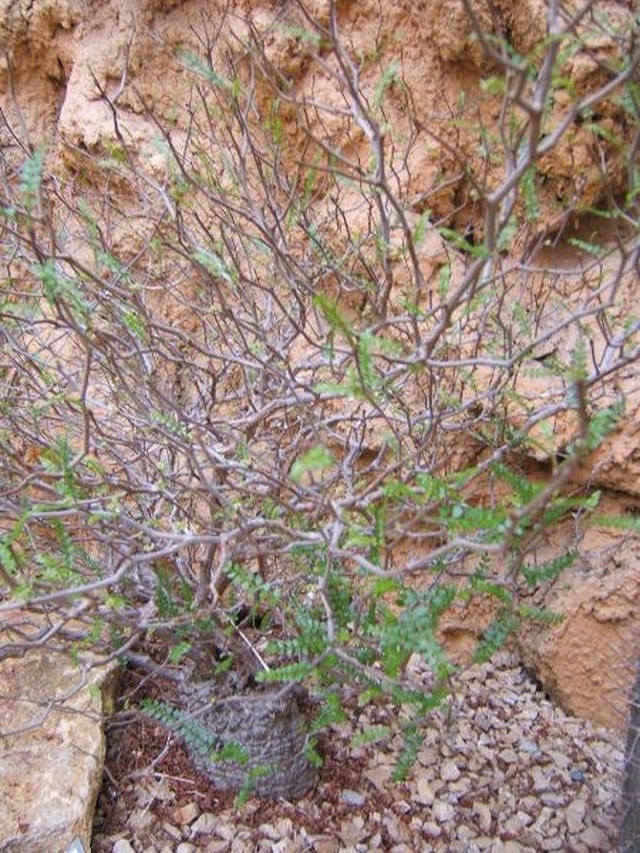
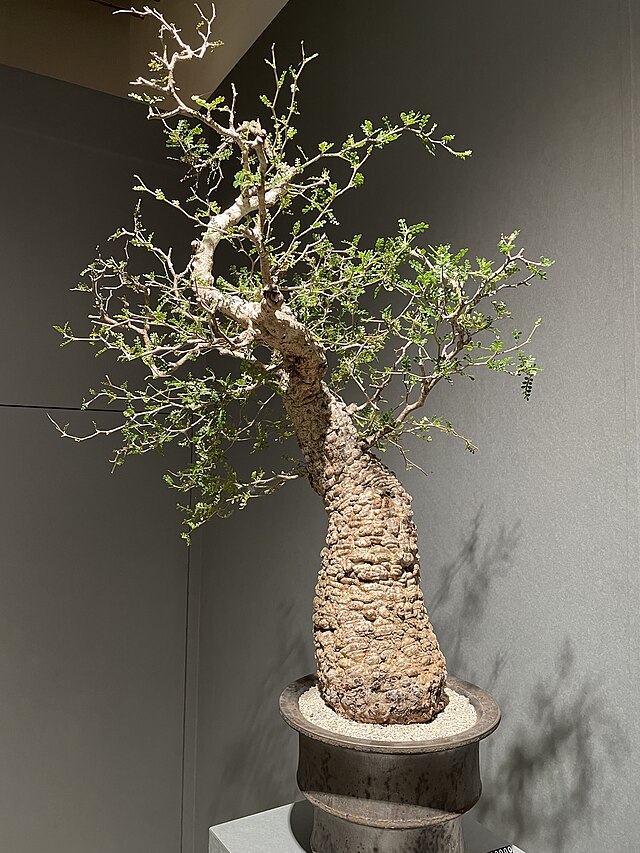
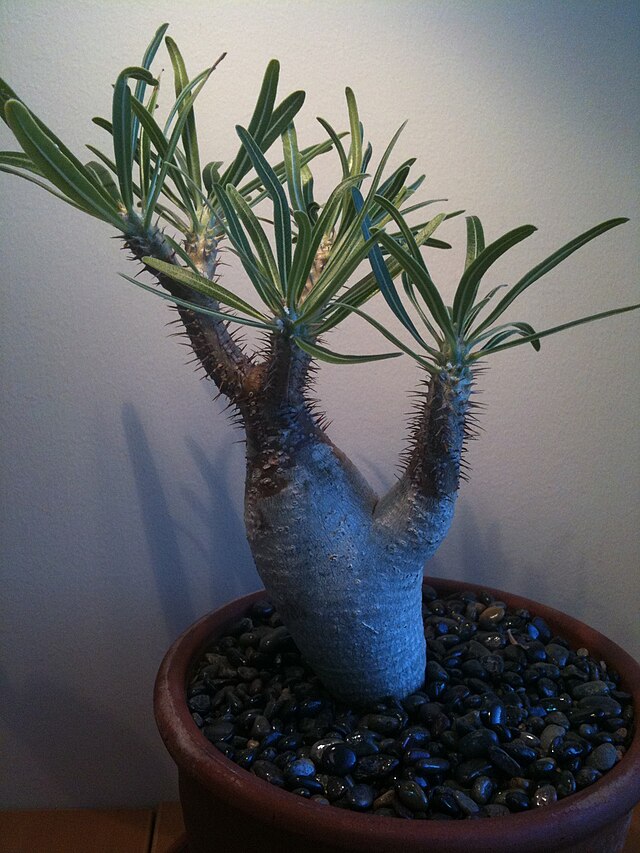
Operculicarya (Operculicarya) is a caudiciform plant in the Anacardiaceae family, native to Madagascar. It grows into a tree-like form while developing a caudex (caudiciform) with a rough, rocky texture, making its rugged, natural appearance highly popular. The representative species, Operculicarya pachypus and Operculicarya decaryi, are both standard members of caudiciform plant collector collections.
The caudiciform plant boom remains strong as of 2026, with "Pachypus" in particular being called the "king of caudiciform plants." This article compares the four major species available in Japan (Pachypus, Decaryi, Borealis, and Paucifolia).
Major Species Comparison
| Species | Trunk Form/Height | Growth Rate | Difficulty | Availability | Price Range |
|---|---|---|---|---|---|
| Pachypus | Large, rocky trunk | Slow | ★★★ | Difficult | Very expensive |
| Decaryi | Medium, bottle-shaped | Moderate | ★★☆ | Moderate | Moderate to high |
| Borealis | Medium to large | Moderate | ★★☆ | Difficult | Expensive |
| Paucifolia | Small to medium | Somewhat slow | ★★★ | Difficult | Expensive |
Pachypus (O. pachypus)
Characteristics
Operculicarya pachypus is the most popular species in the genus and ranks among the finest varieties of caudiciform plants overall.
Trunk Form: Large, rocky, bulbous caudex. When mature, the trunk circumference can exceed 50–100 cm.
Height: In its natural habitat, it can reach over 5 m tall.
Leaves: Small pinnate compound leaves that thicken from spring through fall.
Growth Rate: Very slow (the caudex takes decades to enlarge).
Notable Features: Rocky, textured trunk surface and imposing caudiciform proportions.
Cultivation in Japan
- Root Development: Establishing roots in bare-root specimens is the primary challenge. Heat mat management at 25–30°C is essential.
- Substrate: Highly draining soil mix with pumice as the base (pumice:volcanic ash:red clay = 5:3:2).
- Watering: Approximately once weekly during the growing season (May–September). Withhold water in winter.
- Winter Care: Maintain a minimum temperature above 5°C. Ideally, keep it above 10–15°C if possible.
- Light: Full sun outdoors is the standard approach.
How to Obtain
Prices in Japan are extremely high, with imported bare-root specimens trading at ¥50,000 to several million yen. Domestic seed-grown specimens are relatively affordable but take years to over a decade for the caudex to develop its characteristic swell. This is a variety that rewards patient, long-term cultivation.
Decaryi (O. decaryi)
Characteristics
Operculicarya decaryi is a popular species rivaling Pachypus, prized for its distinctive bottle-shaped to bowl-shaped caudex. Its corky, textured trunk surface develops an aged appearance that collectors value highly.
Trunk Form: Bottle-shaped to bowl-shaped caudex with corky, textured bark.
Height: 2–4 m in nature; typically 1–2 m in cultivation.
Leaves: Pinnate compound leaves, with lower leaf density than Pachypus.
Growth Rate: Slightly faster than Pachypus.
Notable Features: Distinctive corky bark and bottle-shaped caudex.
Cultivation in Japan
- Root Development: Tends to have higher success rates than Pachypus.
- Substrate: Same well-draining soil mix as Pachypus.
- Watering: Once or twice weekly during growing season. In winter, minimal watering once or twice monthly.
- Light: Full sun outdoors is ideal.
- Shaping: Pruning allows you to develop your preferred form, which is a major advantage.
Comparison with Pachypus
| Comparison | Pachypus | Decaryi |
|---|---|---|
| Caudex Shape | Spherical, rocky | Bottle-shaped, bowl-shaped |
| Trunk Texture | Smooth to rough | Corky, textured |
| Availability | Difficult | Somewhat difficult |
| Price | Very expensive | Expensive (less than Pachypus) |
| Root Establishment Difficulty | Difficult | Somewhat easier |
Borealis (O. borealis)
Characteristics
Borealis, native to northern Madagascar, is a relatively newly appreciated species with limited distribution in Japan.
Trunk Form: Slender trunks with branching that creates complex forms.
Leaves: Pinnate compound leaves (similar to Decaryi).
Growth Rate: Moderate.
Notable Features: Similar to Decaryi but with more pronounced branch development.
Cultivation in Japan
- Basic care is essentially the same as for Decaryi.
- Limited distribution means care information is scarce; exercise caution with available guidance.
- Root establishment difficulty is comparable to Decaryi.
Paucifolia (O. paucifolia)
Characteristics
Paucifolia, as its name implies ("few leaves"), has fewer leaves, making the caudex shape more prominent.
Trunk Form: Compact, spherical to bottle-shaped caudex.
Leaves: Pinnate compound leaves, but sparse.
Growth Rate: Slow.
Rarity: High.
Cultivation in Japan
- Requires high-difficulty care similar to Pachypus.
- Distribution in Japan is very limited; specialist dealers are the primary source.
- Root establishment difficulty is comparable to Pachypus.
Common Care Tips
Substrate Mix
All species require highly draining soil as a basic standard.
Pumice (fine grade):Volcanic ash (small):Red clay (small) = 5:3:2
To prevent root rot, skip the drainage layer and choose a pot with large drainage holes instead.
Seasonal Watering Schedule
| Season | Watering Frequency | Notes |
|---|---|---|
| Spring (Mar–May) | Once or twice weekly | Wait for signs of growth to resume |
| Summer (Jun–Aug) | Once weekly | Reduce slightly if over 35°C |
| Fall (Sep–Oct) | Once or twice weekly | Gradually reduce frequency |
| Winter (Nov–Mar) | Minimal to once or twice monthly | Keep indoors, maintain above 5°C |
Root Development Basics
Managing root development in bare-root specimens is the most challenging aspect of Operculicarya cultivation.
- Keep the substrate slightly moist to prevent roots from drying completely.
- Use a heat mat to maintain root temperature at 25–28°C.
- In the morning, mist the foliage lightly (just moistening the surface).
- New leaf emergence indicates successful rooting. This typically takes 1–3 months.
- Once rooting is confirmed, switch to standard care.
Summary: Choosing Your Variety
- For Collection Value & Impact: Operculicarya pachypus is the only choice, but cost and difficulty are also highest.
- For Best Value & Ease of Care: Operculicarya decaryi.
- For Unique Branch Forms: Borealis.
- For a Compact Rarity: Paucifolia.
All these species are best enjoyed with a long-term perspective. Growing them alongside other caudiciform plants like Pachypodium gracilius is also popular, and I strongly recommend them to those with the patience to enjoy their slow growth year by year. Once you find a specimen of interest, check the grower's listing on the GrowerDirect online catalog.