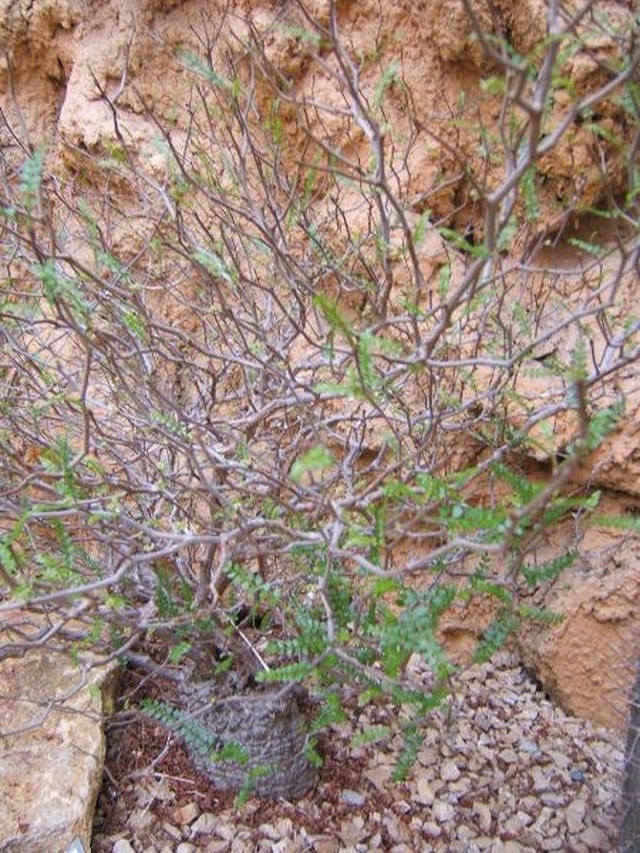
Source: Wikimedia Commons
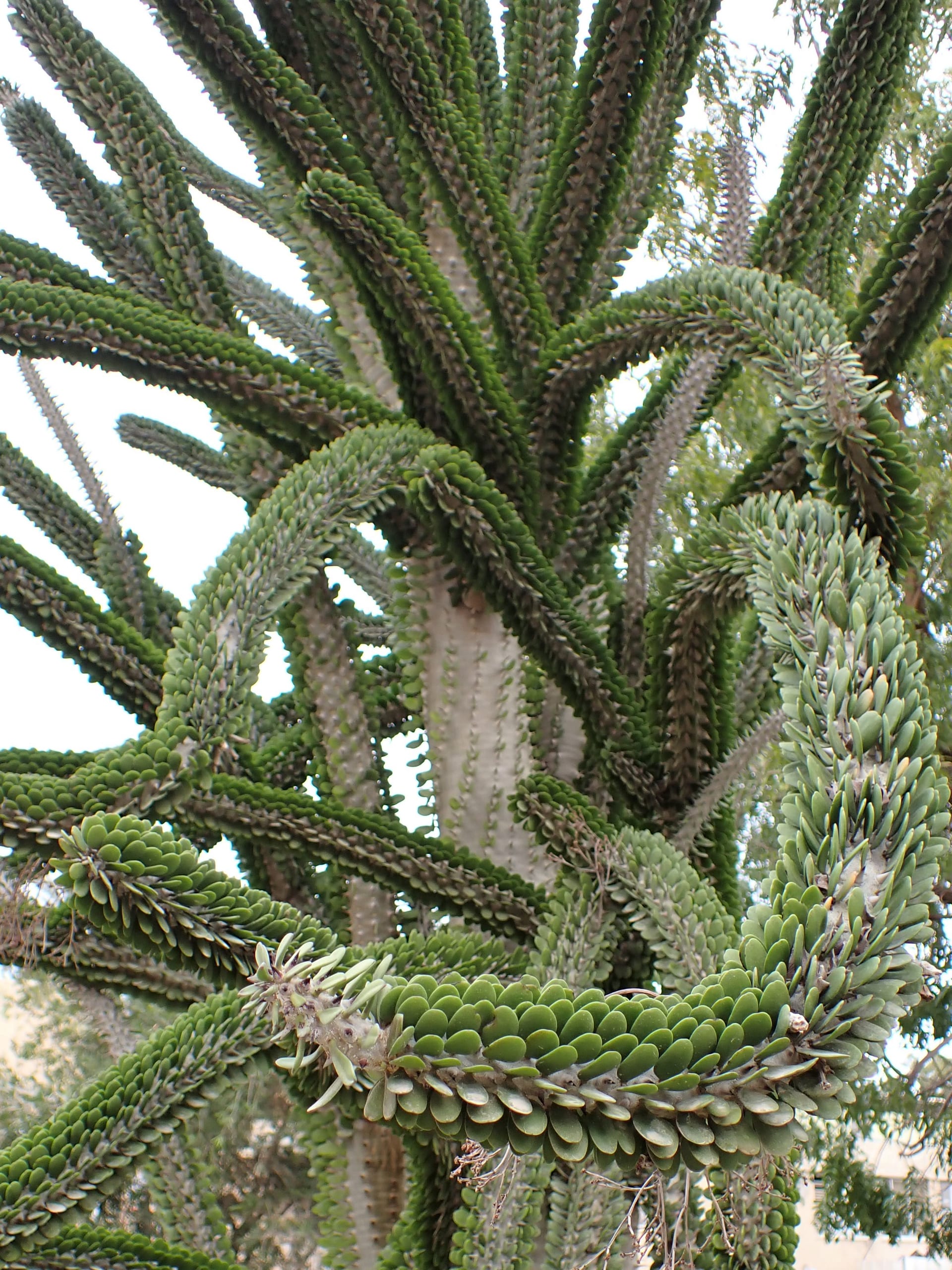
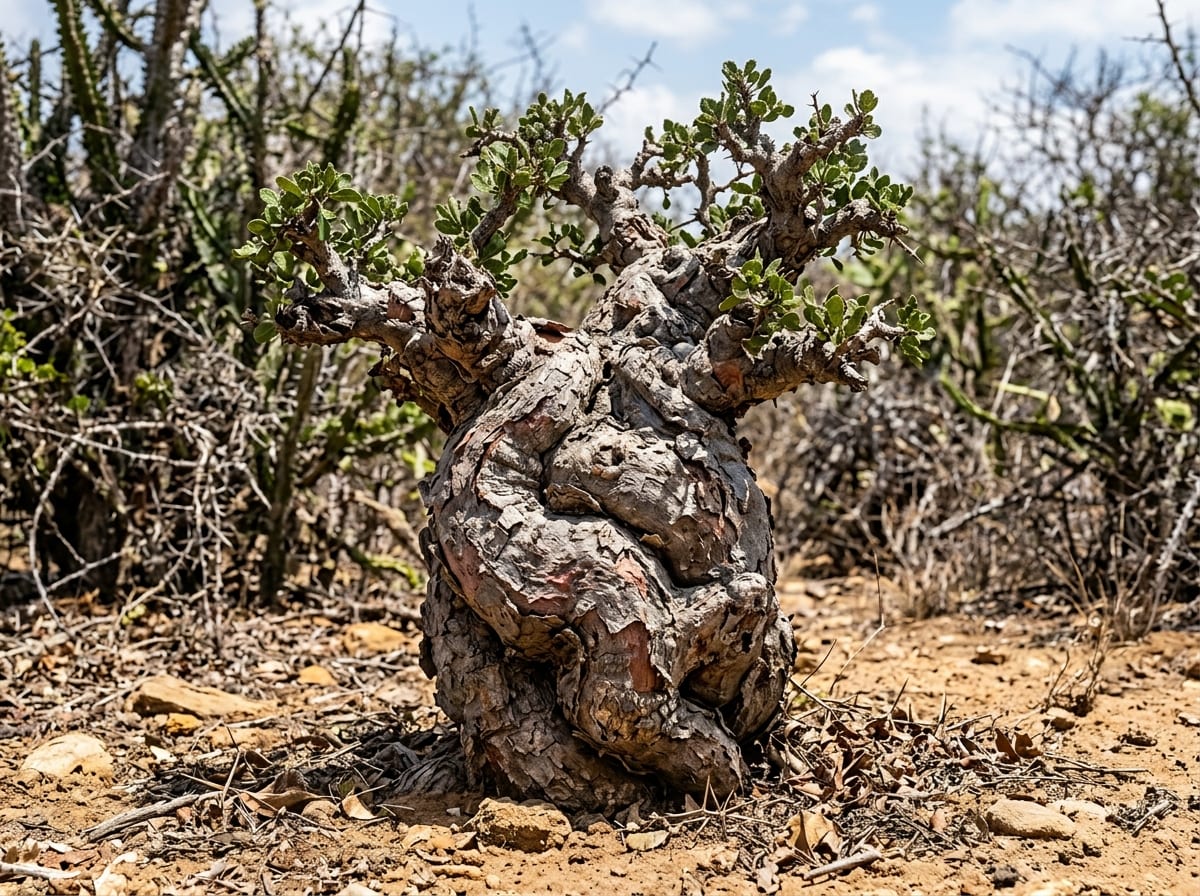
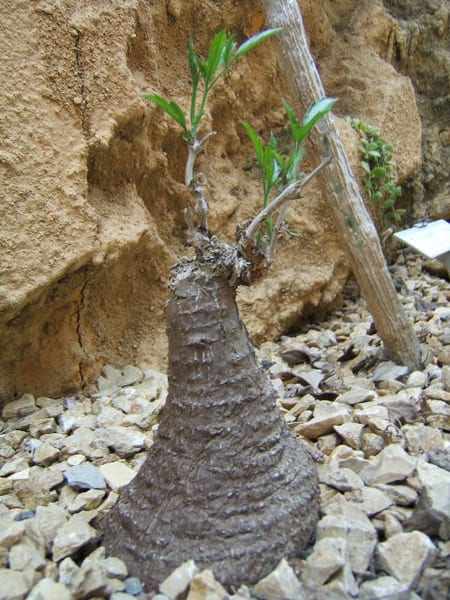
Operculicarya Decaryi
IntermediateOperculicarya decaryi
A caudex plant with bonsai-like form, beautiful balance of small leaves and thick trunk.
About
Operculicarya decaryi is native to the dry forests of southern Madagascar and belongs to the Anacardiaceae family. It is celebrated for its bonsai-like aesthetic: a thick, textured trunk that branches intricately, clothed in small, pinnate leaves that create a delicate canopy. The root system is also thick and sculptural, and exposing the roots above the soil surface creates dramatic nebari-style presentations beloved by both caudex and bonsai enthusiasts. Flowers are inconspicuous, but seasonal leaf color changes add interest. Growth is relatively slow. It thrives in full sun with highly porous, well-aerated soil. Generous watering during the growing season transitions to near-drought after leaf drop in winter. More accessible and affordable than O. pachypus, it serves as a gateway into the Operculicarya genus and appeals strongly to collectors who value bonsai-like refinement in a caudex plant.
Lifespan of the Operculicarya Decaryi
The Operculicarya Decaryi lives 30+ years.
Size of the Operculicarya Decaryi
The Operculicarya Decaryi grows to 20-80cm.
Basic Info
Origin
Southern Madagascar
Lifespan
30+ years
Size
20-80cm
Temperature
10〜35℃
Growing Tips
Light & Placement
Prefers full sun. With ample light the small compound leaves grow densely, producing a compact, bonsai-like form.
Watering
In the growing season, water thoroughly once the soil dries. Ensure good aeration so water never stagnates in the pot.
Temperature & Overwintering
It has some cold tolerance, but in a Japanese winter indoor management is safer. After leaf drop, keep it nearly dry until spring.
Soil & Repotting
Use an airy, ultra-fast-draining mix. For an exposed-root style that shows off the thick roots, raise the roots a little more at each repotting.
Pruning & Shaping
It branches finely, so overlong shoots can be cut back in the growing season for a bonsai-style form. Growth is slow, so avoid cutting too much at once.
Operculicarya Decaryi FAQ
QWhat is the growing difficulty level for Operculicarya Decaryi?
Intermediate. A variety suitable for intermediate growers. Requires some cultivation experience and knowledge of environment management. Pay careful attention to temperature and humidity control.
QWhat is the lifespan of Operculicarya Decaryi?
The average lifespan of Operculicarya Decaryi is 30+ years. With proper cultivation environment and nutrient management, you can keep it healthy for a long time.
QHow large does Operculicarya Decaryi get?
The mature size of Operculicarya Decaryi is 20-80cm. This may vary slightly depending on cultivation environment and individual differences.
QWhat is the typical price for Operculicarya Decaryi?
The price of Operculicarya Decaryi varies significantly by variety, characteristics, size, and lineage. Please check GrowerDirect's price guide for the latest market information.
Last updated: July 5, 2026
References & Sources
Edited & verified by: GrowerDirect Editorial Team
The classifications, regulations, and growing data on this page are created and verified based on the primary information database below.
Taxonomy & Authority
Regulations & Conservation Status
Operculicarya decaryi is individually listed in CITES Appendix II.
Sources: CITES Appendix II species list / CITES Appendices (valid from 2023)
Regulations may change. Always verify the latest information with the relevant authorities.
Related Species
Find listings for this species
Related Articles
How to Care for Operculicarya pachypus | Pruning Time, Watering, and Root Development Management
A complete guide to caring for Operculicarya pachypus, the king of caudiciform plants. Covering pruning timing (May–July), use of wound sealant, root development management and distinguishing between rot and callus formation, watering, differences between wild-collected and seed-grown specimens, and winter dormancy.
Complete Operculicarya Species Guide | Characteristics and Care Methods for Pachypus, Decaryi, Borealis, and Paucifolia
Comprehensive guide to all major Operculicarya species (Pachypus, Decaryi, Borealis, and Paucifolia). Compares each species' morphological characteristics, growth rate, difficulty level, cultivation methods in Japan, and price ranges, providing systematic information to help with variety selection.
How to Grow Uncarina | Differences Between the Madagascar Endemic Species Grandidieri and Roeoesliana
An explanation of the appeal and cultivation methods of the Madagascar endemic caudex plant Uncarina genus. We introduce the differences between Uncarina grandidieri and roeoesliana, seedling cultivation, and repotting timing.
Complete Guide to Choosing Caudex Plants as Gifts | Recommended Varieties by Occasion and How to Include Care Notes
A guide to choosing caudex plants as gifts organized by occasion. We introduce how to select varieties based on the recipient's cultivation experience and how to include care notes for long-term enjoyment.
🩺 Common diseases
Can't find the plant you're looking for?
Post your wishes for free and growers with matching plants will contact you with introductions.