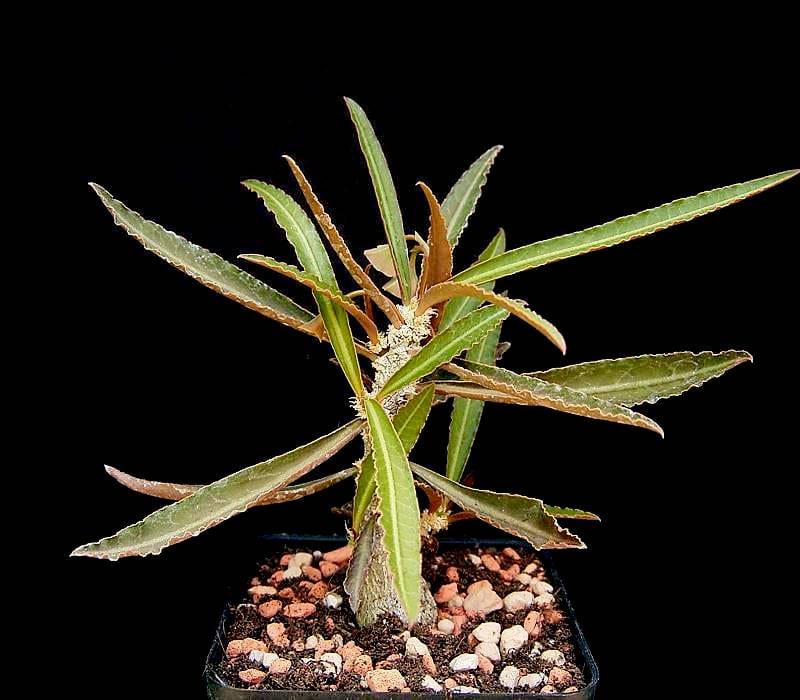
 © Frank Vincentz / CC BY-SA 3.0
Euphorbia waringiae
Euphorbia waringiae is a compact caudiciform succulent native to southeastern Madagascar. Its round caudex, roughly 6 cm across, grows half-buried in the substrate and sends out thin, sideways-leaning branches dotted with small whitish protrusions — a distinctive silhouette that shows off the sculptural charm typical of caudex-forming plants. Growth is slow, and the plant develops gradually over many years, rewarding patient observation. Small white-to-cream flowers appear in flushes that can last for months. It stays compact enough to fit easily into a collection, though it's generally considered a variety better suited to growers with some prior experience.
View Euphorbia waringiae encyclopedia →0% commission on your first sales!Register by September 30, 2026 and your first 2 plants are commission-free!
Grower Wanted!
List your plants on GrowerDirect and sell directly to customers nationwide!
6 Transparency Commitments from GrowerDirect
Our Grower disclose all key information for Caudex Plants listings, ensuring complete transparency on variety, origin, light needs, and difficulty.
- Variety Disclosed
- Real Plant Photos
- Color Details
- Origin Disclosed
- Light Requirements
- Difficulty Level
Browse all 146 varieties
Light Requirements
Difficulty Level
Verified growers wanted for Caudex Plants
Growers are signing up now ahead of launch. Subscribe to be notified when new listings go live.
Getting alerts is free with a member account. When new listings match your saved search, we'll notify you by email and in-app.
Browse other categories
Verified growers (preview)
Are you growing caudex plants?
Register as a grower and connect with buyers directly.
Apply as a growerEuphorbia waringiae key facts
- Growing Difficulty
- Intermediate
- Lifespan
- Slow-growing and long-lived (little published data)
- Size
- Up to about 30 cm tall; caudex about 6 cm across
- Watering
- Average feeding in summer
- Light & Placement
- It prefers light shade and can be grown in a pot indoors.
- Watering
- Give average water in the summer growing season and reduce it while leafless.
- Temperature & Overwintering
- A slow-growing, cold-sensitive species. It is relatively cold-tolerant when dormant, but overwinter it indoors on the dry side.
- Soil & Repotting
- Use a very free-draining mineral mix and plant the caudex half-buried.
- Propagation
- Mainly propagated by seed, and also by cuttings; wash off the latex and let the cut dry for about a week before inserting.
- Pests & Cautions
- Like all Euphorbia, its white latex irritates skin and eyes. Wear gloves when cutting or repotting and keep it away from eyes and mouth. With only one known wild population, choosing seed-raised plants helps protect it.
About Euphorbia waringiae
A compact Madagascan euphorbia with a round, fist-sized caudex that sends out thin, whitish-studded branches sideways. It flowers white to cream for months and grows slowly — best suited to growers with some experience.
7 things to know before growing Euphorbia waringiae
1Bright Partial Shade
Euphorbia waringiae prefers bright partial shade and can be grown indoors in a pot. It is sensitive to cold, so keep it indoors and on the dry side in winter.
2Water on the Dry Side
Because the caudex stores moisture, let the soil surface dry out fully before watering again. Space out watering even further during dormancy or cooler months to avoid root rot from excess moisture.
3Use Fast-Draining Soil
A dedicated caudiciform mix, or a blend heavy in pumice and akadama, works well. Keep organic content low, since soil that holds too much moisture increases the risk of overwatering.
4Repot During Active Growth
Since growth is slow, repot only when roots have filled the pot or during a period of active growth. Handle the caudex carefully to avoid damaging it.
5Bring It Inside for Winter
This plant is sensitive to cold, so move it to a bright spot indoors as temperatures drop. Cut back on watering when it shows signs of dormancy to reduce stress on the plant.
6Choose a Firm Caudex
When selecting a plant, look for a caudex that feels firm and heavy with minimal wrinkling, which usually indicates good condition. Healthy branch color and well-formed protrusions are also good signs to check.
7Enjoy Gradual Change
This is a slow grower that reshapes itself over many years rather than showing dramatic short-term change. Part of the appeal is tracking its small day-to-day progress with patience.
Frequently asked questions about Euphorbia waringiae
- Q.Is this a good plant for beginners?
- A.It's generally considered a variety for growers with some experience, since watering timing and placement require a bit of care. Once you understand the basics, though, it's manageable — especially if you've grown other caudiciform succulents before.
- Q.How large does it get?
- A.It grows to roughly 30 cm in height, with a caudex around 6 cm across. Because growth is slow, reaching this size takes many years.
- Q.When does it bloom?
- A.It produces white-to-cream flowers in flushes that can last for months at a time. Exact bloom timing varies somewhat from plant to plant.
- Q.Can it be grown outdoors?
- A.Yes, it enjoys bright light and can be grown outdoors, but it's sensitive to cold, so it should be brought indoors when temperatures drop. Adjust care to match your local climate.
- Q.What should I watch for over winter?
- A.Move it to a bright spot indoors as temperatures fall, and water less often to match its near-dormant state. Avoiding sudden temperature swings is also important.
Handy Growing Tools for Euphorbia waringiae
Learn more about Euphorbia waringiae in the encyclopedia
View Euphorbia waringiae encyclopedia entry →
Care difficulty, size, origin and light needs — all basics covered.
More in this category
Can't find the plant you're looking for?
Post your wishes for free and growers with matching plants will contact you with introductions.