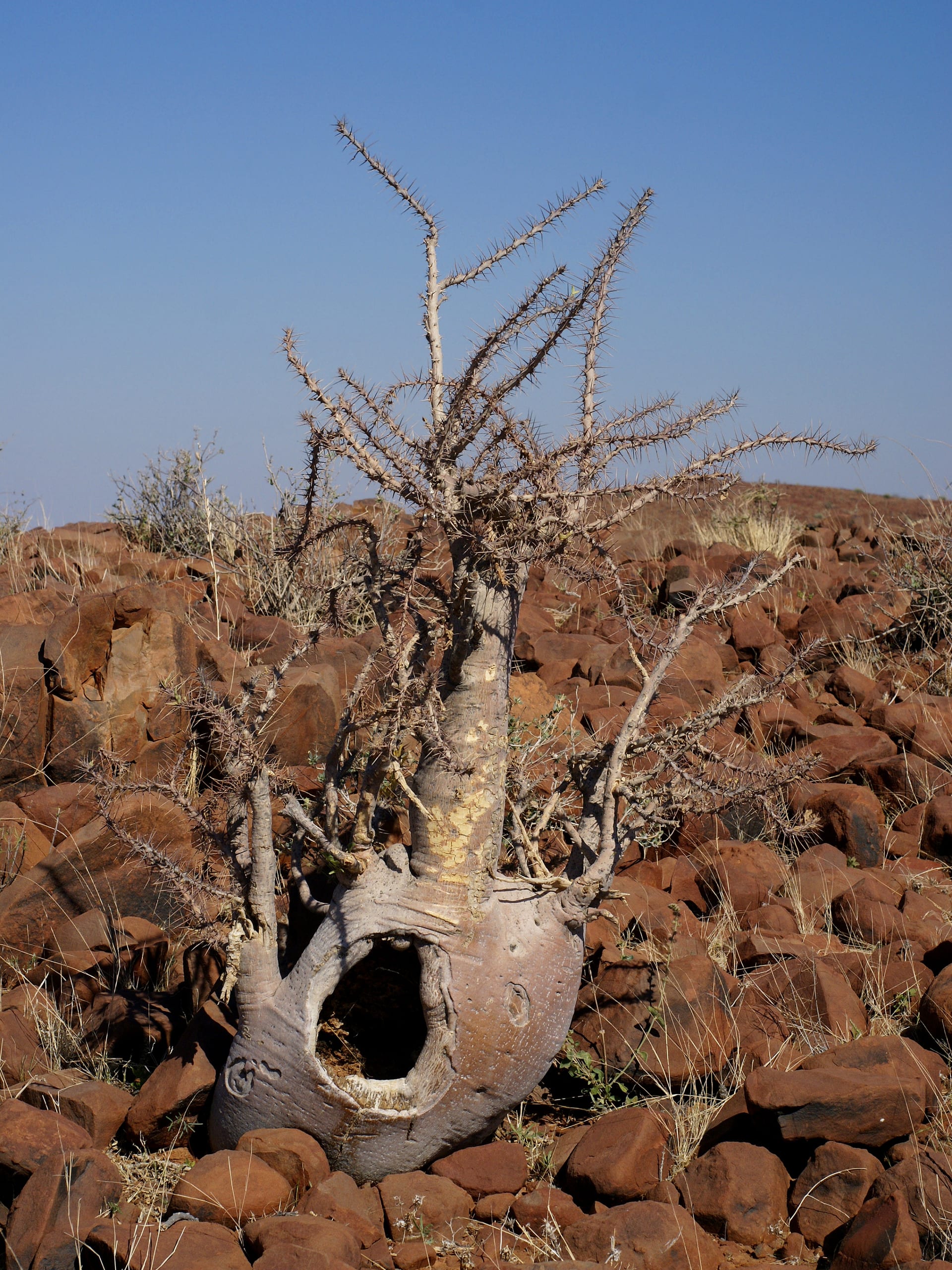
 © Hans Hillewaert / CC BY-SA 4.0
Bottle Tree
Pachypodium lealii, known as the Bottle Tree, is a caudex-forming succulent tree native to the arid regions of Namibia and Angola. In the wild it grows into a striking tree three to six meters tall, occasionally reaching eight, with a swollen, bottle-shaped trunk that can exceed 40 centimeters across. During the dry season it drops its leaves and produces fragrant white flowers tinged with reddish-purple on the outside, blooming right at the tips of its bare branches. Watching the trunk slowly thicken over the years is part of its appeal, but it is considered a plant for experienced growers rather than beginners.
View Bottle Tree encyclopedia →0% commission on your first sales!Register by September 30, 2026 and your first 2 plants are commission-free!
Grower Wanted!
List your plants on GrowerDirect and sell directly to customers nationwide!
6 Transparency Commitments from GrowerDirect
Our Grower disclose all key information for Caudex Plants listings, ensuring complete transparency on variety, origin, light needs, and difficulty.
- Variety Disclosed
- Real Plant Photos
- Color Details
- Origin Disclosed
- Light Requirements
- Difficulty Level
Browse all 146 varieties
Light Requirements
Difficulty Level
Verified growers wanted for Caudex Plants
Growers are signing up now ahead of launch. Subscribe to be notified when new listings go live.
Getting alerts is free with a member account. When new listings match your saved search, we'll notify you by email and in-app.
Browse other categories
Verified growers (preview)
Are you growing caudex plants?
Register as a grower and connect with buyers directly.
Apply as a growerBottle Tree key facts
- Growing Difficulty
- Advanced
- Lifespan
- Long-lived tree (little published data)
- Size
- 3-6 m (rarely 8 m) in habitat; trunk 40 cm or more across
- Watering
- Sparingly in the growing season
- Light & Placement
- Grow in full sun to light shade and keep it out of winter rain.
- Watering
- It is reputedly the hardest continental African Pachypodium and rots easily in poor conditions. Water moderately in the growing season and very little or not at all otherwise.
- Temperature & Overwintering
- It takes light frost but rots easily in cold, prolonged wet. Keep it dry and frost-free in winter.
- Soil & Repotting
- Use a very free-draining mix so the roots never stay wet.
- Propagation
- Fresh seed germinates easily; avoid overwatering seedlings. To avoid root rot it can also be grafted onto P. geayi or P. lamerei.
- Pests & Cautions
- The sap is extremely toxic, once used as an arrow poison, and can cause blindness if it gets in the eyes. Pachypodium sap is toxic and the spines are sharp. Wear thick gloves or wrap the trunk in several layers of newspaper when repotting or moving it.
About Bottle Tree
Pachypodium lealii (Bottle Tree) is a caudex succulent from Namibia and Angola, growing 3-6m tall with a bottle-shaped trunk and fragrant white dry-season flowers. Best suited to experienced growers.
7 things to know before growing Bottle Tree
1Light and Placement
Pachypodium lealii thrives in strong sunlight, so give it the brightest, most well-ventilated spot available. If grown outdoors, watch for sudden temperature swings and take care during the hottest part of summer.
2Water with Care
Pachypodium lealii is considered the most difficult of the southern African pachypodiums and rots easily under poor conditions. Water moderately during the growing season and give very little or none at other times. Cold, wet conditions in winter easily cause rot, so keep it dry and frost-free.
3Well-Draining Soil
Choose a fast-draining mix formulated for succulents or caudex plants to help prevent root rot. Mixing extra pumice or perlite into a commercial succulent soil further improves drainage.
4Repotting Timing
Repot in spring to early summer when growth is most active. Move to a slightly larger pot once roots become crowded, handling the root ball gently to avoid damage.
5Dormancy and Leaf Drop
It is normal for the plant to shed its leaves as it enters dormancy during the dry season, and this is not a sign of trouble. Keep watering minimal while it is leafless and let it rest in a stable environment.
6Choosing a Plant
When selecting a plant, look for a firm trunk without damage or excessive wrinkling. A well-formed, swollen base at the trunk's foot suggests healthy potential for further thickening over time.
7Beware the Sap and Spines
P. lealii's sap is extremely toxic, once used as arrow poison, and can cause blindness if it gets in the eyes. It also has sharp spines, so wear thick gloves or wrap the trunk in several layers of newspaper when repotting or moving it. Its trunk takes many years to thicken, so approach it with patience.
Frequently asked questions about Bottle Tree
- Q.Is Pachypodium lealii suitable for beginners?
- A.Pachypodium lealii is generally considered a plant for experienced growers. Its watering and placement needs require some care, so it suits those who already have experience with succulents or caudex plants.
- Q.How large does it grow?
- A.In its native habitat, Pachypodium lealii can grow three to six meters tall, occasionally reaching around eight meters. Its trunk can exceed 40 centimeters in diameter as it develops over many years.
- Q.When and how does it flower?
- A.It blooms at the tips of its bare branches during the dry season, after the leaves have dropped. The flowers are white with a subtle reddish-purple tinge on the outside and are known for their pleasant fragrance.
- Q.How often should I water it?
- A.During the growing season, water thoroughly once the soil surface has dried. Once the plant enters dormancy, reduce watering significantly and keep it on the drier side.
- Q.When is the best time to repot?
- A.The best time to repot is spring through early summer, when growth is most active. Once you notice roots becoming crowded in the pot, move the plant to a slightly larger one with care.
Handy Growing Tools for Bottle Tree
Learn more about Bottle Tree in the encyclopedia
View Bottle Tree encyclopedia entry →
Care difficulty, size, origin and light needs — all basics covered.
More in this category
Can't find the plant you're looking for?
Post your wishes for free and growers with matching plants will contact you with introductions.