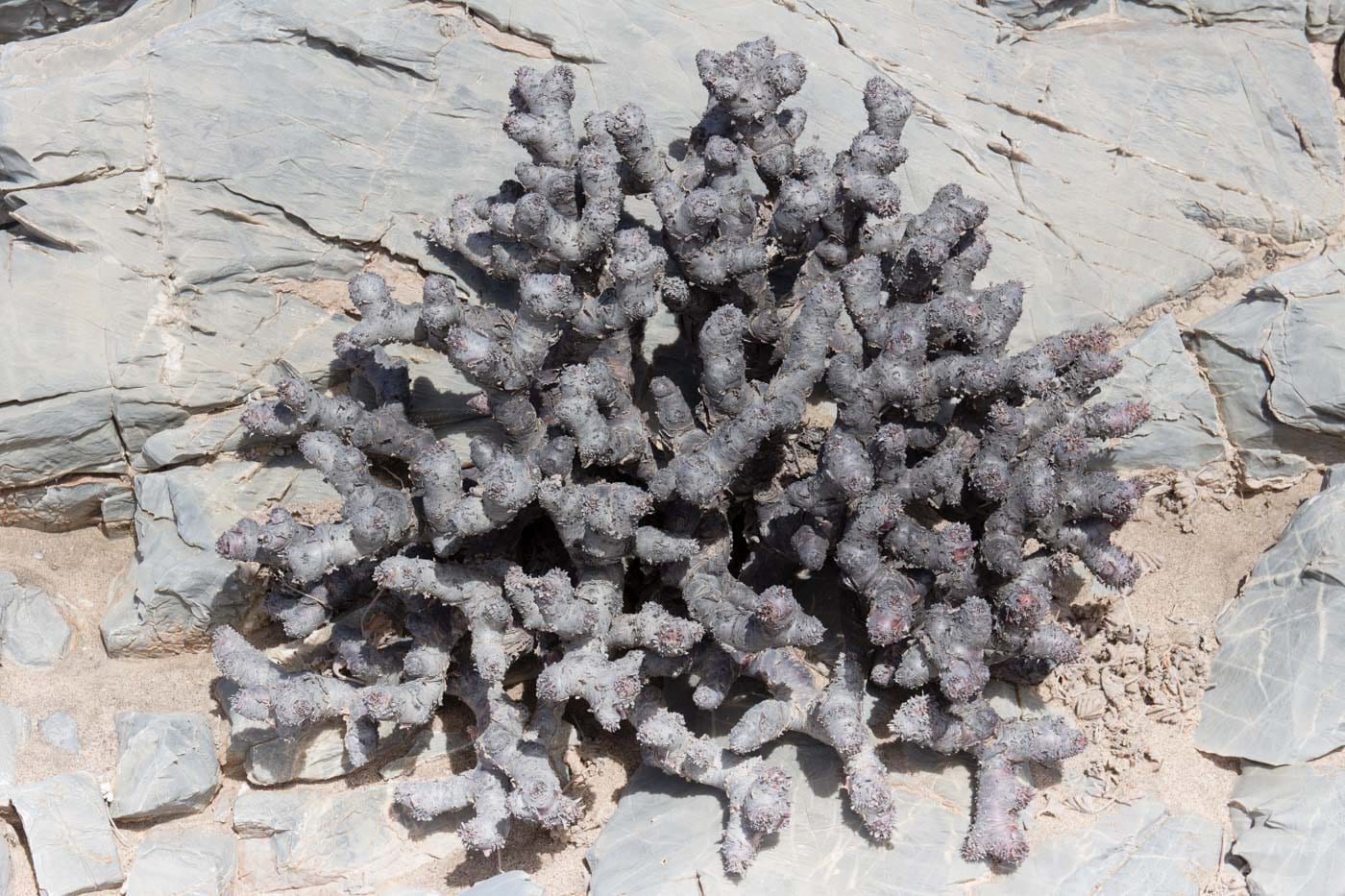
 © Ragnhild&Neil Crawford from Sweden / CC BY-SA 2.0
Pelargonium mirabile
Pelargonium mirabile is a winter-growing pelargonium native to Namibia, prized for its sculptural branch structure. Dozens to hundreds of glossy, dark brown, pencil-thick stems branch out like coral, building a low, dome-shaped clump over time. During the dry season the plant rests as bare branches, then after rain it flushes with grey-green leaves and delicate white-to-pale-pink flowers. That contrast between quiet, sculptural dormancy and a soft post-rain bloom is what makes this species so appealing to caudex collectors. It's generally considered a plant for growers who are already comfortable with a winter-growing watering rhythm.
View Pelargonium mirabile encyclopedia →0% commission on your first sales!Register by September 30, 2026 and your first 2 plants are commission-free!
Grower Wanted!
List your plants on GrowerDirect and sell directly to customers nationwide!
6 Transparency Commitments from GrowerDirect
Our Grower disclose all key information for Caudex Plants listings, ensuring complete transparency on variety, origin, light needs, and difficulty.
- Variety Disclosed
- Real Plant Photos
- Color Details
- Origin Disclosed
- Light Requirements
- Difficulty Level
Browse all 146 varieties
Light Requirements
Difficulty Level
Verified growers wanted for Caudex Plants
Growers are signing up now ahead of launch. Subscribe to be notified when new listings go live.
Getting alerts is free with a member account. When new listings match your saved search, we'll notify you by email and in-app.
Browse other categories
Verified growers (preview)
Are you growing caudex plants?
Register as a grower and connect with buyers directly.
Apply as a growerPelargonium mirabile key facts
- Growing Difficulty
- Intermediate
- Lifespan
- Long-lived perennial (little published data)
- Size
- Under 30 cm tall and about 60 cm across
- Watering
- A little during the growing season
- Dormancy Care
- A winter grower that rests in summer. Water in the spring (February to April) and autumn (August to November) growing periods, keep it completely dry in summer and rather dry in winter.
- Light & Placement
- In summer give it light shade or morning sun and avoid strong afternoon sun.
- Watering
- Water only when temperatures are at least 14°C. Too much water and fertiliser spoil its naturally compact shape, so err on the sparing side.
- Temperature & Overwintering
- Protect it from frost and keep it dry at a minimum of 8°C.
- Soil & Repotting
- Use a free-draining, largely pumice mix with almost no organic matter.
- Propagation
- Seed from ripe fruit germinates freely, and cuttings also root; sow in spring or autumn.
About Pelargonium mirabile
Pelargonium mirabile is a winter-growing caudex-forming pelargonium from Namibia, known for its coral-like dark brown branches and pale pink blooms after rain. Here's what to know before you grow one.
7 things to know before growing Pelargonium mirabile
1Light and Placement
During the autumn-to-spring growing season, keep the plant somewhere bright and well-ventilated, such as outdoors or near a window. Without enough light, the dark branches tend to stretch and lose their tight, compact shape. In peak summer, move it to partial shade to avoid leaf scorch during dormancy.
2Watering on a Winter Cycle
Pelargonium mirabile grows from autumn to spring and rests in summer. Water during the spring (February to April) and autumn (August to November) growing periods, stop completely in summer, and keep it on the dry side in winter too. Water only when minimum temperatures are at least 14°C, and go easy on water and fertilizer, since too much ruins its naturally compact form.
3Rest Dry Through Summer
Summer is the plant's dormant season, so cutting back watering significantly is key to keeping it healthy. Heat combined with excess moisture can damage the branches, so keep it in a well-ventilated spot and let it stay on the dry side. It's normal for the plant to look like bare, leafless branches during this rest period.
4Well-Draining Soil
A fast-draining mix formulated for succulents or caudex plants works well. Blend in a generous portion of mineral components like akadama or pumice so water doesn't linger around the roots. Since overly wet soil can quickly lead to root rot, make sure the pot itself drains well too.
5Repot at the Start of Growth
The best time to repot is early autumn, just as the growing season begins. Disturb the root ball as little as possible when moving it into fresh soil, and hold off on heavy watering for a while afterward until the roots settle in. You don't need to repot every year — once the pot becomes root-bound is a good cue.
6Choosing a Healthy Plant
Look for a plant with thick, glossy branches and a base that feels firm rather than loose in the pot. A specimen with many branch divisions forming a low, compact clump is usually a sign it's been well cared for. Also check that the branches are free of dark blotches or noticeable wrinkling.
7Enjoying the Branch Form
Part of the appeal of this species is watching its branches divide and fill out into a coral-like form over the years. Heavy pruning tends to disrupt that natural shape, so it's best to let the branching develop on its own. Approach it as a slow-changing ornamental caudex plant meant to be enjoyed over the long term.
Frequently asked questions about Pelargonium mirabile
- Q.Is this a good plant for beginners?
- A.It's generally considered a plant for intermediate growers rather than absolute beginners. Once you're comfortable with a winter-growing watering rhythm — generous during the growing season, minimal during summer dormancy — it becomes quite manageable, especially with some prior succulent or caudex experience.
- Q.How big does it get?
- A.It typically stays under 30 cm tall while spreading to around 60 cm wide. Since the branches fan outward as they divide, it's worth giving the pot some extra width to grow into.
- Q.When and what kind of flowers does it produce?
- A.It tends to flower with white-to-pale-pink blooms shortly after rain. Since flowering is triggered by moisture in the same way leaf growth is, the exact timing shifts depending on your watering schedule.
- Q.In summer it's just bare branches — is that normal?
- A.Yes — summer is its dormant period, and dropping its leaves down to bare branches is completely normal. Once watering resumes in autumn, grey-green leaves flush out again and the look changes completely.
- Q.How often should it be repotted?
- A.It doesn't need repotting every year — once the roots fill the pot is a good enough cue. The best timing is early autumn as growth resumes, moving it into fresh, well-draining soil without disturbing the root ball too much.
Handy Growing Tools for Pelargonium mirabile
Learn more about Pelargonium mirabile in the encyclopedia
View Pelargonium mirabile encyclopedia entry →
Care difficulty, size, origin and light needs — all basics covered.
More in this category
Can't find the plant you're looking for?
Post your wishes for free and growers with matching plants will contact you with introductions.