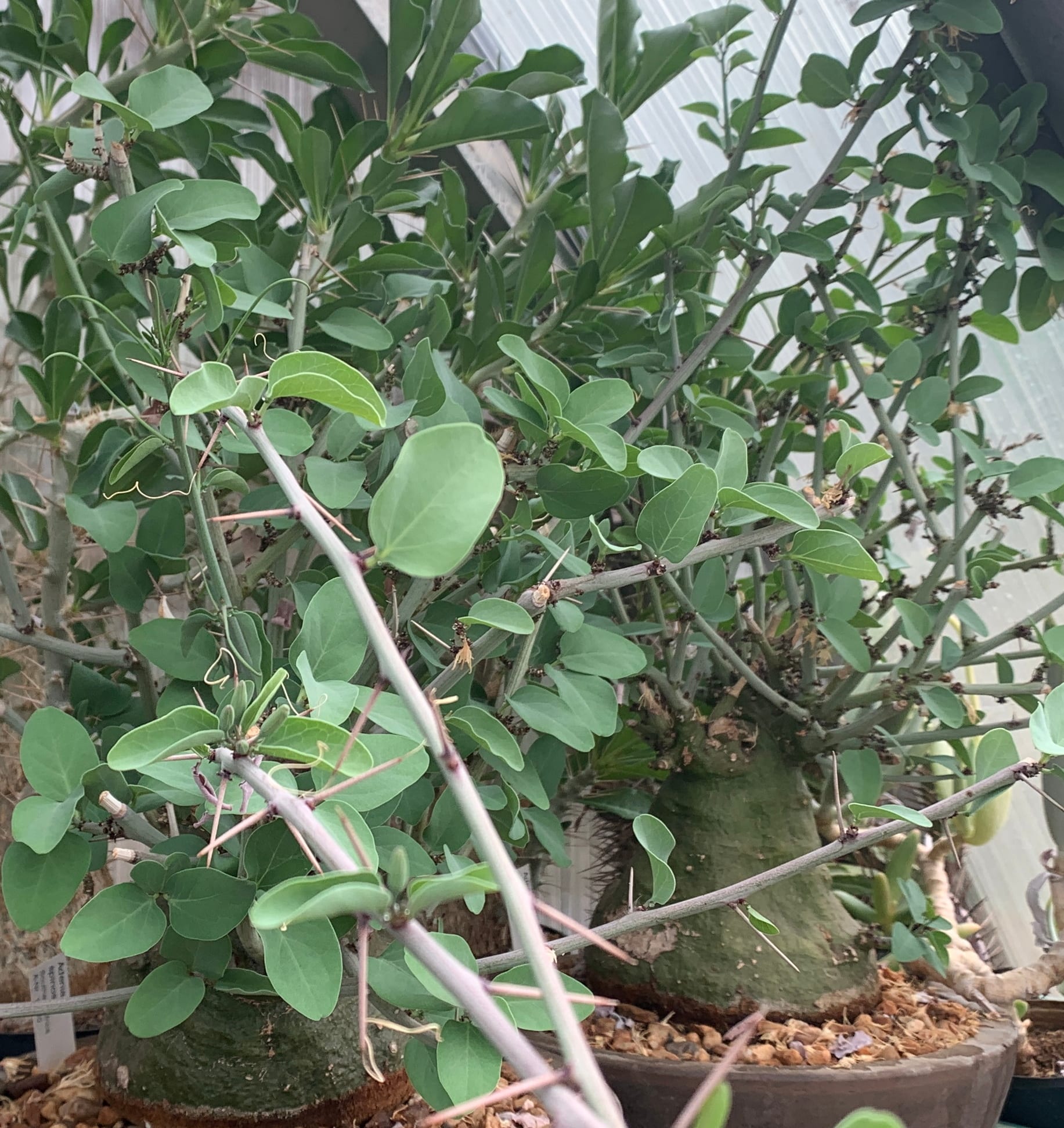
 © Michael Wolf (Webseite) / CC BY-SA 3.0
Adenia spinosa
Adenia spinosa is a summer-growing member of the Adenia genus native to northern South Africa, Botswana, and Zimbabwe. Its defining feature is an irregularly swollen caudex, from which thin, thorny branches twist outward to form a distinctive silhouette. In its native habitat the caudex can reach 1.5 meters across, and watching it slowly develop over many years is part of the appeal of growing caudiciform plants. Note that only seed-grown plants form a caudex — cutting-propagated specimens never do. It's generally considered suited to intermediate growers, which makes the payoff all the more rewarding.
View Adenia spinosa encyclopedia →0% commission on your first sales!Register by September 30, 2026 and your first 2 plants are commission-free!
Grower Wanted!
List your plants on GrowerDirect and sell directly to customers nationwide!
6 Transparency Commitments from GrowerDirect
Our Grower disclose all key information for Caudex Plants listings, ensuring complete transparency on variety, origin, light needs, and difficulty.
- Variety Disclosed
- Real Plant Photos
- Color Details
- Origin Disclosed
- Light Requirements
- Difficulty Level
Browse all 146 varieties
Light Requirements
Difficulty Level
Verified growers wanted for Caudex Plants
Growers are signing up now ahead of launch. Subscribe to be notified when new listings go live.
Getting alerts is free with a member account. When new listings match your saved search, we'll notify you by email and in-app.
Browse other categories
Verified growers (preview)
Are you growing caudex plants?
Register as a grower and connect with buyers directly.
Apply as a growerAdenia spinosa key facts
- Growing Difficulty
- Intermediate
- Lifespan
- Long-lived (little published data)
- Size
- Up to 2.5 m tall; stem base up to 1.5 m across in the wild
- Watering
- Light feeding in the growing season
- Light & Placement
- A summer grower that likes hot, dry conditions; give it plenty of sun, though a partly shaded base, as in the wild, is fine.
- Watering
- Water generously in the summer growing season.
- Dormancy Care
- It drops its leaves and rests in the dry winter season, so keep it dry through winter.
- Temperature & Overwintering
- It cannot stand frost; bring it somewhere warm and frost-free for winter.
- Soil & Repotting
- Use a free-draining, sandy mix; it prefers an acidic soil.
- Propagation
- Propagate from seed or cuttings, but only seedlings develop a caudex; plants from cuttings never do.
- Pests & Cautions
- The sap is poisonous if swallowed: wear gloves when pruning or repotting, mind the spines, and keep it away from children and pets.
About Adenia spinosa
Adenia spinosa is a summer-growing caudiciform succulent native to northern South Africa, Botswana, and Zimbabwe, known for its irregular swollen caudex and thorny, twisting branches. An intermediate-level species where only seed-grown plants develop a caudex.
7 things to know before growing Adenia spinosa
1Check Seed-Grown vs. Cutting
The characteristic caudex of Adenia spinosa only forms on plants grown from seed. Cutting-propagated plants grow the same foliage but never develop a swollen base. If you want to enjoy the caudex, make sure you're choosing a seed-grown specimen.
2Give It Plenty of Sun
Native to the arid regions of northern South Africa, Botswana, and Zimbabwe, Adenia spinosa thrives with strong light during its growing season. Choose a well-ventilated spot outdoors or a sunny windowsill. When moving it to a brighter location, acclimate it gradually to avoid leaf scorch.
3Adjust Watering by Season
As a summer-growing species, Adenia spinosa should be watered thoroughly once the soil surface dries during the active growing season. Once temperatures drop and it sheds its leaves for dormancy, cut back watering significantly and keep it on the dry side. Because caudiciform plants are prone to root rot from overwatering, clear seasonal adjustment is essential.
4Use a Fast-Draining Soil Mix
As a caudiciform native to dry habitats, Adenia spinosa needs soil that prioritizes drainage above all else. A commercial succulent or caudex mix, or akadama blended generously with pumice or perlite, helps minimize the risk of root rot. Always make sure the pot has adequate drainage holes.
5Repot During the Growing Season
Repotting is best done at the start of the growing season, when roots become active again. Handle the root ball carefully to avoid damaging the caudex, and avoid removing too much of the old soil at once. After repotting, water sparingly until the roots settle, and keep the plant out of direct sun for a while.
6Handle the Thorny Branches with Care
Adenia spinosa sends out thin, twisting branches from its caudex, and these branches are covered in thorns. Wear gloves when pruning or repotting to avoid injury. The twisting growth habit of the thorny branches is itself one of the plant's distinctive ornamental features.
7Growing It Is a Long-Term Commitment
Adenia spinosa is considered a long-lived plant, and part of its appeal is watching its irregular caudex slowly swell over many years. In its native habitat, the caudex can reach up to 1.5 meters in diameter, and the plant itself can grow as tall as 2.5 meters. Approach its cultivation with patience and a long-term mindset.
Frequently asked questions about Adenia spinosa
- Q.Will the caudex grow large no matter which plant I choose?
- A.No — the caudex only develops on plants grown from seed. Cutting-propagated plants never form a caudex, so if you want to enjoy its growth, be sure to choose a seed-grown specimen.
- Q.How large does Adenia spinosa grow?
- A.It can reach a height of up to about 2.5 meters. In its native habitat the caudex can grow to 1.5 meters in diameter, though pot-grown size depends on the growing conditions.
- Q.The leaves drop in winter — is the plant dying?
- A.No, it isn't dying. As a summer-growing species, Adenia spinosa naturally sheds its leaves and enters dormancy as temperatures fall. If watering is reduced during dormancy, it will sprout again once the growing season returns.
- Q.Is this a good plant for beginners?
- A.Adenia spinosa is generally considered suitable for intermediate growers. Because it requires caudex-specific care around watering and soil, prior experience with succulents or caudiciform plants will help you grow it with more confidence.
- Q.Are the thorns on the branches dangerous?
- A.Adenia spinosa's branches carry sharp thorns. They aren't an issue for everyday display, but when pruning or repotting and handling the plant directly, take care and consider wearing gloves.
Handy Growing Tools for Adenia spinosa
Learn more about Adenia spinosa in the encyclopedia
View Adenia spinosa encyclopedia entry →
Care difficulty, size, origin and light needs — all basics covered.
More in this category
Can't find the plant you're looking for?
Post your wishes for free and growers with matching plants will contact you with introductions.