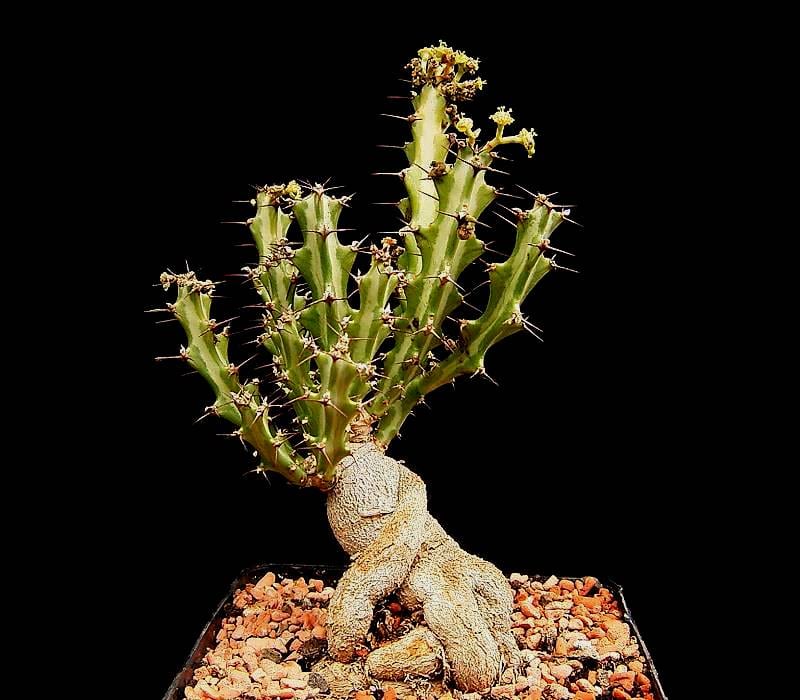
 © Frank Vincentz / CC BY-SA 3.0
Euphorbia knuthii
Euphorbia knuthii is a compact Euphorbia native to southern Africa, prized for its gently curved, sculptural caudex. From the top of this caudex, several thin, three- to four-angled branches marked with grey-green stripes rise up, giving the plant its distinctive silhouette. It's a tough, easy-going species that propagates readily from cuttings, making it a great entry point for anyone new to caudex-forming Euphorbias. Branches typically stay compact at around 3 to 15 cm, though they grow longer with continued cultivation. As a perennial, it rewards patient growers as its caudex slowly swells and matures over many years.
View Euphorbia knuthii encyclopedia →0% commission on your first sales!Register by September 30, 2026 and your first 2 plants are commission-free!
Grower Wanted!
List your plants on GrowerDirect and sell directly to customers nationwide!
6 Transparency Commitments from GrowerDirect
Our Grower disclose all key information for Caudex Plants listings, ensuring complete transparency on variety, origin, light needs, and difficulty.
- Variety Disclosed
- Real Plant Photos
- Color Details
- Origin Disclosed
- Light Requirements
- Difficulty Level
Browse all 146 varieties
Light Requirements
Difficulty Level
Verified growers wanted for Caudex Plants
Growers are signing up now ahead of launch. Subscribe to be notified when new listings go live.
Getting alerts is free with a member account. When new listings match your saved search, we'll notify you by email and in-app.
Browse other categories
Verified growers (preview)
Are you growing caudex plants?
Register as a grower and connect with buyers directly.
Apply as a growerEuphorbia knuthii key facts
- Growing Difficulty
- Beginner-friendly
- Lifespan
- Perennial (the tuber enlarges over many years)
- Size
- Branches 3-15 cm long (longer in cultivation)
- Watering
- A potassium-rich succulent fertiliser in summer
- Light & Placement
- Tough and tolerant of lower light, but good sun keeps branches short and colourful. It benefits from summer outdoors.
- Watering
- Very drought-tolerant, but in the growing season water about once a week to keep the soil reasonably moist. Keep almost dry in winter.
- Temperature & Overwintering
- It has survived −6°C and a little snow when dry, but needs warmth and sun to look its best. Overwinter it dry in a bright, cool spot.
- Soil & Repotting
- Use an airy mineral mix in well-drained pots. Raise the tuber above the soil for display only after about 8-12 years of growth underground.
- Pruning & Shaping
- Every year or two in early spring cut all branches back to the soil line to get many short, even branches; let it heal a week or more before watering.
- Pests & Cautions
- Like all Euphorbia, its white latex irritates skin and eyes. Wear gloves when cutting or repotting and keep it away from eyes and mouth. Cutting-raised plants form many thin, branched roots while seedlings tend to form larger single tubers, so seedlings suit caudex display.
About Euphorbia knuthii
Euphorbia knuthii is a compact southern African species prized for its curved caudex and striped, slender branches. Tough and easy to propagate, it's a great entry-level pick for anyone exploring caudex-forming Euphorbias.
7 things to know before growing Euphorbia knuthii
1Light & Airflow
It thrives in bright outdoor light to partial shade, and good air circulation helps prevent problems from excess moisture. In peak summer, watch the plant's condition and adjust strong direct sun as needed.
2Keep It Lightly Moist in Season
It tolerates drought, but grows best when watered about once a week in the growing season to keep the mix moderately moist. In winter keep it almost dry, in a bright, cool spot.
3Well-Draining Soil
A succulent or cactus mix suits it better than standard potting soil, since good drainage is key. Adding pumice or perlite to a commercial succulent mix improves aeration and makes care easier.
4Repotting
Repot once roots fill the pot or the caudex starts to feel cramped inside it. Doing this during active growth helps the roots recover more smoothly.
5Seasonal Care
During the growing season, give it plenty of water and light to support branch and caudex growth. When growth slows, reduce watering to let the plant settle into a quieter phase.
6Choosing a Plant
Look for a plant with a firm, healthy-looking caudex and branches that aren't loose or wobbly. Clear grey-green striping on the branches is a good sign of healthy growth.
7Handling the Sap
Like other Euphorbias, cut or damaged stems release a white latex sap. Wear gloves when handling it and avoid letting the sap touch your skin or eyes.
Frequently asked questions about Euphorbia knuthii
- Q.Is it suitable for beginners?
- A.Yes, it's considered a tough, beginner-friendly species. As long as you follow the basics of watering and placement, it's a good choice for a first caudex-forming Euphorbia.
- Q.Can it be propagated from cuttings?
- A.Yes, it propagates readily from cuttings. Let the cut end callous over before inserting it into clean, well-draining soil to encourage rooting.
- Q.How big does it get?
- A.Branches typically reach around 3 to 15 cm, though they may grow longer over time depending on conditions. The caudex itself thickens gradually over many years.
- Q.Should it be grown outdoors or indoors?
- A.It prefers bright light and good airflow, so an outdoor spot or a sunny windowsill works well. Adjust its placement depending on your climate and the season.
- Q.Is it safe to touch the sap?
- A.Cutting or damaging the stems releases a white latex sap, so wear gloves when handling it and avoid contact with your skin or eyes.
Handy Growing Tools for Euphorbia knuthii
Learn more about Euphorbia knuthii in the encyclopedia
View Euphorbia knuthii encyclopedia entry →
Care difficulty, size, origin and light needs — all basics covered.
More in this category
Can't find the plant you're looking for?
Post your wishes for free and growers with matching plants will contact you with introductions.