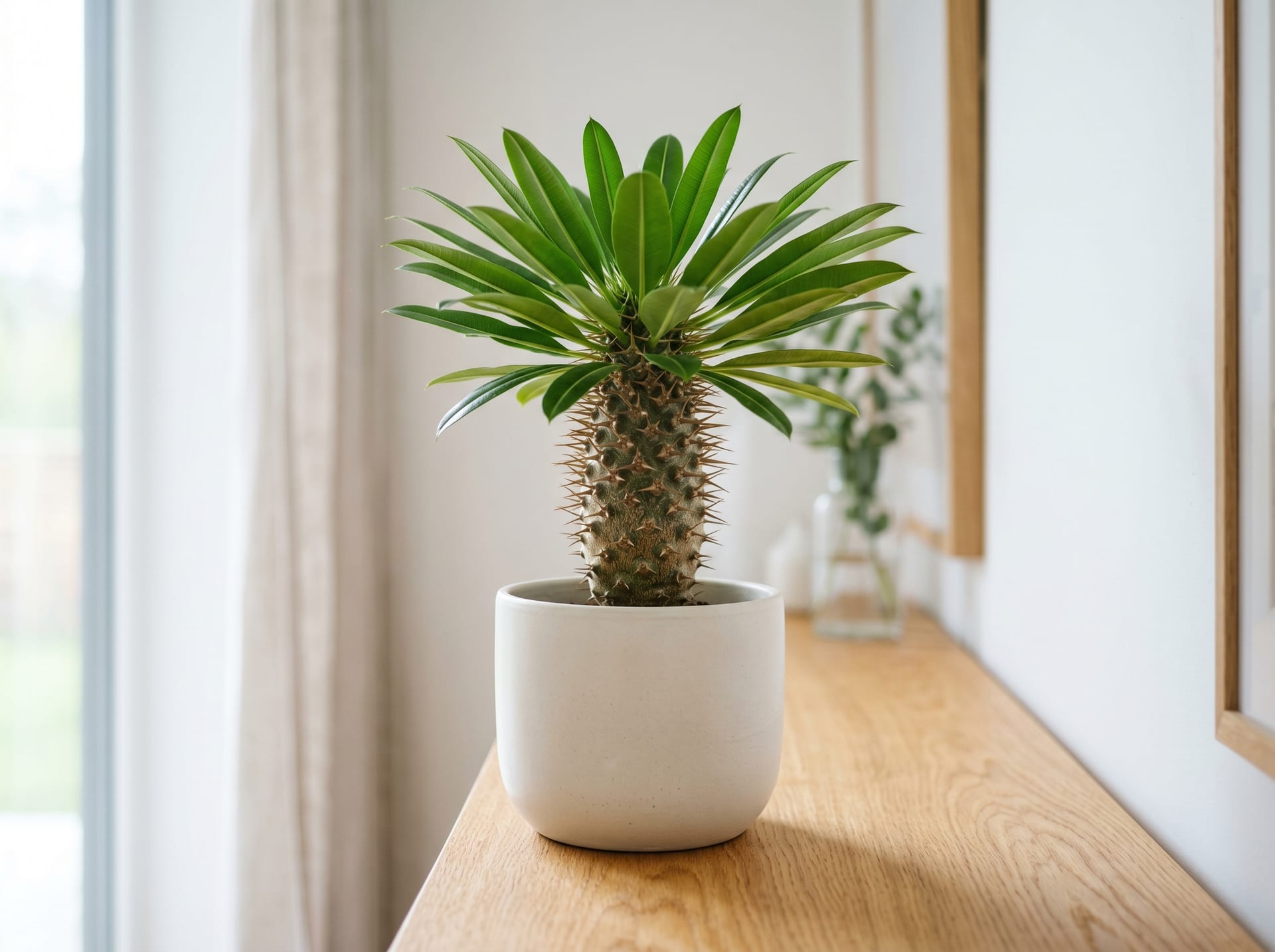
Pachypodium
Pachypodium is a distinctive caudiciform plant native to Madagascar, prized for its swollen trunk, sharp spines, and beautiful flowers that bloom at the tips of its branches. Its slow-growing, sculptural form thrives in dry conditions and has earned it the nickname "living sculpture," making it a popular choice for interior greenery. With many species offering varied shapes and flower colors, it's a rewarding plant for collectors at any level.
View Pachypodium encyclopedia →0% commission on your first sales!Register by September 30, 2026 and your first 2 plants are commission-free!
Grower Wanted!
List your plants on GrowerDirect and sell directly to customers nationwide!
6 Transparency Commitments from GrowerDirect
Our Grower disclose all key information for Caudex Plants listings, ensuring complete transparency on variety, origin, light needs, and difficulty.
- Variety Disclosed
- Real Plant Photos
- Color Details
- Origin Disclosed
- Light Requirements
- Difficulty Level
Browse all 146 varieties
Light Requirements
Difficulty Level
Verified growers wanted for Caudex Plants
Growers are signing up now ahead of launch. Subscribe to be notified when new listings go live.
Getting alerts is free with a member account. When new listings match your saved search, we'll notify you by email and in-app.
Browse other categories
Verified growers (preview)
Are you growing caudex plants?
Register as a grower and connect with buyers directly.
Apply as a growerPachypodium key facts
- Growing Difficulty
- Intermediate
- Lifespan
- 10-30 years
- Size
- 10cm-1m (potted)
- Temperature
- 10〜40℃
- Light & Placement
- Give it full direct sun during the spring-to-summer growing season. Without enough light the trunk stays weak and stretches, so keep it in a sunny spot outdoors.
- Watering
- Plenty during growing season. Complete drought in winter
- Temperature & Overwintering
- Keep between 10 and 40°C, never letting it drop below 10°C. In Japan, indoor management in winter is the norm.
- Dormancy Care
- As temperatures fall in winter it drops its leaves and goes dormant. Withhold water or give only a tiny amount, and resume watering once new growth appears in spring.
- Soil & Repotting
- Use a very fast-draining mix with plenty of pumice. Growth is very slow, so repot in the growing season only once the roots have filled the pot.
- Notes
- Growing from seed is popular. Seed freshness matters
About Pachypodium
Pachypodium belongs to the family Apocynaceae and encompasses a group of caudiciform plants native primarily to Madagascar and southern Africa. The genus name derives from Greek meaning "thick foot," a direct reference to the swollen, water-storing trunks that define these plants. In the wild, they endure harsh arid conditions by accumulating moisture in their dense stems, which are also armored with sharp spines. The most striking aspect of Pachypodium is the individuality of each plant's silhouette. Forms range from nearly spherical to cylindrical to branching tree-like specimens, and even plants of the same species develop distinct personalities depending on their environment and age. From spring through summer, clusters of white, yellow, or pink flowers emerge from the growing tips, creating a vivid contrast against the spiny trunk that draws admirers worldwide. Growth is remarkably slow, which is part of the appeal — a well-grown specimen carries years of quiet history. With adequate sunlight and proper drainage, Pachypodium is manageable even for beginners and deeply rewarding for collectors.
Featured Growers Selling Pachypodium
Browse all Pachypodium growers (2 total) →7 things to know before growing Pachypodium
1Loves Intense Sunlight
Pachypodium thrives in full, direct sunlight throughout the year. When grown indoors, place it near a south-facing window to maximize light exposure. Insufficient light causes etiolation, causing the plant to become leggy and lose its characteristic swollen trunk.
2Water Only When Bone Dry
During the growing season (spring through autumn), water thoroughly only after the soil has completely dried out. Overwatering is the leading cause of root rot, so allow the pot to drain fully and dry between waterings. In winter dormancy, withhold water almost entirely or give only a minimal amount.
3Cold Sensitivity in Winter
Pachypodium is sensitive to cold; most species stop growing and drop their leaves when temperatures fall below 10°C. Keep plants in a warm indoor location during winter and avoid exposing them to temperatures below 5°C. Frost or direct cold drafts can be fatal.
4Prioritize Fast-Draining Soil
Well-draining, aerated soil is essential to prevent root rot. A common mix is succulent or cactus soil combined with 30–40% pumice or perlite. Avoid standard potting mix on its own, as it retains too much moisture for Pachypodium roots.
5Toxic Sap and Sharp Spines
Pachypodium's sap is toxic and can be harmful if it contacts eyes or open wounds. Always wear rubber gloves when repotting or pruning, and wash your hands thoroughly afterward. The plant's sharp spines also pose a risk, so keep it out of reach of small children and pets.
6Slow Growth, Rare Repotting
Pachypodium grows very slowly — some species gain only a few centimeters per year. Repotting every two to four years is generally sufficient unless the plant becomes severely root-bound. Early summer, during active growth, is the best time to repot to minimize root stress.
7Wide Range in Price and Rarity
Prices vary widely depending on the species. Common varieties like Pachypodium lamerei or P. rosulatum gracilis are available for a few thousand yen, while rare species and large specimens can cost tens of thousands to hundreds of thousands of yen. When purchasing, always verify that the seller can provide CITES documentation confirming legal import.
Frequently asked questions about Pachypodium
- Q.My Pachypodium suddenly dropped its leaves. Is it dying?
- A.Leaf drop is most often a natural sign of dormancy triggered by cooler autumn and winter temperatures. As long as the trunk remains firm and turgid, the plant is not dead and should push new growth in spring. However, if the trunk appears shriveled or wrinkled, root rot may be the cause — inspect the roots promptly.
- Q.How often should I water my Pachypodium?
- A.During the growing season (spring through autumn), water after the soil has been completely dry for two to three days. In winter dormancy, once a month or near-complete withholding may be appropriate depending on the species. Drying rates vary with pot size and location, so always check soil moisture before watering rather than following a fixed schedule.
- Q.Can Pachypodium be grown indoors year-round?
- A.Year-round indoor cultivation is possible, but insufficient light often leads to etiolation and reduces the likelihood of flowering. Position the plant in the brightest available spot — ideally a south-facing window — and consider supplemental grow lighting if natural light is limited. Moving the plant outdoors during spring through autumn will significantly improve overall vigor.
- Q.What is the difference between P. gracilius and P. lamerei?
- A.P. rosulatum var. gracilius is prized for its nearly spherical, compact trunk and is especially popular among collectors for its sculptural form. P. lamerei is a large, columnar species that can reach 2–3 meters, giving it a more tree-like presence. Both produce white or yellow flowers, but their mature size and silhouette differ considerably.
- Q.Should I grow from seed or buy an established plant?
- A.Growing from seed is cost-effective but requires several years before the caudex develops to an appreciable size. Purchased plants allow you to enjoy the form immediately, though imported specimens may have limited roots after quarantine treatment and may require rooting care. For beginners, sourcing a domestically grown, already-rooted plant minimizes risk and simplifies early care.
Handy Growing Tools for Pachypodium
Learn more about Pachypodium in the encyclopedia
View Pachypodium encyclopedia entry →
Care difficulty, size, origin and light needs — all basics covered.
Pachypodium related articles
Rooting and Initial Care of Pachypodium Gracilius
Methods for encouraging root development in imported bare-root Pachypodium gracilis. Explains the preparation of pots, soil media, and temperature conditions; watering practices during rooting (maintaining primarily dry conditions); how to confirm successful rooting and interpret key indicators; initial post-rooting care; and seasonal management guidelines.
Complete Guide to Growing Pachypodium rosulatum | A Caudiciform with Striking White Stems
We explain how to grow Pachypodium rosulatum. Covering differences from Gracilicaule, soil, watering, winter dormancy management, and tips for growing from seed—here's a complete guide to caring for this beautiful white-stemmed species so you can enjoy it for years.
Pot Selection and Growth Rate Management for Pachypodium Gracilius
Cultivating Pachypodium gracilius requires careful pot selection and growth rate management. By combining proper drainage, staged repotting, and coordinated management of fertilization, light, and temperature, you can develop healthy specimens with enlarged trunk diameters.
Caudex Plants' Flowering Season and Seasonal Signs | Complete Guide to Management Timing for Full Bloom
Explains flowering season, seasonal signs, and management methods to promote blooming for caudex plants such as Pachypodium and Adenium. A comprehensive guide to maximizing enjoyment of their beautiful flowers.
Caudex Plants 2026: Complete Guide to Trending Varieties | Latest Trends in Pachypodium, Adenium & Operculicarya
A comprehensive guide to trending caudex plant varieties among growers and collectors in 2026, featuring rankings, price ranges, and availability difficulty. Includes Pachypodium, Adenium, Operculicarya, and other popular new arrivals.
Caudex Plants: Seed Growing vs. Air Layering | Complete Comparison of Differences, Advantages & Disadvantages
Complete comparison of two caudex propagation methods: seed growing and air layering. Detailed explanations of actual procedures, costs, success rates, advantages and disadvantages using Pachypodium, Adenium, Euphorbia and more.
More in this category
Can't find the plant you're looking for?
Post your wishes for free and growers with matching plants will contact you with introductions.