Pot Selection and Growth Rate Management for Pachypodium Gracilius
Cultivating Pachypodium gracilius requires careful pot selection and growth rate management. By combining proper drainage, staged repotting, and coordinated management of fertilization, light, and temperature, you can develop healthy specimens with enlarged trunk diameters.
Key Takeaways
Cultivating Pachypodium gracilius requires careful pot selection and growth rate management. By combining proper drainage, staged repotting, and coordinated management of fertilization, light, and temperature, you can develop healthy specimens with enlarged trunk diameters.
Related Species
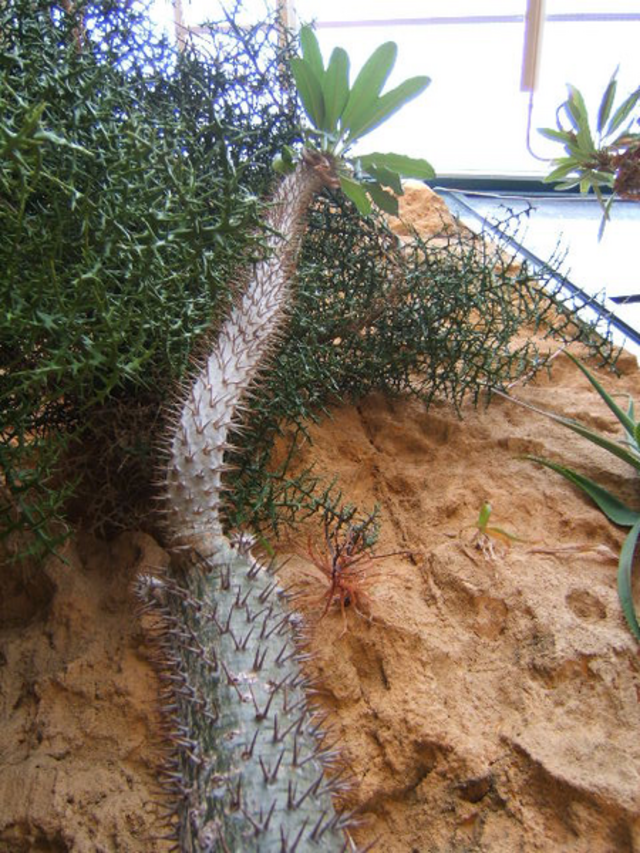
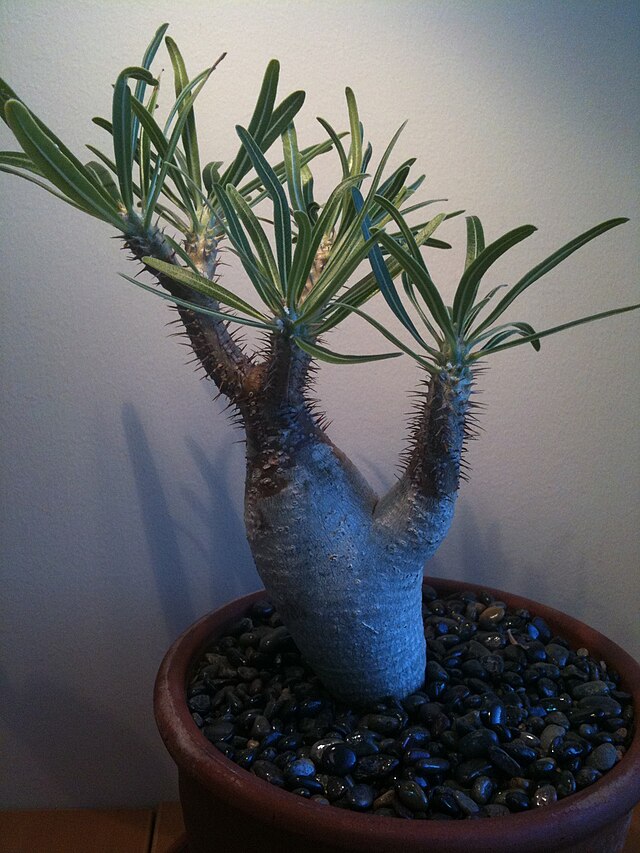
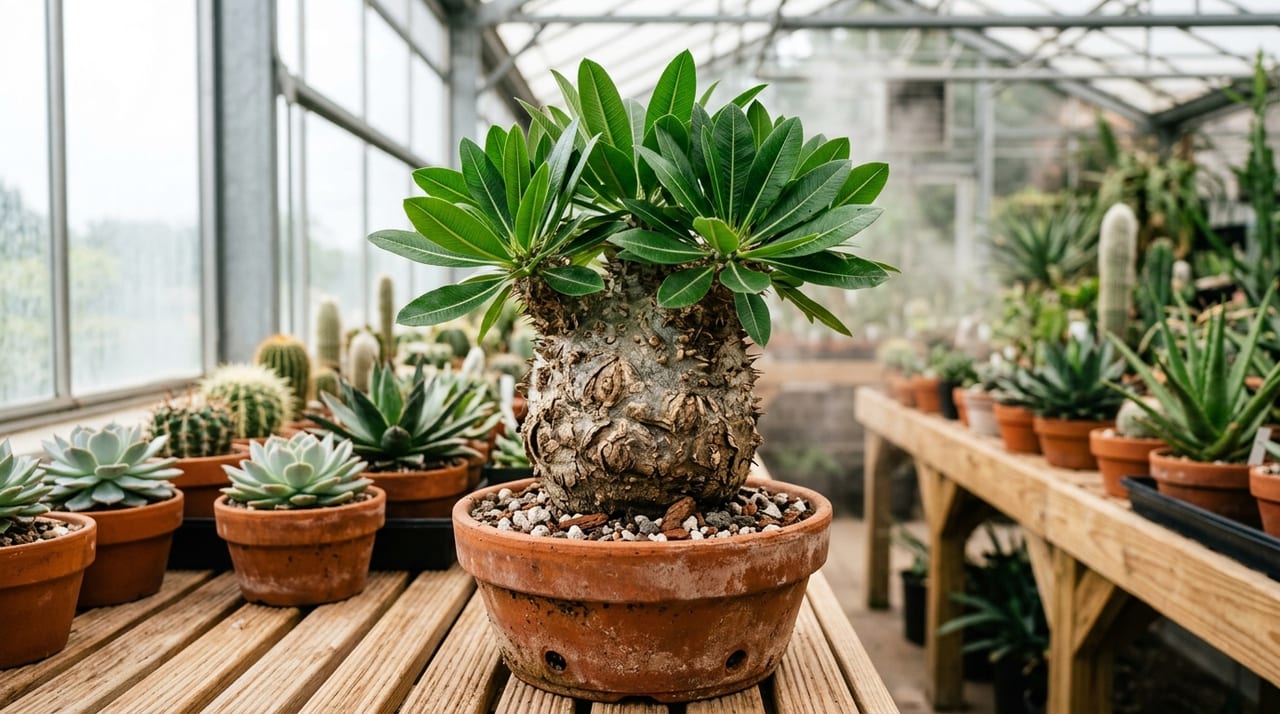
Pachypodium gracilius is a prime example of a caudex plant native to Madagascar, characterized by its distinctive form and enlarged trunk. In cultivating this species, pot selection and growth rate management are extremely important factors. By establishing an appropriate pot environment, you can promote healthy growth and trunk diameter enlargement.
Pot Material and Drainage Selection
In cultivating Pachypodium gracilius, pot material choice significantly influences growth quality. Terracotta pots have excellent air permeability due to their porous structure and dry quickly, requiring careful attention to avoid excess moisture. In contrast, plastic pots retain moisture well and hold water longer, necessitating more precise watering management.
For caudex plants in general, drainage is critically important. Gracilius is adapted to the arid environments of its native habitat and does not favor wet soil. Using well-draining potting soil and preventing root rot are the keys to successful cultivation. Generally, a recommended potting mix combines akadama (small grain), Kanuma soil, and pumice in equal parts. This combination achieves both adequate water retention and excellent drainage.
The size of drainage holes at the pot's base is also important. Pots with small holes slow drainage and increase root rot risk. Selecting pots with multiple holes at least 5mm in diameter ensures that excess water drains quickly after watering.
Repotting Strategy by Growth Stage
To promote trunk diameter enlargement in Pachypodium gracilius, appropriate repotting matched to growth stage is necessary.
- Seedling stage (approximately one year from germination) should begin with small pots, typically 7–10cm in diameter, to encourage root development. Avoid frequent repotting and wait until roots have filled the soil before repotting.
- Young tree stage (years 2–3) is when growth accelerates, making spring repotting at the start of new growth most effective. Pot size should be approximately 15–20cm in diameter. Avoid oversized pots, as they promote excessive soil moisture and increase root rot risk.
- Mature stage (three years and beyond) allows repotting frequency to be reduced to approximately every two years, using pots around 20–30cm in diameter. However, if aiming for continuous trunk diameter enlargement, continuing to repot annually in spring while gently loosening roots will develop larger specimens.
Growth Rate Acceleration Management
To promote growth in Pachypodium gracilius, fertilize during the growing season from spring through autumn. Typical practice involves applying slow-release fertilizer approximately once monthly or liquid fertilizer every two weeks. A balanced fertilizer with appropriate nitrogen, phosphorus, and potassium (for example, NPK ratio around 10:10:10) is suitable. However, during the winter dormant period, withhold fertilizer to maintain reduced metabolism.
Light conditions directly influence growth rate. Gracilius is a sun-loving plant that ideally receives at least six hours of direct sunlight daily year-round. Even indoors, positioning the plant near a south-facing window to maximize light is key to accelerating growth. From spring through autumn, outdoor cultivation takes advantage of stronger light and UV rays, resulting in more pronounced trunk diameter enlargement.
Temperature management also greatly influences growth rate. Pachypodium gracilius, being tropical in origin, prefers warm conditions. The optimal temperature during the growing season is 25–35°C, at which metabolism is most active and growth accelerates. In winter, it is important to maintain temperatures above 10°C. Below 5°C, cold damage risk increases and the plant may die.
Practical Tips for Trunk Diameter Enlargement
To maximize trunk diameter enlargement, combining multiple factors is essential.
- Applying moderate stress to roots encourages the plant to form thicker vascular bundles, thickening the trunk. To apply appropriate stress, wait 3–4 days after the soil surface dries before watering. Maintaining a slightly drier environment, while avoiding complete desiccation, promotes trunk diameter enlargement.
- Increasing the potassium ratio is also effective. Applying a potassium-rich fertilizer (for example, NPK ratio around 10:5:15) in autumn, compared to standard balanced fertilizer, enhances root development and trunk strength, promoting enlargement.
- Maintaining abundant foliage contributes to trunk enlargement because photosynthesis increases organic matter production. Except during winter when Pachypodium gracilius naturally sheds leaves, maintaining dense foliage from spring through autumn increases nutrient supply to the trunk and accelerates enlargement.
- Ensuring adequate air circulation around the trunk prevents pests and diseases and eliminates factors that inhibit growth. Avoiding overcrowding and maintaining adequate space around the specimen maintains a favorable growing environment.
When cultivating plants, patience and careful observation are paramount. While Pachypodium gracilius trunk diameter enlargement requires several years, continued proper management will develop a fine specimen with its distinctive form.