Pachypodium Gracilius Winterization and Root Rot Rescue Technique | Dormancy Period Management, Watering Adjustment, and Recovery Guide from Decayed Roots
Explains Pachypodium gracilius winterization management and root rot rescue technique. Introduces practical methods from watering adjustments during dormancy to root removal and regeneration procedures.
Key Takeaways
Explains Pachypodium gracilius winterization management and root rot rescue technique. Introduces practical methods from watering adjustments during dormancy to root removal and regeneration procedures.
Related Species
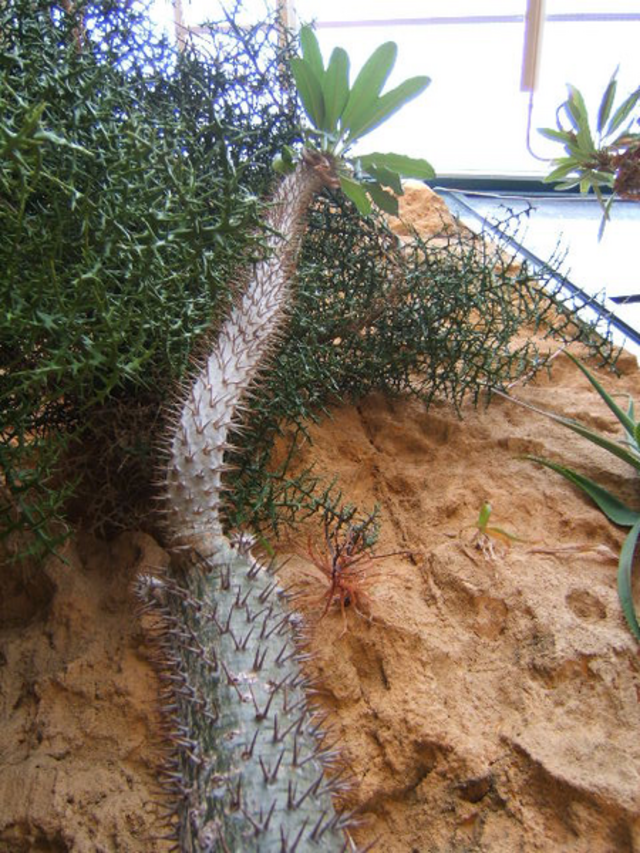
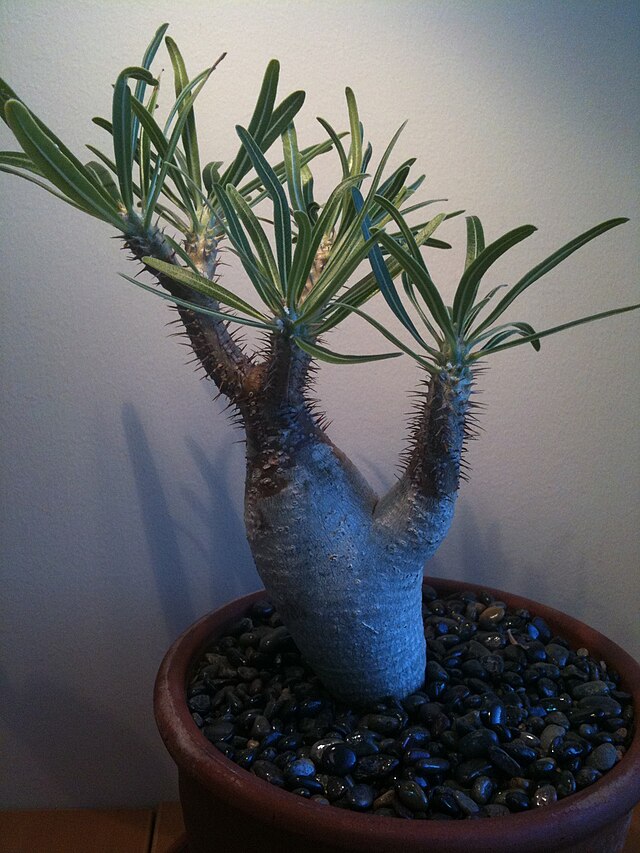
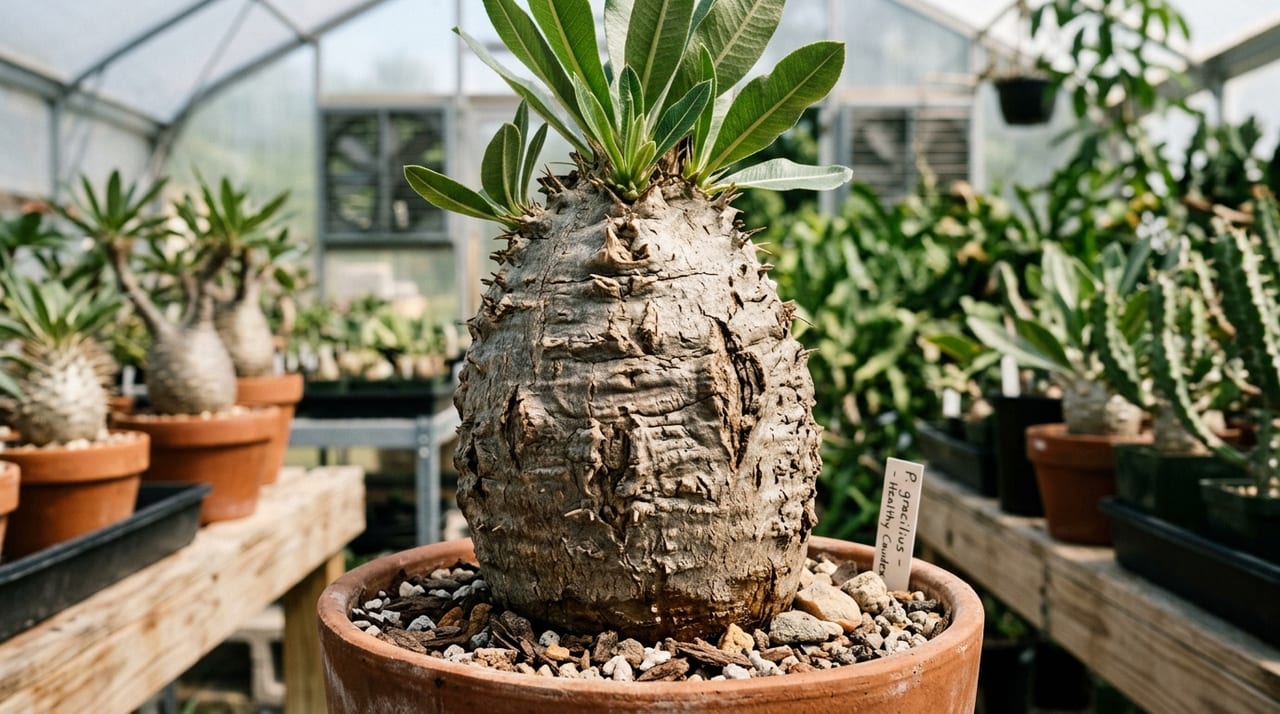
Pachypodium gracilius (a representative species of caudex plants) is one of the most popular varieties among plant enthusiasts for the beauty of its distinctive caudex. However, if winter management fails, the plant quickly succumbs to root rot and death. This article provides a scientific and practical explanation of how to successfully winterize gracilius, including dormancy period management, watering adjustments, and a rescue technique in case root rot occurs.
Pachypodium Gracilius's Winter Physiology and Dormancy Signs
Pachypodium gracilius is a "summer type" plant adapted to the climate rhythm of its native habitat (the arid region of southern Madagascar) that enters dormancy in winter. The temperature drop from autumn to winter in Japan triggers this signal.
Signs of Gracilius Entering Winter:
- Temperature Drop: Temperature begins to fall below 15°C (mid-to-late November)
- New Leaf Growth Stops: Leaves remain old, and new leaves do not emerge
- Leaf Drop Begins: Lower leaves turn yellow and begin to fall
- Growth Slows Significantly: The caudex stops expanding almost entirely
This process gradually progresses over 1–2 weeks. The important thing is not to wait for complete defoliation, but to begin gradually switching watering management as soon as the above signs appear.
Period when Gracilius Enters Complete Dormancy:
- Late November to early January is the deepest dormancy period
- During this time, all leaves fall and the plant becomes completely bare, which is normal
- The caudex is hard and holds water well
Practical Winter Watering Adjustment Techniques
The key to successful gracilius winterization is "gradual water reduction." Rather than abruptly stopping watering, adjusting based on temperature and plant condition is essential.
Stage 1: Temperature Drop Period (Late September to Mid-November)
During this period, the plant is still in active growth, so continue regular watering.
- Decision Criteria: Water 1–2 days after the soil surface dries
- Frequency Guide: Once per week to once every 10 days
- Timing: Morning on clear days (avoid late evening)
- Amount: Water until it flows from the pot bottom
The important thing at this stage is to observe whether new leaves are emerging. If new leaves are appearing, the plant is still active.
Stage 2: Leaf Drop Initiation Period (Late November to Early December)
When leaves turn yellow and begin to fall, gradually reduce watering frequency.
- Decision Criteria: Once 50% or more leaves have fallen, halve watering frequency
- New Frequency: Once every 10–14 days
- Amount: Less than normal (approximately half the volume that flows from the pot bottom)
- Method: Pour gently near the base of the plant (avoid splashing leaves and stems)
At this stage, it is important to check the caudex by touching it to confirm its "firmness." If the caudex is hard and turgid, the plant has stored sufficient water.
Stage 3: Complete Dormancy Period (Mid-December to February)
This is the management phase when leaves have almost completely fallen. Watering management during this period is the most critical phase for preventing root rot.
Watering Policy During Complete Dormancy:
- Basic Principle: Water Reduction: In principle, stop watering
- Exceptional Watering: Only if the caudex feels "somewhat softer" when touched, consider giving a small amount of water approximately once per month
- Specific Judgment Criteria:
- Caudex feels like a "marble"→ No watering needed
- Caudex feels like a "mandarin orange"→ Consider once-monthly light watering
- Caudex extremely shriveled and dried→ Emergency watering
Watering is Necessary When:
You can judge using weight in addition to touch. Remember the "weight" of the pot immediately after repotting as a reference, and if it becomes extremely light compared to that, the caudex may be suffering from water deficiency.
Special Attention During Deep Winter (Mid-January to Early February):
- When temperatures below 10°C continue for days, stop watering completely
- Watering during cold periods increases the risk of freezing before roots can absorb it
- Only if room temperature is maintained at 15°C or higher should monthly watering be considered carefully
Stage 4: Dormancy Break (Late February to Mid-March)
Temperature gradually increases. During this period, new leaves still have not emerged. It is important to wait patiently for signs of new growth.
- Decision Criteria: When temperatures exceeding 18°C become more frequent
- Watering Frequency: Once every 2–3 weeks
- Amount: Small quantity (just enough to moisten the caudex)
- Once New Leaves are Confirmed: Return to normal Stage 1 watering
Early Detection and Rescue of Root Rot
The most feared problem in winter watering management is root rot. However, if detected early and handled appropriately, gracilius has an exceptionally strong ability to recover from root problems.
Signs of Root Rot
Early Stage (Mild):
- Part of the caudex becomes soft (normally hard)
- Caudex color changes to brown or black (spotty)
- A toothpick inserted at the base penetrates easily (healthy caudex is hard)
- A light unpleasant odor emanates when the caudex is pressed
Progressive Stage (Moderate to Severe):
- The entire caudex becomes soft
- A strong odor of decay comes from the base
- Roots are black and mushy (crumble when washed with water)
- The caudex surface rots and develops holes
Root Rot Rescue Procedure When Discovered
The first 48 hours are critical. Execute the following steps.
Step 1: Carefully Remove from Pot
- Carefully remove gracilius from the pot
- Gently remove surrounding soil (do not injure roots)
- Expose all roots to visibility
Step 2: Remove Decayed Roots
- Healthy Roots: White or light brown, hard, elastic and break when bent
- Decayed Roots: Black, brown, mushy, stretchy, unpleasant odor
- Remove all decayed portions (if uncertain, remove it)
- Use a clean knife for cutting (sterilize with alcohol)
- Trim back to healthy cross-section and dry thoroughly
If the Caudex Itself is Decayed:
- Confirm that healthy portions (white or green inside) remain
- Remove all decayed surface
- Depth of removal: until the area no longer has a decayed odor
- Allow cut surfaces to dry thoroughly (2–5 days in a well-ventilated dark location)
Step 3: Repotting
- Prepare New Soil: High-drainage mix for caudex plants
- Red clay (small grains) 40%
- Akadama (small grains) 30%
- Perlite 20%
- Charcoal 10%
- Prepare a New Pot: Always use a clean pot (disinfect with alcohol)
- Planting Depth: Embed the lower half of the caudex in soil (do not bury up to the base)
- Initial Watering: Right after planting, only a light mist (do not drench)
- Management Environment: Place in a well-ventilated, bright indoor location (avoid direct sunlight)
Step 4: Recovery Period Management (2–3 Weeks)
- Watering:
- 3–5 days after initial misting, light watering (water does not flow from pot bottom)
- Thereafter once every 10–14 days, small amount of water
- Be conservative until new white roots begin to emerge from the caudex
- Light and Temperature:
- Bright indoor location (fluorescent light is acceptable)
- Stable temperature of 18°C or higher (avoid cold exposure)
- Avoid direct sunlight (strong light during recovery period stresses roots)
- Humidity:
- Relative humidity of 50–60% is ideal
- Avoid locations where dry air from air conditioning blows directly
Recovery Milestones from Root Rot
Signs of Success:
- 2–3 weeks after planting, new white roots begin to emerge from the caudex
- New roots also emerge from the cut stem section
- New tissue forms from the caudex cut surface (thin membrane-like)
Recovery Timeline:
- 1 month: New roots extend 3–5mm
- 2 months: New roots establish firmly, caudex flexibility returns
- 3 months to spring: New leaves begin to extend (normally around the spring equinox)
Common Pachypodium Gracilius Winterization Failures and Countermeasures
Below is a summary of common failure patterns among actual plant enthusiasts and their solutions.
| Failure Pattern | Cause | Countermeasure |
|---|---|---|
| Watering at autumn frequency even in fall | Missed temperature drop signals | Gradually reduce from November. Halve frequency once 50% of leaves fall |
| Frequent watering even during dormancy | Misconception that "watering ensures safety" | Judge by touching caudex. If hard, stop watering |
| Watering at night | Cold water at night chills roots and promotes rot | Always water in the morning on clear days |
| Using cold tap water | Cold shock makes roots susceptible to rot | Use room-temperature water. If possible, use lukewarm water |
| Neglect of root rot | Decay progresses rapidly | Touch caudex once monthly to check |
| High temperature and humidity during root rot | Rot-promoting bacteria thrive in such conditions | Prioritize ventilation. Maintain 15–20°C and 50–60% relative humidity |
Discerning Gracilius's Awakening to Spring
Succeeding in winterization only to mishandle the transition to spring can delay sprouting or cause problems with new root emergence.
Signs of Awakening to Spring:
- Days exceeding 18°C become more frequent (mid-March onward)
- Small protrusions appear at the top of the caudex (near the base of the stem), signaling new bud preparation
- When touching the base, it feels "slightly moist"
Steps to Transition to Spring:
- Once Temperatures Exceeding 18°C are Confirmed, increase watering to once every 2 weeks
- Once New Buds Appear, switch to weekly watering
- Once New Leaves Begin to Unfold, return to normal spring–fall watering
Summary and Mindset for Winterization
Pachypodium gracilius winterization is a "season of patience." From the joy of autumn growth, winter demands restraint in watering, patience, and simply watching the plant sleep.
What matters are the following three points:
- Gradual Watering Adjustment: Observe temperature and plant condition, adjusting according to Stages 1–4
- Monthly Health Check: Confirm caudex firmness and detect anomalies early
- Swift Response to Root Rot: Remove from pot within 48 hours of discovery and remove decayed roots
Failure happens to everyone. Even if root rot does occur, gracilius's recovery ability is stronger than imagined, so if you follow the above steps without panicking, the plant will recover in most cases.
Approach this winter as an opportunity to understand gracilius's growth cycle and care for it thoughtfully. Next spring, the moment new leaves unfold will be the supreme joy that rewards your winter patience.