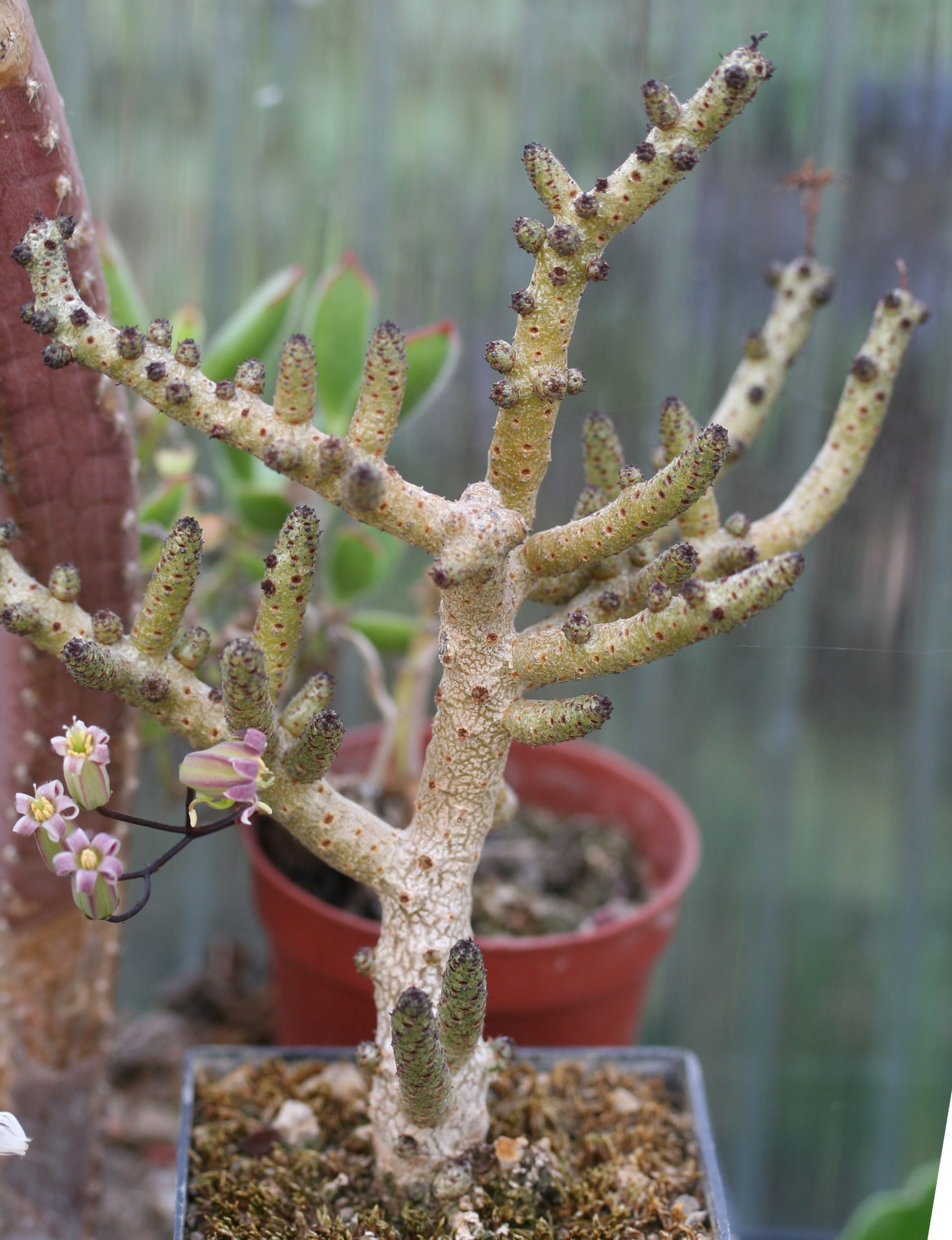
 © Michael Wolf (Webseite) / CC BY-SA 3.0
Tylecodon buchholzianus
Tylecodon buchholzianus is a small, winter-growing caudiciform succulent native to South Africa. From a slightly swollen base, it sends up numerous slender, pale branches in a bonsai-like silhouette that only grows more characterful with age. Unusually, it carries very few leaves — most photosynthesis happens through the green bark of its stems instead. Growth is slow, so shaping this quirky little plant is a long-term project, but that unhurried pace is part of its appeal for collectors who enjoy watching a caudex mature over the years. It suits growers with some succulent experience more than absolute beginners.
View Tylecodon buchholzianus encyclopedia →0% commission on your first sales!Register by September 30, 2026 and your first 2 plants are commission-free!
Grower Wanted!
List your plants on GrowerDirect and sell directly to customers nationwide!
6 Transparency Commitments from GrowerDirect
Our Grower disclose all key information for Caudex Plants listings, ensuring complete transparency on variety, origin, light needs, and difficulty.
- Variety Disclosed
- Real Plant Photos
- Color Details
- Origin Disclosed
- Light Requirements
- Difficulty Level
Browse all 146 varieties
Light Requirements
Difficulty Level
Verified growers wanted for Caudex Plants
Growers are signing up now ahead of launch. Subscribe to be notified when new listings go live.
Getting alerts is free with a member account. When new listings match your saved search, we'll notify you by email and in-app.
Browse other categories
Verified growers (preview)
Are you growing caudex plants?
Register as a grower and connect with buyers directly.
Apply as a growerTylecodon buchholzianus key facts
- Growing Difficulty
- Intermediate
- Lifespan
- Slow-growing and long-lived (little published data)
- Size
- About 20 cm (sometimes 30 cm) tall and 27 cm wide
- Watering
- Slow-release fertilizer mixed in at repotting
- Light & Placement
- Grow it in bright light.
- Watering
- A winter grower: in the growing season water when the roots are almost dry. Growth starts in autumn and really takes off on the first warm days of spring.
- Dormancy Care
- It is fully dormant in summer; give little or no water then, depending on plant size.
- Temperature & Overwintering
- Keep it at a minimum of 5°C in winter, preferably 8°C; leaves drop easily in cool conditions.
- Soil & Repotting
- Use a well-drained cactus mix and repot every two to three years with slow-release fertilizer added.
- Pruning & Shaping
- It usually stays compact, but leggy plants can be pruned in the growing season to tighten them and encourage the caudex; even hard pruning recovers quickly once growth starts.
- Propagation
- Fairly easy from cuttings in late autumn. Fallen leaves sometimes root but rarely produce a bud.
About Tylecodon buchholzianus
A small winter-growing Tylecodon with slender pale branches rising bonsai-like from a swollen base. Unusual for photosynthesizing mainly through bark rather than leaves; slow-growing and best suited to intermediate growers.
7 things to know before growing Tylecodon buchholzianus
1Light & Placement
During the autumn-to-spring growing season, give the plant as much sun and airflow as possible. If a plant hasn't been hardened off to direct sun, introduce it gradually to avoid leaf scorch. In summer dormancy, move it to bright shade rather than full sun.
2Watering Rhythm
As a winter grower, this Tylecodon is actively growing from autumn through spring. Water thoroughly during that period once the soil has fully dried out. In the heat of summer it goes dormant, so watering should be cut back drastically or nearly stopped.
3Well-Draining Soil
Use a mineral, fast-draining mix to avoid root rot. A succulent or cactus blend with pumice and hard-fired akadama or kanuma works well. Choose a pot with a drainage hole so water never sits around the roots.
4Repotting
Because growth is slow, repotting only needs to happen every few years. The best time is early autumn, just as the plant wakes from summer dormancy. Gently loosen the root ball, remove old soil, trim any damaged roots, and pot into fresh mix.
5Getting Through Summer Dormancy
Hot summer weather puts this Tylecodon into dormancy. Overwatering during this period is a common cause of root rot, so keep it cool, well-ventilated, and nearly dry. It's normal for leaves to drop at this time — new growth returns once the growing season starts again.
6Winter Cold Protection
Although winter is the growing season, hard frost and freezing temperatures can still damage the plant. If you keep it outdoors, bring it inside or into a greenhouse on cold nights to protect it from extreme cold.
7Choosing a Healthy Plant
Look for a plant with firm, pale bark rather than shriveled or blackened branches. A solid, non-wobbly swollen base is a good sign of health. Since branch shapes vary from plant to plant, picking one with a silhouette you like is part of the fun with this species.
Frequently asked questions about Tylecodon buchholzianus
- Q.Why does it have so few leaves?
- A.Tylecodon buchholzianus has an unusual habit of photosynthesizing mainly through its green bark instead of leaves. This is thought to be an adaptation that lets it keep photosynthesizing under dry, sunny conditions, and it's one of the plant's most distinctive traits.
- Q.Leaves dropped in summer — is it dying?
- A.No, this is normal. Dropping leaves as it enters summer dormancy is a natural response, and the plant keeps photosynthesizing through its bark in the meantime. New leaves emerge again once the growing season resumes in autumn.
- Q.Why does it grow so slowly?
- A.This is naturally a slow-growing species that puts out new branches gradually over many years to build its characteristic form. It rewards patient, long-term growers rather than those looking for fast results.
- Q.Should I grow it outdoors or indoors?
- A.During the autumn-to-spring growing season, a sunny, well-ventilated spot outdoors or by a window suits it best. When frost or freezing temperatures threaten, bring it indoors or into a greenhouse to protect it.
- Q.Can beginners grow this plant?
- A.Because its growing season is reversed compared to summer-growing succulents, watering at the wrong time of year can easily lead to root rot, which is why it's considered suited to intermediate growers. Anyone already comfortable caring for winter-growing succulents should find it manageable.
Handy Growing Tools for Tylecodon buchholzianus
Learn more about Tylecodon buchholzianus in the encyclopedia
View Tylecodon buchholzianus encyclopedia entry →
Care difficulty, size, origin and light needs — all basics covered.
More in this category
Can't find the plant you're looking for?
Post your wishes for free and growers with matching plants will contact you with introductions.