Source: Wikimedia Commons
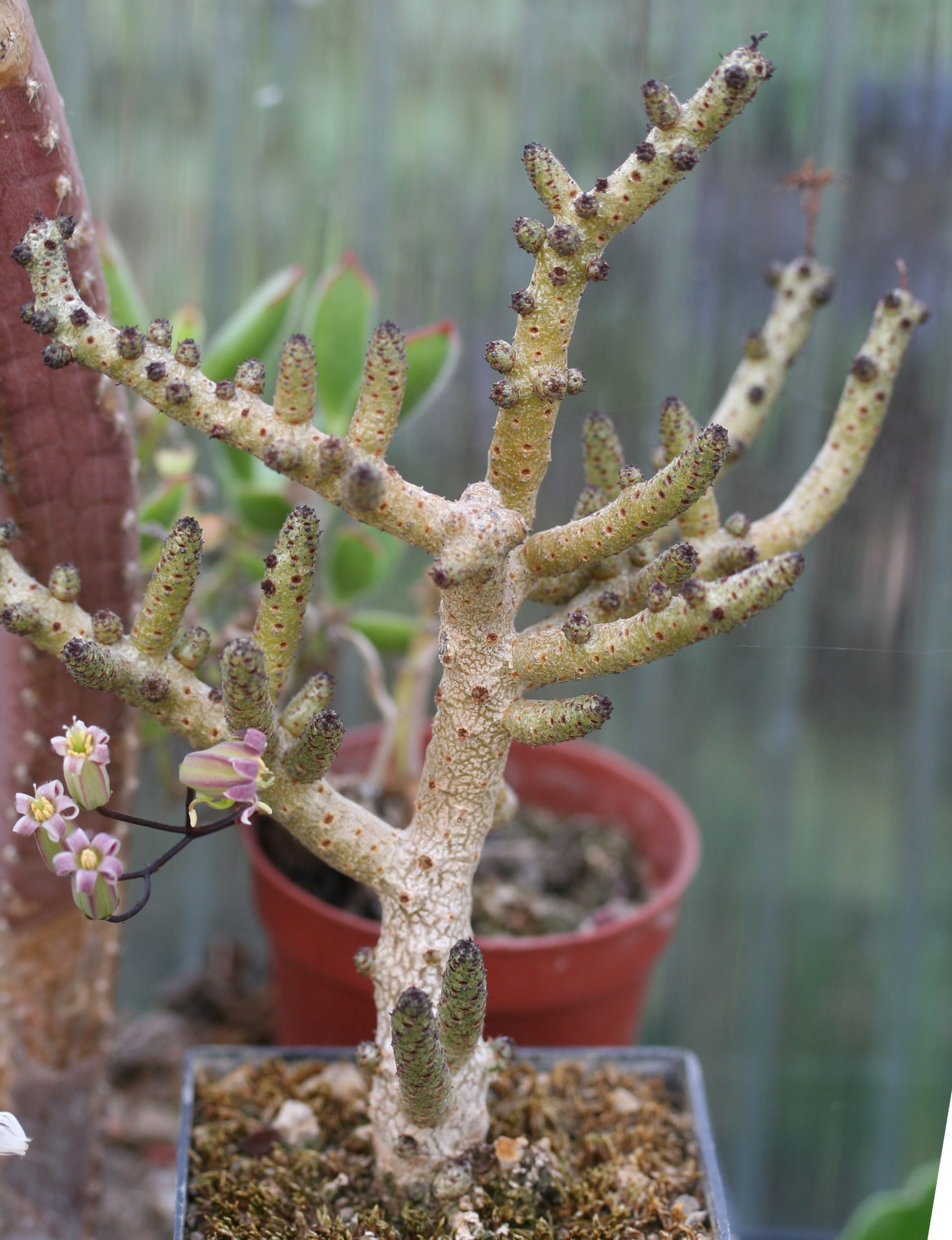
Tylecodon buchholzianus
IntermediateTylecodon buchholzianus
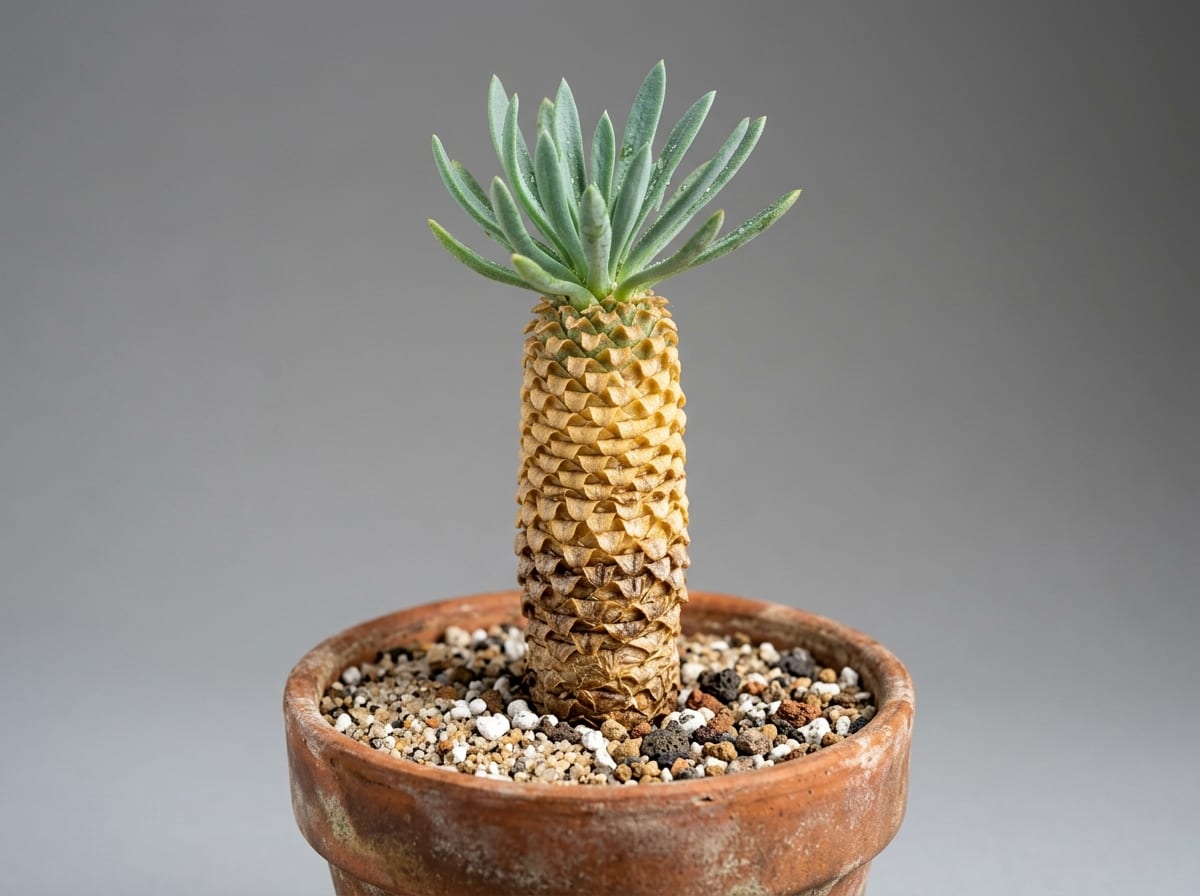
A small, winter-growing Tylecodon that raises many pale, slender, bonsai-like branches from a slightly swollen base. Its branches photosynthesize through their bark and can grow with only microscopic leaves, a rare trait.
About
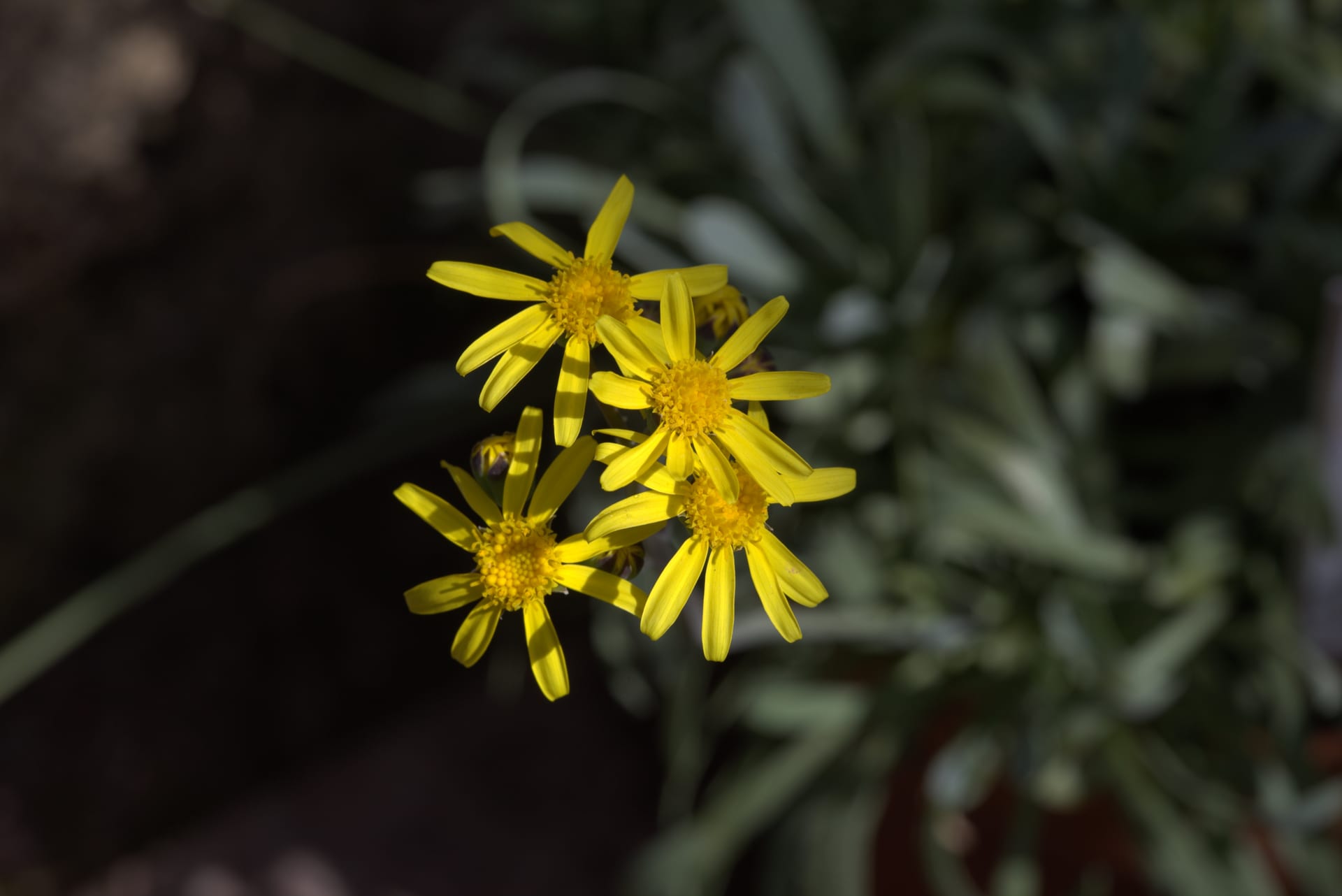
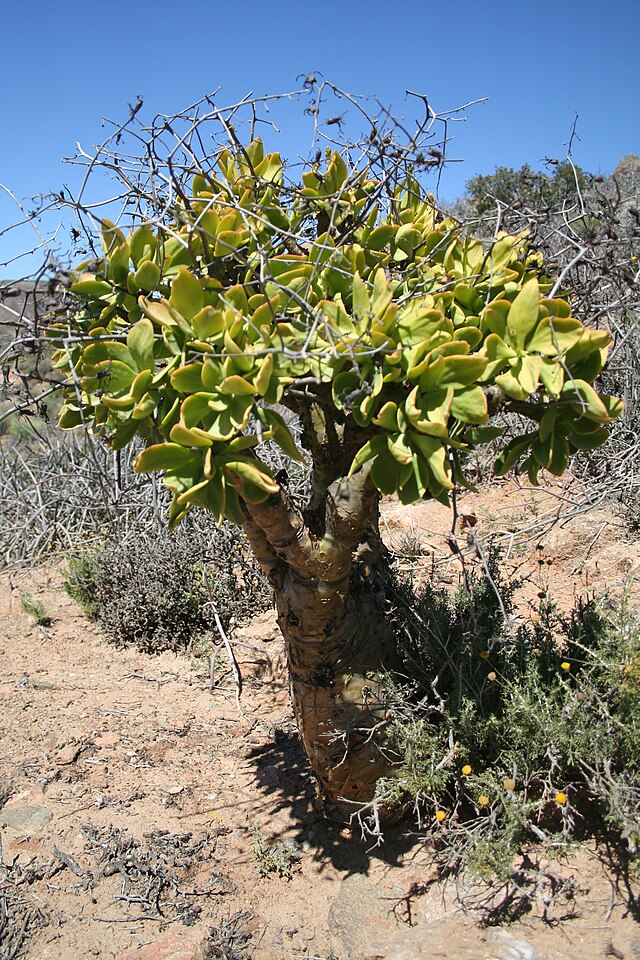
Tylecodon buchholzianus is a small winter-growing stem succulent in the Crassulaceae, found from the coastal strip of south-western Namibia to the Richtersveld near the Orange River mouth and Komaggas in South Africa. It grows on cool, south- or east-facing rocky slopes that catch sea fog, on exposed rock faces and in shaded cracks under shrubs. It is widespread with a stable population, though mining destroys habitat in parts of its range. A bonsai-like dwarf shrub, the typical variety grows erect to about 20 cm (sometimes 30 cm) tall and 27 cm wide. The base is slightly swollen and irregular, bearing many slender, pale grey to brown branches. Unusually among Tylecodon, its branches stay almost leafless and photosynthesize for a long time, able to grow with only microscopic leaflets. In spring it also produces normal but short-lived linear leaves about 5–15 mm long, crowded at the branch tips. The flowers are pale pink. Var. fasciculatus has spreading, eventually pendulous stems. The species varies considerably from place to place. In Japan it is sold mainly by specialist nurseries.
Size of the Tylecodon buchholzianus
The Tylecodon buchholzianus grows to About 20 cm (sometimes 30 cm) tall and 27 cm wide.
Basic Info
Origin
South-western Namibia to north-western South Africa (Richtersveld)
Lifespan
Slow-growing and long-lived (little published data)
Size
About 20 cm (sometimes 30 cm) tall and 27 cm wide
Temperature
10〜35℃
Watering & Fertilizer
Slow-release fertilizer mixed in at repotting
Growing Tips
Light & Placement
Grow it in bright light.
Watering
A winter grower: in the growing season water when the roots are almost dry. Growth starts in autumn and really takes off on the first warm days of spring.
Dormancy Care
It is fully dormant in summer; give little or no water then, depending on plant size.
Temperature & Overwintering
Keep it at a minimum of 5°C in winter, preferably 8°C; leaves drop easily in cool conditions.
Soil & Repotting
Use a well-drained cactus mix and repot every two to three years with slow-release fertilizer added.
Pruning & Shaping
It usually stays compact, but leggy plants can be pruned in the growing season to tighten them and encourage the caudex; even hard pruning recovers quickly once growth starts.
Propagation
Fairly easy from cuttings in late autumn. Fallen leaves sometimes root but rarely produce a bud.
Tylecodon buchholzianus FAQ
QWhat is the growing difficulty level for Tylecodon buchholzianus?
Intermediate. A variety suitable for intermediate growers. Requires some cultivation experience and knowledge of environment management. Pay careful attention to temperature and humidity control.
QHow large does Tylecodon buchholzianus get?
The mature size of Tylecodon buchholzianus is About 20 cm (sometimes 30 cm) tall and 27 cm wide. This may vary slightly depending on cultivation environment and individual differences.
QHow should I water and fertilize Tylecodon buchholzianus?
Tylecodon buchholzianus: watering & fertilizer — Slow-release fertilizer mixed in at repotting. Aim for appropriate frequency and amount.
QWhat is the typical price for Tylecodon buchholzianus?
The price of Tylecodon buchholzianus varies significantly by variety, characteristics, size, and lineage. Please check GrowerDirect's price guide for the latest market information.
Last updated: September 23, 2026
References & Sources
Edited & verified by: GrowerDirect Editorial Team
The classifications, regulations, and growing data on this page are created and verified based on the primary information database below.
Taxonomy & Authority
Regulations & Conservation Status
Not listed in CITES (checked on Species+). No special procedure is needed for transfers within Japan.
Sources: Species+ (CITES): Tylecodon buchholzianus
Regulations may change. Always verify the latest information with the relevant authorities.
Related Species
Find listings for this species
Related Articles
How to Grow Uncarina | Differences Between the Madagascar Endemic Species Grandidieri and Roeoesliana
An explanation of the appeal and cultivation methods of the Madagascar endemic caudex plant Uncarina genus. We introduce the differences between Uncarina grandidieri and roeoesliana, seedling cultivation, and repotting timing.
Complete Guide to Choosing Caudex Plants as Gifts | Recommended Varieties by Occasion and How to Include Care Notes
A guide to choosing caudex plants as gifts organized by occasion. We introduce how to select varieties based on the recipient's cultivation experience and how to include care notes for long-term enjoyment.
Diagnosing and Treating Poor Root Development in Caudex Plants | Causes and Solutions for Roots That Won't Emerge or Won't Grow
A detailed guide to root emergence problems in caudex plants. From diagnosis methods to solutions, practical techniques for promoting healthy root development are introduced.
Complete Guide to Growing Jatropha podagrica (Buddha's Navel) | Cultivation Management to Enjoy Its Distinctive Caudex and Coral-Red Flowers
Characteristics and cultivation methods of the caudex plant Jatropha podagrica. Detailed explanation of watering management during dormancy, soil, and propagation methods.
🩺 Common diseases
Can't find the plant you're looking for?
Post your wishes for free and growers with matching plants will contact you with introductions.