Complete Guide to Growing Jatropha podagrica (Buddha's Navel) | Cultivation Management to Enjoy Its Distinctive Caudex and Coral-Red Flowers
How to grow Jatropha podagrica (Buddha belly plant). It explains that the plant drops its leaves and goes dormant when temperatures fall below 10°C, that watering is almost completely stopped in winter, that 30–40% pumice or perlite is mixed into the soil, and that cuttings are inserted after letting the cut surface dry for a few days.
Key Takeaways
How to grow Jatropha podagrica (Buddha belly plant). It explains that the plant drops its leaves and goes dormant when temperatures fall below 10°C, that watering is almost completely stopped in winter, that 30–40% pumice or perlite is mixed into the soil, and that cuttings are inserted after letting the cut surface dry for a few days.
Related Species
Introduction
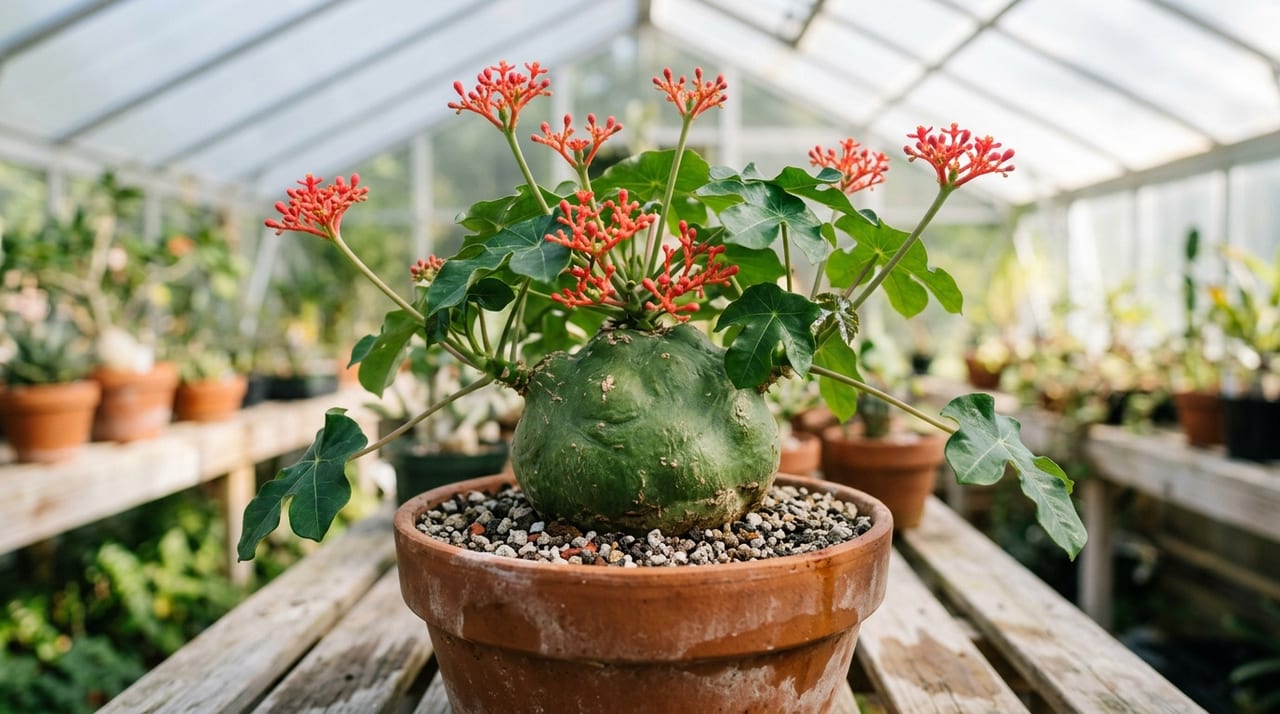
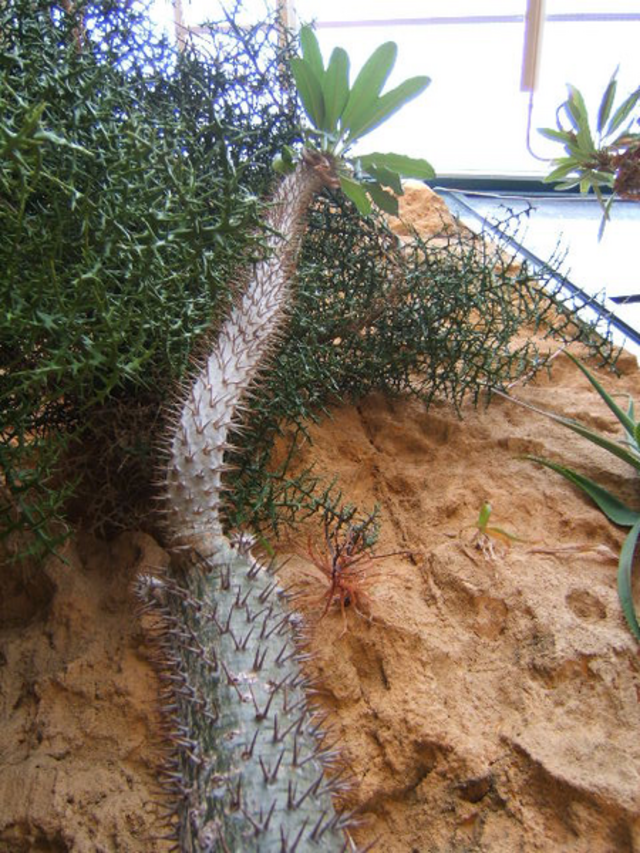
In the world of caudex plants, there are many species with distinctive charm hidden in the shadow of popular varieties like Pachypodium and Adenium. One of them is Jatropha podagrica. It is a highly ornamental plant that displays round leaves at the tips of petioles extending from a swollen, green caudex, and produces coral-like red flowers from early summer through autumn. Its Japanese name is Sangoaburagiri, and it is also called "Buddha's Head," and its rounded, humorous form is beloved among caudex plant collectors. In this article, we will provide a detailed explanation of the characteristics and cultivation methods of Jatropha podagrica.
Characteristics and Native Habitat of Jatropha podagrica
Jatropha podagrica is a plant of the Euphorbiaceae family native to Central America (the region from southern Mexico to Panama). It has a succulent nature that stores water in its swollen, green stem (caudex), is highly drought-tolerant, but is not very cold-tolerant. Its main characteristics are as follows:
| Item | Details |
|---|---|
| Cold Hardiness | When temperatures remain below 10℃, growth becomes significantly sluggish, leaves drop, and the plant enters dormancy. |
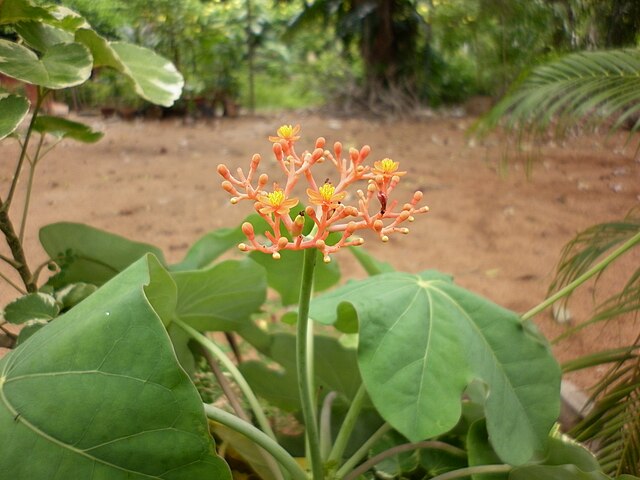
| Flowering Period | From early summer through autumn, small coral-red flowers bloom clustered at the tips of flower stems. The contrast with the rounded caudex is beautiful and serves as a high ornamental value point. |
| Handling Precautions | The sap is irritating, and touching it with bare skin can cause irritation. Wear rubber gloves when pruning or repotting. |
Watering and Seasonal Management
Water management for Jatropha podagrica follows the same principle as other caudex plants: "water only after drying." The management guidelines for each season are as follows:
| Season | Watering Guidelines |
|---|---|
| Spring–Fall (Growing Season) | Water thoroughly after confirming the soil is completely dry. The plant relatively prefers moisture during this period, and excessive drying can slow growth. |
| Fall (As temperatures drop) | Gradual leaf drop begins. This is a natural sign of heading into dormancy; as leaves drop, significantly reduce watering frequency. |
| Winter (Dormancy) | Manage with minimal watering. Overwatering increases the risk of root rot as dormant roots cannot process excess moisture. |
| Spring (When new growth begins) | As temperatures rise and new growth emerges, gradually increase watering frequency. Timing the resumption of watering correctly during this period is crucial for maintaining a healthy growth cycle. |
Soil and Pot Selection
Suitable soil and pot conditions for Jatropha podagrica are as follows:
- Soil: The basic principle is to use well-draining soil by mixing approximately 30–40% pumice or perlite into standard potting soil for succulents and cacti, which helps reduce root rot risk.
- Pot: Using a terracotta pot with good breathability promotes faster soil drying and helps prevent overwatering.
Repotting is best done in spring during the growing season. Repot into a pot one size larger when roots have filled the current pot, or every few years. When doing so, carefully remove old soil without damaging the caudex, and replant in fresh soil.
Propagation Methods
Jatropha podagrica can be propagated from both seed and cuttings.
- Seed propagation: The ideal germination temperature is around 25℃. By carefully monitoring early growth after germination, you can enjoy watching the distinctive caudex gradually swell.
- Cuttings: Cut a section of stem, let the cut dry for several days, then insert into dry soil. Since you'll be handling sap, wearing gloves is advisable. Rooting takes several weeks, but once successful, the new plant can become independent relatively quickly.
Summary
Jatropha podagrica is a caudex plant that combines two attractions: a rounded, distinctive caudex and coral-red flowers. The key to management is balancing watering between the growing and dormant seasons, and understanding this point makes it a relatively easy species to grow. Why not add its humorous and charming form—quite different from Pachypodium or Adenium—to your cultivation options?
Pests, Diseases, and Management Precautions
Jatropha podagrica is relatively resistant to pests and diseases, but scale insects and spider mites can develop in poorly ventilated environments. Management precautions are as follows:
- If pests develop, remove affected areas early and apply diluted insecticide as needed.
- Prevention is most effective by keeping the plant in a well-ventilated location and regularly observing the leaves.
- Because the sap can irritate the skin, be mindful of placement to prevent small children or pets from touching the stems or leaves.
- Make it a habit to wash your hands thoroughly after pruning or repotting work.
Understanding that leaf drop during dormancy is a natural cycle, not disease, and resisting the urge to overwater is the most important point for long-term success with this plant.