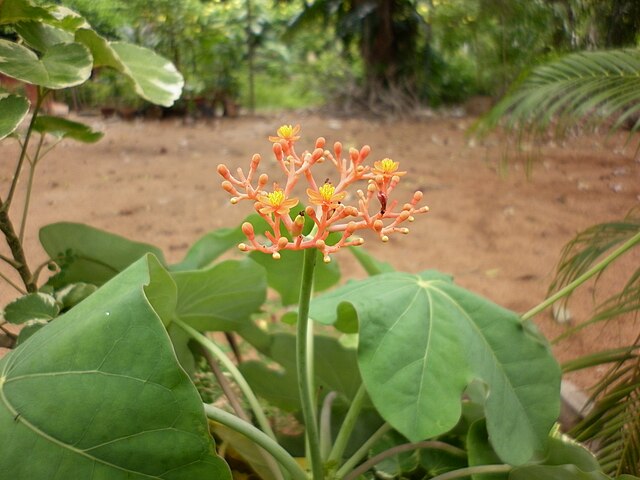
Source: Wikimedia Commons
Jatropha Podagrica
BeginnerJatropha podagrica
Known as Gout Plant, with red flowers and a plump trunk from Central-South America.
Overview
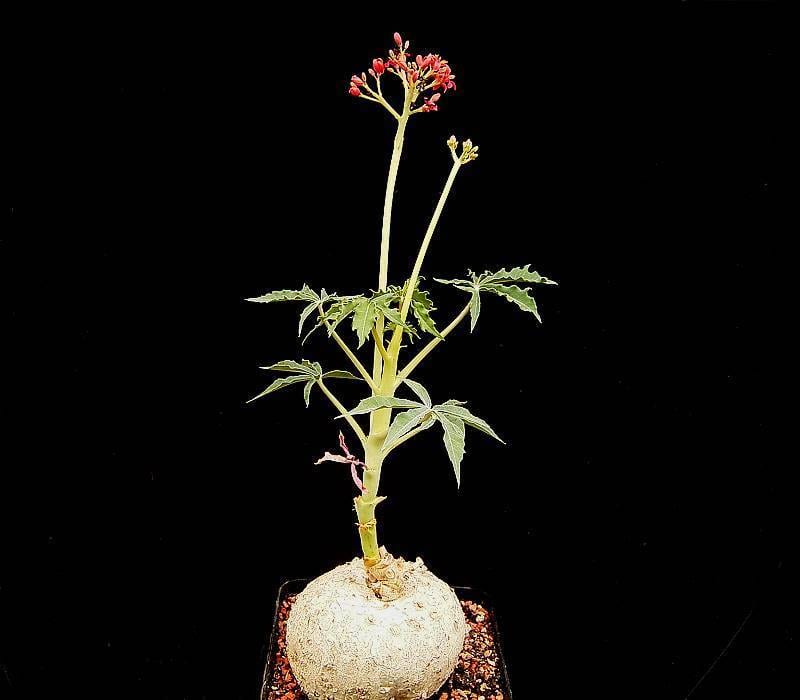
Jatropha podagrica, known as the Gout Plant or Guatemala Rhubarb, is native to tropical regions of Central America and northern South America. Its most recognizable feature is the knobby, bottle-shaped swollen trunk that resembles a gouty joint—the origin of its common name. The trunk is topped with large, umbrella-like leaves, and clusters of bright red flowers are produced on long-lasting inflorescences over an extended blooming period. Despite its exotic appearance, it is relatively tough and forgiving, making it accessible to beginners. All parts of the plant are toxic and should be kept away from children and pets. Full sun is preferred though it tolerates bright partial shade. Well-draining soil and generous watering from spring through autumn, transitioning to very limited water during winter dormancy when it drops its leaves, constitute the basic care regime.
Lifespan of the Jatropha Podagrica
The Jatropha Podagrica lives 10-20 years.
Size of the Jatropha Podagrica
The Jatropha Podagrica grows to 20-50cm.
Temperature & humidity for the Jatropha Podagrica
The ideal temperature for the Jatropha Podagrica is 10〜38℃.
It must be protected from temperatures below 10°C.
Basic Info
Origin
Central America and northern South America
Lifespan
10-20 years
Size
20-50cm
Temperature
10〜38℃
Growing Tips
Light & Placement
Prefers full sun but also grows in bright partial shade. Ample light helps the trunk swell and improves flowering.
Watering
In the spring-to-autumn growing season, water thoroughly once the soil dries. Excess moisture causes root rot, so water until it drains out the bottom, then let it dry.
Temperature & Overwintering
Cold tolerance is low; overwinter indoors where it stays above 10°C. It drops its leaves in winter, but this does not mean it has died.
Dormancy Care
It goes dormant and leafless in winter, so stop watering or give only a tiny amount. Resume watering when it warms up and new shoots appear.
Soil & Repotting
Use a well-draining mix; akadama blended with pumice works well. Repot during the growing season once the roots fill the pot.
Pests & Cautions
The plant is toxic, so wear gloves when pruning or repotting. Keep it out of reach of small children and pets.
Jatropha Podagrica FAQ
QWhat is the growing difficulty level for Jatropha Podagrica?
Beginner. A variety suitable for beginners. No special equipment or experience is required—you can grow it without problems by setting up a basic cultivation environment.
QWhat is the ideal temperature for Jatropha Podagrica?
The ideal temperature for Jatropha Podagrica is 10〜38℃. Avoid sudden temperature changes and maintain a stable environment.
QWhat is the lifespan of Jatropha Podagrica?
The average lifespan of Jatropha Podagrica is 10-20 years. With proper cultivation environment and nutrient management, you can keep it healthy for a long time.
QHow large does Jatropha Podagrica get?
The mature size of Jatropha Podagrica is 20-50cm. This may vary slightly depending on cultivation environment and individual differences.
QWhat is the typical price for Jatropha Podagrica?
The price of Jatropha Podagrica varies significantly by variety, characteristics, size, and lineage. Please check GrowerDirect's price guide for the latest market information.
Last updated: October 2, 2026
Growing Specifications
- USDA Zone
- 10–11
References & Sources
Edited & verified by: GrowerDirect Editorial Team
The classifications, regulations, and growing data on this page are created and verified based on the primary information database below.
Taxonomy & Authority
Regulations & Conservation Status
Not listed in either CITES Appendix I or II. Also not subject to Japan's designated invasive species or specified animals regulations (being a plant).
Sources: CITES Appendix I species list / CITES Appendix II species list / Ministry of the Environment List of Specified Invasive Alien Species
Regulations may change. Always verify the latest information with the relevant authorities.
Related Species
Find listings for this species
Related Articles
Complete Guide to Growing Jatropha podagrica (Buddha's Navel) | Cultivation Management to Enjoy Its Distinctive Caudex and Coral-Red Flowers
How to grow Jatropha podagrica (Buddha belly plant). It explains that the plant drops its leaves and goes dormant when temperatures fall below 10°C, that watering is almost completely stopped in winter, that 30–40% pumice or perlite is mixed into the soil, and that cuttings are inserted after letting the cut surface dry for a few days.
How to Grow Uncarina | Differences Between the Madagascar Endemic Species Grandidieri and Roeoesliana
An explanation of the appeal and cultivation methods of the Madagascar endemic caudex plant Uncarina genus. We introduce the differences between Uncarina grandidieri and roeoesliana, seedling cultivation, and repotting timing.
Complete Guide to Choosing Caudex Plants as Gifts | Recommended Varieties by Occasion and How to Add Care Notes
A scene-by-scene guide to choosing caudex plants as gifts. We introduce variety selection tailored to the recipient's growing experience and how to add care notes so they can enjoy them long-term.
Diagnosis and Solutions for Poor Root Development in Caudex Plants | Why Roots Won't Emerge and How to Fix It
A detailed guide to rooting problems in caudex plants. From diagnosis methods to improvement strategies, we introduce practical techniques for successful rooting.
🩺 Common diseases
Can't find the plant you're looking for?
Post your wishes for free and growers with matching plants will contact you with introductions.