Adenia ballyi
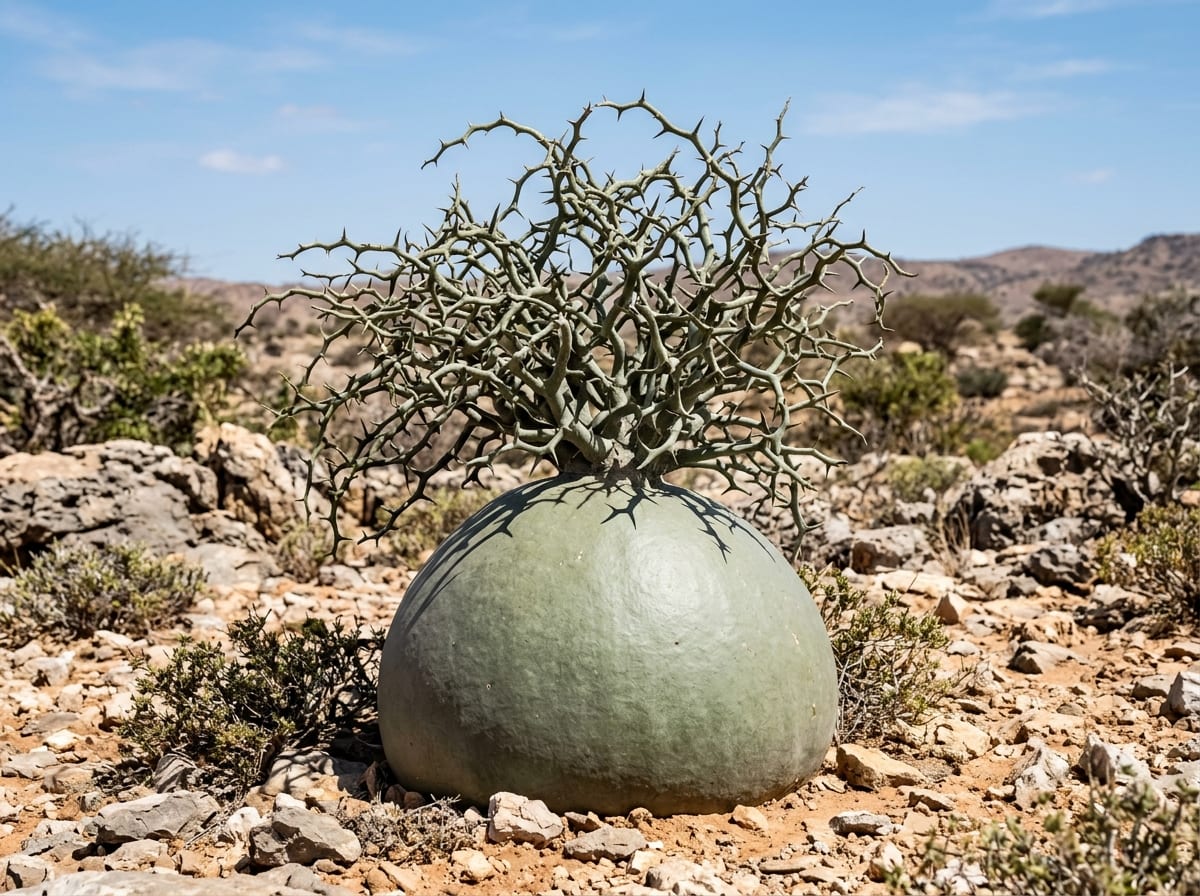
Adenia ballyi is a caudex-forming succulent in the passionflower family, native to Somalia. From its large, gray-green, dome-shaped caudex grow thick, thorny stems that curve and twist dramatically, giving the plant a wild, sculptural presence. Unusually, the tendrils it would normally use to climb have evolved into sharp spines instead. In habitat, the caudex can reach about a meter across, and the plant develops its striking form gradually over many years. Because it demands a bit more care than easier caudex plants, it suits growers who already have some caudex-growing experience.
View Adenia ballyi encyclopedia →0% commission on your first sales!Register by September 30, 2026 and your first 2 plants are commission-free!
Grower Wanted!
List your plants on GrowerDirect and sell directly to customers nationwide!
6 Transparency Commitments from GrowerDirect
Our Grower disclose all key information for Caudex Plants listings, ensuring complete transparency on variety, origin, light needs, and difficulty.
- Variety Disclosed
- Real Plant Photos
- Color Details
- Origin Disclosed
- Light Requirements
- Difficulty Level
Browse all 145 varieties
Light Requirements
Difficulty Level
Verified growers wanted for Caudex Plants
Growers are signing up now ahead of launch. Subscribe to be notified when new listings go live.
Getting alerts is free with a member account. When new listings match your saved search, we'll notify you by email and in-app.
Browse other categories
Verified growers (preview)
Are you growing caudex plants?
Register as a grower and connect with buyers directly.
Apply as a growerAdenia ballyi key facts
- Growing Difficulty
- Advanced
- Lifespan
- Long-lived (little published data)
- Size
- Up to 2 m tall; caudex up to 1 m across in the wild
- Watering
- Light feeding in the growing season
- Light & Placement
- It grows on sunny rocky ground; give it plenty of sun.
- Watering
- Water while it is in leaf, letting the mix dry between waterings.
- Dormancy Care
- Adenia rot easily if wet while leafless, so keep it dry when the leaves have fallen.
- Temperature & Overwintering
- Adenia are prone to rot in cold, wet conditions; overwinter it warm and on the dry side.
- Soil & Repotting
- It grows on limestone rock; use a very porous mix with plenty of pumice or similar grit.
- Pests & Cautions
- Adenia are reported to be highly toxic in all parts, and this species is also spiny: wear gloves when pruning or repotting and keep it away from children and pets.
About Adenia ballyi
Adenia ballyi is a Somali caudex plant with a large gray-green base and thorny, curving stems. Its tendrils have evolved into spines, and habitat specimens can reach a 1m caudex. Best for experienced growers.
7 things to know before growing Adenia ballyi
1Sunlight and Airflow
Adenia ballyi thrives with plenty of light and good air circulation, so give it the brightest spot you can. In peak summer, intense direct sun can scorch the leaves, so light shade during the hottest hours is a good compromise. If it's grown outdoors, bring it inside well before the first frost.
2Watering Basics
During the growing season, water thoroughly once the soil has fully dried out. Because the caudex stores its own water reserves, overwatering easily leads to root rot. In winter dormancy, cut back watering drastically and keep the plant on the dry side.
3Well-Draining Soil
A fast-draining succulent or caudex-plant mix works best. Blend in hard akadama and pumice so water never sits in the pot. Avoid soil that's heavy in organic matter, since it raises the risk of root rot.
4Repotting Guidelines
Spring to early summer, during the active growing season, is the best time to repot. Move the plant into a pot just one size larger, taking care not to disturb the root ball too much. Hold off on heavy watering afterward to let the roots settle in.
5Winter Dormancy Care
As temperatures drop, the plant sheds its leaves and enters dormancy. During this period, keep it almost completely dry and place it somewhere warm and bright indoors to maintain a safe minimum temperature. Once new growth appears in spring, gradually resume watering.
6Handling the Spines
The sharp spines covering the stems are the plant's signature feature, but they also call for care — wear gloves when repotting or handling it. Because of the spines, it's wise to place the plant somewhere out of the path of people and pets.
7Choosing a Healthy Plant
Look for a caudex that feels firm and plump, with a smooth surface and minimal wrinkling. It's also worth checking that the stem and spine tips aren't dried out and that the base sits securely without wobbling. Since caudex plants grow slowly, choose one you genuinely like and plan to enjoy for the long term.
Frequently asked questions about Adenia ballyi
- Q.Can beginners grow Adenia ballyi?
- A.Adenia ballyi is generally considered suitable for experienced growers. It requires some skill in judging watering and managing dormancy, so it suits people who already have caudex-plant experience.
- Q.How large does it grow?
- A.The stems can reach up to about 2 meters tall. In habitat, the caudex is known to reach around a meter across, though in a pot it takes many years to approach that size.
- Q.I've heard it has spines — is it dangerous?
- A.The stems are densely covered in sharp spines that can hurt if touched directly. Wearing gloves during repotting or maintenance, and placing the plant where people and pets won't brush against it, helps avoid problems.
- Q.How long does it live?
- A.It's considered a long-lived plant, though detailed records on its lifespan are limited. With consistent care, you can expect to watch the caudex develop over many years.
- Q.How should I care for it in winter?
- A.As temperatures fall, the plant drops its leaves and goes dormant. During this time, cut watering back significantly and keep it in a warm, bright indoor spot. Resume watering once new growth appears in spring.
Handy Growing Tools for Adenia ballyi
Learn more about Adenia ballyi in the encyclopedia
View Adenia ballyi encyclopedia entry →
Care difficulty, size, origin and light needs — all basics covered.
More in this category
Can't find the plant you're looking for?
Post your wishes for free and growers with matching plants will contact you with introductions.