Source: Wikimedia Commons
African baobab
BeginnerAdansonia digitata
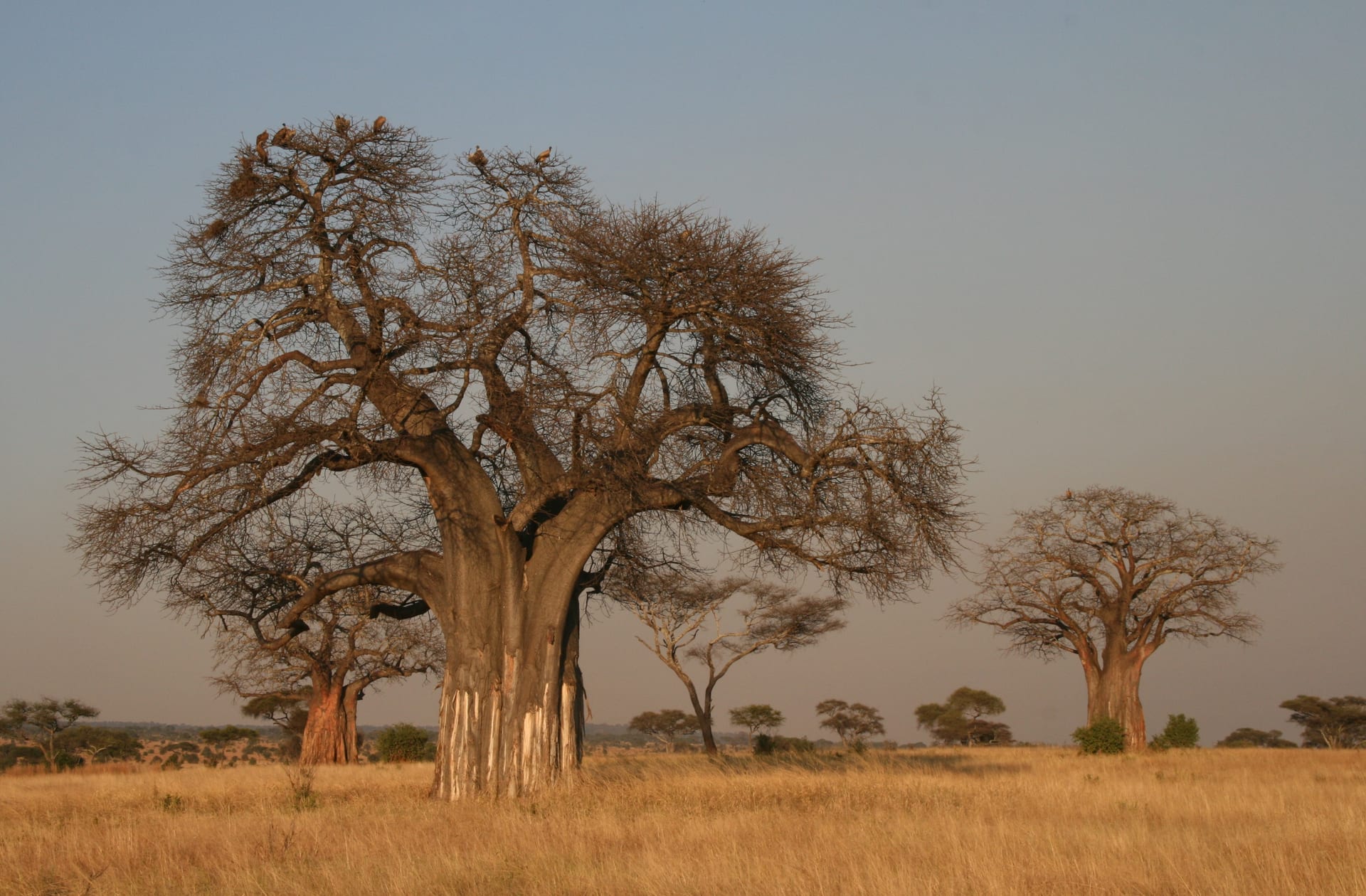
The African baobab of the savanna, famous for its massive bottle-shaped trunk. Seedlings have simple leaves that change with age to palmate leaves of five to seven leaflets, and young plants can be kept in pots for many years.
About
Adansonia digitata, the African baobab, is a deciduous tree in the Malvaceae and the most widespread baobab, native to sub-Saharan Africa and the southern Arabian Peninsula (Yemen and Oman). It grows in hot, dry savanna and open woodland on well-drained ground, always in frost-free areas. It reaches 5–25 m tall, but the trunk is enormous and can exceed 10 m across; radiocarbon dating has shown one tree to be 1,275 years old. It sheds its leaves in the dry season and stands leafless for about eight months of the year. Mature leaves have five to seven (sometimes nine) palmate leaflets, while seedlings and young shoots bear simple leaves that change to compound leaves with age. The large white flowers hang on long stalks, open in the late afternoon for a single night and are pollinated mainly by bats. The hard-shelled fruit contains an edible pulp. It is easy to raise from seed and grows fairly quickly when young, so it can be kept in a pot for many years or trained as a bonsai. In Japan seedlings and seed are widely sold online.
Source: Wikipedia (CC BY-SA 4.0)
Lifespan of the African baobab
The African baobab lives Extremely long-lived (one tree dated to 1,275 years).
Size of the African baobab
The African baobab grows to 5–25 m tall in the wild with a trunk that can exceed 10 m across; stays small in a pot.
Basic Info
Origin
Sub-Saharan Africa and the southern Arabian Peninsula
Lifespan
Extremely long-lived (one tree dated to 1,275 years)
Size
5–25 m tall in the wild with a trunk that can exceed 10 m across; stays small in a pot
Temperature
10〜35℃
Watering & Fertilizer
Regular feeding in the growing season
Growing Tips
Light & Placement
Give it good light; potted plants can be moved to a sunny window or greenhouse for winter.
Watering
Very drought-tolerant. Even in the growing season avoid overwatering and let the mix dry between waterings.
Temperature & Overwintering
It cannot take even light frost, so keep it at a minimum of 10–13°C in winter. No water is needed while it is leafless in winter.
Soil & Repotting
Plant in a well-drained mix; it thrives even in rainy climates as long as drainage is good.
Propagation
Soak seed in hot water, let it cool and leave it for 24 hours before sowing in spring or summer at 25–27°C; germination takes two to six weeks. Cuttings also root.
African baobab FAQ
QWhat is the growing difficulty level for African baobab?
Beginner. A variety suitable for beginners. No special equipment or experience is required—you can grow it without problems by setting up a basic cultivation environment.
QWhat is the lifespan of African baobab?
The average lifespan of African baobab is Extremely long-lived (one tree dated to 1,275 years). With proper cultivation environment and nutrient management, you can keep it healthy for a long time.
QHow large does African baobab get?
The mature size of African baobab is 5–25 m tall in the wild with a trunk that can exceed 10 m across; stays small in a pot. This may vary slightly depending on cultivation environment and individual differences.
QHow should I water and fertilize African baobab?
African baobab: watering & fertilizer — Regular feeding in the growing season. Aim for appropriate frequency and amount.
QWhat is the typical price for African baobab?
The price of African baobab varies significantly by variety, characteristics, size, and lineage. Please check GrowerDirect's price guide for the latest market information.
Last updated: September 23, 2026
References & Sources
Edited & verified by: GrowerDirect Editorial Team
The classifications, regulations, and growing data on this page are created and verified based on the primary information database below.
Taxonomy & Authority
Regulations & Conservation Status
Not listed in CITES (checked on Species+). No special procedure is needed for transfers within Japan.
Sources: Species+ (CITES): Adansonia digitata
Regulations may change. Always verify the latest information with the relevant authorities.
Related Species
Find listings for this species
Related Articles
How to Grow Uncarina | Differences Between the Madagascar Endemic Species Grandidieri and Roeoesliana
An explanation of the appeal and cultivation methods of the Madagascar endemic caudex plant Uncarina genus. We introduce the differences between Uncarina grandidieri and roeoesliana, seedling cultivation, and repotting timing.
Complete Guide to Choosing Caudex Plants as Gifts | Recommended Varieties by Occasion and How to Include Care Notes
A guide to choosing caudex plants as gifts organized by occasion. We introduce how to select varieties based on the recipient's cultivation experience and how to include care notes for long-term enjoyment.
Diagnosing and Treating Poor Root Development in Caudex Plants | Causes and Solutions for Roots That Won't Emerge or Won't Grow
A detailed guide to root emergence problems in caudex plants. From diagnosis methods to solutions, practical techniques for promoting healthy root development are introduced.
Complete Guide to Growing Jatropha podagrica (Buddha's Navel) | Cultivation Management to Enjoy Its Distinctive Caudex and Coral-Red Flowers
Characteristics and cultivation methods of the caudex plant Jatropha podagrica. Detailed explanation of watering management during dormancy, soil, and propagation methods.
🩺 Common diseases
Can't find the plant you're looking for?
Post your wishes for free and growers with matching plants will contact you with introductions.