Source: Wikimedia Commons
Fockea multiflora
IntermediateFockea multiflora
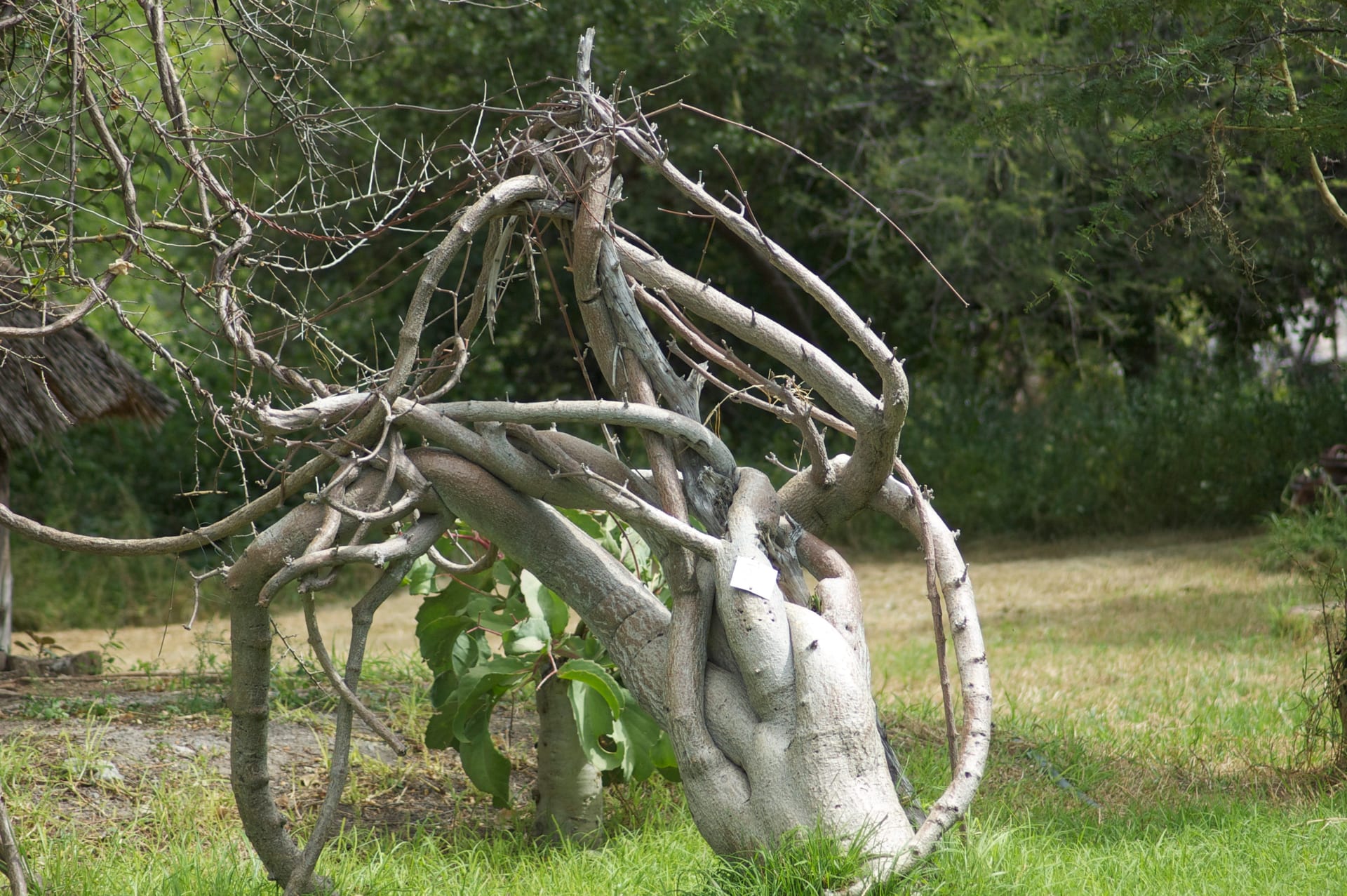
The giant of the genus Fockea: a tropical African liana whose thick stems climb up to 15 m into trees. Unlike tuberous relatives such as F. edulis, it has no distinct tuber; instead the trunk swells toward the base.
About
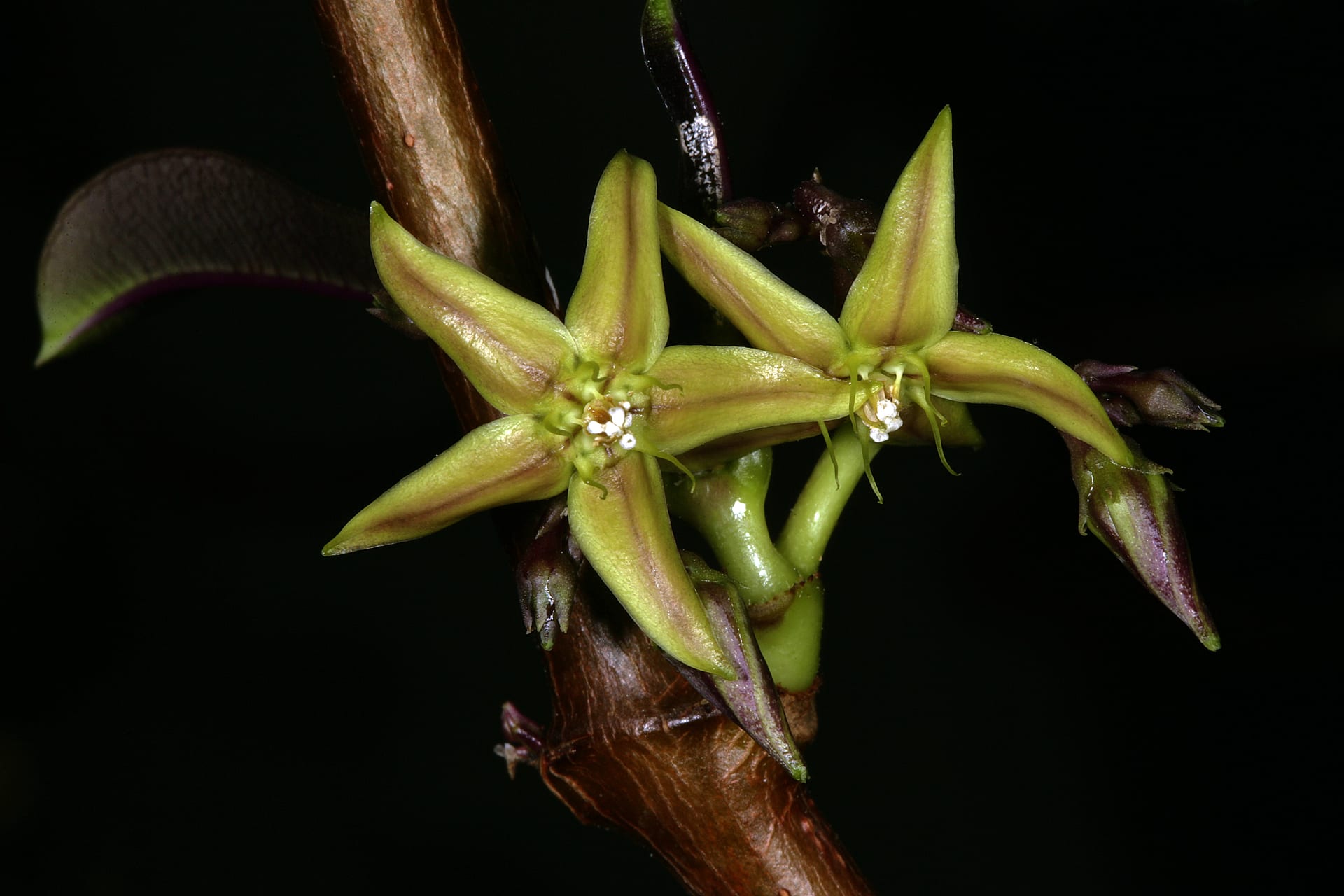
Fockea multiflora is a semi-succulent climber in the dogbane family (Apocynaceae, formerly Asclepiadaceae), found in the seasonally dry tropics of south-central Africa, including Tanzania, Malawi, Mozambique, Zambia, Zimbabwe, Angola, Botswana and Namibia, on low hills and among rocks around their bases at about 600–1,000 m. Of the six Fockea species it is the second most widespread. While the other five are small climbers with large underground tubers, this species has no tuber and becomes a massive woody liana up to 15 m long; large specimens are probably the biggest members of the milkweed subfamily. The trunk thickens toward the base to about 30 cm, and mature plants have a network of fleshy roots radiating from it. Damaged stems exude a white latex. Young stems are woolly and later develop grey, shiny bark. The opposite leaves are broadly elliptic, about 10 cm long, with grey-felted undersides. Clusters of up to about 30 flowers, each about 15 mm across, grey-green outside and yellow-green to brown inside, form in the leaf axils. It is known in English as python vine. Published cultivation information is scarce. In Japan potted plants and seed are sold online as a large species distinct from the tuberous Fockea edulis.
Source: Wikipedia (CC BY-SA 4.0)
Size of the Fockea multiflora
The Fockea multiflora grows to Stems up to 15 m long with a trunk about 30 cm thick in the wild; stays small in a pot.
Basic Info
Origin
South-central tropical Africa (Tanzania to Namibia)
Lifespan
Long-lived woody climber (little published data)
Size
Stems up to 15 m long with a trunk about 30 cm thick in the wild; stays small in a pot
Temperature
10〜35℃
Watering & Fertilizer
Light feeding in the growing season
Growing Tips
Light & Placement
It comes from seasonally dry tropical hills. Grow it in bright light and either give the stems a support or cut them back.
Watering
A plant of regions with wet and dry seasons: water in the warm growing season, letting the mix dry between waterings.
Temperature & Overwintering
Native to tropical Africa, with little published data on cold tolerance; overwinter it in a warm room on the dry side.
Soil & Repotting
Use a free-draining mix; mature plants develop fleshy roots, so avoid soggy soil.
Pests & Cautions
Cut stems bleed white latex; wear gloves when pruning and keep it off skin and eyes.
Fockea multiflora FAQ
QWhat is the growing difficulty level for Fockea multiflora?
Intermediate. A variety suitable for intermediate growers. Requires some cultivation experience and knowledge of environment management. Pay careful attention to temperature and humidity control.
QHow large does Fockea multiflora get?
The mature size of Fockea multiflora is Stems up to 15 m long with a trunk about 30 cm thick in the wild; stays small in a pot. This may vary slightly depending on cultivation environment and individual differences.
QHow should I water and fertilize Fockea multiflora?
Fockea multiflora: watering & fertilizer — Light feeding in the growing season. Aim for appropriate frequency and amount.
QWhat is the typical price for Fockea multiflora?
The price of Fockea multiflora varies significantly by variety, characteristics, size, and lineage. Please check GrowerDirect's price guide for the latest market information.
Last updated: September 23, 2026
References & Sources
Edited & verified by: GrowerDirect Editorial Team
The classifications, regulations, and growing data on this page are created and verified based on the primary information database below.
Taxonomy & Authority
Regulations & Conservation Status
Not listed in CITES (checked on Species+). No special procedure is needed for transfers within Japan.
Sources: Species+ (CITES): Fockea multiflora
Regulations may change. Always verify the latest information with the relevant authorities.
Related Species
Find listings for this species
Related Articles
How to Grow Uncarina | Differences Between the Madagascar Endemic Species Grandidieri and Roeoesliana
An explanation of the appeal and cultivation methods of the Madagascar endemic caudex plant Uncarina genus. We introduce the differences between Uncarina grandidieri and roeoesliana, seedling cultivation, and repotting timing.
Complete Guide to Choosing Caudex Plants as Gifts | Recommended Varieties by Occasion and How to Include Care Notes
A guide to choosing caudex plants as gifts organized by occasion. We introduce how to select varieties based on the recipient's cultivation experience and how to include care notes for long-term enjoyment.
Diagnosing and Treating Poor Root Development in Caudex Plants | Causes and Solutions for Roots That Won't Emerge or Won't Grow
A detailed guide to root emergence problems in caudex plants. From diagnosis methods to solutions, practical techniques for promoting healthy root development are introduced.
Complete Guide to Growing Jatropha podagrica (Buddha's Navel) | Cultivation Management to Enjoy Its Distinctive Caudex and Coral-Red Flowers
Characteristics and cultivation methods of the caudex plant Jatropha podagrica. Detailed explanation of watering management during dormancy, soil, and propagation methods.
🩺 Common diseases
Can't find the plant you're looking for?
Post your wishes for free and growers with matching plants will contact you with introductions.