Caudex Plant Encyclopedia
Encyclopedia of popular caudex plants with care guides, traits, and root management tips.
Featured Caudex Plant
Showing 30 of 141 species(1–24)
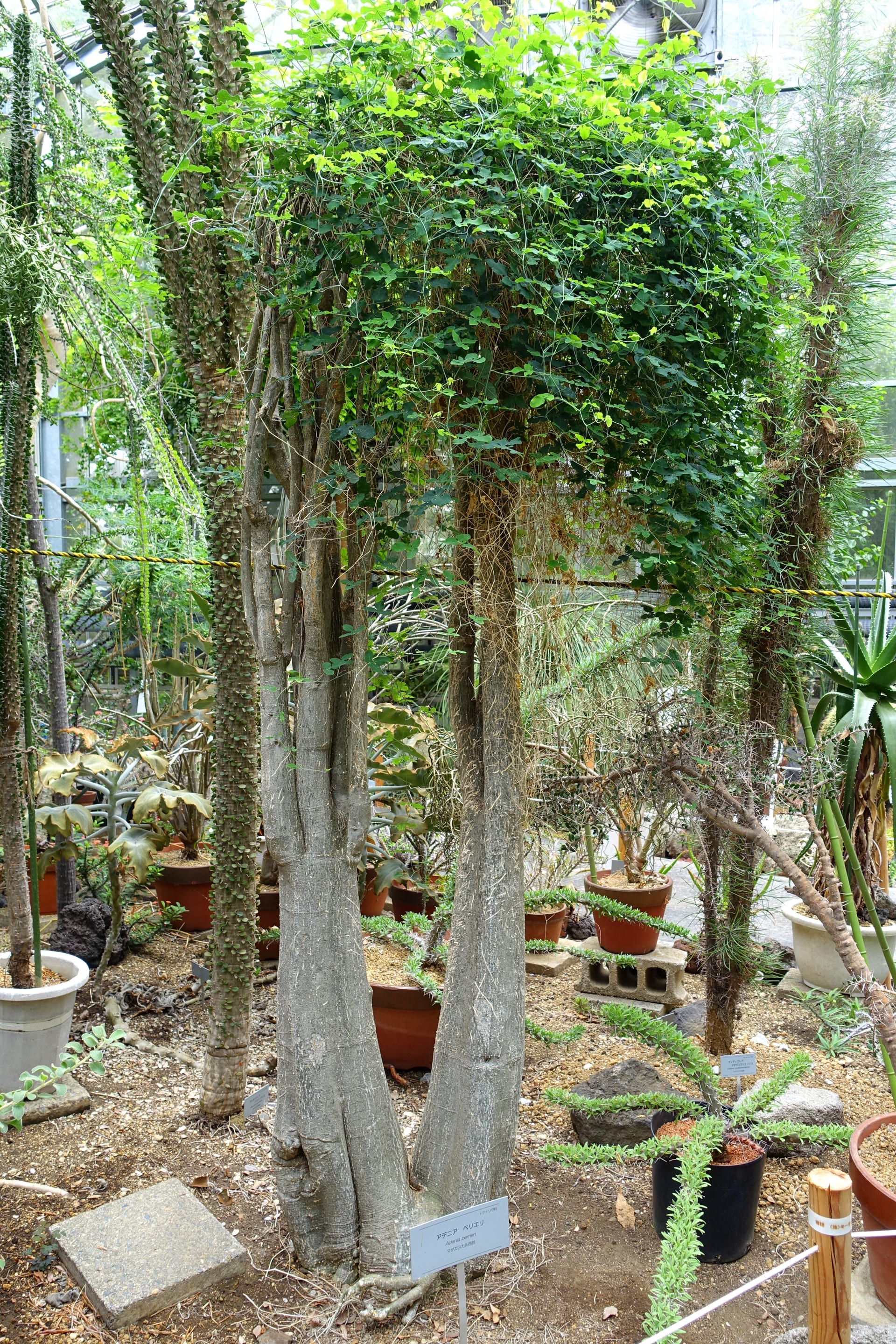 © Daderot / CC0
Adenia perrieri
Adenia perrieri
A Madagascan Adenia that sends green vines with lace-like, finely divided leaves from a caudex about 20 cm across. It is grown more for its foliage than its caudex, and a white-spotted "snowflake" form is also known.
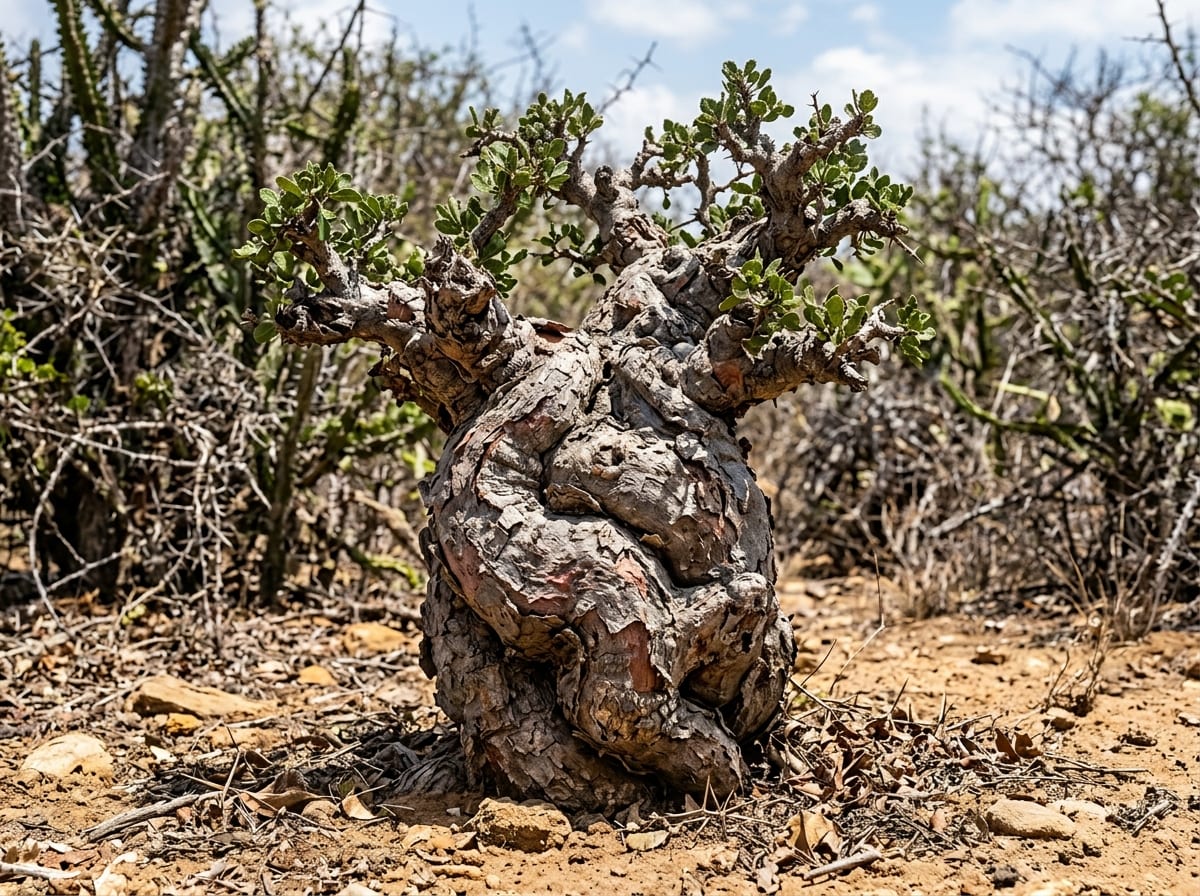
Commiphora monstruosa
Commiphora monstruosa
A Commiphora endemic to Madagascar, a shrub with a fat, knobbly trunk and flaking bark. It was first described in Operculicarya, and the name refers to its bizarre shape.
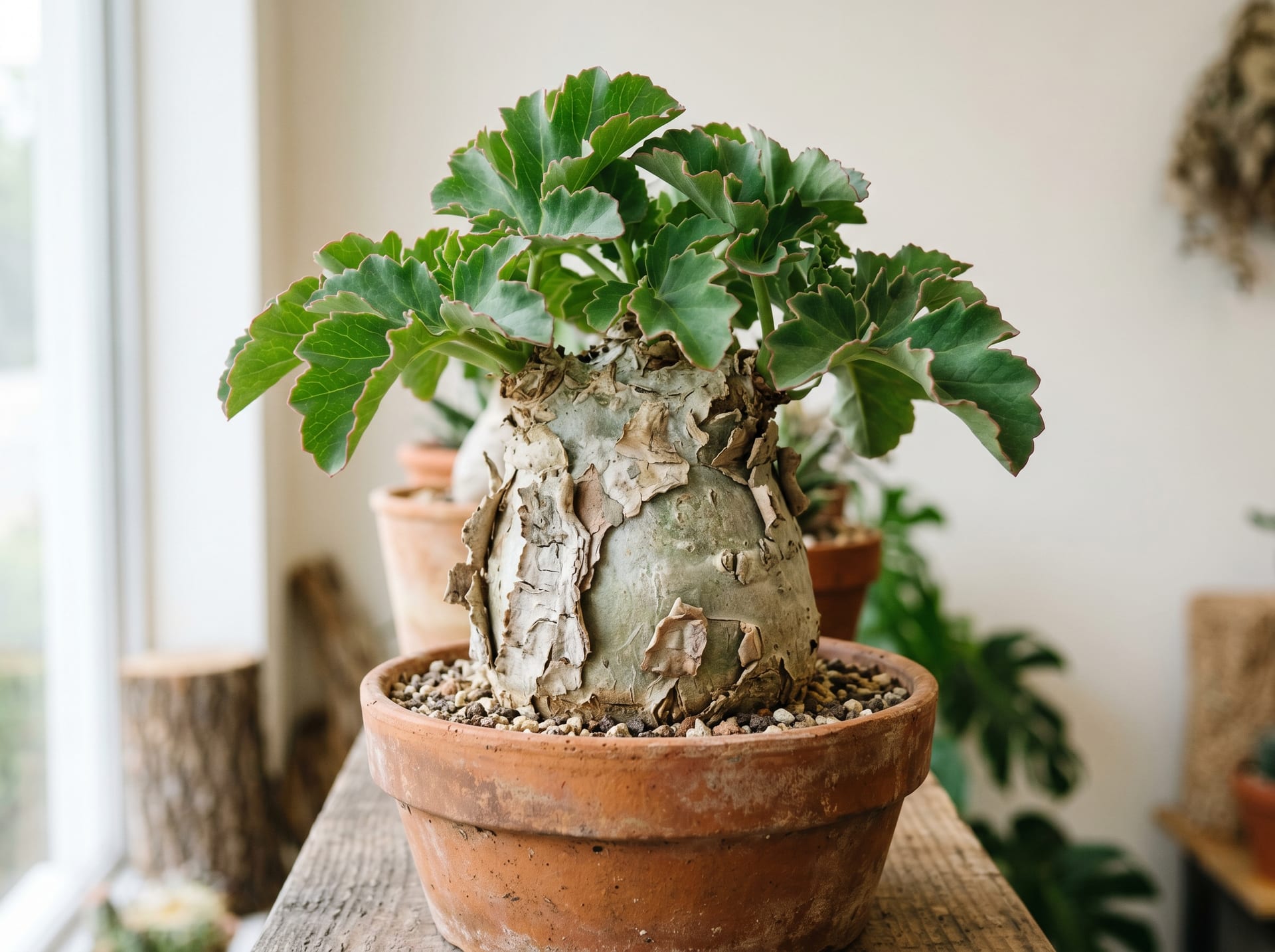
Cyphostemma Laza
Cyphostemma laza
A Madagascar grape-family caudex with silver trunk and large leaves, very impressive.
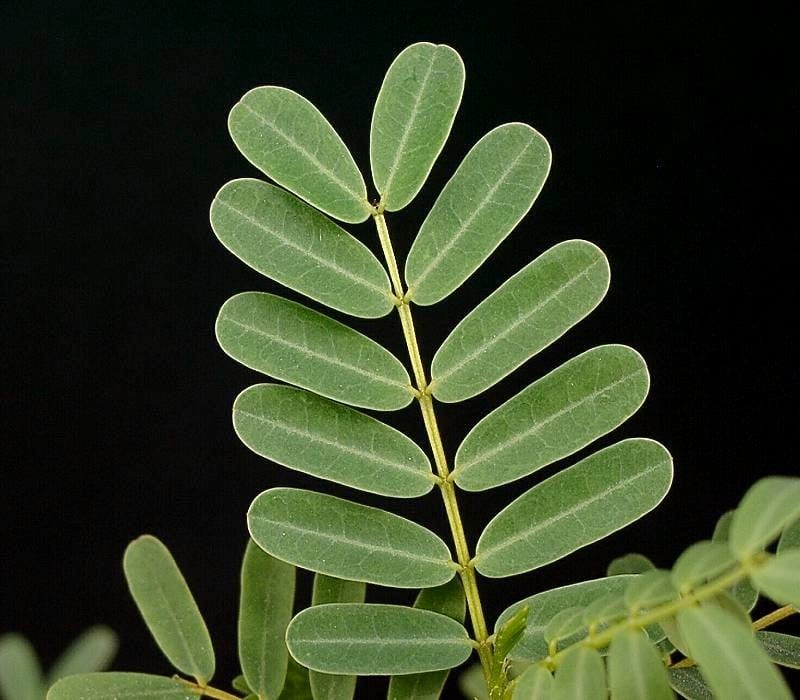 © Frank Vincentz / CC BY-SA 3.0
Delonix decaryi
Delonix decaryi
A caudiciform legume from south-western Madagascar with a bottle-shaped trunk of peeling grey bark under an umbrella-shaped crown. It has finely divided leaves and fragrant white flowers with long red stamens.
 © User:Qwertzy2 / CC BY-SA 3.0
Elephant-foot Grape Tree
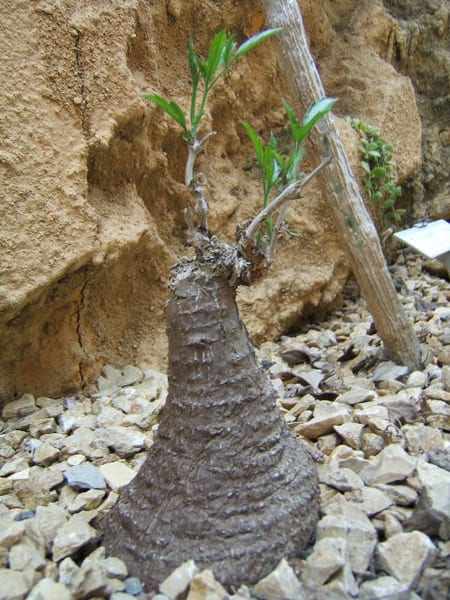
Cyphostemma elephantopus
A caudiciform member of the grape family endemic to south-western Madagascar. From a stout brown caudex like an elephant's foot it sends out vining stems with fleshy three-lobed leaves in summer. CITES Appendix II.
 © Frank Vincentz / CC BY-SA 3.0
Euphorbia Ambovombensis
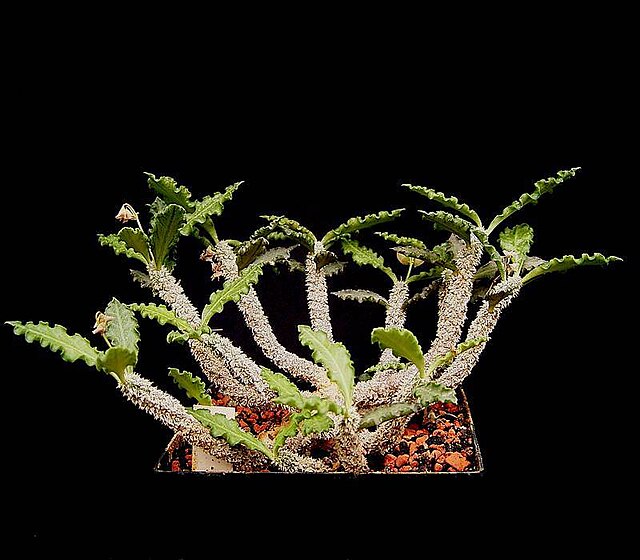
Euphorbia ambovombensis
A small caudex Euphorbia from Madagascar with a plump caudex and small leaves.
 © Frank Vincentz / CC BY-SA 3.0
Euphorbia Cylindrifolia
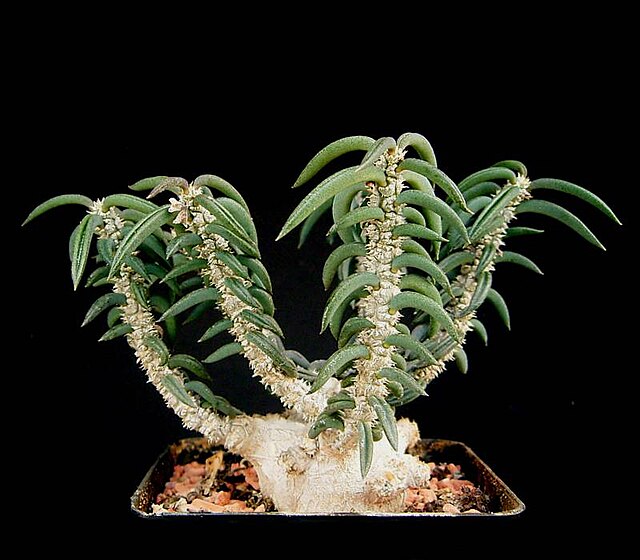
Euphorbia cylindrifolia
A small Euphorbia with cylindrical leaves and caudex, endemic to Madagascar.
 © Leonora Enking from West Sussex, England / CC BY-SA 2.0
Euphorbia decaryi
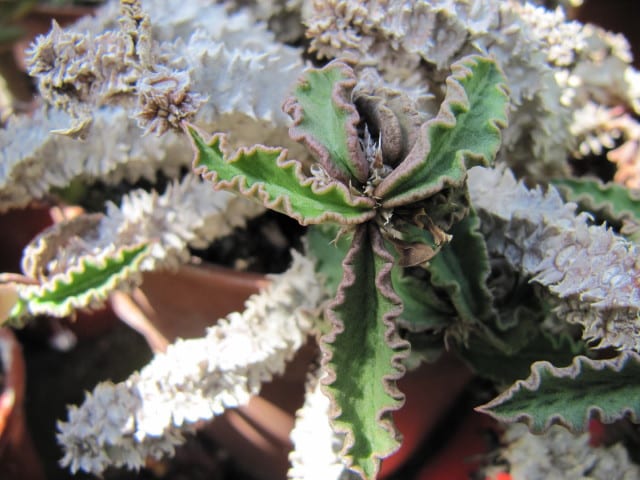
Euphorbia decaryi
A small Madagascan spurge that spreads by creeping rhizomes and bears rosettes of leaves at the stem tips. Its dark red to green leaves are strongly wavy and crisped, turning coppery in summer.
 © Frank Vincentz / CC BY-SA 3.0
Euphorbia gottlebei
Euphorbia gottlebei
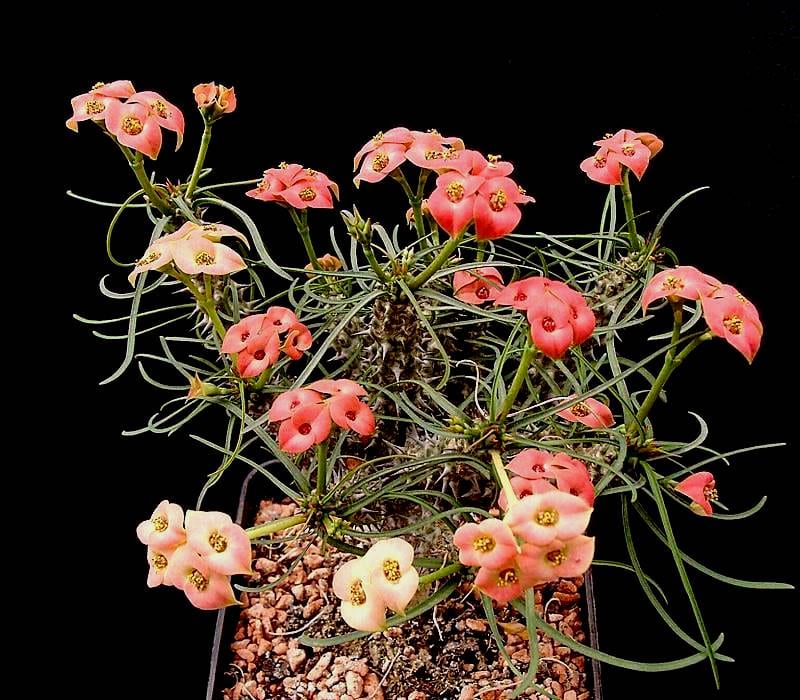
A shrubby Madagascan spurge with slender, densely spiny branches, narrow leaves and small flowers with orange-red bracts below the branch tips. It looks like a miniature crown-of-thorns.
 © Frank Vincentz / CC BY-SA 3.0
Euphorbia pachypodioides
Euphorbia pachypodioides
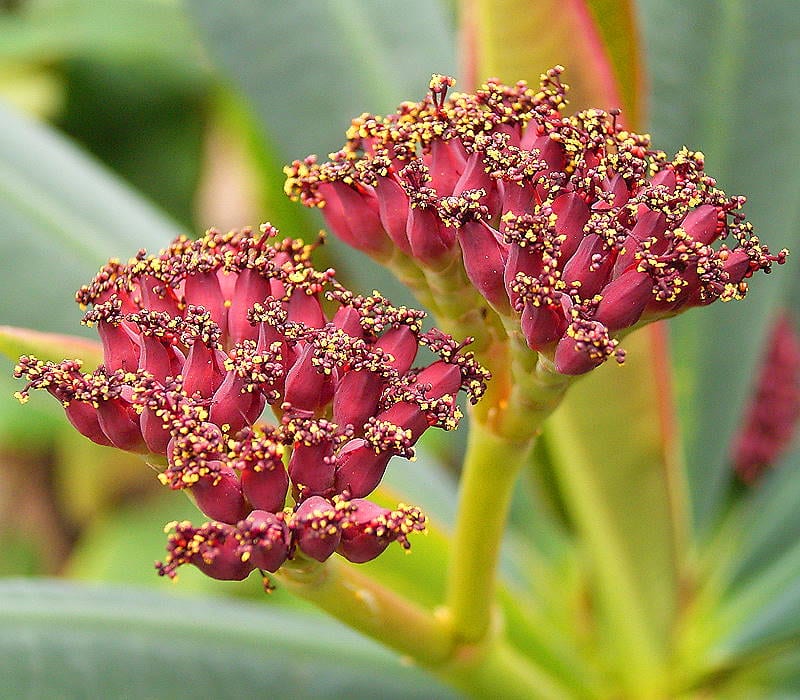
A Euphorbia with a Pachypodium-like columnar stem topped by large leaves, glaucous blue-green above and red-violet beneath. Flowers wrapped in dark purple bracts open before the leaves.
Euphorbia suzannae-marnierae
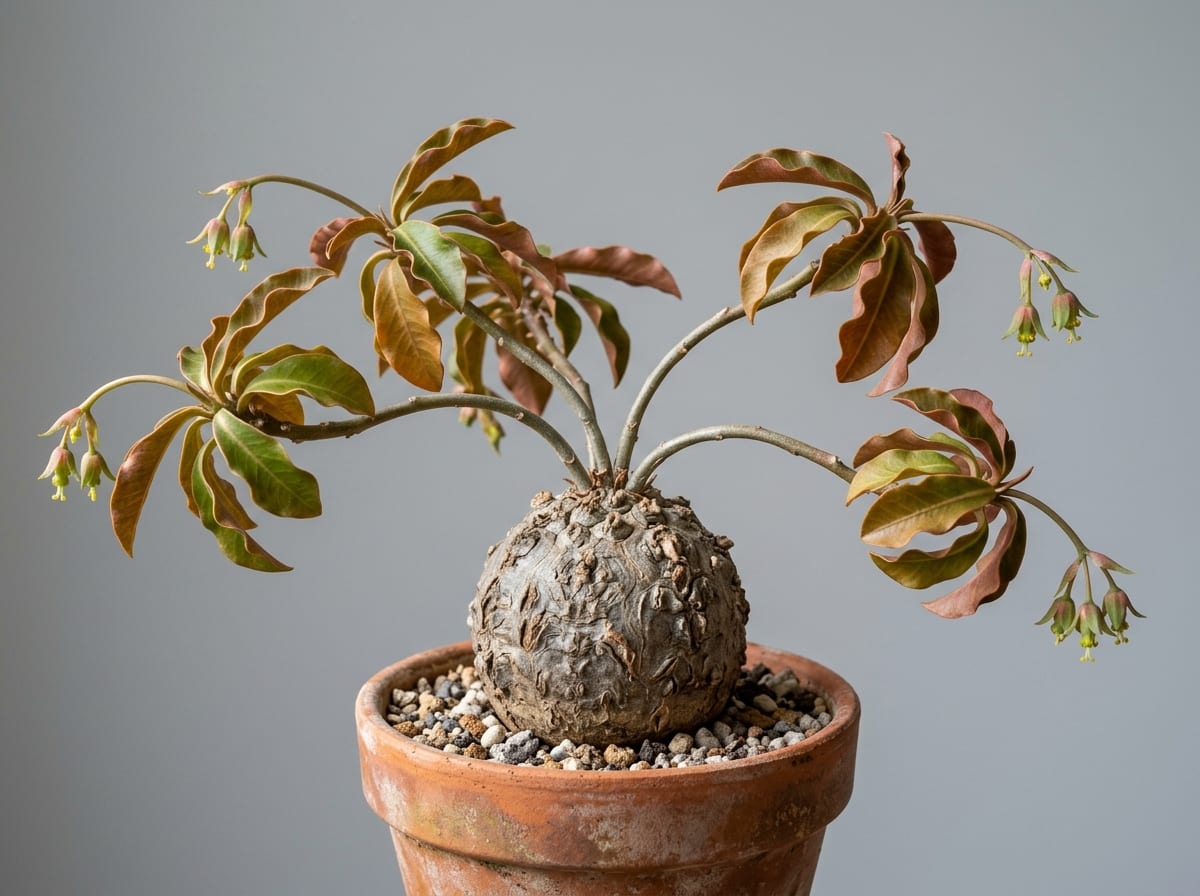
Euphorbia suzannae-marnierae
A small spurge from the southern tip of Madagascar with a round grey-brown caudex about 5 cm across, a few slender branches and spirally arranged, leathery, curled leaves in green to copper. The flowers are pendulous bells.
 © Frank Vincentz / CC BY-SA 3.0
Euphorbia tulearensis
Euphorbia tulearensis
A small spurge from south-western Madagascar with a rounded corky caudex, short fat branches and rosettes of crinkled leaves like those of E. decaryi. It forms a bonsai-like plant about 20 cm tall.
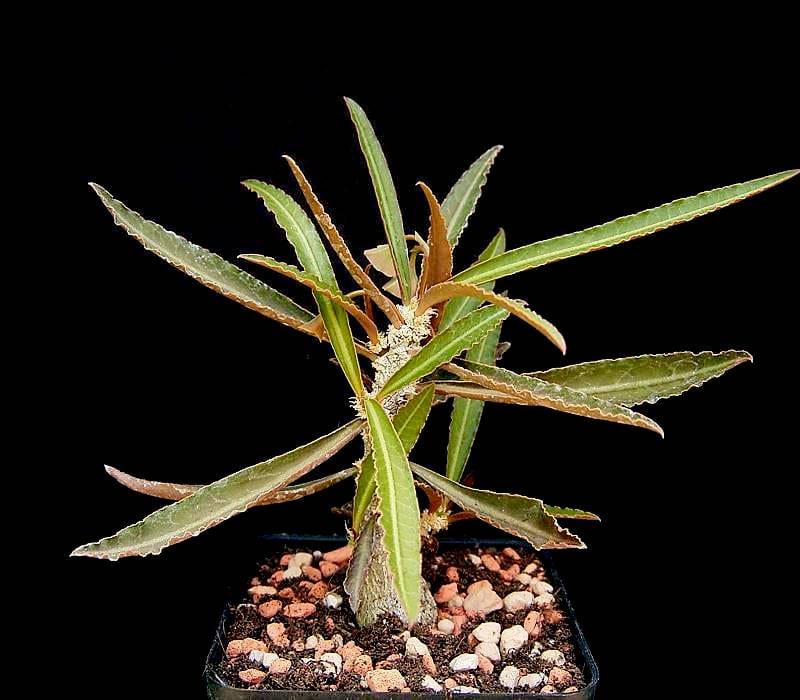 © Frank Vincentz / CC BY-SA 3.0
Euphorbia waringiae
Euphorbia waringiae
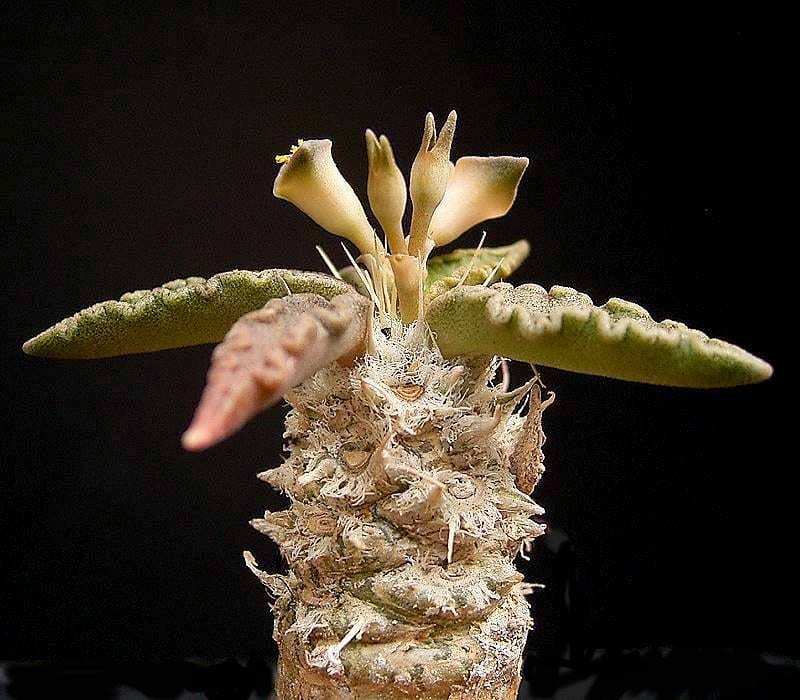
A small spurge from south-eastern Madagascar whose half-buried round caudex, about 6 cm across, sends out slender leaning branches set with small whitish bumps. White to cream flowers keep opening for several months.
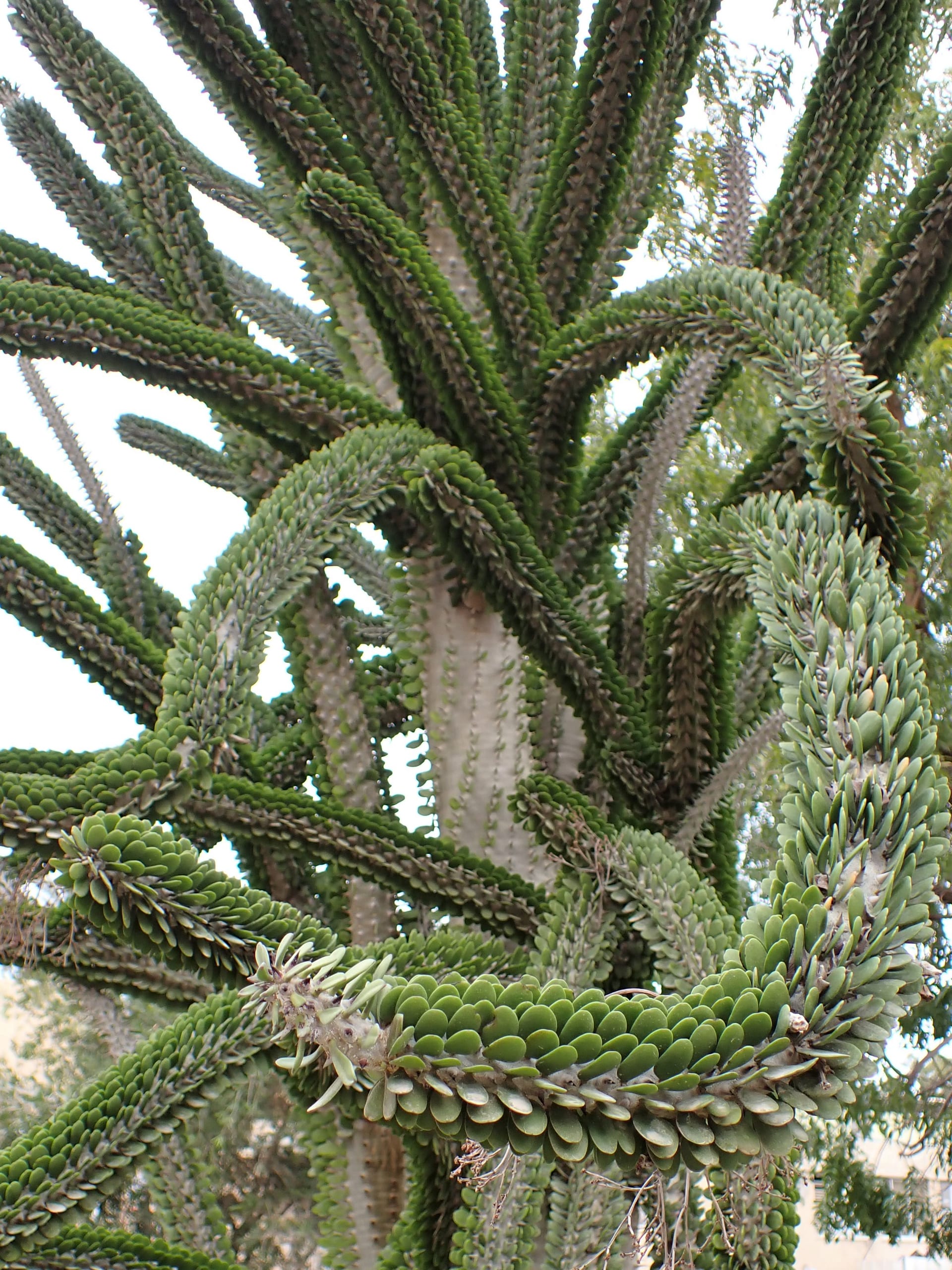 © Krzysztof Ziarnek, Kenraiz / CC BY-SA 4.0
Madagascar ocotillo
Alluaudia procera
The "Madagascar ocotillo" of the southern spiny forest, with bone-white stems lined with conical spines and small round leaves. It looks much like the American ocotillo but belongs to an unrelated family.
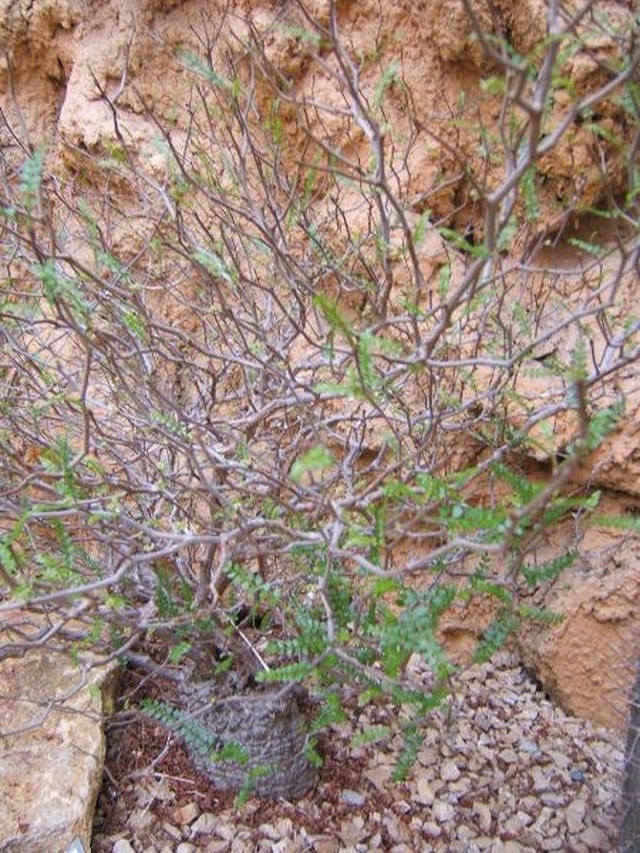 © User:Qwertzy2 / CC BY-SA 3.0
Operculicarya Decaryi
Operculicarya decaryi
A caudex plant with bonsai-like form, beautiful balance of small leaves and thick trunk.
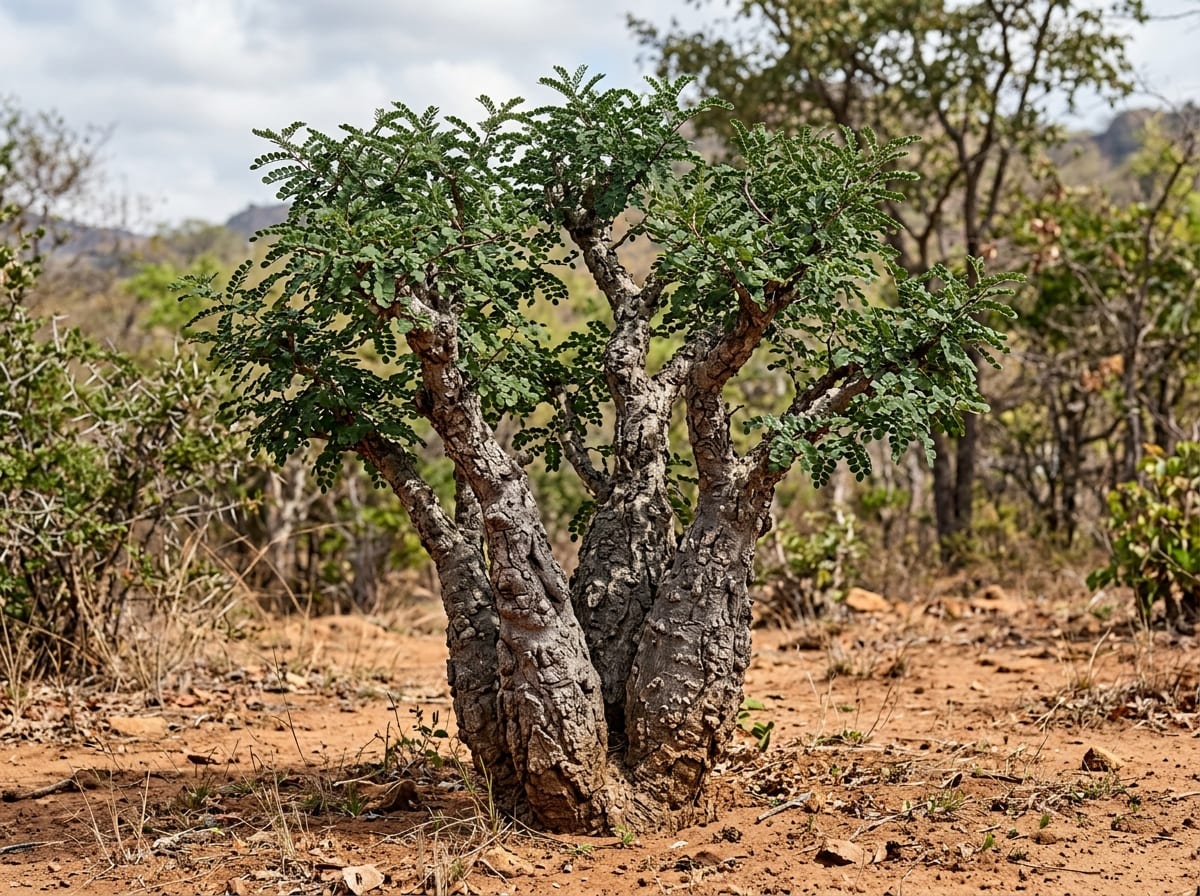
Operculicarya hyphaenoides
Operculicarya hyphaenoides
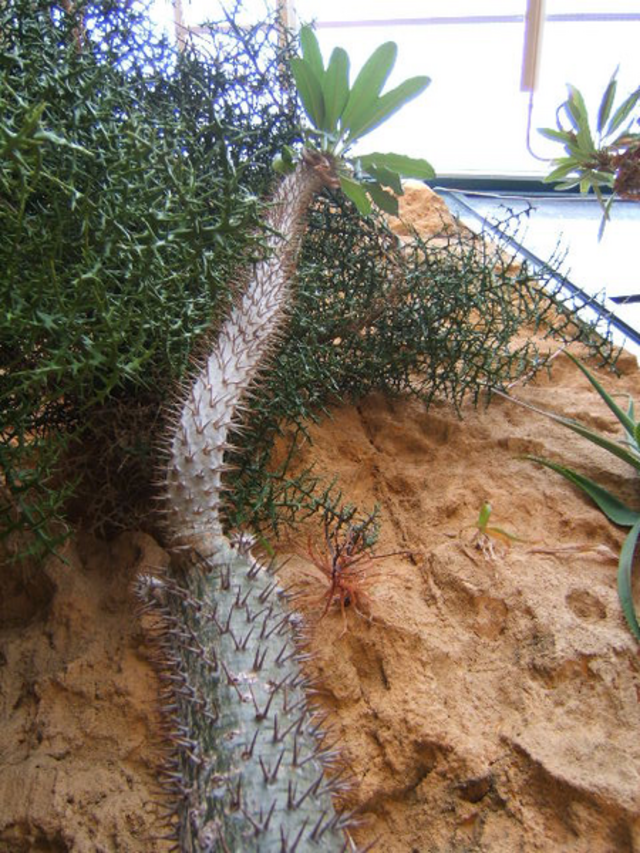
A south-western Madagascan Operculicarya with several thick, warty trunks from one base and finely divided, densely hairy pinnate leaves. Its rounded, squarish leaflets and overall hairiness set it apart from O. pachypus and O. decaryi.
 © User:Qwertzy2 / CC BY-SA 3.0
Pachypodium
Pachypodium
Caudex plant from Madagascar. Fascinating contrast between thick thorny trunk and small leaves. Rapidly growing popularity.
Pachypodium bicolor
Pachypodium bicolor
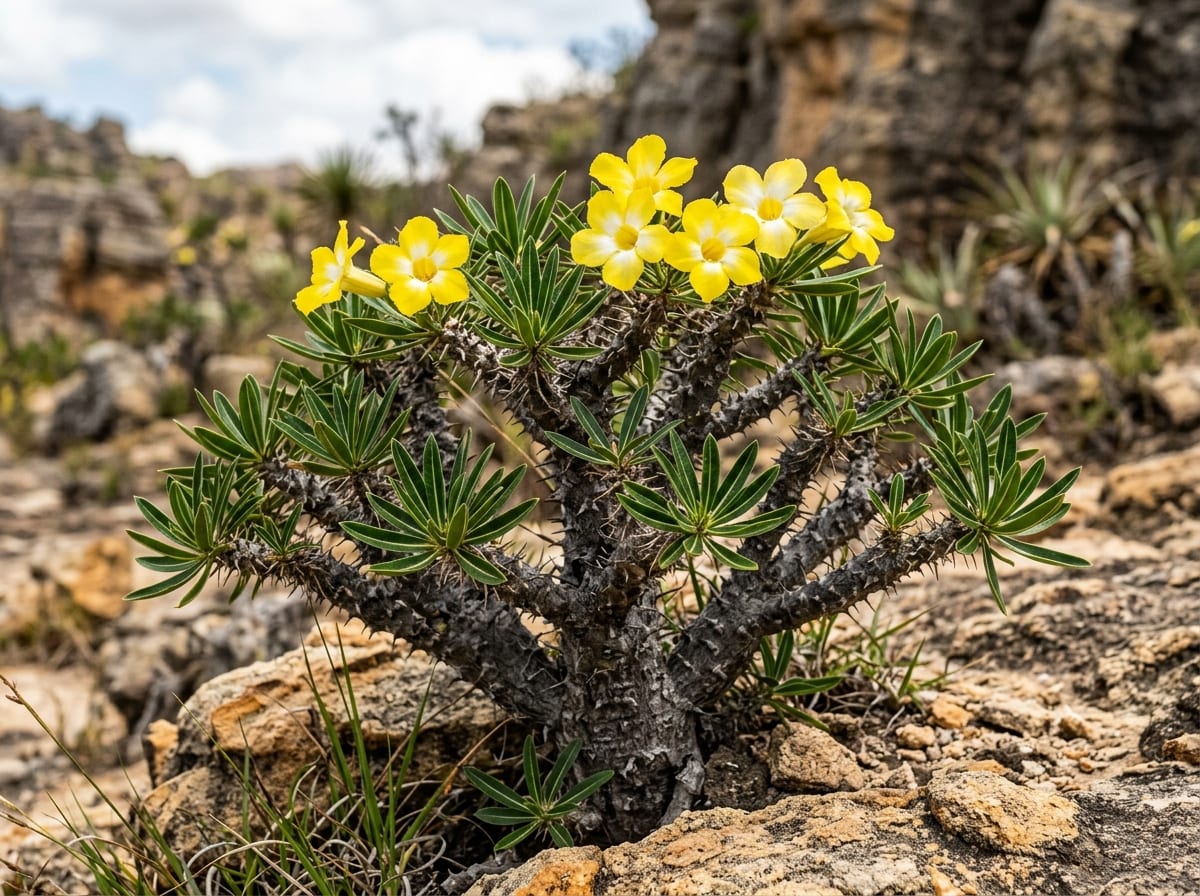
A yellow-flowered Pachypodium in the P. rosulatum group, named for its two-tone flowers whose throat is white inside. A thick trunk branches densely into a low, somewhat pendulous shrub 25-50 cm tall.
 © scott.zona / CC BY 2.0
Pachypodium decaryi
Pachypodium decaryi
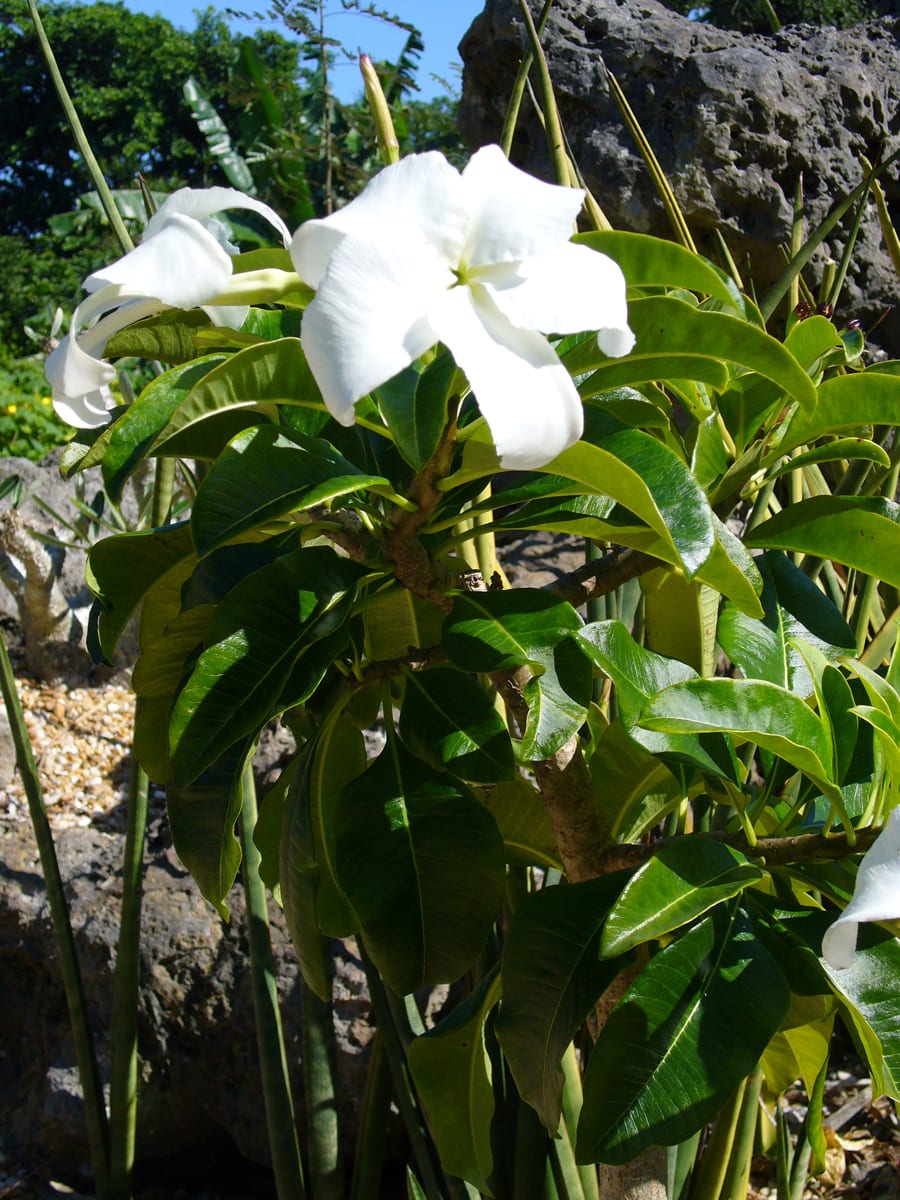
A northern Madagascan Pachypodium with an almost spherical grey caudex and slender, nearly spineless branches. It bears pure white flowers up to 12 cm across, the largest in the genus. CITES Appendix I.
Pachypodium enigmaticum
Pachypodium enigmaticum
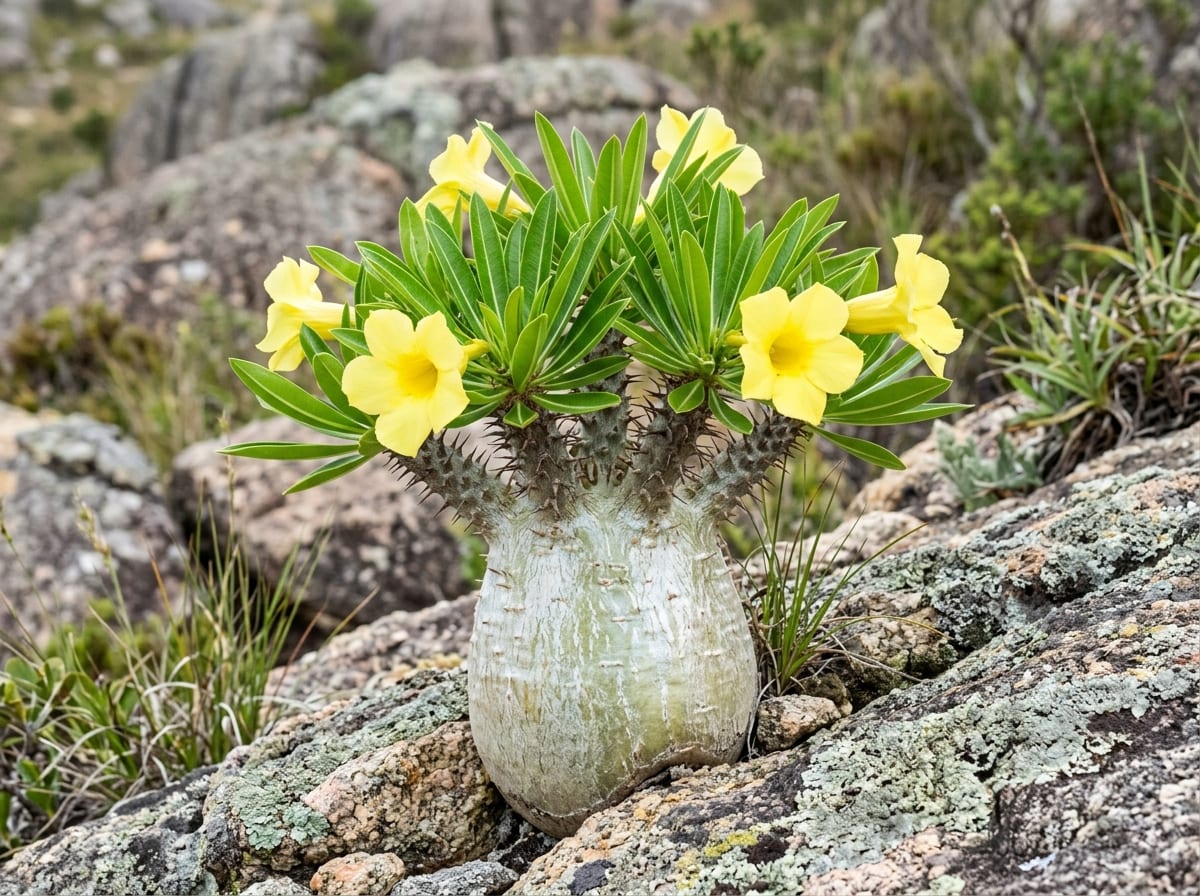
A Pachypodium from central Madagascar described in 2014. From the top of a round, greenish-white caudex it spreads glossy, hairless leaves and bears large, clear yellow flowers.
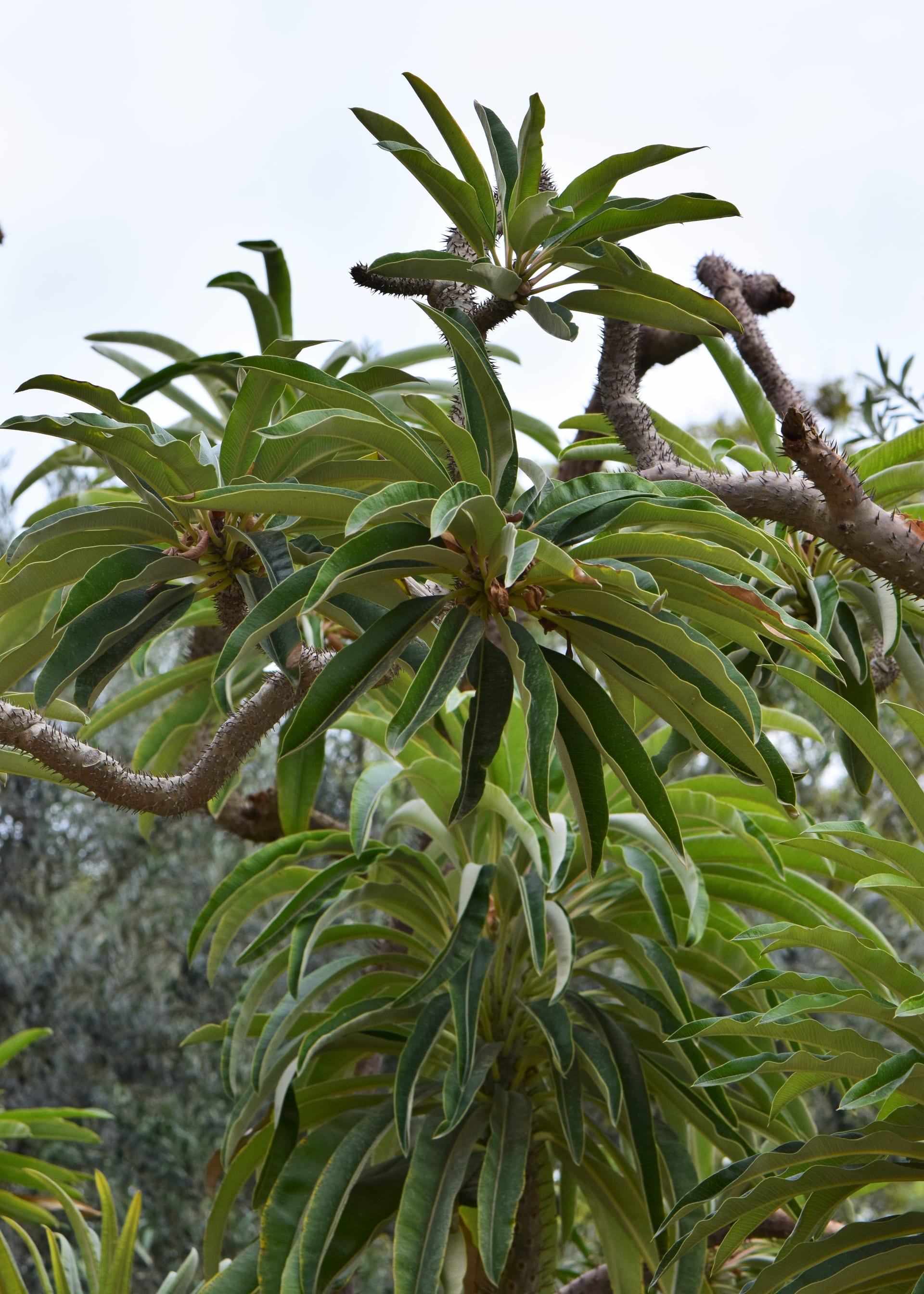 © Krzysztof Ziarnek, Kenraiz / CC BY-SA 4.0
Pachypodium geayi
Pachypodium geayi
Known in Japan as Aasoukai. A south-western Madagascan Pachypodium with a thick, spiny, silver-grey trunk rising like a column and a crown of long, narrow leaves with a bright pink midrib. One of the largest species in the genus.
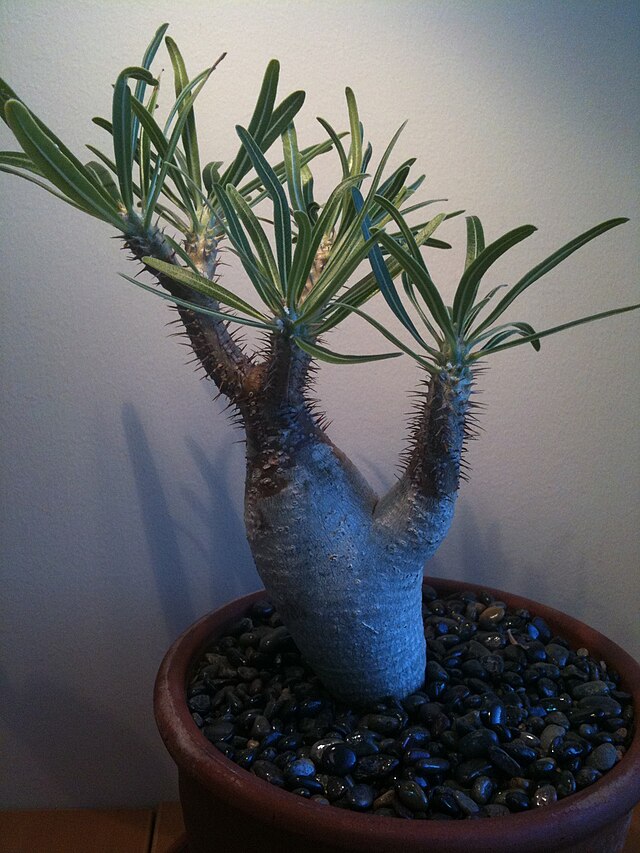 © Jesteinwiki / CC0
Pachypodium Gracilius
Pachypodium gracilius
The quintessential caudex plant from Madagascar. Round caudex body with yellow flowers. Wild-collected specimens with unique forms command high prices. Seed-growing is also very popular.
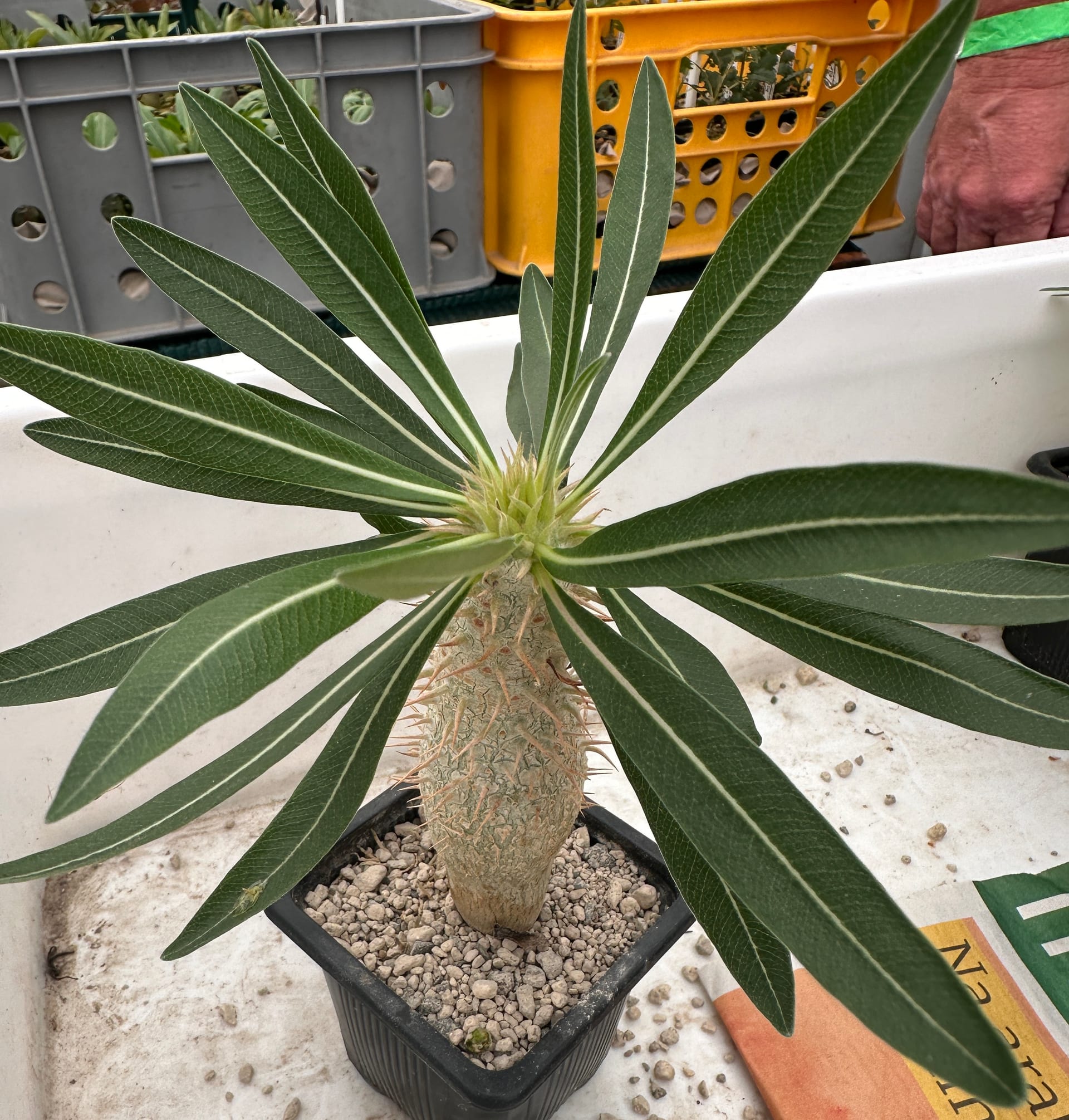 © Michael Wolf (Webseite) / CC BY-SA 3.0
Pachypodium inopinatum
Pachypodium inopinatum
A small central-northern Madagascan Pachypodium in the P. rosulatum group. Slender spiny branches rise from a swollen trunk, and unusually for this mostly yellow-flowered group it bears ivory flowers.
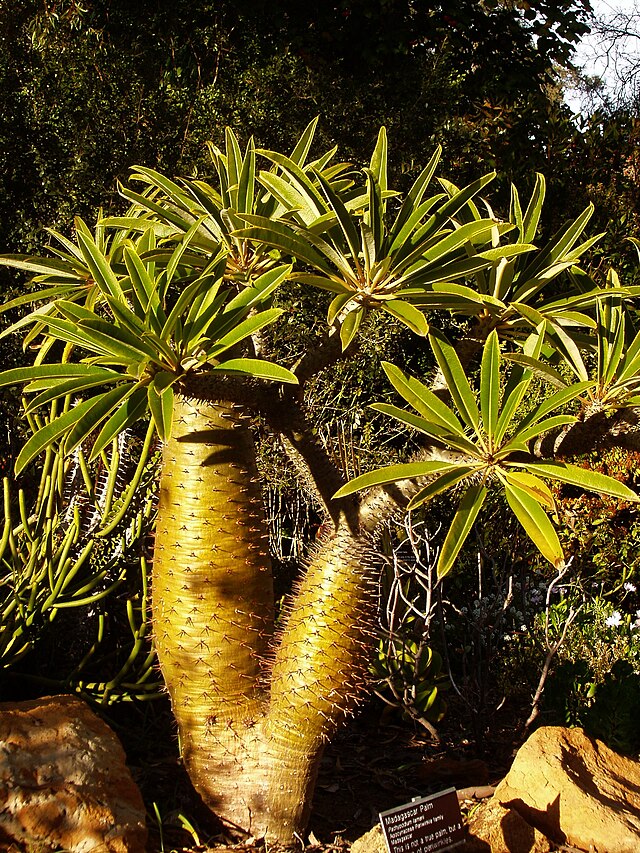 © Daderot at English Wikipedia / CC BY-SA 3.0
Pachypodium Lamerei
Pachypodium lamerei
A spiny caudex plant from Madagascar. Popular as 'Madagascar Palm Tree'.
Related Content
Caudex Plant FAQ
- How much do caudex plants cost?
- Pachypodium gracilius seedlings cost 2,000-10,000 yen, wild-collected specimens 30,000-200,000+ yen, and Operculicarya pachypus can reach hundreds of thousands of yen.
- Can beginners grow caudex plants?
- Adenium (Desert Rose) and Pachypodium seedlings are relatively easy and beginner-friendly. Just be careful with watering during winter dormancy, and you can enjoy them for years.
- How long do caudex plants live?
- Some specimens live for hundreds of years in the wild. In cultivation, they can thrive for decades with proper care. Watching the caudex thicken year by year is the greatest appeal.
- What should I check when buying caudex plants?
- Whether it's rooted is the most important point. Wild-collected imports are often unrooted and require root establishment. Beginners should start with rooted domestically grown seedlings.
- How do caudex plants overwinter?
- Many caudex plants go dormant in winter. Reduce watering from October, and withhold water completely from December to February. Keep indoors in a sunny spot at minimum 10°C.