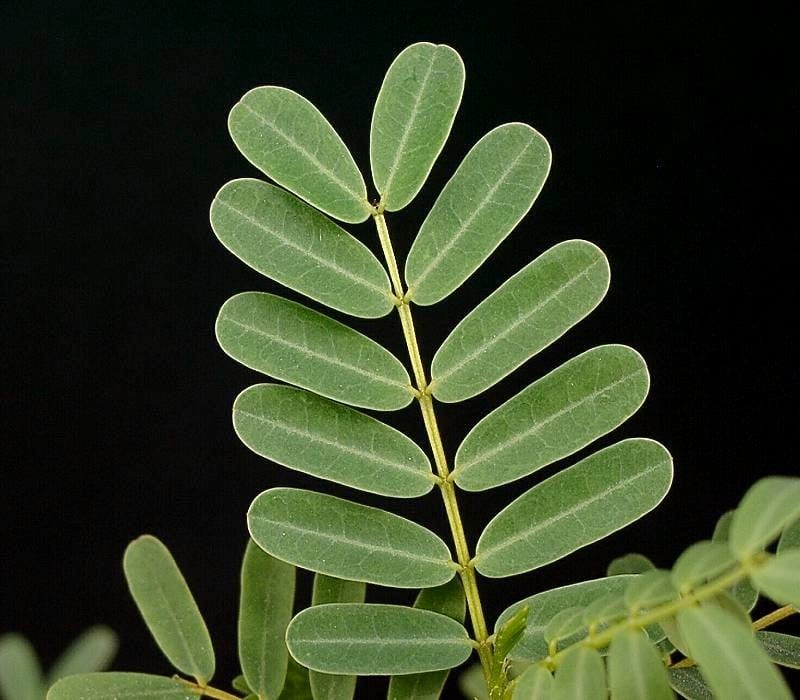
Source: Wikimedia Commons
Delonix decaryi
IntermediateDelonix decaryi
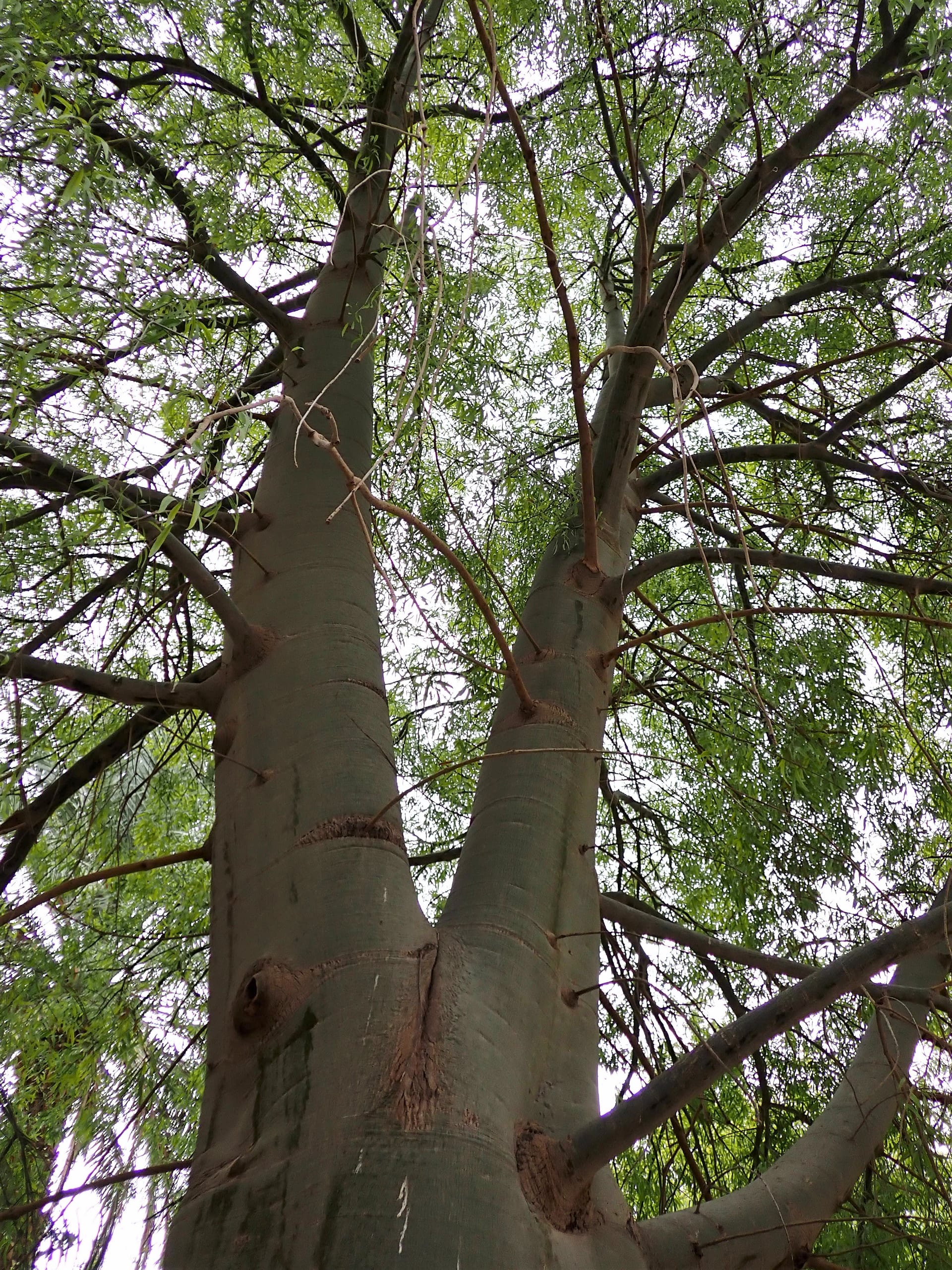
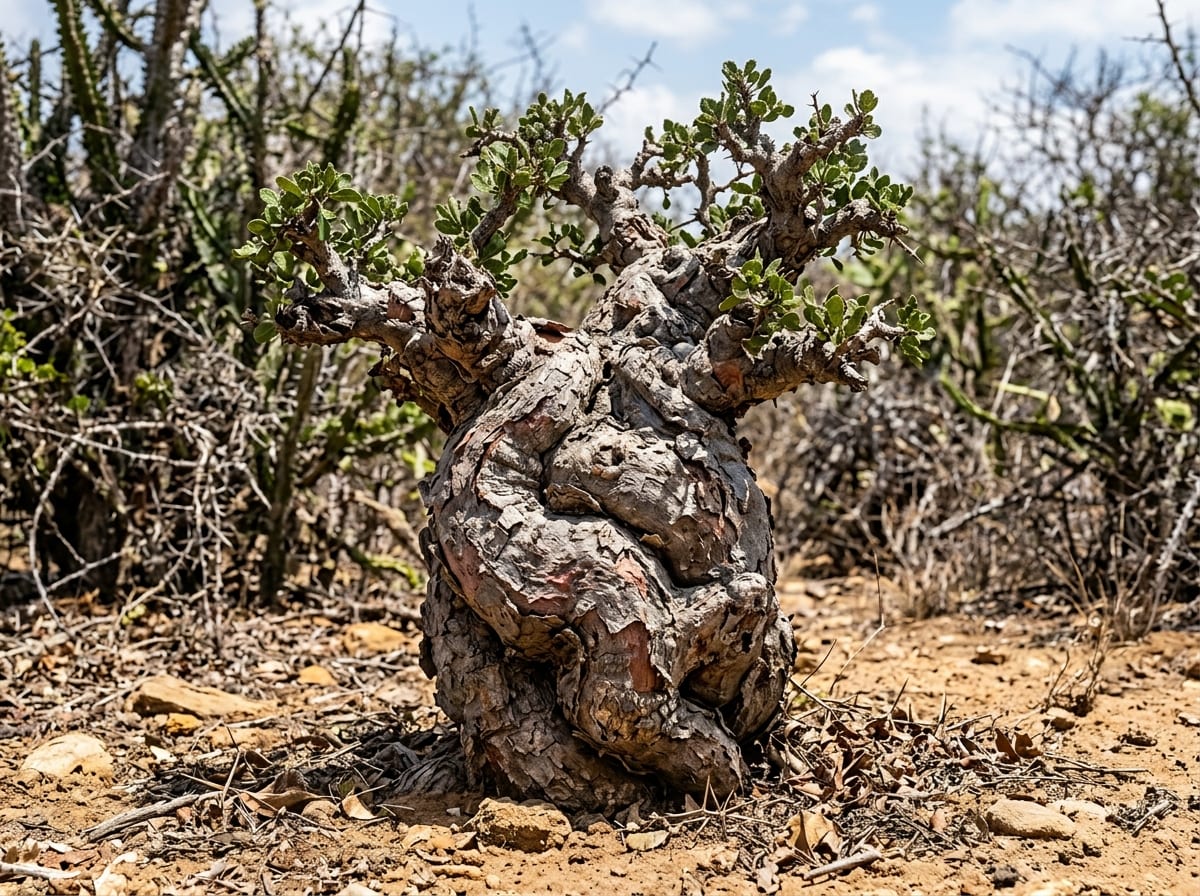
A caudiciform legume from south-western Madagascar with a bottle-shaped trunk of peeling grey bark under an umbrella-shaped crown. It has finely divided leaves and fragrant white flowers with long red stamens.
About
Delonix decaryi is a small tree in the legume family, endemic to coastal southern and south-western Madagascar (Toliara), where it grows in xerophytic shrubland and open woodland at 0–500 m. It belongs to the same genus as the flamboyant tree (Delonix regia) but is a bottle tree, 3–10 m tall with an umbrella-shaped crown. The trunk swells into a bottle shape up to 80 cm across, with grey bark that peels in flakes. The bipinnate leaves have two or three pairs of pinnae, each with 14–16 narrow, opposite leaflets. The fragrant white flowers, up to about 7.5 cm across, have long red stamens, and the petals turn yellowish or apricot as they age. They are held in clusters above the foliage and followed by long, slender, flattened dark brown pods. The IUCN Red List category is Vulnerable. It is easy from seed; some seedlings show a swollen base within a few years, though many stay stick-like for a long time. It can be grown in a pot and trained like a bonsai. In Japan potted plants are sold online and by specialist nurseries, and seed is also available.
Source: Wikipedia (CC BY-SA 4.0)
Size of the Delonix decaryi
The Delonix decaryi grows to 3–10 m tall with a trunk up to 80 cm across in the wild; stays small in a pot.
Basic Info
Origin
Coastal southern and south-western Madagascar (Toliara)
Lifespan
Long-lived woody plant (little published data)
Size
3–10 m tall with a trunk up to 80 cm across in the wild; stays small in a pot
Temperature
10〜35℃
Watering & Fertilizer
Regular feeding in the growing season
Growing Tips
Light & Placement
Give it plenty of sun all year; it grows in light shade to full sun.
Watering
Water generously in summer.
Temperature & Overwintering
Keep it rather dry in winter at a minimum of about 12°C. Even mature plants are said to tolerate only about 2°C briefly, so never let it freeze; it dislikes wet winters.
Soil & Repotting
Plant in a rich, very free-draining, preferably stony mix.
Propagation
Easily raised from seed: soak the seed in hot water until the coat begins to peel, then sow; germination starts within about a week. Seedlings tend to flop, so keep them upright.
Delonix decaryi FAQ
QWhat is the growing difficulty level for Delonix decaryi?
Intermediate. A variety suitable for intermediate growers. Requires some cultivation experience and knowledge of environment management. Pay careful attention to temperature and humidity control.
QHow large does Delonix decaryi get?
The mature size of Delonix decaryi is 3–10 m tall with a trunk up to 80 cm across in the wild; stays small in a pot. This may vary slightly depending on cultivation environment and individual differences.
QHow should I water and fertilize Delonix decaryi?
Delonix decaryi: watering & fertilizer — Regular feeding in the growing season. Aim for appropriate frequency and amount.
QWhat is the typical price for Delonix decaryi?
The price of Delonix decaryi varies significantly by variety, characteristics, size, and lineage. Please check GrowerDirect's price guide for the latest market information.
Last updated: September 23, 2026
References & Sources
Edited & verified by: GrowerDirect Editorial Team
The classifications, regulations, and growing data on this page are created and verified based on the primary information database below.
Taxonomy & Authority
Regulations & Conservation Status
Not listed in CITES (checked on Species+). No special procedure is needed for transfers within Japan. The IUCN Red List category is Vulnerable.
Sources: Species+ (CITES): Delonix decaryi / IUCN Red List category via GBIF: Delonix decaryi
Regulations may change. Always verify the latest information with the relevant authorities.
Related Species
Find listings for this species
Related Articles
How to Grow Uncarina | Differences Between the Madagascar Endemic Species Grandidieri and Roeoesliana
An explanation of the appeal and cultivation methods of the Madagascar endemic caudex plant Uncarina genus. We introduce the differences between Uncarina grandidieri and roeoesliana, seedling cultivation, and repotting timing.
Complete Guide to Choosing Caudex Plants as Gifts | Recommended Varieties by Occasion and How to Include Care Notes
A guide to choosing caudex plants as gifts organized by occasion. We introduce how to select varieties based on the recipient's cultivation experience and how to include care notes for long-term enjoyment.
Diagnosing and Treating Poor Root Development in Caudex Plants | Causes and Solutions for Roots That Won't Emerge or Won't Grow
A detailed guide to root emergence problems in caudex plants. From diagnosis methods to solutions, practical techniques for promoting healthy root development are introduced.
Complete Guide to Growing Jatropha podagrica (Buddha's Navel) | Cultivation Management to Enjoy Its Distinctive Caudex and Coral-Red Flowers
Characteristics and cultivation methods of the caudex plant Jatropha podagrica. Detailed explanation of watering management during dormancy, soil, and propagation methods.
🩺 Common diseases
Can't find the plant you're looking for?
Post your wishes for free and growers with matching plants will contact you with introductions.