Techniques for Creating Age and Character in Bonsai | How to Thicken the Trunk and Achieve a Timeless Look
This guide explains techniques for creating age and character in bonsai. We introduce methods for thickening the trunk, techniques for creating jin and shari, tips for utilizing bark texture, moss placement, and other techniques to enhance the dignity of your bonsai.
Key Takeaways
This guide explains techniques for creating age and character in bonsai. We introduce methods for thickening the trunk, techniques for creating jin and shari, tips for utilizing bark texture, moss placement, and other techniques to enhance the dignity of your bonsai.
One of the great pleasures of bonsai is expressing the dignity of an ancient tree in a small pot, as if it has aged for many years. However, transforming young material into a bonsai with character requires both technique and time. Here we explain practical techniques for adding age and dignity to your bonsai.
Basic Principles for Thickening the Trunk
The trunk thickness is the single most important factor in determining a bonsai's presence and dignity. A thick trunk conveys the majesty of an ancient tree.
- To thicken the trunk, the basic approach is to allow the roots to spread freely by planting in the ground or using a large pot, and encourage vigorous growth of branches and foliage
- The trunk will not thicken easily when kept in a small bonsai pot. During the thickening stage, do not be concerned with pot size
- At the material stage, cultivate for 3 to 5 years in a field or large pot to achieve sufficient trunk thickening before moving to a bonsai pot
- Using a sacrifice branch (a single branch extended above the area you want to thicken) allows that part of the trunk to thicken concentratedly
- Once the trunk reaches the desired thickness, cut off the sacrifice branch. Protect the cut with wound sealant
- Developing the root base is also important. Shallow, spreading roots create the effect of making the trunk base appear thicker
While trunk thickening takes time, it produces natural thickness and visual presence.
Expressing Deadwood Character with Jin and Shari
Jin and shari are techniques for making branches or parts of the trunk appear like deadwood. They create the striking appearance of ancient trees weathered by wind and snow in nature.
- Jin: Remove the bark from branch tips to expose the white wood beneath, expressing the character of deadwood
- Shari: Remove the bark from part of the trunk to reveal the white wood, expressing the marks of lightning strikes or wind and snow
- Perform this work in spring through early summer when sap flow is active. The bark peels more easily, and the remaining portions recover quickly
- Peel the bark vertically using pliers or jin pliers. Peeling horizontally risks cutting off water flow and killing the branch
- Apply lime-sulfur mixture to create a white finish and provide antifungal protection
- Particularly effective on conifers such as Juniperus procumbens and Sinai juniper. Can be applied to broadleaf trees, but work carefully
While jin and shari techniques create dramatic change in bonsai, overdoing them can appear unnatural. It is important to observe natural deadwood for reference.
Utilizing Bark Texture and Root Development
The surface texture of the trunk greatly influences its sense of age.
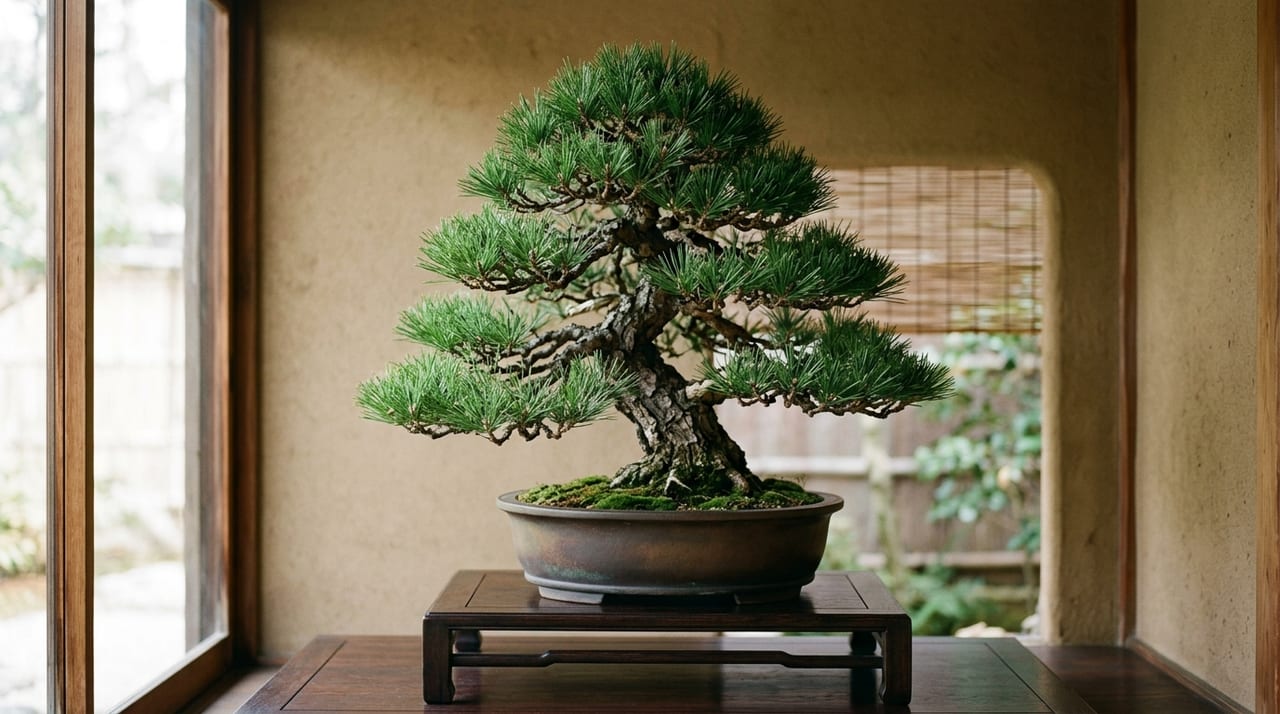
- Pine trees develop tortoise-shell-like cracks in their bark over time. This rough texture is a symbol of ancient trees
- To encourage bark roughness, cultivate in an environment where the trunk receives adequate sunlight and air circulation
- With plum trees, the trunk becomes increasingly rough over time, developing a unique rustic character
- Maple and zelkova have smooth bark, so their sense of age is expressed through trunk curves and root development
- Exposed roots (roots that rise above the soil) create a sense of great age. Gradually expose roots higher during repotting
- Radiating roots (spreading in all directions) provide stability and presence. Organize root direction during repotting
Bark and root character are developed over years and cannot be hastened artificially. Daily care and attention create natural dignity.
Finishing Touches: Moss and Soil
The styling of the base area is an important element in enhancing the sense of age in bonsai.
- Adding moss to the soil surface creates a settled appearance, as if the tree has grown in the same place for many years
- Mountain moss (Hypnum plumaeforme) is the most commonly used moss in bonsai. Its full, mounded appearance is beautiful
- Before adding moss, level the soil surface and dampen it with a mister before pressing the moss in place
- Until the moss is established, avoid direct sunlight and maintain humidity with frequent misting
- Rather than covering the entire pot surface with moss, leaving some soil exposed creates a more natural appearance
- Adding stones creates a mountain landscape and adds greater depth of character
Moss is a key finishing element and is an important factor in bonsai exhibitions.
Deepening Your Appreciation of Bonsai
Bonsai is not merely plant cultivation but an art form that condenses natural landscape into a pot. Its depth is so great that it cannot be mastered in a lifetime, and many enthusiasts spend decades cultivating a single tree.
The most important thing when starting bonsai is patience. Bonsai gains value only with time. Start with inexpensive materials or cuttings and master basic care techniques. Once you have mastered the fundamentals—watering, fertilizing, and light management—you can progress to techniques like pruning, wiring, and repotting, which is the fastest path to improvement.
Attending gatherings of bonsai enthusiasts and exhibitions also aids improvement. Viewing others' work develops your aesthetic judgment and reveals areas for improvement in your own bonsai. Moreover, the opportunity to receive direct advice from experienced practitioners is invaluable.
The way to enjoy bonsai is personal. Whether you aim for competitions, enjoy the seasons in your home garden, or incorporate bonsai as indoor decor, find a way to engage with bonsai that suits your lifestyle.
Basic Bonsai Care Techniques
Here we outline the basic techniques for maintaining healthy bonsai.
The Art of Watering The basic rule for watering bonsai is to water thoroughly when the soil surface turns light and dry. Water until it flows from the drainage hole, then discard any water in the saucer. In summer, water twice daily (morning and evening); in winter, once every one to two days. However, this varies significantly depending on tree species and pot size.
Fertilizing Tips The basic approach is to apply solid organic fertilizer once monthly during the growing season (April through October). Reduce fertilizing during the rainy season and peak summer. The key is to use less fertilizer for conifers and slightly more for broadleaf trees.
Light Management Most bonsai thrive best in a sunny outdoor location. However, direct sunlight in peak summer can cause leaf scorch, so use shade cloth or move to partial shade. Generally avoid indoor management, and if you must bring bonsai indoors for display, return them outdoors after two to three days.
Pest Control Common pests include aphids, scale insects, and spider mites. Practice preventive spraying once monthly and daily observation for early detection and treatment.
Bonsai Tools and Work Environment
Several basic tools are needed for bonsai maintenance. With scissors (pruning shears and branch cutters), wire (various aluminum wires), tweezers, a jin file, and a turntable, you can handle most tasks. Clean and store your tools after use, and regularly sharpen the blades to improve work efficiency.
Set up your work table at waist height to maintain good posture. Since bonsai work involves fine detail, adequate lighting and a magnifying lens are helpful.
Finding Bonsai Materials on GrowerDirect
Finding quality material is the first step toward bonsai with character. On GrowerDirect, you can purchase high-quality bonsai materials directly from growers—including pre-developed stock with excellent trunk thickness and juniper specimens with jin and shari already applied. The ability to consult with growers about training methods and future appearance for each species is a major advantage. Find your starting point for cultivating your own masterpiece on GrowerDirect.