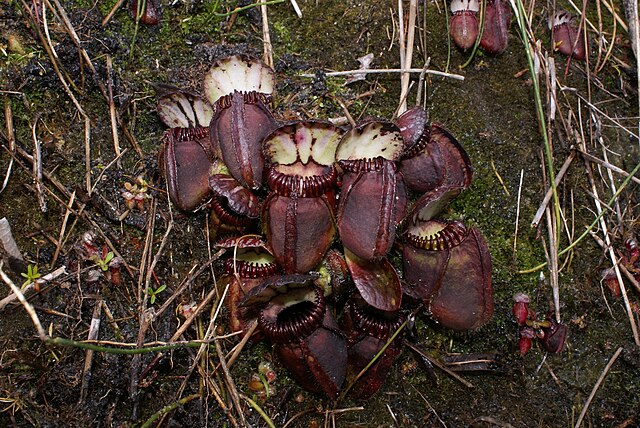
土瓶草
Cephalotus follicularis is a rare carnivorous plant endemic to the southwestern wetlands of Australia — the sole species in its family — prized for its distinctive small pitcher-shaped traps. While relatively hardy for an insectivorous plant, it requires careful attention to temperature and humidity. Its unique appearance and collector appeal make it a favorite among carnivorous plant enthusiasts.
前3笔销售免佣金!在2026年7月31日前注册生产者账户 → 前3笔成交的手续费免费!
栽培者 招募中!
在BoTachoku上销售,直接面向全国客户销售吗?
ボタちょく的 6 项透明性承诺
栽培者在食虫植物出品时明示以下信息。确保品种、产地、所需光照、栽培难度的透明度。
- 品种明确
- 真实照片
- 颜色
- 产地明确
- 所需光照
- 难度明确
食虫植物分类正在招募认证栽培者
栽培者正在陆续注册,即将上架。设置上架通知,不错过新商品。
「接收上架通知」需免费注册会员即可设置。当有符合您保存条件的新商品上架时,我们会通过邮件和站内通知提醒您。
关于土瓶草
Cephalotus follicularis is the world's sole member of its own family, found only in the coastal wetlands of a small region in southwestern Australia. Its name derives from the Greek for "head-bearing," a nod to its charming miniature pitcher traps. The pitchers feature a lid, a rim lined with sharp ribbed teeth, and a smooth inner wall bathed in digestive fluid—an elegant mechanism that traps and digests insects with remarkable efficiency. Uniquely, the plant produces both flat photosynthetic leaves and pitchers simultaneously. In the wild it grows in nutrient-poor sandy bogs in mild to cool conditions, making heat sensitivity its most important cultivation consideration. Growth is exceptionally slow, but in a well-suited environment the plant gradually matures into an impressive specimen, with natural variation in pitcher size and coloration fueling collector enthusiasm. Its rarity, distinctive form, and status as a true monotypic curiosity make it a treasured plant for beginners and seasoned enthusiasts alike.
开始养护土瓶草前需要了解的7件事
1Heat Sensitivity
High summer temperatures are the biggest challenge for Cephalotus — prolonged heat above 30°C can weaken the plant significantly. From midsummer through September, prioritize shade and airflow; growing indoors under plant lights in a cool spot is also an effective strategy.
2Use Carnivore-Specific Mix
Standard potting mix or any soil containing fertilizer will damage the roots — avoid it entirely. The standard mix is low-nutrient, slightly acidic: peat moss combined with perlite or coarse sand. New Zealand sphagnum peat is particularly well regarded, and purpose-made carnivorous plant mixes are also available.
3Water Quality Matters
Mineral buildup from tap water can gradually damage the roots, so use rainwater, distilled water, or RO water instead. The tray method — keeping the pot in a shallow dish of water — is standard practice, though in winter it is safer to let the medium dry out slightly between waterings.
4Let the Traps Work Naturally
Forcing insects into the traps or handling them unnecessarily stresses the plant. Placed near a window or outdoors, the pitchers will catch small insects naturally — supplemental feeding is rarely needed. Fertilizer should not be applied as a general rule.
5Bright Indirect Light
Prolonged direct sunlight can cause leaf scorch, so bright indirect light — filtered through a sheer curtain or a bright shaded spot — is ideal. Insufficient light causes pale pitchers and leggy growth. A quality LED grow light works well as an alternative.
6Winter Dormancy Helps
In its native habitat, Cephalotus experiences a cool winter period of roughly 5–10°C. Providing similar cool conditions — keeping it frost-free but cool — can strengthen the plant and encourage vigorous growth in spring. Year-round heating is possible but may gradually reduce the plant's vigor.
7Availability and Cost
Cephalotus is not widely available in Japan and is mainly found at specialist carnivorous plant shops or online. Small plants typically range from 2,000 to 5,000 yen, while mature specimens or named clones can easily exceed 10,000 yen. Because it is a rare species with variable pricing, buying from a reputable seller is important.
土瓶草的常见问题
- Q.Can beginners grow Cephalotus successfully?
- A.Yes, with careful attention to shading, soft water, and tray watering, beginners can grow Cephalotus successfully. Growth is slow, so patience is key, but a stable environment will yield steady progress.
- Q.Why aren't my pitchers developing?
- A.Insufficient humidity or light is usually the cause. Ensuring 50–80% humidity and providing bright indirect light often resolves the issue. After adjusting conditions, allow several weeks to observe improvement.
- Q.How do I help my plant survive summer?
- A.Keeping temperatures below 30°C is the top priority—move the plant to an air-conditioned room or a naturally cool spot. Block direct sun and ensure consistent moisture throughout the hot season.
- Q.Is tap water safe to use?
- A.Tap water is not recommended because the calcium, magnesium, and other minerals it contains can damage the roots over time. Use purified water, rainwater, or RO (reverse osmosis) water instead.
- Q.Does Cephalotus need special winter care?
- A.Cephalotus can tolerate temperatures down to around 5°C, but hard frost is dangerous. Overwintering indoors near a bright window is ideal. Slowed growth in cool weather is normal dormancy behavior.