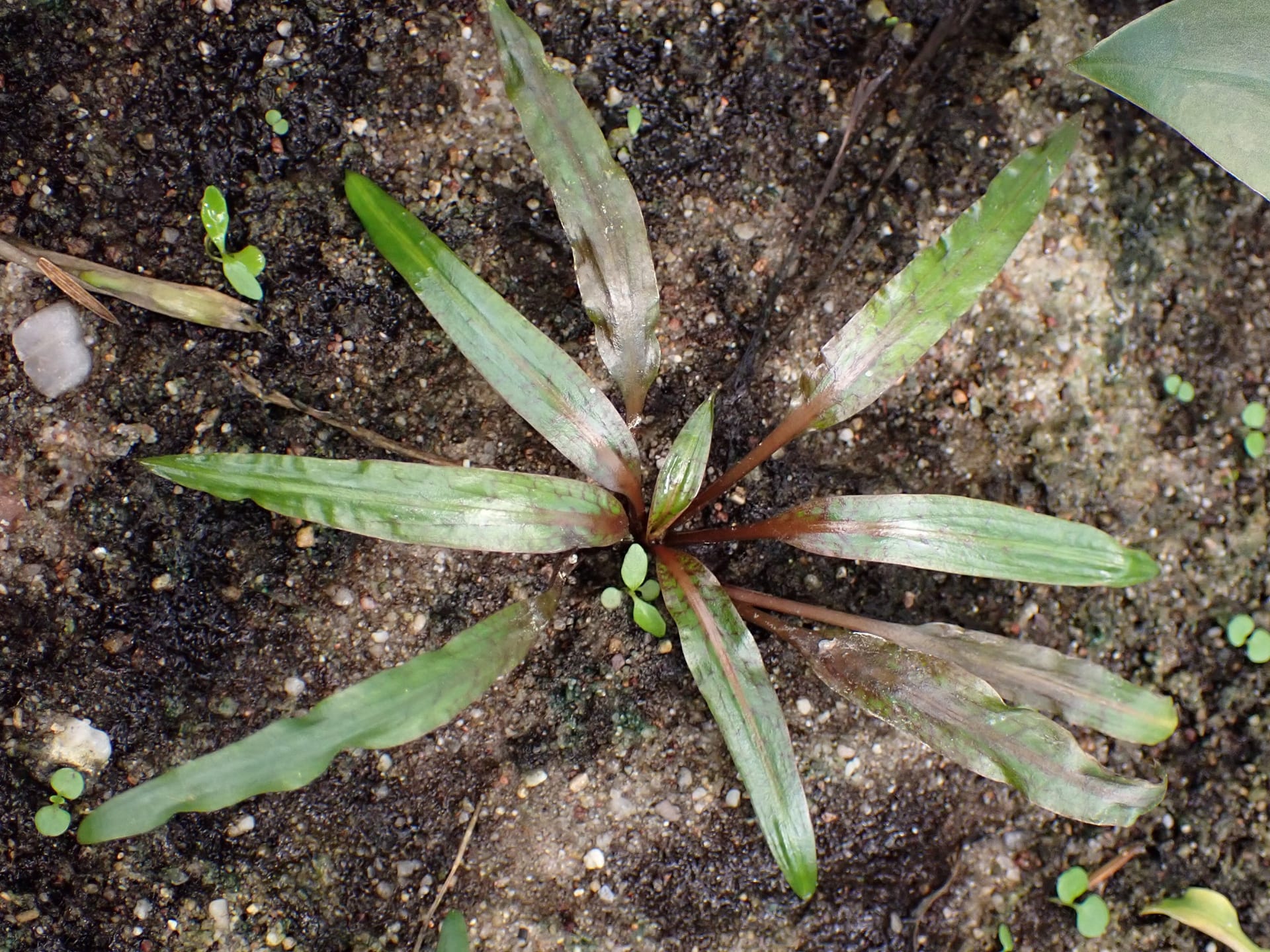
 © Krzysztof Ziarnek, Kenraiz / CC BY-SA 4.0
白葉克里普特溪芋(Cryptocoryne albida)
Cryptocoryne albida is a delicate aquatic plant with slender, lance-shaped leaves that ripple gently along their edges. It comes in a standard green form as well as a "brown" variety, whose reddish-brown leaves carry dark, feather-like mottling, giving keepers a choice of look. It tolerates low light well, making it an easy fit for tanks with modest lighting and a good pick for beginners. As a perennial, it spreads by sending out runners that produce new plantlets nearby, gradually forming a dense colony over time. Underwater it stays compact at roughly 5 to 15 cm tall, giving it a foreground-to-midground silhouette that blends easily with other aquatic plants.
View 白葉克里普特溪芋(Cryptocoryne albida) encyclopedia →成交手續費 0%!2026年9月30日前註冊,前 2 株免佣金!
生產者 招募中!
在 GrowerDirect 上架,直接銷售給全國的客戶吧!
GrowerDirect承諾的 6 項透明性重點
在水草出品中,生產者會清楚標示以下資訊。確保品種、產地、所需光照、栽培難度的透明度。
- 品種標示
- 實物照片
- 色澤
- 產地標示
- 所需光照
- 難度標示
查看全部134個品種
水草分類正在招募認證生產者
生產者正在陸續註冊,即將上架。設定上架通知,不錯過新商品。
「接收上架通知」需免費註冊會員即可設定。當有符合您儲存條件的新商品上架時,我們會以郵件和站內通知提醒您。
白葉克里普特溪芋(Cryptocoryne albida)的基本資料
- 栽培難度
- 適合新手
- 壽命
- 多年生植物。通過走莖繁殖
- 體型
- 沉水高度5~15公分,葉寬1~3公分、長度約15公分
- 適宜溫度
- 22〜29℃
- 澆水
- 無需添加CO2也能生長
- 光照
- 即使在極弱光下也能生長,但此時生長速度會非常緩慢。
- CO2·肥料
- CO2非必須。添加CO2可加速生長。
- 水溫·水質
- 適溫為22~29℃,在pH值5~8的範圍內可生長。
- 底床·著床
- 植於底床中。根系發達良好,故宜使用含營養的底床。
- 修剪·繁殖方法
- 將走莖上長出的子株剪離進行繁殖。
- 注意事項
- 植株移植或光照、水質發生急劇變化時容易發生「克里普特溶葉」現象。只要根莖存活,新葉就會長出,因此應耐心等待而不應拔除。水草不應棄置於野外,也不應讓其逃逸到水族箱外。
關於白葉克里普特溪芋(Cryptocoryne albida)
Cryptocoryne albida, a beginner-friendly aquatic plant with rippled, lance-shaped leaves in green or brown forms. This low-light-tolerant perennial spreads by runners and stays 5-15cm tall, suiting foreground-to-midground layouts.
開始照料白葉克里普特溪芋(Cryptocoryne albida)前需要了解的7件事
1Placement & Lighting
This plant tolerates low light, so it rarely struggles even in a tank with subdued lighting or in the shade of taller plants. That said, sudden jumps in light intensity or water parameters can stress the leaves, so it's best to acclimate it gradually when moving it to a new setup.
2Water Quality & Changes
It isn't fussy about water chemistry and is easy to keep overall, but abrupt swings in water quality or temperature during water changes can cause the leaves to melt. Changing the water gradually, in small amounts, puts less stress on the plant.
3Choosing a Substrate
Planting it in a nutrient-rich substrate helps the plant settle in and establish well. Its roots are fine and delicate, so a reasonably deep substrate layer gives them room to spread properly.
4Planting & Layout
Since it stays around 5 to 15 cm tall, it works well as a foreground-to-midground plant. Leaving some space between plants when planting gives the plantlets produced by its runners room to spread without crowding.
5Dividing & Replanting
New plantlets produced by the runners settle in best once their own roots have developed before being separated from the parent plant. Leaves may melt right after replanting, but they're gradually replaced by new growth, so it's worth giving it some time.
6Watch for Environmental Changes
Right after introducing it to a tank, or after a big change in water quality or lighting, the leaves can turn translucent and melt away — a phenomenon often called "crypt melt." As long as the roots stay healthy, new leaves will emerge, so it's best to stay patient and keep watching rather than remove the plant.
7Picking a Healthy Plant
Look for a plant with several leaves that have good color and little tearing or melting — it will adjust to a new tank more easily. The green and brown forms differ in leaf color, so you can pick whichever suits the mood of your layout.
白葉克里普特溪芋(Cryptocoryne albida)的常見問題
- Q.Is this a good plant for beginners?
- A.Yes — it tolerates low light and has a low difficulty rating, making it a good choice for anyone new to keeping aquatic plants. Avoiding sudden water quality changes is enough to keep it trouble-free.
- Q.What's the difference between the green and brown forms?
- A.Both are the same species, Cryptocoryne albida, sold in two forms: one with green leaves and one called "brown," whose reddish-brown leaves have dark, feather-like mottling. Care is essentially the same for both, so you can choose based on which color you prefer.
- Q.My plant's leaves melted — is it dying?
- A.Leaves can turn translucent and melt after being introduced to a new tank or after a change in conditions, a phenomenon often called "crypt melt." As long as the roots are healthy, new leaves will grow back, so it's best to leave the plant in place and keep watching rather than pull it out.
- Q.Do I need to add CO2?
- A.No — it's a hardy plant that grows fine even under low light without added CO2. It isn't required, though extra CO2 can help it grow more vigorously if that's your goal.
- Q.Can I plant it alongside other aquatic plants?
- A.Yes — since it tolerates low light and has a fairly understated look, it combines well with other aquatic plants in a layout. It's often used as a foreground-to-midground plant mixed with other species.
白葉克里普特溪芋(Cryptocoryne albida)栽培的實用工具
在圖鑑中詳細了解白葉克里普特溪芋(Cryptocoryne albida)
查看白葉克里普特溪芋(Cryptocoryne albida)的圖鑑條目 →
收錄栽培難度、尺寸、原產地、日照等基礎資料。