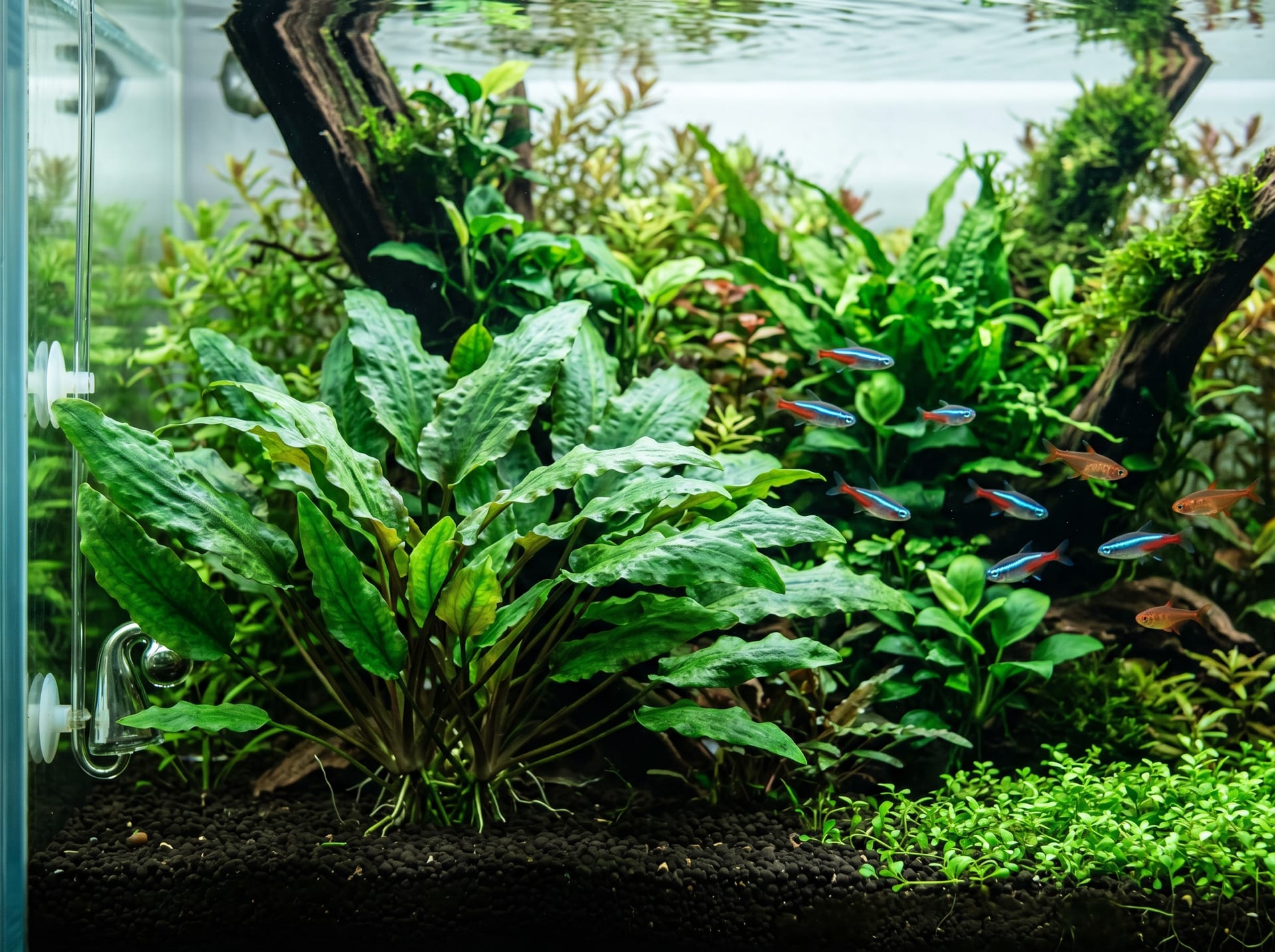
隱棒花
Root-dwelling plant from Southeast Asia. Many varieties with subtle beauty. May melt with environmental changes but recovers.
View 隱棒花 encyclopedia →前 3 筆銷售免佣金!於2026年8月31日前登記生產者→前3筆成交的手續費免費!
栽培者 招募中!
在 ボタちょく 上架,直接銷售給全國的客戶吧!
ボタちょく承諾的 6 項透明性重點
在水草出品中,栽培者會清楚標示以下資訊。確保品種、產地、所需光照、栽培難度的透明度。
- 品種標示
- 實物照片
- 色澤
- 產地標示
- 所需光照
- 難度標示
隱棒花的基本資料
- 栽培難度
- 適合新手
- 體型
- 5-30cm (varies by variety)
- 適宜溫度
- 22〜28℃
- Lighting
- Low to medium light sufficient
- CO2
- Not required
- Substrate
- Nutrient-rich soil recommended
- Growth
- Slow but steady spread
- Notes
- Crypt melt is normal — recovers if roots are alive
關於隱棒花
Cryptocoryne is an aquatic plant from the Araceae family, native to rivers and wetlands across Sri Lanka, India, and Southeast Asia. Since the 19th century, it has been cherished by aquarists worldwide for its quiet, sophisticated beauty. Its appeal lies in remarkable diversity — from broad-leaved C. wendtii to the slender, flow-dancing leaves of C. balansae, and the tiny C. parva. Leaf colors span green, brown, and reddish tones, lending tanks a distinctive depth and character difficult to achieve with other plants. Growth is slow, but plants firmly rooted in a stable substrate can maintain their beauty for years. Although leaves may temporarily melt in response to environmental shifts, healthy roots allow the plant to recover reliably. Whether you're a beginner or an experienced aquascaper, Cryptocoryne offers a rewarding, long-term growing experience.
開始照料隱棒花前需要了解的7件事
1Prepare for Crypt Melt
When first introduced or after sudden water changes, leaves may melt and disintegrate — a phenomenon known as "crypt melt." If the roots are intact, new shoots typically emerge within a few weeks, so avoid pulling the plant out. Remove melted leaves promptly to keep the water clean.
2Minimize Water Changes
Cryptocoryne tolerates a wide range of pH 6–7.5 and hardness 3–15 dGH, but reacts poorly to sudden shifts. Aim for weekly partial water changes of around one-third of the tank volume to maintain stable conditions and avoid triggering melt.
3Thrives in Low Light
Classified as a low-light plant, Cryptocoryne grows well without intense illumination. Aim for 8–10 hours of moderate light per day (roughly 20–40 μmol). CO2 injection is not required, making it accessible for beginners without specialized equipment.
4Substrate Matters for Roots
Cryptocoryne draws nutrients primarily through its roots, so a nutrient-rich substrate such as aqua soil or gravel mixed with fertilizer works best. Aim for a substrate depth of at least 5 cm to allow firm rooting, and supplement with root tabs when using inert gravel.
5Size Varies by Species
Mature size varies dramatically by species — from compact varieties like parva (around 5 cm) to large specimens like aponogetifolia (over 30 cm). Choose species based on tank size and intended placement: foreground, midground, or background.
6Fertilize Conservatively
Cryptocoryne generally prefers root-zone nutrition over liquid fertilizers. If using liquid fertilizers, start at half the recommended dose and adjust based on leaf color. Iron deficiency can cause yellowing, so occasional addition of iron-containing fertilizer helps maintain healthy leaf coloration.
7Compatible Tank Mates
Cryptocoryne's soft leaves are vulnerable to goldfish, cichlids, and other herbivorous or aggressive species. It pairs well with peaceful small fish such as tetras and rasboras, as well as bee shrimp. Amano shrimp are effective at controlling algae that tends to accumulate on the broad leaves.
隱棒花的常見問題
- Q.My leaves melted — is the plant dead?
- A.In most cases the plant is not dead — this is a temporary phenomenon known as "crypt melt." As long as the roots survive, stabilizing water conditions will prompt new growth. Remove the melted leaves, but never pull out the roots.
- Q.Can I grow Cryptocoryne without CO2?
- A.Yes, Cryptocoryne grows well without CO2 injection. It is one of the more adaptable aquatic plants, tolerating low light and low CO2 levels. That said, adding CO2 will enhance leaf color and noticeably speed up growth.
- Q.It's been weeks and mine hasn't spread — is that normal?
- A.Cryptocoryne is a naturally slow grower. After introduction, it may spend the first few weeks to a month establishing its root system before any visible spread occurs. Once rooted, it will gradually multiply by sending out runners through the substrate.
- Q.Is it safe to plant with goldfish or cichlids?
- A.Goldfish and cichlids tend to uproot or consume aquatic plants, making them poor tank mates for Cryptocoryne, which relies on stable root anchorage. Small tetras or Corydoras, which are less herbivorous, are much more compatible companions.
- Q.Which species is best for beginners?
- A.Cryptocoryne wendtii is the most widely recommended species for beginners due to its hardiness and wide availability. It comes in green, brown, and red color variants to suit different tastes. Its affordable price and easy availability make it the ideal first Cryptocoryne to try.
隱棒花栽培的實用工具
Learn more about 隱棒花 in the encyclopedia
View 隱棒花 encyclopedia entry →
Care difficulty, size, origin and light needs — all basics covered.