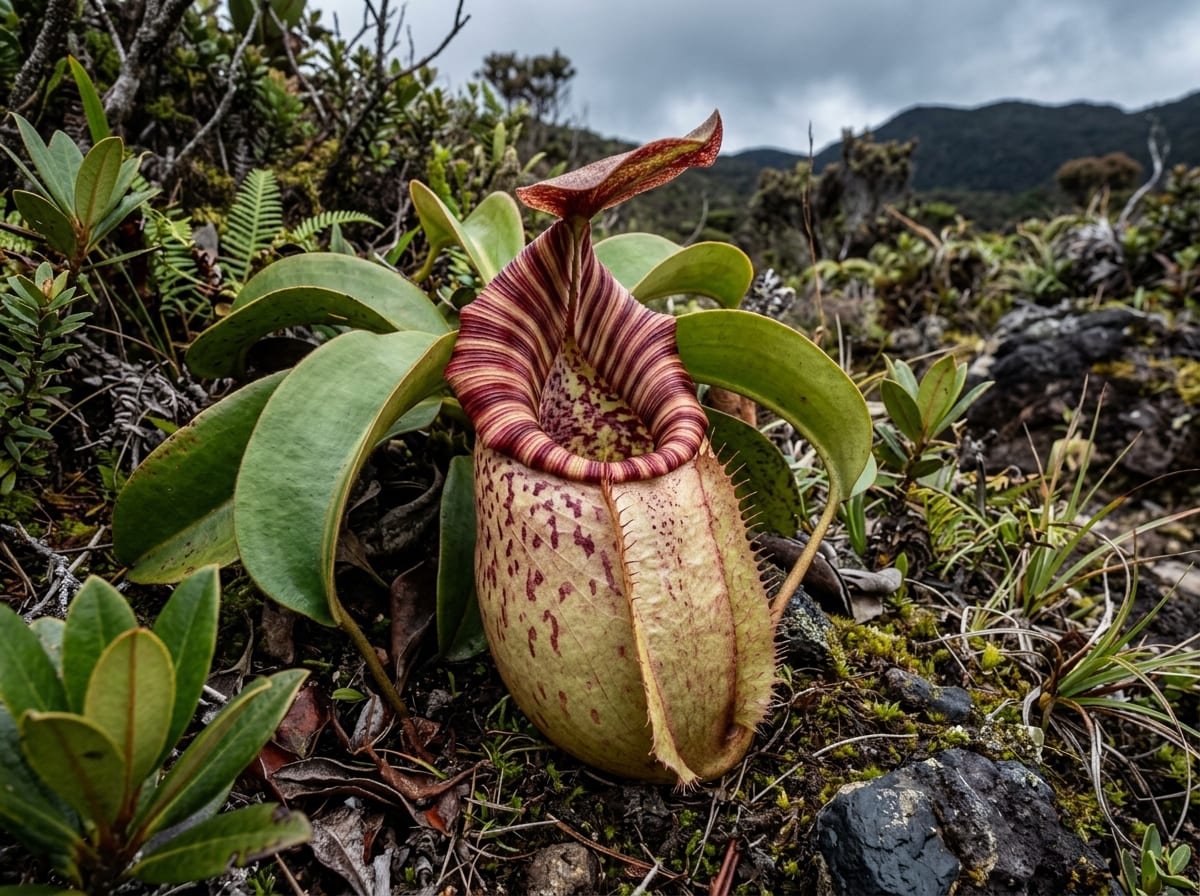
阿滕伯勒豬籠草 (Nepenthes attenboroughii)
Nepenthes attenboroughii is a striking pitcher plant found only on Mount Victoria on Palawan Island in the Philippines. Its bell-shaped pitchers can reach up to 30cm in height and 16cm across, with some recorded holding over 1.5 liters of fluid, an impressive scale even among carnivorous plants. Named after naturalist David Attenborough, it has long been a bucket-list species for pitcher plant enthusiasts. The plant grows as a perennial, upright to semi-sprawling shrub that can eventually reach about 1.5 meters tall. Because it takes some experience to grow well, it suits growers who already have some background with Nepenthes.
View 阿滕伯勒豬籠草 (Nepenthes attenboroughii) encyclopedia →成交手續費 0%!2026年9月30日前註冊,前 2 株免佣金!
生產者 招募中!
在 GrowerDirect 上架,直接銷售給全國的客戶吧!
GrowerDirect承諾的 6 項透明性重點
在食蟲植物出品時,生產者將透明標示以下資訊。保證品種、產地、光照需求、栽培難度的透明度。
- 品種標示
- 實物照片
- 色澤
- 產地標示
- 光照需求
- 難度標示
查看全部145個品種
食蟲植物分類正在招募認證生產者
生產者正在陸續註冊,即將上架。設定上架通知,不錯過新商品。
「接收上架通知」需免費註冊會員即可設定。當有符合您儲存條件的新商品上架時,我們會以郵件和站內通知提醒您。
阿滕伯勒豬籠草 (Nepenthes attenboroughii)的基本資料
- 栽培難度
- 適合高級者
- 壽命
- 多年生灌木狀(直立至斜向生長)
- 體型
- 下部食蟲袋高達30公分、寬16公分,整株高約1.5公尺
- 澆水
- 施肥應極度稀釋並控制用量(植株捕食大型昆蟲)
- 溫度・越冬
- 本種為高地性植物,長期栽培需要夜溫下降。日本夏季夜溫過高是最大課題。
- 光照・擺放位置
- 自生地為低木稀疏的開闊山頂,喜好明亮光線。
- 澆水
- 使用雨水或低鹽分水質,在介質完全乾燥前澆水。不宜在水盤中積水,應使用排水良好的介質,避免根部腐爛。
- 介質・換盆
- 自生地為超鹼性岩石地。栽培時應使用排水良好的介質植入,避免根部腐爛。
- 肥料
- 若施用化肥應極度稀釋。偶爾在食蟲袋內投放昆蟲即足以維持植株良好生長。
- 病蟲害・注意事項
- IUCN列為極危物種,自生地面臨盜採威脅。購買時應選擇實生或組織培養繁殖的個體。
關於阿滕伯勒豬籠草 (Nepenthes attenboroughii)
Nepenthes attenboroughii is a large pitcher plant found only on Mount Victoria, Palawan. Its bell-shaped pitchers reach up to 30cm, making it a striking pick for experienced growers.
開始照料阿滕伯勒豬籠草 (Nepenthes attenboroughii)前需要了解的7件事
1Light and Placement
This species prefers bright, filtered light rather than harsh direct sun, such as a spot behind a sheer curtain or under shade cloth outdoors. Good air circulation also helps the plant form healthy pitchers, so avoid stuffy, stagnant corners.
2Watering
Use rainwater or other water low in dissolved salts, and water before the mix dries out completely. Don't leave water standing in the saucer; use a free-draining mix so the roots don't stay soggy.
3Potting Mix
Use a low-nutrient mix that drains well while still holding some moisture, such as pure sphagnum moss or sphagnum blended with pumice or perlite. Avoid rich garden soil or fertilized potting mix, and look for products labeled specifically for carnivorous plants.
4Temperature and Seasons
Because it comes from the cool highlands of Mount Victoria, this species can struggle in hot, humid summer conditions. Ensuring good airflow and, where possible, a nighttime temperature drop helps keep plants healthy through the warmer months. Managing this temperature swing is one reason the species is considered suited to experienced growers.
5Repotting
This is a large species that grows as an upright to ascending shrub up to about 1.5 meters tall. When it starts to feel root-bound, move it into a slightly larger pot with a free-draining mix. After repotting, keep it out of direct sun for a while until the roots settle.
6Choosing a Plant
Look for a plant with undamaged, unblemished pitchers and leaves and a healthy, actively growing stem tip. A firm base and well-established roots are also good signs of vigor. Because it is Critically Endangered on the IUCN Red List, choose plants propagated from seed or tissue culture.
7Humidity
Consistently high humidity around the plant is key to getting it to form pitchers reliably. A terrarium, greenhouse, or a growing space with a humidifier will encourage better pitcher production than an open, dry room. If you are keeping it in a drier indoor spot, regular misting can also help.
阿滕伯勒豬籠草 (Nepenthes attenboroughii)的常見問題
- Q.Is this a good species for beginners?
- A.Nepenthes attenboroughii is generally considered a plant for experienced growers. It calls for careful temperature management during hot, humid summers and consistently high humidity, so some background with carnivorous plants is helpful. It is best approached once you are comfortable with the basics of Nepenthes care.
- Q.How big does it grow?
- A.The lower pitchers can reach about 30cm tall and 16cm across, among the largest in the genus. The plant itself grows as an upright to ascending shrub up to roughly 1.5 meters tall.
- Q.How should I care for it in winter?
- A.The main goal is to avoid sudden temperature swings and cold drafts while keeping the surroundings warm and humid. If a windowsill gets too cold at night, moving the plant further into the room can help. Winter air also tends to be dry, so keep up with humidity management during the colder months.
- Q.Why is my plant not forming pitchers?
- A.Insufficient light is a likely cause. It grows on open, bright mountaintops in the wild, so give it plenty of light. As a highland species, it also needs cooler nights to thrive long term. It's normal for young plants to produce small pitchers, or few of them, for a while.
- Q.What environment mimics its natural habitat?
- A.This species grows naturally only on Mount Victoria on Palawan Island, a cool, humid highland environment. Recreating that at home means favoring good airflow over stifling heat and maintaining steady humidity around the plant. It also tends to do well with a slight temperature drop at night, similar to its mountain habitat.
阿滕伯勒豬籠草 (Nepenthes attenboroughii)栽培的實用工具
在圖鑑中詳細了解阿滕伯勒豬籠草 (Nepenthes attenboroughii)
查看阿滕伯勒豬籠草 (Nepenthes attenboroughii)的圖鑑條目 →
收錄栽培難度、尺寸、原產地、日照等基礎資料。