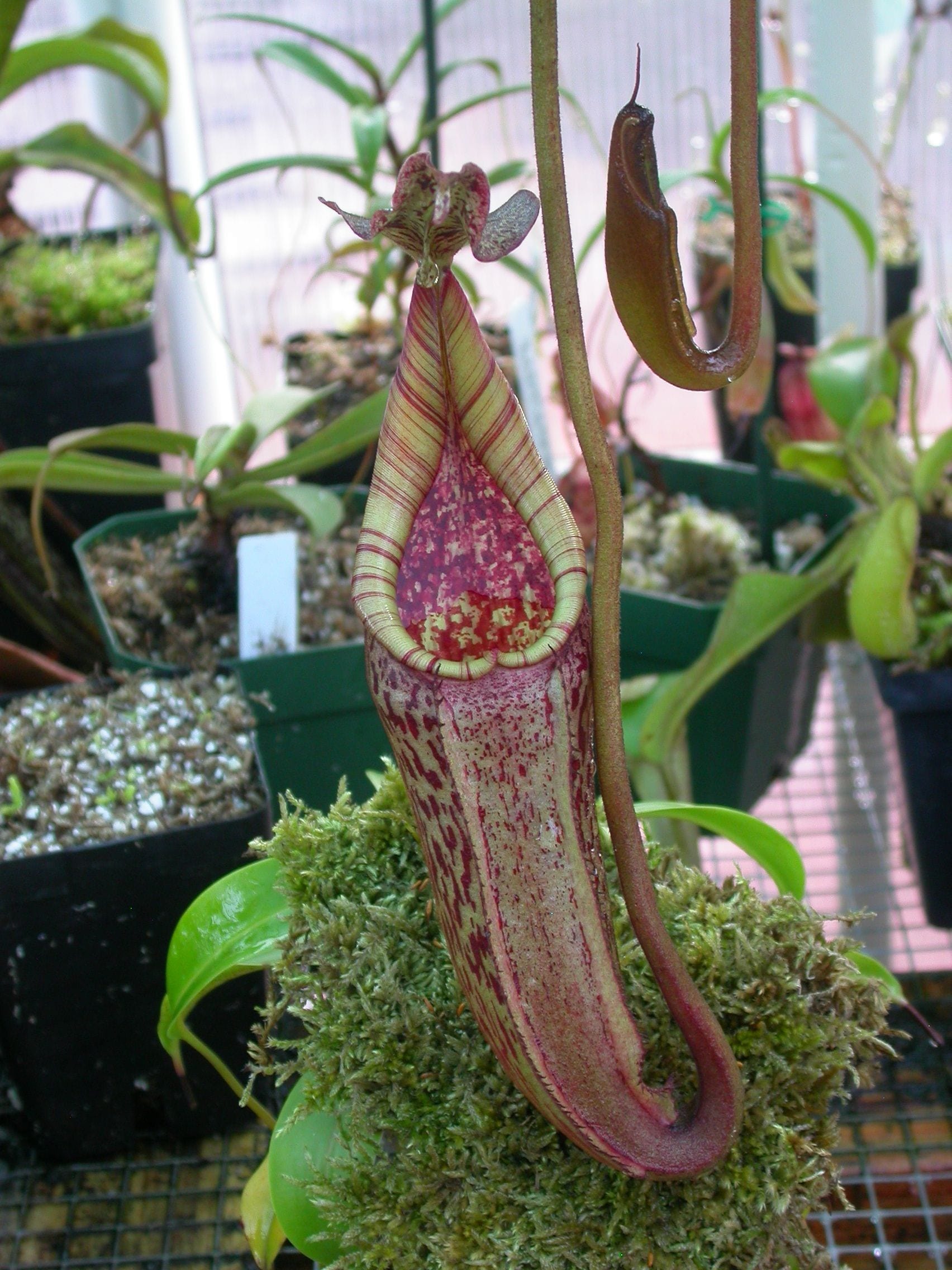
 © JeremiahsCPs (English Wikipedia) / CC BY-SA 3.0
豬籠草艾瑪 (Nepenthes eymae)
Nepenthes eymae is a pitcher plant native to the mountains of Sulawesi, Indonesia. Its signature feature is the distinctive shape of its upper pitchers: they stay narrow and funnel-like for most of their length, then flare out abruptly near the mouth into a wine-glass silhouette that sets the species apart from the closely related Nepenthes maxima. The lower pitchers, by contrast, are egg-shaped and can reach 24cm tall and 16cm wide. A vining perennial, it sends out vines reaching around 8 meters. It's considered a plant for more experienced growers, but that extra effort is rewarded with a striking, one-of-a-kind form that has made it a favorite among carnivorous plant enthusiasts.
View 豬籠草艾瑪 (Nepenthes eymae) encyclopedia →成交手續費 0%!2026年9月30日前註冊,前 2 株免佣金!
生產者 招募中!
在 GrowerDirect 上架,直接銷售給全國的客戶吧!
GrowerDirect承諾的 6 項透明性重點
在食蟲植物出品時,生產者將透明標示以下資訊。保證品種、產地、光照需求、栽培難度的透明度。
- 品種標示
- 實物照片
- 色澤
- 產地標示
- 光照需求
- 難度標示
查看全部145個品種
食蟲植物分類正在招募認證生產者
生產者正在陸續註冊,即將上架。設定上架通知,不錯過新商品。
「接收上架通知」需免費註冊會員即可設定。當有符合您儲存條件的新商品上架時,我們會以郵件和站內通知提醒您。
豬籠草艾瑪 (Nepenthes eymae)的基本資料
- 栽培難度
- 適合高級者
- 壽命
- 多年生(藤本)
- 體型
- 下部捕蟲袋高達24厘米、寬16厘米,藤蔓可伸長至8米左右
- 澆水
- 施肥極少極稀(通過捕捉昆蟲獲取養分)
- 溫度與越冬
- 該物種為高地種,長期栽培需要夜間溫度下降。日本夏季夜間溫度高是最大的挑戰。
- 光照與擺放位置
- 喜歡明亮的光線,但盛夏強烈的直射日光會導致葉片晒傷。應放在明亮的半陰處,保持濕度的位置。
- 澆水
- 使用雨水或低鹽質的水,在基質完全乾透前澆水。不要讓托盤積水,避免根部腐爛。
- 基質與植換
- 使用排水良好、通透性好的基質種植。常用的包括單獨使用水苔,或將水苔和珍珠岩混入蘭花專用基質。
- 肥料
- 如使用化肥,應極度稀釋。偶爾在捕蟲袋中放入昆蟲即可滿足生長需要。
- 病蟲害與注意事項
- 據報道,栽培株的多數不能產生典型的酒杯形上部捕蟲袋。如重視形態,應選擇附有上部捕蟲袋照片的植株。
關於豬籠草艾瑪 (Nepenthes eymae)
Nepenthes eymae is a Sulawesi-native pitcher plant known for its wine-glass-shaped lower pitchers, narrow below and flaring sharply above. An advanced-level vining perennial reaching about 8 m, with lower pitchers up to 24 cm tall.
開始照料豬籠草艾瑪 (Nepenthes eymae)前需要了解的7件事
1Bright, indirect light
Nepenthes eymae prefers bright, filtered light rather than intense direct sun, similar to light passing through a sheer curtain. As a highland species, avoid harsh midsummer sun and stuffy, humid conditions—keep it somewhere with good air circulation.
2Watering and Humidity
Use rainwater or other water low in dissolved salts, and water before the mix dries out completely. Don't leave water standing in the saucer, so the roots don't stay soggy. As a highland Nepenthes, it does best in bright partial shade where humidity can be kept up.
3Use a well-draining mix
Pure sphagnum moss, or a mix of sphagnum with perlite or pumice, works well by balancing drainage and moisture retention. Avoid rich, general-purpose potting soil, as it can lead to root rot.
4Repot without disturbing roots
Repot roughly once every one to two years, once the sphagnum starts to break down. The roots are delicate, so keep the root ball as intact as possible and move it into a slightly larger pot with fresh sphagnum.
5Watch summer heat and winter cold
Since it originates from the Sulawesi highlands, keep it out of direct afternoon sun and in a cooler spot during peak summer heat. It's also sensitive to cold, so bring it indoors to a bright spot in winter and shield it from cold winds.
6Upper and Lower Pitchers Differ
The signature wine-glass shape belongs to the upper pitchers; the lower pitchers are egg-shaped. Most cultivated plants, however, reportedly don't produce the typical wine-glass upper pitchers, so don't expect the shape from the name alone. If form matters to you, choose a plant sold with photos of its upper pitchers.
7Choosing a healthy plant
Look for a plant with firm, unblemished foliage and minimal discoloration. Since this is a variety for more experienced growers, choosing one that already has several established pitchers makes ongoing care easier to gauge.
豬籠草艾瑪 (Nepenthes eymae)的常見問題
- Q.Is Nepenthes eymae suitable for beginners?
- A.Nepenthes eymae is generally considered a plant for more experienced growers, as it needs careful attention to temperature and humidity. It's a good idea to build experience with easier Nepenthes first, or make sure your growing setup is well established before trying it.
- Q.Why isn't my plant producing pitchers?
- A.Pitcher formation is influenced by bright light, high humidity, and a good day-night temperature swing. Check whether your plant's spot is too dark or too dry—adjusting those conditions often encourages more pitchers to form.
- Q.Why do the upper and lower pitchers look different?
- A.Nepenthes produce different pitchers near the base and higher up the vine. In eymae, the lower pitchers are egg-shaped, while the signature wine-glass shape appears on the upper pitchers. Most cultivated plants, however, reportedly don't produce the typical wine-glass upper pitchers.
- Q.How large does this plant get?
- A.It's a vining perennial with vines that can reach around 8 meters. The lower pitchers can grow up to about 24 cm tall and 16 cm wide.
- Q.Can it be grown indoors?
- A.It can be grown indoors as long as it gets plenty of light, such as near a bright window. Since it's a highland species, good air circulation and humidity are important—stuffy, poorly ventilated conditions can cause problems.
豬籠草艾瑪 (Nepenthes eymae)栽培的實用工具
在圖鑑中詳細了解豬籠草艾瑪 (Nepenthes eymae)
查看豬籠草艾瑪 (Nepenthes eymae)的圖鑑條目 →
收錄栽培難度、尺寸、原產地、日照等基礎資料。