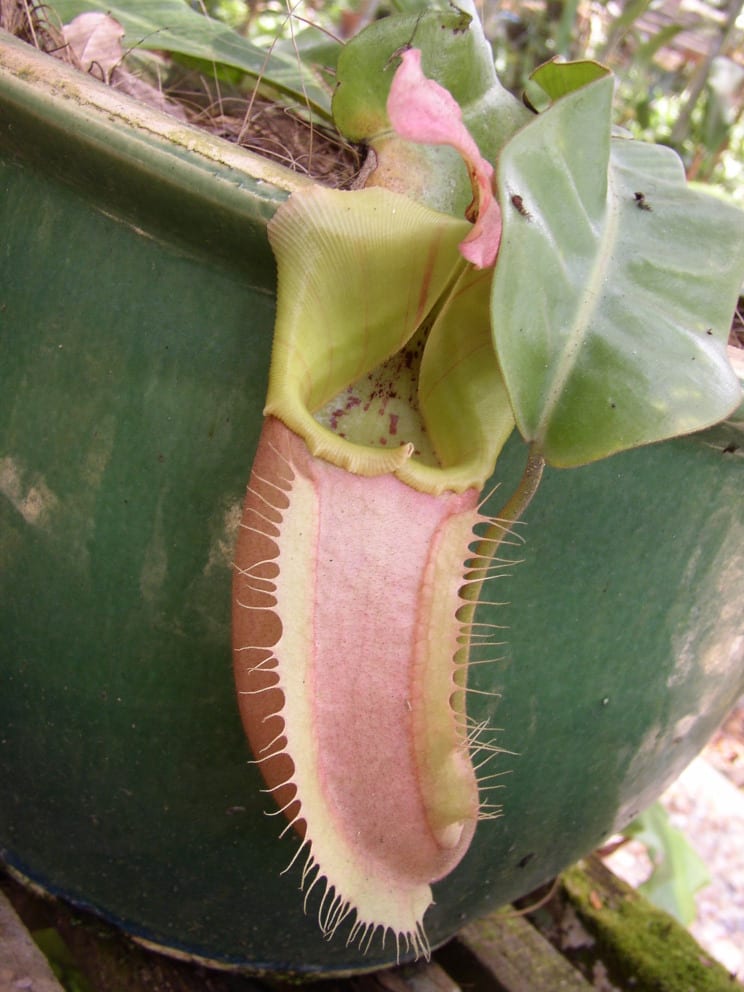
 © en:User:NepGrower / Public domain
維氏豬籠草
Nepenthes veitchii is an epiphytic pitcher plant native to the forests of Borneo, prized for its striking growth habit: it climbs tree trunks while arranging its leaves in two neat rows along the stem. Its most distinctive feature is the peristome, the wide, upright rim around the pitcher's mouth, lined with fine ridges reminiscent of fish gills that give each pitcher an unmistakable, almost sculptural look. Historical records from the 19th century describe pitchers reaching around 25 cm in length. A perennial species that grows from an epiphytic habit into a vining form, N. veitchii is generally considered a plant for experienced growers.
View 維氏豬籠草 encyclopedia →成交手續費 0%!2026年9月30日前註冊,前 2 株免佣金!
生產者 招募中!
在 GrowerDirect 上架,直接銷售給全國的客戶吧!
GrowerDirect承諾的 6 項透明性重點
在食蟲植物出品時,生產者將透明標示以下資訊。保證品種、產地、光照需求、栽培難度的透明度。
- 品種標示
- 實物照片
- 色澤
- 產地標示
- 光照需求
- 難度標示
查看全部145個品種
食蟲植物分類正在招募認證生產者
生產者正在陸續註冊,即將上架。設定上架通知,不錯過新商品。
「接收上架通知」需免費註冊會員即可設定。當有符合您儲存條件的新商品上架時,我們會以郵件和站內通知提醒您。
維氏豬籠草的基本資料
- 栽培難度
- 適合高級者
- 壽命
- 多年生(附生至藤蔓性)
- 體型
- 捕蟲囊長度約25厘米(19世紀記錄)
- 澆水
- 肥料極稀薄施用(通過捕蟲獲取養分)
- 溫度與越冬
- 分佈海拔跨度0至1600公尺,分佈範圍寬廣,不同產地的性質可能偏向低地型或高地型。購買時應確認產地,高地產的株隻應降低夜間溫度。
- 光照與放置位置
- 在明亮光線下口緣顏色更加鮮豔。應避免直射陽光過強的場所,在明亮的半蔭環境下栽培。
- 澆水
- 使用雨水或低鹽類含量的水,在栽培介質未完全乾燥前施水。不要讓受盤積水,應使用排水性好的介質以防止根部腐爛。
- 栽培介質與換盆
- 因其附生特性,應使用透氣性良好的介質,或沿著木板、蕨根纖維栽培。避免根部悶蒸。
- 肥料
- 若使用化學肥料應極度稀釋。偶爾在捕蟲囊中放入昆蟲即可提供足夠養分。
- 病蟲害與注意事項
- 同一種的株隻因產地不同,性質和顏色差異很大。選擇標有產地名稱的株隻有利於確定管理方法。購買時應選擇實生或組織培養繁殖的株隻。
關於維氏豬籠草
Nepenthes veitchii is a Bornean epiphytic pitcher plant with a wide, gill-ribbed peristome and leaves arranged in two neat rows. A perennial species suited to experienced growers.
開始照料維氏豬籠草前需要了解的7件事
1Placement
Nepenthes veitchii thrives in bright, indirect light or gently filtered sun. Strong afternoon sun, especially in midsummer, can scorch the leaves, so light filtered through a sheer curtain works well. Good air circulation around the plant also helps prevent stagnant, overly humid conditions.
2Watering
Keep the growing medium consistently moist, but avoid letting water sit and stagnate in the pot, as this can lead to root rot. Watering from above and letting excess drain freely suits this plant better than standing it in a saucer of water. Rainwater or soft water is preferable, since tap water can be too hard for its liking.
3Potting Mix
A well-draining, moisture-retentive epiphytic mix, either pure sphagnum moss or sphagnum blended with perlite or orchid bark, suits this species well. Ordinary potting soil tends to compact and hold too much water, increasing the risk of root rot.
4Repotting
Sphagnum moss breaks down over time and drains poorly as it ages, so repot into fresh moss roughly every one to two years. Once the vining stem lengthens, training it onto a stake or piece of fern fiber lets the plant grow in the climbing, epiphytic form it naturally takes.
5Seasonal Care
This plant favors warm, humid conditions but tends to grow best with a slight drop in temperature at night. In winter, keep it in a bright spot indoors and protect it from extreme cold or dry air.
6Humidity
In dry air, pitchers often fail to develop fully or shrivel before they mature. Growing the plant in a terrarium or alongside a humidifier helps maintain the high humidity it needs to produce well-formed pitchers.
7Choosing a Plant
Look for a plant with leaves arranged neatly in two rows and a sturdy stem, signs of stable, healthy growth. Choosing one that already has pitchers lets you enjoy N. veitchii's distinctive wide peristome right away.
維氏豬籠草的常見問題
- Q.Can beginners grow this plant?
- A.Nepenthes veitchii is considered a plant for experienced growers, as it needs careful attention to humidity and potting mix. It's best to build experience with other, easier Nepenthes species before taking this one on.
- Q.How big do the pitchers get?
- A.Historical records note pitchers reaching around 25 cm in length. Actual size varies depending on the plant's condition and growing environment.
- Q.Why aren't pitchers forming, or why are they small?
- A.Pitchers often fail to develop well when the air is too dry or light is insufficient. Keeping humidity high and providing bright light usually helps.
- Q.Can it be grown outdoors?
- A.While it enjoys warm, humid conditions, it doesn't tolerate cold well, making year-round outdoor cultivation difficult. Move it to a bright spot indoors once temperatures start to drop.
- Q.Should I fertilize it?
- A.Since the plant obtains nutrients by catching insects in its pitchers, little to no fertilizer is generally needed. If you do fertilize, use a diluted liquid fertilizer sparingly.
維氏豬籠草栽培的實用工具
在圖鑑中詳細了解維氏豬籠草
查看維氏豬籠草的圖鑑條目 →
收錄栽培難度、尺寸、原產地、日照等基礎資料。