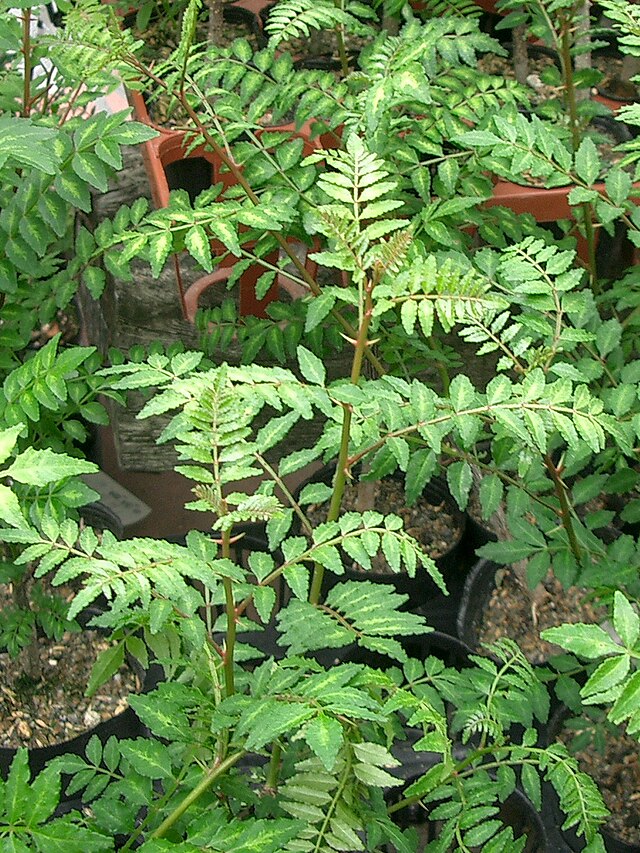
來源:Wikimedia Commons
山椒
適合中級Zanthoxylum piperitum
烹飪中廣為人知的落葉灌木。細小的葉子和枝條上的刺刻畫出盆景特有的細緻感。初夏的花朵和秋季的紅色果實也是看點。獨特的香氣也能品嚐到。
關於我們
山椒是芸香科山椒屬的落葉灌木,原產於日本、中國、朝鮮半島。作為「山之香料」,自古以來就是日本料理不可或缺的調味料,從嫩芽、葉子、花朵、果實到樹皮都被利用,是與日本特有飲食文化深深結合的樹木。春季的嫩芽被稱為「木芽」供使用,果實粉末眾所周知地灑在烤鰻上。葉子是羽狀複葉,觸碰時散發清爽香氣。為雌雄異株,雌株秋季結紅果,果實爆開時露出黑色種子。在盆景中,山椒作為既能欣賞香氣又能欣賞果實的果實盆景佔有獨特地位。被稱為「葉山椒」的觀賞品種葉片紋樣和形狀往往富有個性,深受盆景愛好者珍視。管理上喜陽光充足,使用排水良好的土壤。澆水時應避免乾燥,夏季應頻繁澆水。需注意有刺枝條。每2~3年於春季發芽前進行一次換盆。
Source: Wikipedia (CC BY-SA 4.0)
山椒的壽命
山椒的壽命為30~50年。
山椒的體型
山椒的成體體型為10~40cm(盆景尺寸)。
基本資訊
產地
日本、中國、朝鮮半島
壽命
30~50年
體型
10~40cm(盆景尺寸)
溫度
-5〜35℃
澆水與施肥
肥料(定期施肥)
栽培要點
擺放位置
半陰環境最佳。避免強烈直射日光
澆水
喜歡潮濕環境。害怕乾燥,絕不能缺水
樹形整理
充分利用棘刺、營造自然樹形。避免重剪
注意事項
注意鳳蝶幼蟲。葉片可能被啃食殆盡
山椒常見問題
Q山椒的栽培難度是多少?
適合中級。中級者用品種。需要一定的栽培經驗和環境管理知識。需要特別注意溫度和濕度的管理。
Q山椒的壽命是多長?
山椒的平均壽命為30~50年。透過適切的栽培環境和養分管理,可以長期健康成長。
Q山椒能長多大?
山椒的成體大小為10~40cm(盆景尺寸)。會因栽培環境和個體差異有所變化。
Q山椒如何澆水施肥?
山椒的澆水與施肥為:肥料(定期施肥)。請注意適當的頻率和用量。
Q山椒的一般價格是多少?
山椒的價格因品種・特徵・大小・系統而異。請查看GrowerDirect的市價頁面以取得最新價格資訊。
最後更新: 2026年6月24日
栽培規格
- USDA耐寒區
- 5–9
參考與來源
編輯與資料核驗: GrowerDirect編輯部
本頁的分類、規制和栽培數據基於以下主要信息數據庫進行創建和驗證。
分類與學名依據
法規與保育狀況
相關物種
相關文章
初學者盆栽樹種選擇與完全培育藍圖|1年至5年分階段管理戰略
盆栽初學者成功的關鍵在於樹種選擇。本文選擇五葉松、真柏等適合初學者的樹種,詳細解說從第1年到第5年透過分階段管理將其培育成完成盆栽的過程。提供樹形基礎構築、調整、完成這5年歷程的藍圖。
盆栽的古木制造技巧|枝條老化表現與樹齢感的演出方法
介紹將幼樹打造成古木盆栽的技法。涵蓋樹皮質感、枝條構成、根系表現、隨時間推移的變化,呈現樹齢感的實踐方法。
如何防止盆栽肥料燒傷|判斷施肥量與濃度的方法
盆栽肥料燒傷為何發生?本文解說滲透壓的機制、如何區分葉尖褐化等初期症狀、為何在盛夏和換盆直後容易發生,以及應急處置和預防策略。
盆栽禮物指南|適合長壽祝賀和開業祝賀的樹種與禮儀
介紹盆栽作為祝賀禮物時的樹種選擇和禮儀。推介根據場景(如長壽祝賀、開業祝賀等)的適合樹種,以及考慮管理負擔的選擇方法。