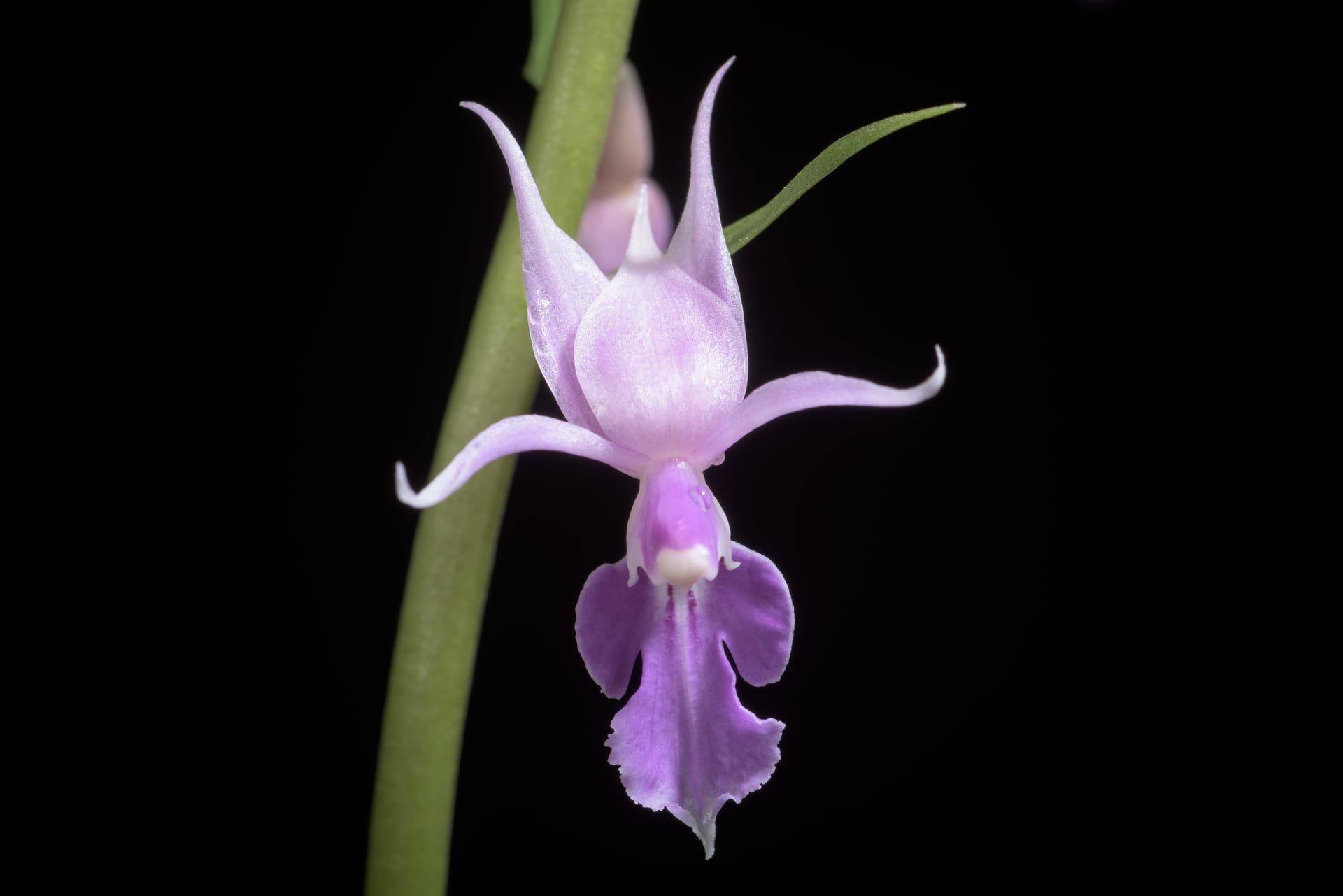
 © snotch from Sapporo, Hokkaido, Japan / CC BY 2.0
夏蕙蘭
Natsu-ebine is an unusual member of the Calanthe orchid family that blooms in the height of summer, sending up spikes of pale purple flowers in July and August. Its curled-back sepals and finely ruffled lip give the blossoms a delicate, cooling look that sets it apart from typical spring-flowering orchids. This perennial has a reputation for being tricky to keep over the long term, as it is sensitive to heat, dryness, and viral disease, making it best suited to experienced growers. Leaves reach 10 to 30 cm and flower stalks 20 to 40 cm, giving the plant a graceful, woodland-garden presence.
View 夏蕙蘭 encyclopedia →成交手續費 0%!2026年9月30日前註冊,前 2 株免佣金!
生產者 招募中!
在 GrowerDirect 上架,直接銷售給全國的客戶吧!
GrowerDirect承諾的 6 項透明性重點
出品 蘭花 時,認證 生產者 明示品種、產地、光照需求、栽培難度等資訊,確保購物透明。
- 品種說明
- 實物照片
- 色澤
- 產地說明
- 光照需求
- 難度說明
查看全部142個品種
蘭花分類正在招募認證生產者
生產者正在陸續註冊,即將上架。設定上架通知,不錯過新商品。
「接收上架通知」需免費註冊會員即可設定。當有符合您儲存條件的新商品上架時,我們會以郵件和站內通知提醒您。
夏蕙蘭的基本資料
- 栽培難度
- 適合高級者
- 壽命
- 多年生草本(據稱長期栽培困難)
- 體型
- 葉片長10~30厘米,花莖高20~40厘米
- 澆水
- 春至初夏施少量稀釋液肥
- 光照與放置位置
- 置於避免強烈日光的明亮半陰處。夏季尤其需要涼爽的半日陰環境。
- 澆水
- 不耐乾燥,應避免土壤過乾,夏季應向周圍灑水以保持濕度。
- 溫度與越冬
- 不耐高溫,在平地高溫環境下花蕾易脫落。夏季越夏應在通風良好的涼爽處進行。能耐冬季寒冷。
- 培養土與換盆
- 以鹿沼土或輕石混合腐葉土製成兼具排水性和保水性的培養土進行盆栽。
- 病蟲害與注意事項
- 易患病毒病,發病株無法治癒。應逐株消毒工具,症狀株應隔離。應選擇人工栽培增殖品,而非野生採集株。
關於夏蕙蘭
Natsu-ebine is a rare summer-blooming orchid with pale purple flowers in July and August. This perennial suits experienced growers for its curled sepals and ruffled lip, though it is sensitive to heat, dryness, and viral disease.
開始照料夏蕙蘭前需要了解的7件事
1Place in Partial Shade
Natsu-ebine dislikes strong direct sun and scorches easily, so give it bright partial shade with good air circulation. Be especially careful of harsh summer afternoon sun, using shade cloth if needed to ease the strain on the plant.
2Balance Watering Carefully
Water thoroughly once the soil surface dries during the growing season, since overwatering leads to root rot. At the same time, it is sensitive to drying out completely, so avoid letting the potting mix go bone dry.
3Use Well-Draining Soil
A mix formulated for wild orchids or woodland plants, balancing drainage with moisture retention, suits this species well. Avoid soil that stays wet, as it can damage the roots.
4Repot After Dormancy
Repot every few years, right as new growth begins after the dormant season ends. Watch the plant's condition, since root-bound pots or breaking-down soil can weaken it over time.
5Summer Heat Needs Care
Midsummer, which is also the flowering season, is the most demanding time of year, and the combination of heat and dryness can quickly weaken the plant. Keeping it cool and shaded while maintaining airflow is key to growing it successfully over the long term.
6Winter Dormancy Care
As temperatures drop, the above-ground growth dies back and the plant enters dormancy. Reduce watering during this period and keep it somewhere protected from frost.
7Check Leaves Before Buying
Because this species is vulnerable to viral disease, it is worth checking the leaves for spots, discoloration, or stunting before bringing one home. Choosing a healthy, vigorous plant is the first step toward growing it successfully long-term.
夏蕙蘭的常見問題
- Q.Is Natsu-ebine suitable for beginners?
- A.It's considered an advanced-grower plant, being sensitive to heat, dryness, and viral disease, which makes long-term cultivation difficult. It suits those with prior orchid-growing experience or the time for close, regular care.
- Q.When does it bloom?
- A.Unlike most Calanthe orchids, Natsu-ebine flowers in the height of summer, during July and August. It produces spikes of pale purple blossoms.
- Q.If it's sensitive to heat, why does it bloom in summer?
- A.Because its flowering period overlaps with the hottest part of the year, the plant tends to use up a lot of energy at once. This means it needs even more attention to airflow and shade than typical Calanthe orchids.
- Q.Should it be grown outdoors or indoors?
- A.Outdoors in a spot with bright partial shade and good airflow is generally best. Just be sure to shield it from harsh summer sun and winter frost, adjusting its placement with the seasons.
- Q.How should I care for it after it finishes blooming?
- A.Warm weather often continues after flowering ends, so keep watching for both underwatering and overwatering during this stretch. Gradually ease off on watering as the plant heads into dormancy.
夏蕙蘭栽培的實用工具
在圖鑑中詳細了解夏蕙蘭
查看夏蕙蘭的圖鑑條目 →
收錄栽培難度、尺寸、原產地、日照等基礎資料。