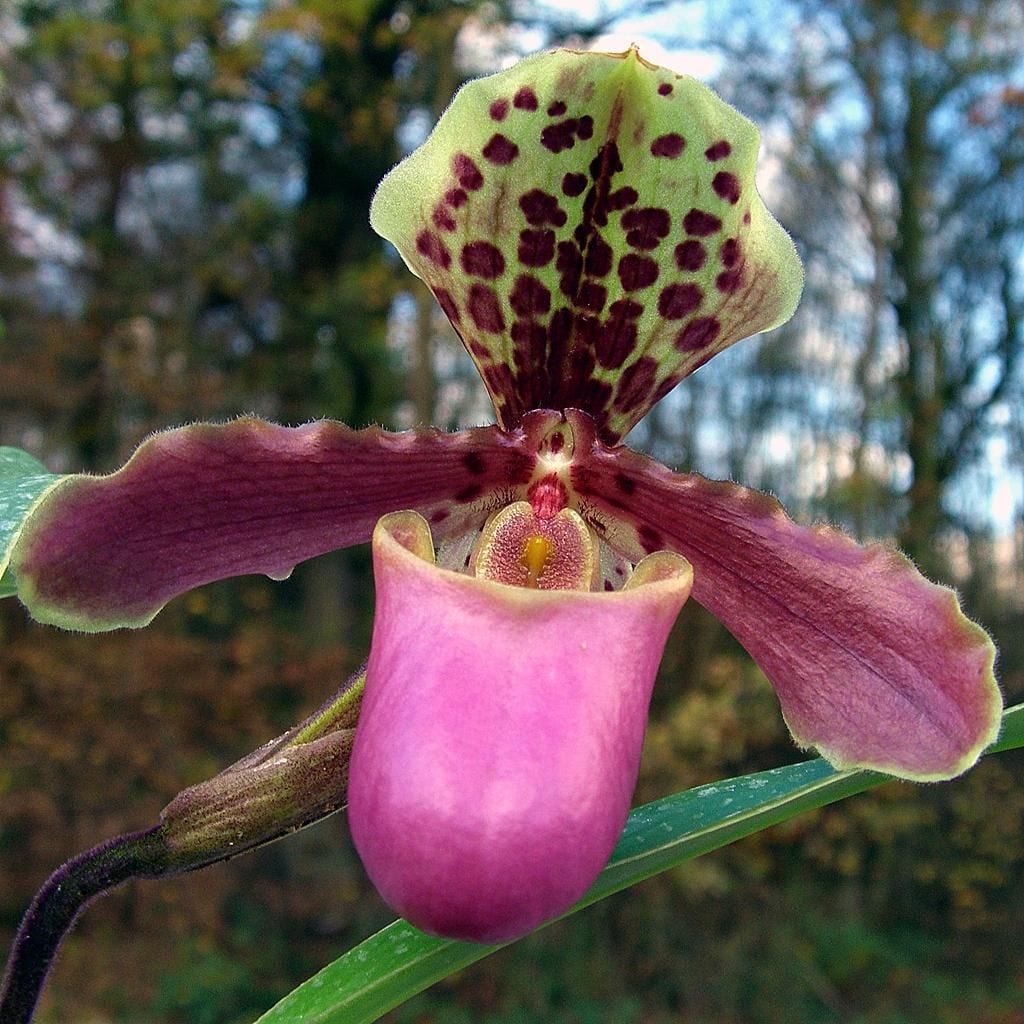
 © Orchi / CC BY-SA 3.0
亨利兜蘭
Paphiopedilum henryanum is a compact slipper orchid native to limestone cliffs in Guangxi and Yunnan in China and northern Vietnam. Its narrow, glossy dark-green leaves form a neat rosette, and from autumn into winter it sends up a flower stem of roughly 12-15cm topped with a single bloom about 4-6cm across. Rather than bold colors, the appeal lies in the contrast between the tidy foliage and that single, understated flower, making it a favorite among more experienced orchid growers. It calls for intermediate-level care, but rewards patient growers who divide and replant it over the years. Every Paphiopedilum species is listed in CITES Appendix I, which makes it an Internationally Endangered Species under Japan's Act on Conservation of Endangered Species (種の保存法). Transferring a plant within Japan, whether by sale or gift, requires a registration certificate under that Act, and this applies to plants propagated in Japan too. When buying, always confirm that the plant comes with its registration certificate.
View 亨利兜蘭 encyclopedia →成交手續費 0%!2026年9月30日前註冊,前 2 株免佣金!
生產者 招募中!
在 GrowerDirect 上架,直接銷售給全國的客戶吧!
GrowerDirect承諾的 6 項透明性重點
出品 蘭花 時,認證 生產者 明示品種、產地、光照需求、栽培難度等資訊,確保購物透明。
- 品種說明
- 實物照片
- 色澤
- 產地說明
- 光照需求
- 難度說明
查看全部142個品種
蘭花分類正在招募認證生產者
生產者正在陸續註冊,即將上架。設定上架通知,不錯過新商品。
「接收上架通知」需免費註冊會員即可設定。當有符合您儲存條件的新商品上架時,我們會以郵件和站內通知提醒您。
亨利兜蘭的基本資料
- 栽培難度
- 適合中級者
- 壽命
- 多年生植物,通過分株可長期栽培(壽命資料稀少)
- 體型
- 小型。花莖12~15cm、花朵直徑4~6cm
- 澆水
- 生長期施稀釋的液體肥料
- 光照與擺放位置
- 在明亮的半陰環境下栽培。強烈的直射日光會導致葉片灼傷。
- 澆水
- 當介質快乾時澆水,避免過度潮濕或過度乾燥。
- 溫度與越冬
- 喜歡中溫至高溫環境。冬季應在室內溫暖的地方管理。
- 介質與換盆
- 自生地生長在石灰岩懸崖。應用排水良好的介質盆栽,換盆和分株在花期後進行。
- 肥料
- 在生長期定期施稀釋的液體肥料。
- 病蟲害與注意事項
- 本種為CITES附錄I物種,購買時必須確認物種保存法的登記證件。
關於亨利兜蘭
Paphiopedilum henryanum is a compact slipper orchid from southern China and northern Vietnam, known for its narrow dark-green leaves and single 4-6cm blooms each autumn and winter. Best suited to intermediate growers.
開始照料亨利兜蘭前需要了解的7件事
1Avoid Direct Sun
Coming from limestone cliff habitats, this orchid likes bright conditions but strong midsummer sun can scorch the leaves. A sheer-curtained window or bright, well-ventilated partial shade works best.
2Water When Dry
Water thoroughly once the surface of the mix has dried out, rather than keeping it constantly damp. Make sure water drains freely from the pot, since standing moisture around the base can lead to rot.
3Use Free-Draining Mix
Because it grows on rocky limestone ledges in the wild, this plant prefers a mix that lets its roots dry out between waterings. A bark-and-perlite based compact mix formulated for Paphiopedilum suits it well.
4Repot and Divide After Flowering
Repot once the mix starts to break down, timing it for after flowering has finished. This is also the best moment to divide the plant, producing new offsets with minimal stress.
5Keep Routine Steady in Bloom Season
While the flower stem develops from autumn into winter, avoid major changes to light or watering habits. Keep it away from cold drafts too, since low temperatures at this stage can damage the developing bud.
6Choose Healthy-Leaved Plants
Glossy, deep-green leaves are the sign of a healthy plant. Avoid specimens with dried leaf tips or blackened bases. As an Appendix I species, it must come with a registration certificate under Japan's Act on Conservation of Endangered Species (種の保存法), so always confirm the certificate when acquiring one.
7A Slow, Long-Term Orchid
This is considered an intermediate-level orchid, and flowering may take a while to become reliable until conditions suit it. It's best approached as a plant to grow patiently over years, propagated through repeated divisions.
亨利兜蘭的常見問題
- Q.Is this orchid suitable for beginners?
- A.It's generally considered an intermediate-level orchid, though anyone comfortable with basic watering and drainage needs can manage it. Growers with some prior orchid experience will find it approachable.
- Q.How many flowers does it produce?
- A.Each flower stem carries a single bloom. Once the plant is well established, it typically flowers again each autumn through winter.
- Q.How big does it get?
- A.It's a compact Paphiopedilum, with flower stems around 12-15cm and blooms roughly 4-6cm across, making it easy to manage in a pot.
- Q.What causes the leaves to look damaged?
- A.Leaf scorch from direct sun and root rot from poorly draining mix are the most common causes. Reviewing the plant's location and potting mix usually helps.
- Q.When is the best time to divide the plant?
- A.Division is best done together with repotting, after flowering has finished.
亨利兜蘭栽培的實用工具
在圖鑑中詳細了解亨利兜蘭
查看亨利兜蘭的圖鑑條目 →
收錄栽培難度、尺寸、原產地、日照等基礎資料。