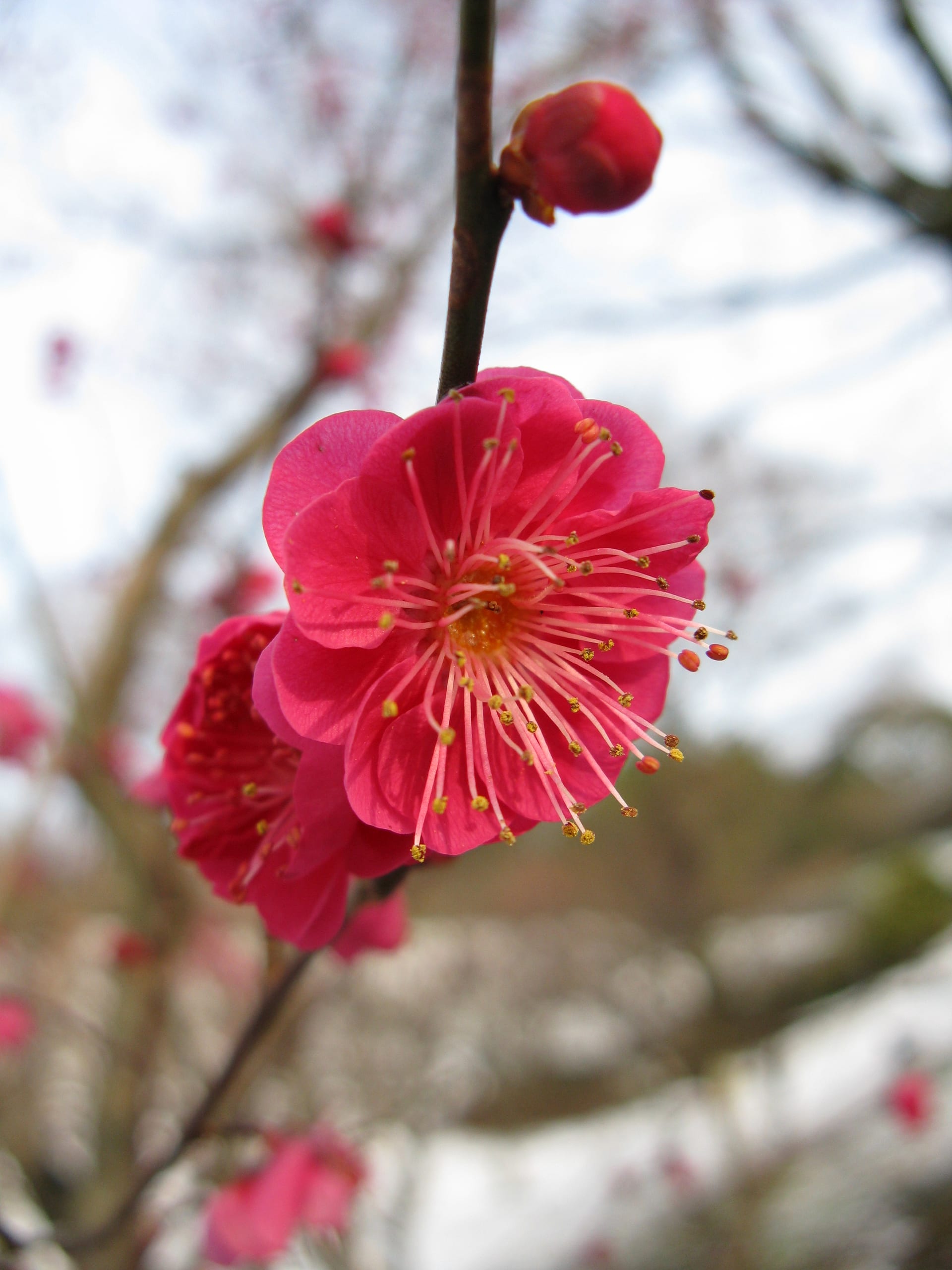
Source: Wikimedia Commons
Kagoshima-beni Japanese apricot
IntermediatePrunus mume 'Kagoshima-beni'
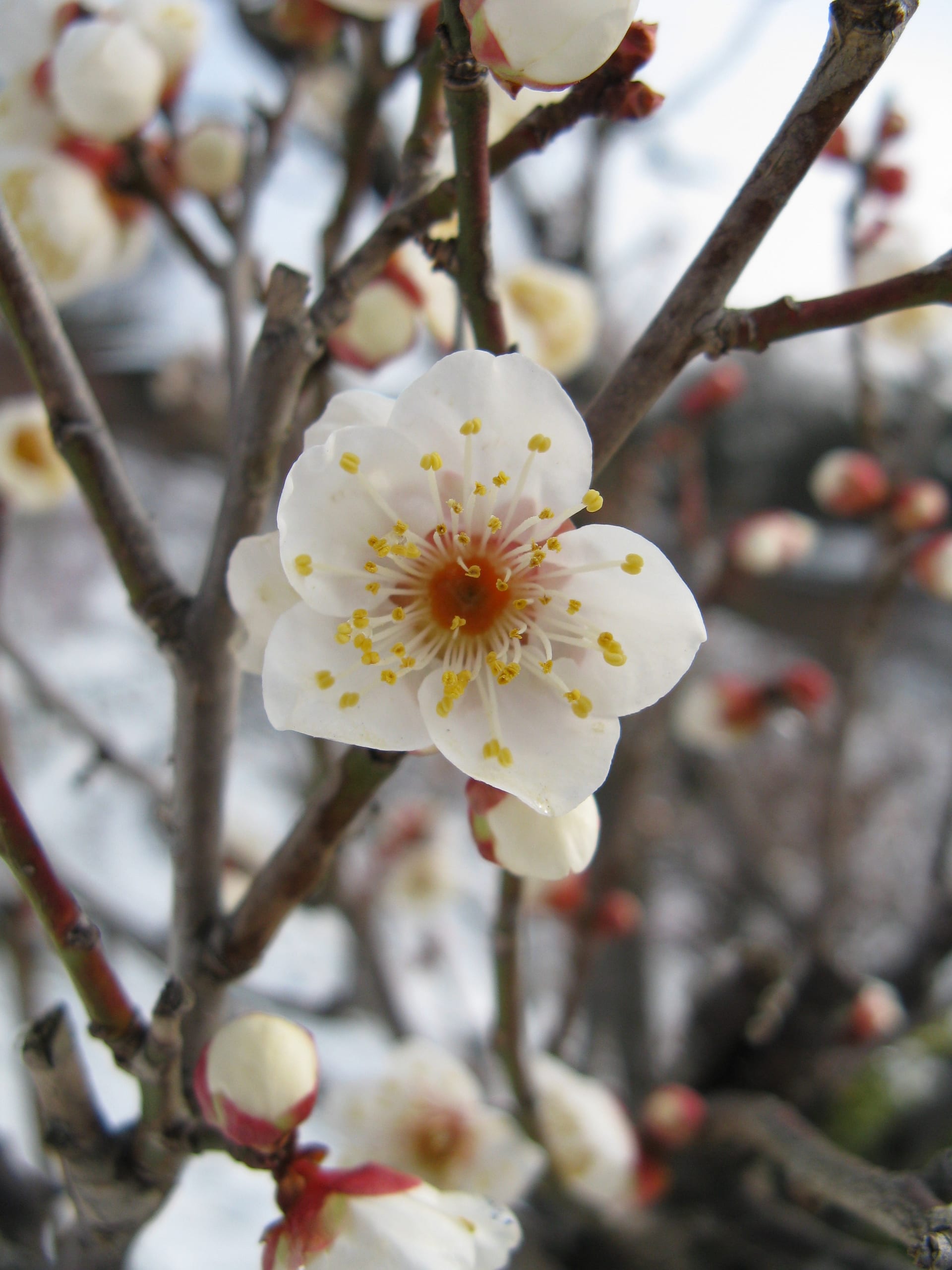
A hibai-group cultivar regarded as the classic red ume. It bears deep red, double, medium flowers, and even the pith of thin twigs and the leaf stalks are deep red. Fragrant and a standard red ume for bonsai.
About
Kagoshima-beni (also Kagoshima-koubai) is a flowering ume cultivar regarded as the classic red-flowered ume. Flowering ume are grouped into the near-wild yabai group, the hibai group derived from it with red-pithed branches, and the bungo group from crosses with apricot, among others; Kagoshima-beni belongs to the hibai group. A municipal ume-garden list describes its flowers as double, medium and deep crimson, and a nursery guide adds that the pith of thin twigs and the leaf stalks are also deep red. The hibai group is known for fragrance, easy propagation and suitability for bonsai. Deep red double flowers and red pith and leaf stalks identify it; among other red ume, 'Yae-kanko' of the yabai group opens earlier, and single 'Beni-chidori' has petal-like stamens. Sources give its season as early or as rather late (early February to mid-March), and it also varies with region and year. Ume cultivars are normally propagated by grafting, and this standard red ume is widely sold, from grafted young plants to trained potted trees.
Lifespan of the Kagoshima-beni Japanese apricot
The Kagoshima-beni Japanese apricot lives Ume is long-lived; some potted ume are said to be 400 years old.
Size of the Kagoshima-beni Japanese apricot
The Kagoshima-beni Japanese apricot grows to Ume is a small deciduous tree of 3–10 m; as bonsai it is trained to suit the pot.
Basic Info
Origin
Japan (flowering ume cultivar, hibai group)
Lifespan
Ume is long-lived; some potted ume are said to be 400 years old
Size
Ume is a small deciduous tree of 3–10 m; as bonsai it is trained to suit the pot
Temperature
-5〜35℃
Watering & Fertilizer
Fertilizer (March–June after flowering and Sept–Nov; none in summer)
Growing Tips
Light & placement
Needs plenty of sun from spring to set flower buds. Keep in a sunny, airy spot, with shade cloth in summer as leaves scorch easily
Watering
Naturally thirsty and dries fast while in leaf: 1–2 times daily in spring/autumn, 2–3 in summer, every 2–3 days in winter, soaking once the surface dries
Temperature & overwintering
Dormant in winter. Protect under the bench or in a cold frame so frozen soil and late frosts do not damage the roots
Soil & repotting
Mostly akadama with about 20% free-draining grit. Repot around February before budbreak, together with post-flowering pruning: every 1–2 years, 2–3 for old trees
Fertilizer
A heavy feeder: small regular feeds March–June after flowering, stop in summer while buds form, then feed well Sept–Nov. Use a phosphorus-rich flowering/fruiting fertilizer
Pruning & styling
Remove spent flowers at 50–70% bloom to save the tree's strength, and prune right after flowering. Buds form in July–August, so in May pinch new shoots on mature trees at 4–6 nodes
Pests & cautions
Watch for aphids, spider mites, scale, clearwing moth borers (oozing sap), powdery mildew and scab. Flowering ume are prone to bacterial canker, so avoid strong wind
Kagoshima-beni Japanese apricot FAQ
QWhat is the growing difficulty level for Kagoshima-beni Japanese apricot?
Intermediate. A variety suitable for intermediate growers. Requires some cultivation experience and knowledge of environment management. Pay careful attention to temperature and humidity control.
QWhat is the lifespan of Kagoshima-beni Japanese apricot?
The average lifespan of Kagoshima-beni Japanese apricot is Ume is long-lived; some potted ume are said to be 400 years old. With proper cultivation environment and nutrient management, you can keep it healthy for a long time.
QHow large does Kagoshima-beni Japanese apricot get?
The mature size of Kagoshima-beni Japanese apricot is Ume is a small deciduous tree of 3–10 m; as bonsai it is trained to suit the pot. This may vary slightly depending on cultivation environment and individual differences.
QHow should I water and fertilize Kagoshima-beni Japanese apricot?
Kagoshima-beni Japanese apricot: watering & fertilizer — Fertilizer (March–June after flowering and Sept–Nov; none in summer). Aim for appropriate frequency and amount.
QWhat is the typical price for Kagoshima-beni Japanese apricot?
The price of Kagoshima-beni Japanese apricot varies significantly by variety, characteristics, size, and lineage. Please check GrowerDirect's price guide for the latest market information.
Last updated: September 23, 2026
References & Sources
Edited & verified by: GrowerDirect Editorial Team
The classifications, regulations, and growing data on this page are created and verified based on the primary information database below.
Taxonomy & Authority
Regulations & Conservation Status
Not listed by CITES and not regulated for domestic sale. Not a registered variety under the Plant Variety Protection Act (no ume entry for 'Kagoshima-beni' in the MAFF database, checked Sept 2026).
Sources: Species+ (CITES listing search) / MAFF Plant Variety Registration Database
Regulations may change. Always verify the latest information with the relevant authorities.
Related Species
Find listings for this species
Related Articles
Bonsai Aged Wood Techniques | Creating Branch Aging Expression and Tree Age Aesthetics
Explains techniques for creating bonsai that appear aged from young stock. Introduces practical methods for expressing tree age aesthetics, from bark texture and branch structure to root development expression and changes over time.
How to Prevent Fertilizer Burn in Bonsai | Determining the Right Fertilizer Amount and Concentration
Why does fertilizer burn occur in bonsai? This explains the mechanism of osmotic pressure, how to identify early symptoms such as browning of leaf tips, why it occurs easily in midsummer and right after repotting, and emergency measures and preventive strategies.
A Guide to Giving Bonsai as Gifts | Appropriate Species and Etiquette for Longevity Celebrations and Business Opening Celebrations
This guide explains how to choose bonsai species and proper etiquette when giving bonsai as gifts for celebrations. It introduces recommended species for different occasions such as longevity celebrations and business opening celebrations, as well as how to choose species while considering management requirements.
Bringing Out the Artistry of Bonsai: Fundamental Techniques in Pruning and Shaping Trees
Master the fundamentals of pruning and shape forming to unveil bonsai artistry. Learn the principles of heavy and light pruning, wiring techniques, how to select bonsai styles and determine the front view, seasonal care schedules, and solutions to common mistakes—all explained step by step.
🩺 Common diseases
Can't find the plant you're looking for?
Post your wishes for free and growers with matching plants will contact you with introductions.