Bringing Out the Artistry of Bonsai: Fundamental Techniques in Pruning and Shaping Trees
Bringing Out the Artistry of Bonsai: Fundamental Techniques in Pruning and Shaping Trees。The beauty of bonsai lies in condensing a vast natural landscape…
Key Takeaways
Bringing Out the Artistry of Bonsai: Fundamental Techniques in Pruning and Shaping Trees。The beauty of bonsai lies in condensing a vast natural landscape…
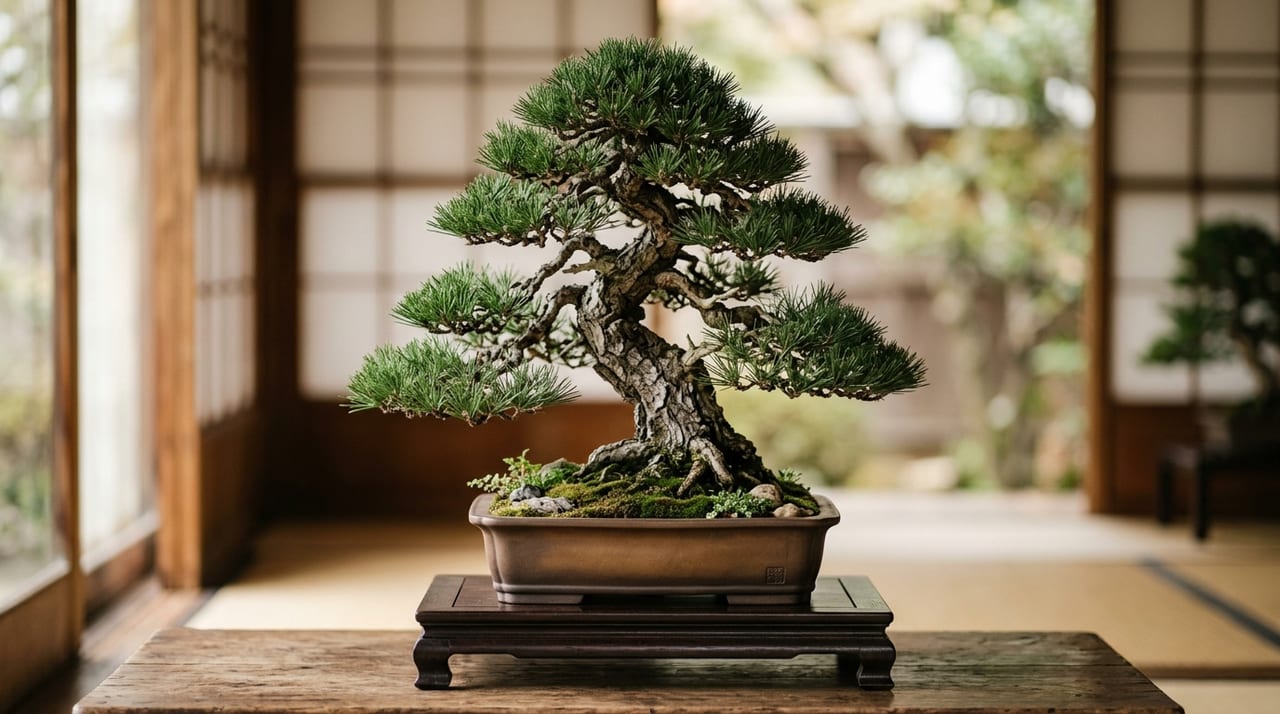
The beauty of bonsai lies in condensing a vast natural landscape within a small pot. The techniques of pruning and shaping are what bring out this "artistry" to its fullest. By perceiving the individuality of the tree and applying the right touches, a single sapling gradually develops over decades into a bonsai of profound depth. This article systematically explains the fundamental techniques that are useful in practice.
Basic Philosophy of Pruning
Pruning in bonsai is not simply cutting branches. It is an "aesthetics of subtraction" that looks ahead to the tree's future. First, it is important to understand that there are roughly two types of pruning.
Strong pruning (structural pruning) involves boldly removing large branches or unnecessary trunks to establish the skeletal framework of the tree's future form. Because this causes significant stress to the tree, the general principle is to perform it during the dormant winter season for deciduous trees, and during a stable growth period for evergreens.
Aesthetic pruning (maintenance pruning) is fine-tuning work to refine the outline of a tree that is close to its finished form. It involves cutting back areas where new shoots have grown too long, or thinning to prevent foliage from becoming too dense and causing rot. It is performed as an extension of daily care.
When performing pruning, adhere to these basic principles:
- Prioritize removing undesirable branches: Radial branches (multiple stems radiating from a single point), reverse branches (branches that curve back toward the trunk), and crossing branches (branches that intersect others) are the main causes of poor tree shape.
- Always use sharp tools for cut surfaces: A ragged cut becomes an entry point for harmful bacteria. Use bonsai pruning shears or carving knives to cut quickly and precisely.
- Apply wound dressing to cut surfaces: After cutting larger branches, applying a specialized wound dressing prevents the cut from drying out, rotting, or becoming infected by pests or disease.
Wire Training Technique
The most important technique for freely controlling tree shape is "wire training." Aluminum or copper wire is wrapped around branches or the trunk and bent in the desired direction to fix the shape. Over the course of several months to a year, the woody tissue develops a memory of the new form, and once the wire is removed, the branches retain their new position.
The basic steps of wire training are as follows:
- Select the wire thickness: A good guideline is about one-third the diameter of the branch you wish to bend. Wire that is too thin will lack holding power, while wire that is too thick will damage the branch.
- Wrap at a 45-degree angle: Wrap the wire in a spiral pattern at a 45-degree angle to the branch. Too steep an angle risks breaking the branch; too shallow an angle reduces holding power.
- Fix two adjacent branches with a single wire: Using one wire to secure two neighboring branches distributes the force and reduces stress on each branch.
- Bend the branch gradually: Support the area you wish to bend with your thumb and index finger, then apply force slowly. Small cracking sounds indicate fiber stretching and are within acceptable range, but a loud snapping sound signals breakage.
- Always remove the wire: Remove the wire before it becomes embedded in the branch (the guideline is within 3 to 6 months). If the wire cuts into the branch, it will permanently damage the tree shape and recovery becomes difficult.
Choosing Tree Style and Deciding the Front Face
Japanese bonsai has traditional tree styles known as "informal upright," "formal upright," "slanting style," "cascade style," "literati style," and others. Deciding early on which style to pursue forms the foundation for determining the direction of your pruning and wire training work.
The most common informal upright (moyōgi) features a trunk that gently curves left and right as it extends upward. This style closely resembles trees growing in natural mountain and field environments, and can be applied to most species, making it recommended for those attempting tree shaping for the first time.
When deciding on a tree form, remove the tree from its pot and observe it from every angle. Determining the front face (the side to display) is your starting point. Consider which face shows the most vigorous root structure, which angle displays the trunk's lines most beautifully, and which perspective makes the branch arrangement appear most three-dimensional. By making this comprehensive judgment to select the front, the axis for all subsequent work becomes fixed.
Seasonal Management Schedule
In bonsai pruning and shaping, the work performed changes dramatically with the seasons. Management that aligns with the tree's natural growth rhythm ensures long-term health and refinement of its artistry.
Spring (March–May) is the most vigorous growth period. Once new shoots begin to emerge, perform pinching to control tree shape. Deciduous trees should receive light pruning during this season to refine their outline.
Summer (June–August) is when foliage is dense and the tree builds reserves. Avoid strong pruning, and limit work to light maintenance such as leaf thinning or branch thinning to improve air circulation. Heavy pruning during this season can severely weaken the tree.
Autumn (September–November) is a period of vigor before leaf fall. As preparation for the following spring, thin out unnecessary small branches. Wire training of conifers (pines, junipers, Chinese juniper, and other evergreen species) is best performed during this season.
Winter (December–February) is the ideal time for pruning deciduous trees. With leaves fallen and branch structure clearly visible, you can gauge the entire tree form and perform bold pruning with confidence. Because wound healing progresses toward spring, even large cuts are repaired relatively easily.
Common Mistakes and Their Remedies
Here are key points where beginners often struggle with bonsai pruning and shaping.
Mistake 1: Over-pruning Cutting too many branches at once causes severe stress to the tree and can lead to dieback. Especially with pines, avoid removing more than one-third of the total branch volume at one time. If uncertain, use a safer approach: divide the work over multiple years, such as "the upper half this year, the lower half next year."
Mistake 2: Wire cutting into branches Leaving wire in place for extended periods allows growing branches to become embedded, leaving permanent scars. This is especially a concern with fast-growing deciduous trees; check the condition at least monthly from spring through summer. If embedding has begun, carefully remove the wire immediately with wire cutters.
Mistake 3: Pruning at the wrong time for the species For flowering trees such as plum or cherry, failure to prune immediately after flowering overlaps with the period when next year's flower buds form, reducing the bloom count. Verify the species at the time of purchase and maintain a management calendar suited to each tree's characteristics.
Developing the Ability to Read Trees and Appreciate Their Character
In mastering pruning and shaping techniques, what ultimately matters is "the ability to read your tree." What state is the tree in now? Which branches should be kept, and which should be removed? What should the tree's future form be? These judgments can only be acquired through accumulated knowledge and experience.
A tree that arrives directly from a grower carries the thoughts and management history of the person who raised it. When it arrives, spend about a week carefully observing the tree and reading the intent behind its current form before making changes. Rather than rushing, approach the tree as if in dialogue with it—this is the shortcut to refining the artistry of bonsai. With awareness that each cut shapes the tree's future, carefully build your technique one step at a time.