Source: Wikimedia Commons
Java Staghorn Fern (Platycerium willinckii)
IntermediatePlatycerium bifurcatum subsp. willinckii
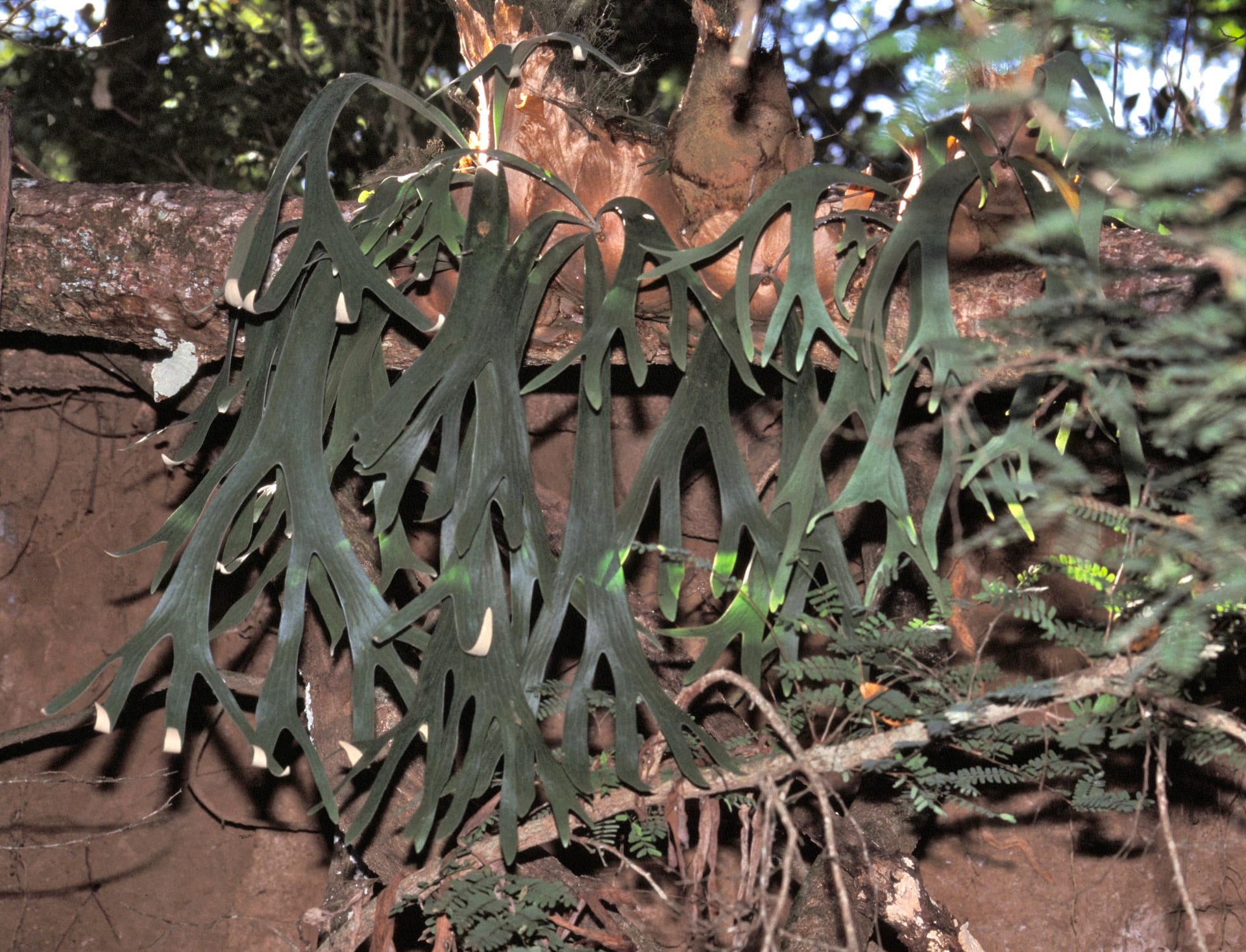
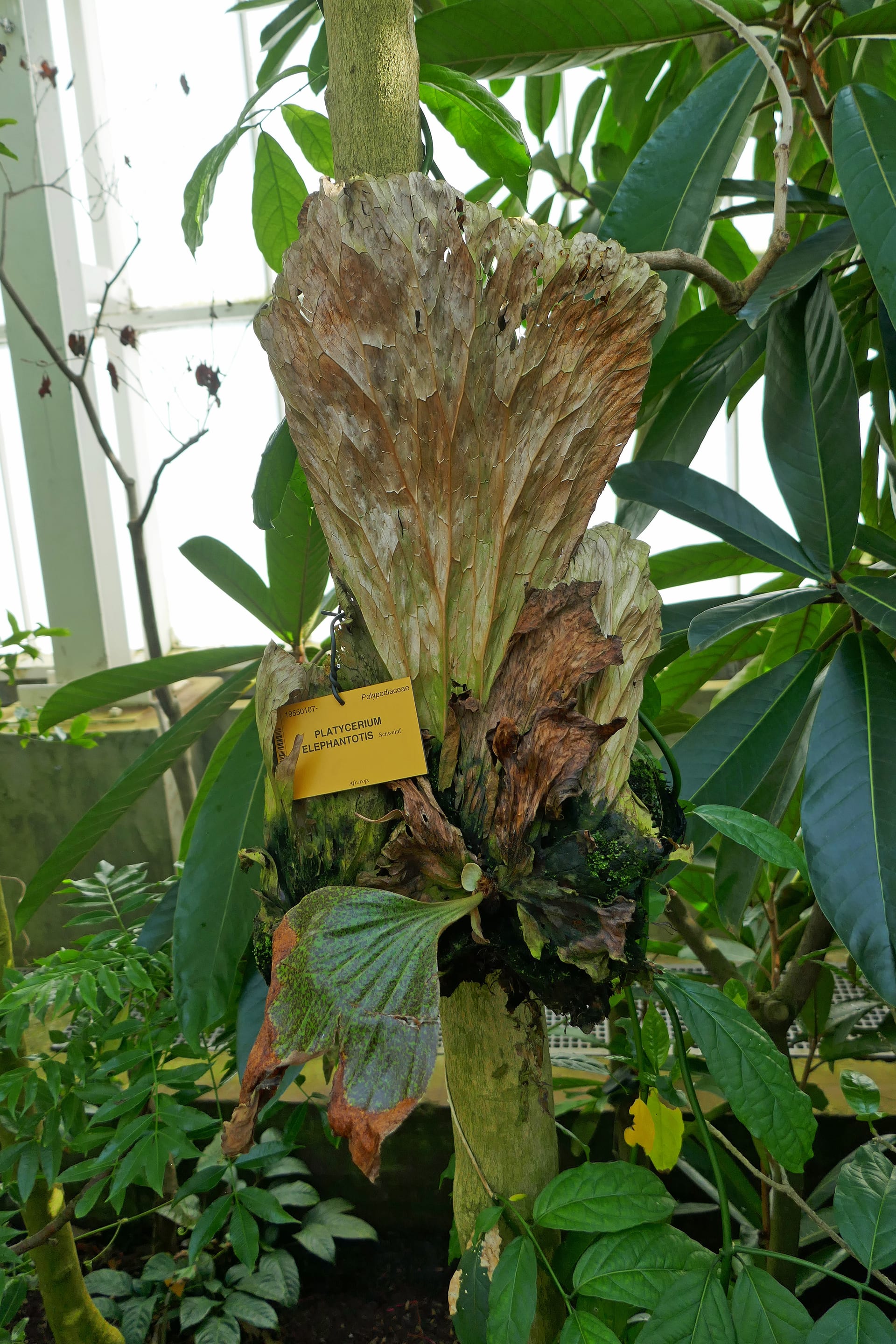
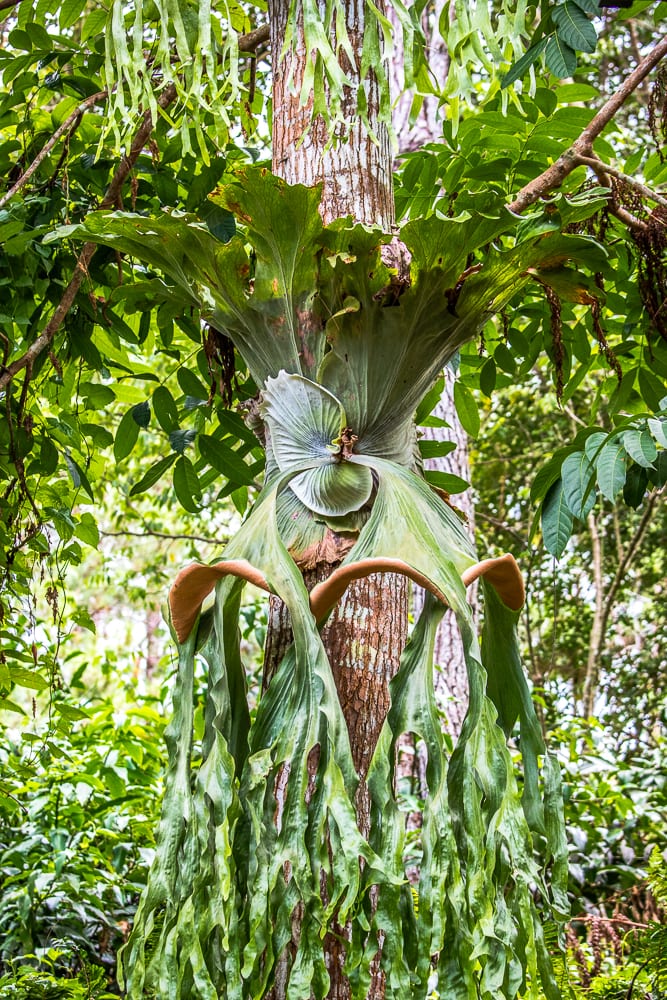
A staghorn fern with tall, deeply lobed shield fronds that leave a lace of veins as they dry. Long, narrow fertile fronds covered in white hairs hang down in contrast to the brown shields.
About
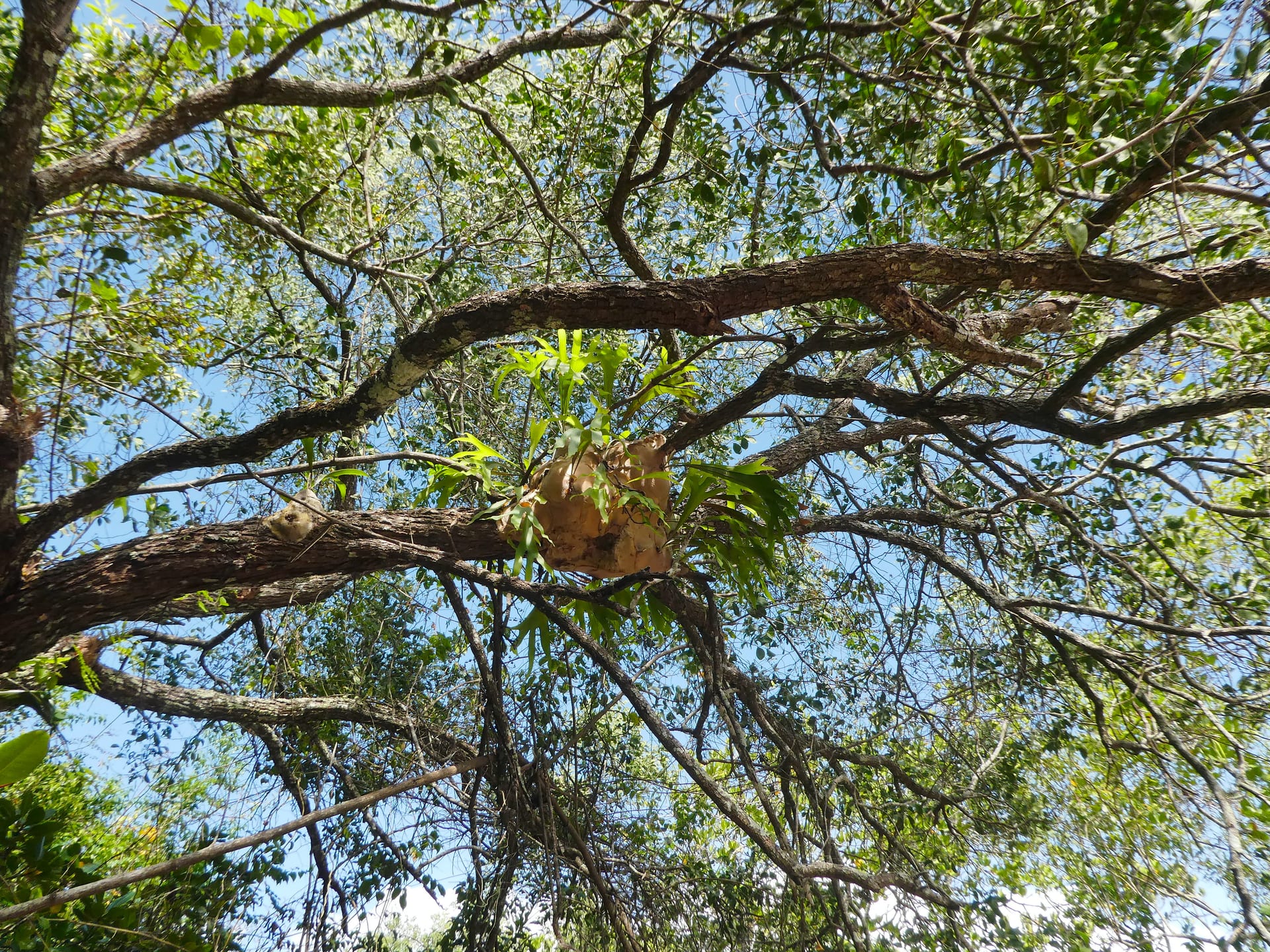
Platycerium willinckii is an epiphytic fern in the family Polypodiaceae. GBIF treats it as a subspecies of the common staghorn fern, P. bifurcatum subsp. willinckii, but it is sold under its own name in horticulture. It is native to Java and the Lesser Sunda Islands and is sometimes called the Java staghorn. Both frond types help identify it. The shield fronds are tall and deeply lobed at the top; they soon turn brown and, as they decay, leave a standing mesh of veins. The fertile fronds grow out edgewise from the base and then hang down as long straps that divide near the tips. Their undersides carry many white hairs, so they look whitish and contrast strongly with the brown shields. P. bifurcatum has bluntly lobed shield fronds that stay green for a long time, so shield height, how the shields die back and the whiteness of the fertile fronds separate them. It forms pups, though less freely than P. bifurcatum, and is less cold tolerant. Frond length and branching vary widely between plants, and selections with finely divided, curling tips are known. In Japan many plants, including named selections, are sold by specialist nurseries and growers. Detailed primary descriptions of this taxon are scarce.
Basic Info
Origin
Indonesia (Java and the Lesser Sunda Islands)
Lifespan
Perennial (epiphytic fern)
Size
Fertile frond length varies greatly; little measured data exists for this taxon
Temperature
15〜30℃
Humidity
50〜70%
Watering & Fertilizer
Little data on feeding; in the wild, leaf litter trapped by the shield fronds decomposes to supply nutrients
Growing Tips
Light & Placement
Dappled light to partial shade. Indoors, give it bright light filtered through a sheer curtain.
Watering
Water the crown regularly, letting the roots dry slightly between waterings but never completely. Soak mounted plants or water the base thoroughly.
Temperature & Overwintering
Less cold tolerant than P. bifurcatum. Bring it into a warm room in winter, away from cold windows.
Soil & Repotting
Mount on a board or tree-fern slab with sphagnum moss, or pot in an orchid mix or sphagnum. The shield fronds grow over the base to cover the roots, so never peel them off.
Propagation
It produces pups that can be divided once well grown, though fewer than P. bifurcatum.
Pests & Cautions
After shipping it may sit dormant for a while, and its small bud can make it look dead, so do not give up on it too soon. Watch for spider mites, aphids and mealybugs. The white star-shaped hairs on the fronds protect the plant, so do not rub them off.
Java Staghorn Fern (Platycerium willinckii) FAQ
QWhat is the growing difficulty level for Java Staghorn Fern (Platycerium willinckii)?
Intermediate. A variety suitable for intermediate growers. Requires some cultivation experience and knowledge of environment management. Pay careful attention to temperature and humidity control.
QHow should I water and fertilize Java Staghorn Fern (Platycerium willinckii)?
Java Staghorn Fern (Platycerium willinckii): watering & fertilizer — Little data on feeding; in the wild, leaf litter trapped by the shield fronds decomposes to supply nutrients. Aim for appropriate frequency and amount.
QWhat is the typical price for Java Staghorn Fern (Platycerium willinckii)?
The price of Java Staghorn Fern (Platycerium willinckii) varies significantly by variety, characteristics, size, and lineage. Please check GrowerDirect's price guide for the latest market information.
Last updated: September 23, 2026
References & Sources
Edited & verified by: GrowerDirect Editorial Team
The classifications, regulations, and growing data on this page are created and verified based on the primary information database below.
Primary sources
- Species+ (CITES listing check)
- Ministry of the Environment: List of Invasive Alien Species
- Hobbyist's Guide to Identifying Platyceriums (H. Halling, LAIFS; archived) - Platycerium willinckii
- GBIF - Platycerium bifurcatum subsp. willinckii
- Flora of Australia - Platycerium bifurcatum
- NC State Extension Plant Toolbox - Platycerium bifurcatum (genus cultivation basics)
Taxonomy & Authority
Regulations & Conservation Status
Not listed in the CITES Appendices. Not a designated invasive alien species in Japan, nor a nationally rare species under the Act on Conservation of Endangered Species.
Sources: Species+ (CITES listing check) / Ministry of the Environment: List of Invasive Alien Species
Regulations may change. Always verify the latest information with the relevant authorities.
Related Species
Find listings for this species
Related Articles
Complete Platycerium Mounting Guide | Seedling Selection, Sphagnum Moss, Mounting Methods & Detailed Watering Instructions
Complete guide to mounting platycerium. We walk you through seedling selection, board and materials preparation, using sphagnum moss, mounting techniques, and post-mounting watering and care—with detailed steps anyone can follow.
Why New Leaves on Foliage Plants Are Smaller — Practical Solutions for Light, Humidity, and Nutrition
We analyze the causes behind stunted growth and smaller new leaves on foliage plants. From light environment and humidity management to fertilization strategy and root health, we explain each factor based on empirical data and introduce methods to restore new leaf size.
Spider Mite and Scale Insect Control: Practical Pest Prevention
Learn to identify spider mites and scale insects on houseplants and recognize damage signs, master practical spider mite control methods, discover effective scale insect elimination techniques, create pest-resistant environments with seasonal management, understand pesticide safety precautions, and discover early detection and prevention strategies.
Root Rot Prevention and Root Zone Regeneration Management in Foliage Plants | Soil Selection, Watering, and Early Diagnosis & Recovery Techniques
Root rot is the greatest threat to foliage plants. This article covers practical knowledge from the mechanisms of root rot development to prevention, early-stage diagnosis and treatment methods, and ensuring long-term plant health through soil and watering management.
🩺 Common diseases
Can't find the plant you're looking for?
Post your wishes for free and growers with matching plants will contact you with introductions.