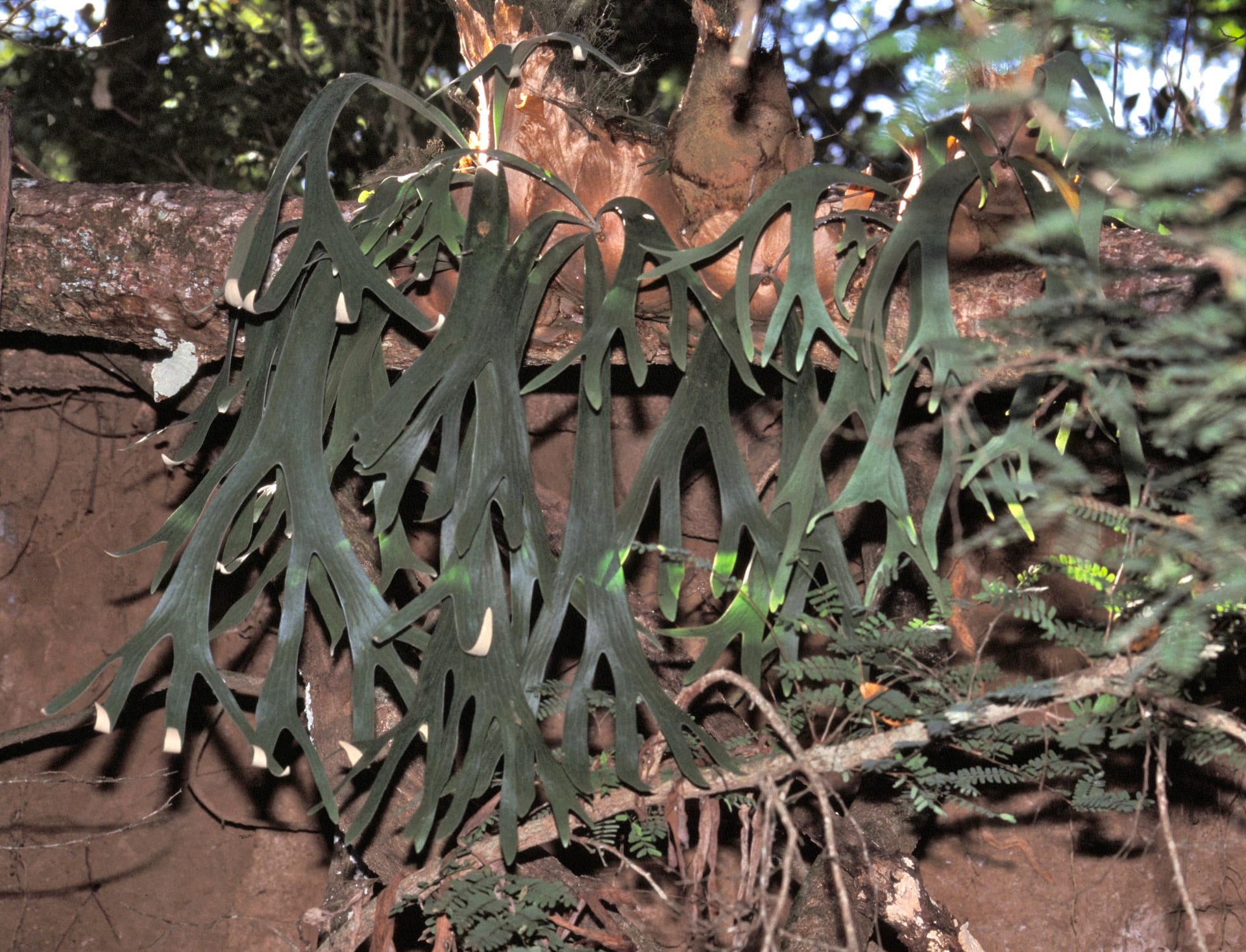
 © Bernard DUPONT from FRANCE / CC BY-SA 2.0
Java Staghorn Fern (Platycerium willinckii)
Platycerium willinckii, also known as the Java Staghorn Fern, is an epiphytic fern native to Indonesia that grows by attaching itself to bark or other surfaces rather than rooting in soil. Its shield-like leaves grow tall and deeply lobed, gradually cupping around the base of the plant. Even after they turn brown and die, these old shield leaves are left in place, their veins forming a lace-like network that continues to protect the roots. Long, slender fertile fronds covered in fine white hairs hang gracefully downward, creating a striking contrast with the papery brown shield leaves above. This combination of architectural form and soft texture makes it a distinctive choice for anyone drawn to mounted or hanging displays.
View Java Staghorn Fern (Platycerium willinckii) encyclopedia →0% commission on your first sales!Register by September 30, 2026 and your first 2 plants are commission-free!
Grower Wanted!
List your plants on GrowerDirect and sell directly to customers nationwide!
6 Transparency Commitments from GrowerDirect
Every Grower selling Foliage Plants provides complete transparency: variety, origin, light requirements, and care difficulty.
- Variety Information
- Real Photos
- True Colors
- Origin Information
- Light Requirements
- Care Difficulty
Browse all 139 varieties
Light Requirements
Care Difficulty
Verified growers wanted for Foliage Plants
Growers are signing up now ahead of launch. Subscribe to be notified when new listings go live.
Getting alerts is free with a member account. When new listings match your saved search, we'll notify you by email and in-app.
Browse other categories
Verified growers (preview)
Are you growing foliage plants?
Register as a grower and connect with buyers directly.
Apply as a growerJava Staghorn Fern (Platycerium willinckii) key facts
- Growing Difficulty
- Intermediate
- Lifespan
- Perennial (epiphytic fern)
- Size
- Fertile frond length varies greatly; little measured data exists for this taxon
- Watering
- Little data on feeding; in the wild, leaf litter trapped by the shield fronds decomposes to supply nutrients
- Light & Placement
- Dappled light to partial shade. Indoors, give it bright light filtered through a sheer curtain.
- Watering
- Water the crown regularly, letting the roots dry slightly between waterings but never completely. Soak mounted plants or water the base thoroughly.
- Temperature & Overwintering
- Less cold tolerant than P. bifurcatum. Bring it into a warm room in winter, away from cold windows.
- Soil & Repotting
- Mount on a board or tree-fern slab with sphagnum moss, or pot in an orchid mix or sphagnum. The shield fronds grow over the base to cover the roots, so never peel them off.
- Propagation
- It produces pups that can be divided once well grown, though fewer than P. bifurcatum.
- Pests & Cautions
- After shipping it may sit dormant for a while, and its small bud can make it look dead, so do not give up on it too soon. Watch for spider mites, aphids and mealybugs. The white star-shaped hairs on the fronds protect the plant, so do not rub them off.
About Java Staghorn Fern (Platycerium willinckii)
Platycerium willinckii, the Java Staghorn Fern, features deeply lobed shield leaves and drooping, white-haired fertile fronds — a striking epiphytic fern prized for houseplant displays.
7 things to know before growing Java Staghorn Fern (Platycerium willinckii)
1Light and Placement
It prefers bright, indirect light or filtered shade. Direct summer sun can scorch the fronds, so diffuse it with a sheer curtain, and if grown outdoors, a well-ventilated spot under eaves works well.
2Watering
As an epiphyte, it's best watered from below or by soaking the whole mount once the growing medium has dried out. Water tends to collect between the shield leaves and fertile fronds, so good airflow helps prevent rot.
3Growing Medium and Mounting
Rather than potting in soil, it's typically wrapped in sphagnum moss and mounted on a board or hung in a basket. Good drainage and airflow around the roots are key to preventing root rot.
4Remounting
As the shield leaves grow to cover the mount, the plant eventually needs to move to a larger board or basket. Doing this during the active growing season puts less stress on the plant.
5Seasonal Care
During the growing season, keep up regular watering and feeding, but let it dry out more between waterings as temperatures drop. It's sensitive to cold, so move it to a warm spot indoors when temperatures fall.
6The Role of Shield Leaves
Leave the shield leaves in place even after they turn brown and die back. The dried leaves leave behind a lace-like network of veins that continues to shield the roots and helps store water and nutrients.
7Choosing a Healthy Plant
Look for fertile fronds with an intact coating of fine white hairs and minimal discoloration or damage. A plant whose shield leaves sit snugly against its base is generally in good condition to establish well.
Frequently asked questions about Java Staghorn Fern (Platycerium willinckii)
- Q.Is this fern suitable for beginners?
- A.It's generally considered suited to intermediate growers, since epiphytic care around watering and placement takes some getting used to. Anyone with some houseplant experience should find it manageable once the basics click.
- Q.Should dead shield leaves be removed?
- A.No, there's no need to remove them. The dried shield leaves form a lace-like network of veins that wraps around the plant and provides a base and protection for new shield leaves to grow over.
- Q.How long do the fertile fronds get?
- A.Frond length varies a great deal between individual plants, so it's hard to give a reliable benchmark. Growing conditions and the plant's age both affect how far they extend, which is part of the fun of watching it develop.
- Q.Can it be grown in potting soil?
- A.Since it's an epiphyte, wrapping the roots in sphagnum moss and mounting it on a board or in a basket is the more common approach. If grown in soil, make sure the mix drains well and allows plenty of airflow.
- Q.What should I watch for in winter?
- A.Since it's sensitive to cold, move it to a warm, bright spot indoors as temperatures drop. Cutting back on watering frequency at the same time helps reduce stress on the plant.
Handy Growing Tools for Java Staghorn Fern (Platycerium willinckii)
Learn more about Java Staghorn Fern (Platycerium willinckii) in the encyclopedia
View Java Staghorn Fern (Platycerium willinckii) encyclopedia entry →
Care difficulty, size, origin and light needs — all basics covered.
More in this category
Can't find the plant you're looking for?
Post your wishes for free and growers with matching plants will contact you with introductions.