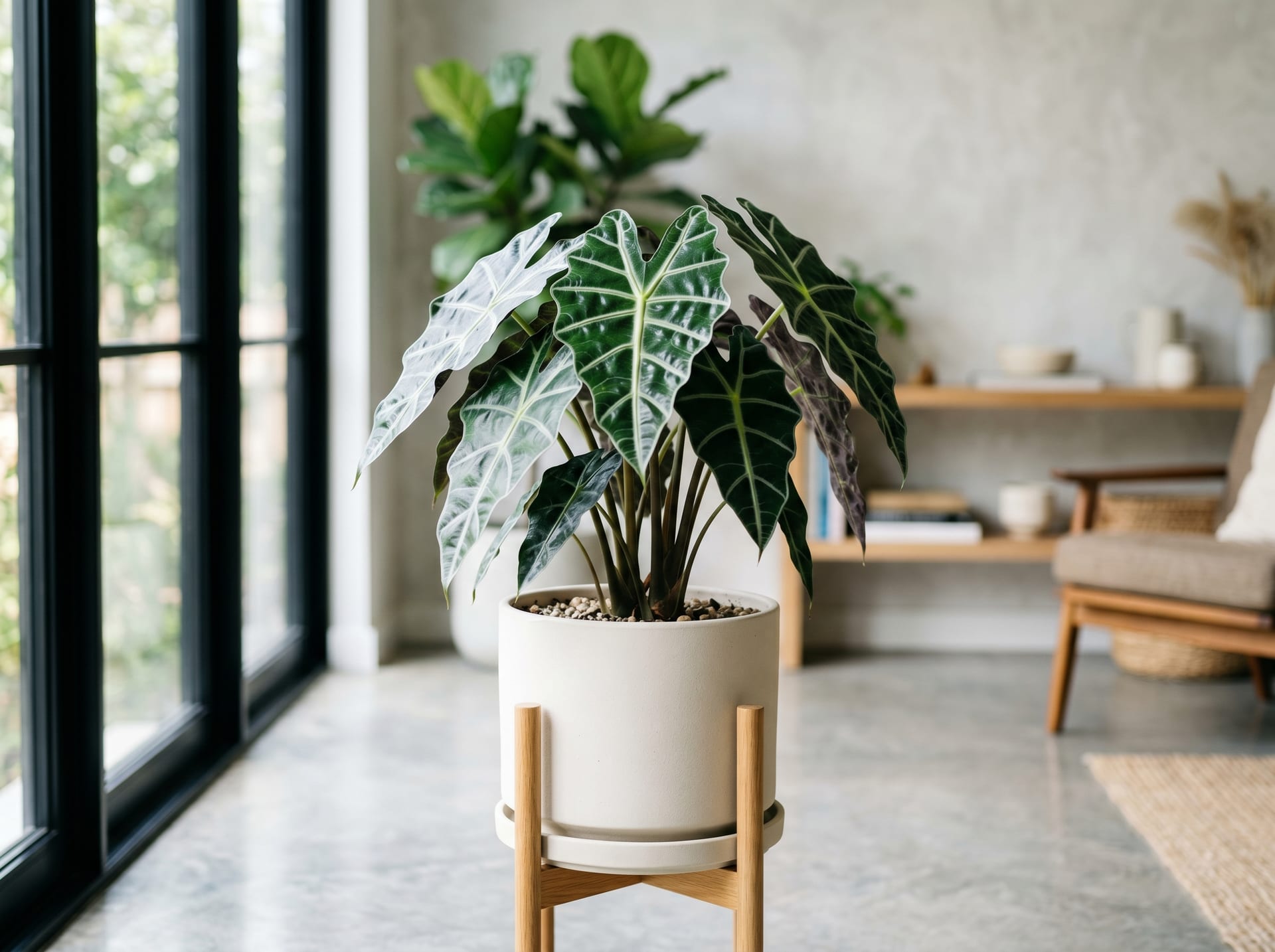
Alocasia
Alocasia is a tropical houseplant native to Asia, prized for its dramatic arrow- or shield-shaped leaves and striking vein patterns. With a bold architectural presence and wide variety of leaf colors and textures across cultivars, it appeals to both beginners and collectors alike. Once you understand its preference for warmth and humidity, it rewards you with impressive, long-lasting foliage.
Grower Wanted!
List your plants on GrowerDirect and sell directly to customers nationwide!
6 Transparency Commitments from GrowerDirect
Every Grower selling Foliage Plants provides complete transparency: variety, origin, light requirements, and care difficulty.
- Variety Information
- Real Photos
- True Colors
- Origin Information
- Light Requirements
- Care Difficulty
Browse all 139 varieties
Light Requirements
Care Difficulty
Verified growers wanted for Foliage Plants
Growers are signing up now ahead of launch. Subscribe to be notified when new listings go live.
Getting alerts is free with a member account. When new listings match your saved search, we'll notify you by email and in-app.
Browse other categories
Verified growers (preview)
Are you growing foliage plants?
Register as a grower and connect with buyers directly.
Apply as a growerAbout Alocasia
Alocasia belongs to the family Araceae and encompasses more than 80 species native to the tropical rainforests of Southeast and South Asia. Long cultivated in their homelands — some varieties even as a food source — they have grown into globally beloved houseplants prized for dramatic foliage. Their defining feature is their large, architecturally sculpted leaves: arrow-shaped, shield-like, or heart-shaped, with raised veins that give the surface an almost three-dimensional quality. Leaf color ranges from deep forest green and near-black to silver-white and variegated, making each variety feel like its own discovery. Compact cultivars like 'Polly' suit desks and shelves, while giant species can produce leaves exceeding a meter in length, transforming an entire room. Culturally, they thrive in warmth and humidity, making indoor care standard in temperate climates. With well-draining soil, consistent moisture, and protection from cold drafts, Alocasia is a resilient long-term companion that rewards attentive growers with ever-larger, increasingly impressive leaves over many years.
7 things to know before growing Alocasia
1Avoid Direct Sunlight
Alocasia thrives in bright, indirect light but is prone to leaf scorch under direct sun. A spot near a window filtered by a sheer curtain works well. Too little light will result in smaller leaves, so finding the right balance is key.
2Loves Warmth and Humidity
As a tropical plant, Alocasia prefers temperatures of 20–30°C and humidity above 60%. Misting the leaves or placing a humidifier nearby helps during dry seasons. It is sensitive to cold and growth slows below 10°C, so keep it indoors year-round in cooler climates.
3Water According to Soil Moisture
Water thoroughly when the top of the soil feels dry, and always empty the saucer to prevent waterlogging. Overwatering is the leading cause of root rot, so well-draining soil and a pot with drainage holes are essential. Reduce watering frequency in winter when growth slows.
4All Parts Are Toxic — Handle with Care
All parts of Alocasia contain calcium oxalate crystals, which cause irritation and inflammation if ingested. In households with pets or young children, place it out of reach. Wearing gloves when handling or repotting is recommended to avoid skin irritation.
5Repot Every 1–2 Years
Signs that repotting is needed include roots emerging from the drainage holes or soil repelling water. Move to a slightly larger pot using well-draining potting mix formulated for tropical houseplants. After repotting, keep the plant away from direct sun and minimize environmental changes for a few weeks while roots settle.
6Dormancy May Cause Leaf Drop
During winter, reduced light and cooler temperatures can trigger a semi-dormant state, causing leaves to yellow and drop. This is a natural process, not a sign the plant is dying. As warmth and light return in spring, new growth typically emerges from the underground corm.
7Watch for Spider Mites and Mealybugs
Spider mites thrive in dry indoor conditions — look for fine webbing or tiny dots on the undersides of leaves. Mealybugs appear as white, cottony clusters at leaf bases and along stems. For both pests, wipe them off with a damp cloth; if you use a pesticide, check the label to confirm it is registered for the target pest, and deal with the problem early to prevent further spread.
Frequently asked questions about Alocasia
- Q.Is Alocasia suitable for beginner plant owners?
- A.Alocasia is manageable for beginners who understand its core needs: bright indirect light, consistent but not excessive watering, warmth, and humidity. Knowing in advance that it can enter dormancy in winter prevents unnecessary panic. Starting with a compact, widely available cultivar like 'Polly' is a practical first step.
- Q.Why are my Alocasia's leaves turning yellow?
- A.The most common causes are overwatering leading to root rot, or insufficient light. Check whether the soil stays wet for too long between waterings, and assess whether the plant is getting enough bright, indirect light. Lower leaves also yellow naturally with age — if new growth is emerging at the same time, the plant is generally healthy.
- Q.Can I keep Alocasia if I have cats or dogs?
- A.Alocasia contains calcium oxalate crystals throughout the plant, which can cause oral irritation and gastrointestinal upset if chewed or swallowed by cats or dogs. If you keep pets, place the plant on high shelves or in a room the animals cannot access. Contact a veterinarian immediately if you suspect ingestion.
- Q.All the leaves fell off in winter. Is it dead?
- A.Leaf drop in winter is often normal dormancy — Alocasia retreats to its underground corm when temperatures and light levels fall. Check whether the corm (the bulb-like base) is firm and rot-free; if so, the plant is alive. Keep watering minimal, maintain a warm location, and watch for new shoots as spring approaches.
- Q.How often does Alocasia need to be repotted?
- A.Repot every one to two years, or when roots begin emerging from the drainage holes. Spring (April to June), when growth is most active, is the ideal time. Choose a new pot only one size up (about 2–3 cm larger in diameter), as oversized pots retain too much moisture and increase root rot risk.
Handy Growing Tools for Alocasia
Alocasia related articles
Trending Houseplant Guide 2026 | Latest Trends in Rare Varieties and How to Obtain Them
An explanation of the latest trends in rare houseplants to watch in 2026. We introduce the characteristics of rare varieties such as Philodendron, Alocasia, and Monstera, price trends, and methods for obtaining them from specialist growers.
Alocasia Care Guide: Choosing Varieties, Watering, Summer Care, and Winter Dormancy
Learn the basics of Alocasia care. We explain the characteristics of popular varieties like Polly and Amazonica, proper watering and lighting conditions, heat management during summer, and overwintering methods.
More in this category
Can't find the plant you're looking for?
Post your wishes for free and growers with matching plants will contact you with introductions.