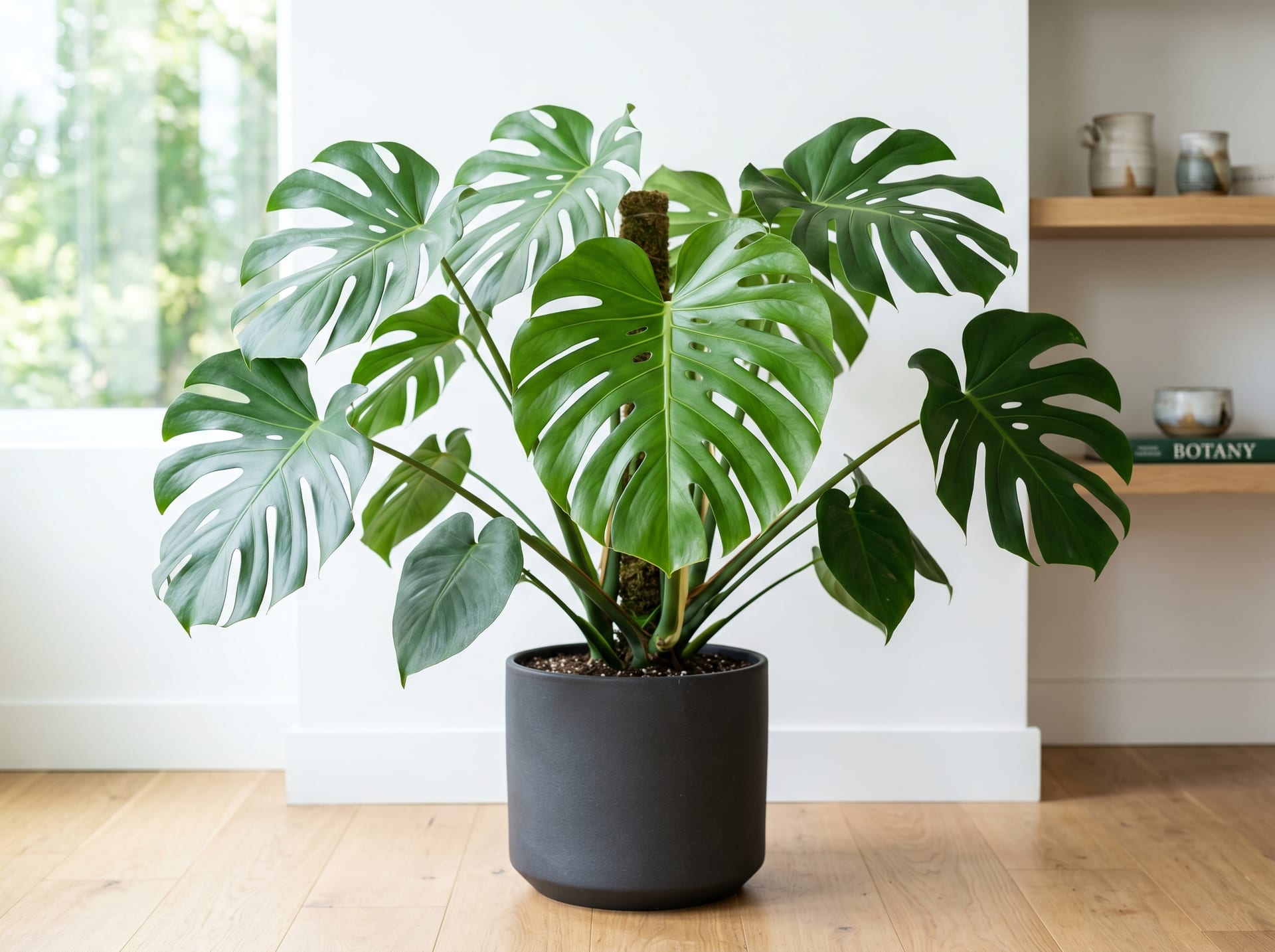
Monstera
Monstera is a tropical plant known for its large, distinctively split leaves that bring a bold and sophisticated presence to any interior space. Its tolerance for lower light conditions makes it an excellent choice for beginners. As the plant matures, the leaf fenestrations deepen, offering a rewarding long-term growing experience.
0% commission on your first sales!Register by September 30, 2026 and your first 2 plants are commission-free!
Grower Wanted!
List your plants on GrowerDirect and sell directly to customers nationwide!
6 Transparency Commitments from GrowerDirect
Every Grower selling Foliage Plants provides complete transparency: variety, origin, light requirements, and care difficulty.
- Variety Information
- Real Photos
- True Colors
- Origin Information
- Light Requirements
- Care Difficulty
Browse all 139 varieties
Light Requirements
Care Difficulty
Verified growers wanted for Foliage Plants
Growers are signing up now ahead of launch. Subscribe to be notified when new listings go live.
Getting alerts is free with a member account. When new listings match your saved search, we'll notify you by email and in-app.
Browse other categories
Verified growers (preview)
Are you growing foliage plants?
Register as a grower and connect with buyers directly.
Apply as a growerAbout Monstera
Monstera deliciosa belongs to the Araceae family and is native to the tropical rainforests of Central and South America. Its genus name derives from the Latin word for "abnormal" or "monstrous," a nod to the striking holes and splits that appear in mature leaves—a phenomenon called fenestration. In the wild, monstera climbs tree trunks and can reach several meters in height; mature plants also produce edible fruit, earning the common name "Swiss cheese plant" and "fruit salad plant." The leaf fenestrations are thought to be an adaptation that reduces wind damage and allows light to filter through to lower leaves. In cultivation, plants typically reach 1–2 meters indoors, gracing living spaces with their large, glossy, deep-green foliage. Tolerant of lower light and forgiving of occasional missed watering, monstera rewards growers of all experience levels with steady, satisfying growth and ever-changing leaf architecture.
Featured Growers Selling Monstera
Browse all Monstera growers (1 total) →7 things to know before growing Monstera
1Bright Indirect Light is Best
Monstera dislikes direct sunlight, which can scorch its leaves. A spot near a window with filtered light or 1–2 meters from a bright window is ideal. While it tolerates lower light, too little light results in leaves without the characteristic splits.
2Water When the Soil Dries Out
Root rot from overwatering is the most common issue with Monstera. Water only when the top 2–3 cm of soil has dried out. Since drying time varies by season, make it a habit to check soil moisture rather than watering on a fixed schedule.
3Managing Aerial Roots and Support
As Monstera grows, it produces aerial roots that naturally cling to trees in the wild. Indoors, providing a moss pole or support stake encourages stability and promotes larger leaf growth. Aerial roots can be trimmed without harm, but leaving them adds to the plant's tropical aesthetic.
4Toxic to Pets and Children
Monstera contains calcium oxalate crystals in its leaves, stems, and sap, which can cause oral irritation and vomiting if ingested by pets or young children. In households with cats, dogs, or small children, place the plant out of reach or consider a pet-safe alternative.
5Fertilize During the Growing Season
During the spring and summer growing season, apply a balanced liquid fertilizer once or twice a month to encourage active leaf development. Reduce or stop fertilizing in autumn and winter when growth slows. Always follow the recommended dosage, as excess fertilizer can damage the roots.
6Choose the Right Pot and Soil
A pot with drainage holes and well-draining soil are essential for Monstera. Mixing perlite or vermiculite into standard potting soil improves aeration. When roots begin to crowd the pot, consider repotting into a slightly larger container — typically every one to two years.
7Wipe Leaves for Health and Shine
Dust accumulates easily on Monstera's large leaves, reducing photosynthesis efficiency. Gently wiping the leaf surfaces with a damp soft cloth once a month keeps the plant clean and healthy. Check the undersides of leaves as well to catch early signs of pests such as spider mites.
Frequently asked questions about Monstera
- Q.Why aren't my monstera's leaves splitting?
- A.Insufficient light is the most common cause. Moving the plant to a brighter spot with indirect light often prompts new leaves to emerge with splits. In very young plants, fenestration simply hasn't begun yet and will develop naturally with age.
- Q.What causes yellowing leaves?
- A.Overwatering and the resulting root rot are the most frequent culprits. Check the soil moisture and adjust your watering schedule. Yellowing can also result from direct sun scorch or nutrient deficiency during the growing season.
- Q.How should I care for monstera in winter?
- A.Keep the plant indoors where temperatures stay above 10°C, and avoid positioning it near cold drafts from windows. Reduce watering to less than half the summer frequency, waiting until the soil is thoroughly dry before each watering. Misting the leaves occasionally helps counteract dry indoor heating.
- Q.How do I propagate monstera?
- A.The easiest method is stem cutting: take a cutting that includes at least one node and aerial root, then root it in water or moist soil. Keep the cutting in bright, indirect light and roots should develop within one to two months.
Handy Growing Tools for Monstera
Monstera related articles
Monstera Propagation from Cuttings: Growing New Plants
Learn how to propagate Monstera through cuttings. Covers the ideal timing (May–August) when success is easiest along with necessary tools, selecting and cutting stems with aerial roots and nodes, water and soil propagation steps, post-rooting care, troubleshooting when propagation doesn't go as planned, and tips to encourage growth.
Variegated Monstera Selection and Color Maintenance | Variegation Stability and Environmental Factors
This article explains how variegation develops in Monsteras and covers the key management points for light, temperature, humidity, and fertilization needed to maintain variegation stably. We also introduce methods for handling reversion.
Aerial Root Management and Utilization in Houseplants | Cultivation Techniques for Aerial Root-Bearing Plants like Philodendron and Monstera
This guide explains how to understand and manage the characteristics of aerial roots in houseplants. We introduce cultivation techniques that leverage aerial roots, from growth promotion to aesthetic expression.
Why Monstera Fenestration Is Difficult to Develop: Causes and Solutions
Discover why Monstera leaves struggle to develop cuts and holes (fenestration). We break down the key causes—insufficient light, plant growth stage, nutrient balance, humidity and temperature, and air circulation—and share practical strategies to encourage fenestrated leaves.
Monstera Fenestration Formation Conditions | The Relationship Between Light, Nutrition, and Plant Maturity
Explains the mechanisms and conditions for fenestration (cuts and holes) forming on Monstera leaves. Covers light intensity, nutrition, plant maturity, staking techniques, and other key management points for producing beautifully fenestrated leaves.
Foliage Plant Propagation Guide: How to Propagate Pothos, Monstera, and Rubber Plants by Cuttings and Water Propagation
A guide to propagating foliage plants through cuttings and water propagation. We explain how to make proper cuts on popular varieties like Pothos, Monstera, Rubber Plant, and Spathiphyllum, create environments that promote root development, and provide practical timing for transitioning from water to soil.
More in this category
Can't find the plant you're looking for?
Post your wishes for free and growers with matching plants will contact you with introductions.