Monstera Propagation from Cuttings: Growing New Plants
Monstera Propagation from Cuttings: Growing New Plants。Monstera is a foliage plant prized for its distinctive deeply lobed leaves and vigorous growth.
Key Takeaways
Monstera Propagation from Cuttings: Growing New Plants。Monstera is a foliage plant prized for its distinctive deeply lobed leaves and vigorous growth.
Related Species
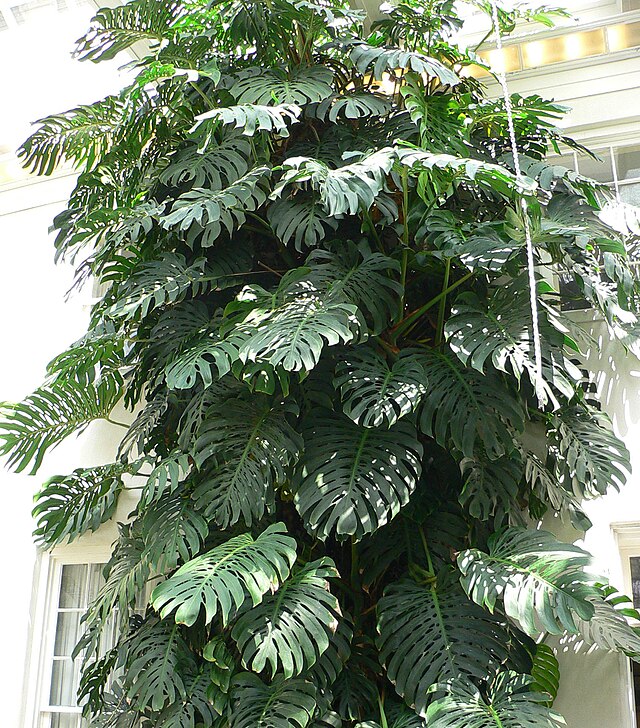
Monstera is a foliage plant prized for its distinctive deeply lobed leaves and vigorous growth. Monstera deliciosa in particular can develop leaf widths exceeding 50 centimeters when grown indoors with proper care, making it a striking interior green plant favored by many enthusiasts. Monstera's ability to be easily propagated through cuttings is another major attraction. With proper technique, even beginners can achieve a high success rate. It is important to thoroughly understand the entire process of propagating new plants from a parent plant without damaging it.
Optimal Timing for Cutting Propagation and Necessary Materials
Monstera cuttings have the highest success rate from May to August, when growth is most active. With consistently warm temperatures, rooting speeds increase, and white roots commonly begin to emerge within 2–3 weeks. In environments where indoor temperature can be controlled, propagation can be attempted year-round if you avoid the coldest months of winter.
Prepare the following in advance for smooth work.
- Sharp scissors or utility knife (sterilize with alcohol before use)
- Clean containers for cuttings (glass jars for water propagation, or deep planters)
- Clean growing medium such as akadama, pumice soil, and vermiculite, or commercial cutting mix
- Rooting hormone (such as Rootone) *optional
- Spray bottle and clear plastic bags (for humidity retention)
Sterilizing cutting tools with alcohol is an important step that reduces the risk of infection at the cut surface. Omitting this step can cause rot, so be sure to perform it.
Selecting and Cutting Propagation Material
The most critical aspect of selecting propagation material is to always include nodes. Monstera roots develop from nodes, so stems without nodes will not produce roots. Ideal cutting material has the following characteristics:
- Cuttings should have 1–2 leaves and include 2–3 nodes
- Prioritize sections where aerial roots (brown protrusions) are already visible
- Length should be approximately 10–15 centimeters
Make the cut 2–3 centimeters below a node, using a diagonal angle. This diagonal cut increases the cut surface area, promoting water absorption and root development. After cutting, allow the cut surface to dry for 30 minutes to 1 hour to form a thin protective layer. This extra step is effective in preventing rot.
If the leaves are large, you may cut them approximately in half to reduce transpiration, but maintain enough leaf area for photosynthesis. Remove lower leaves, keeping only 1–2 leaves at the top. This is the standard form.
Water Propagation and Soil Propagation Methods
There are two types of cutting propagation: water propagation and soil propagation, each with its own advantages and disadvantages.
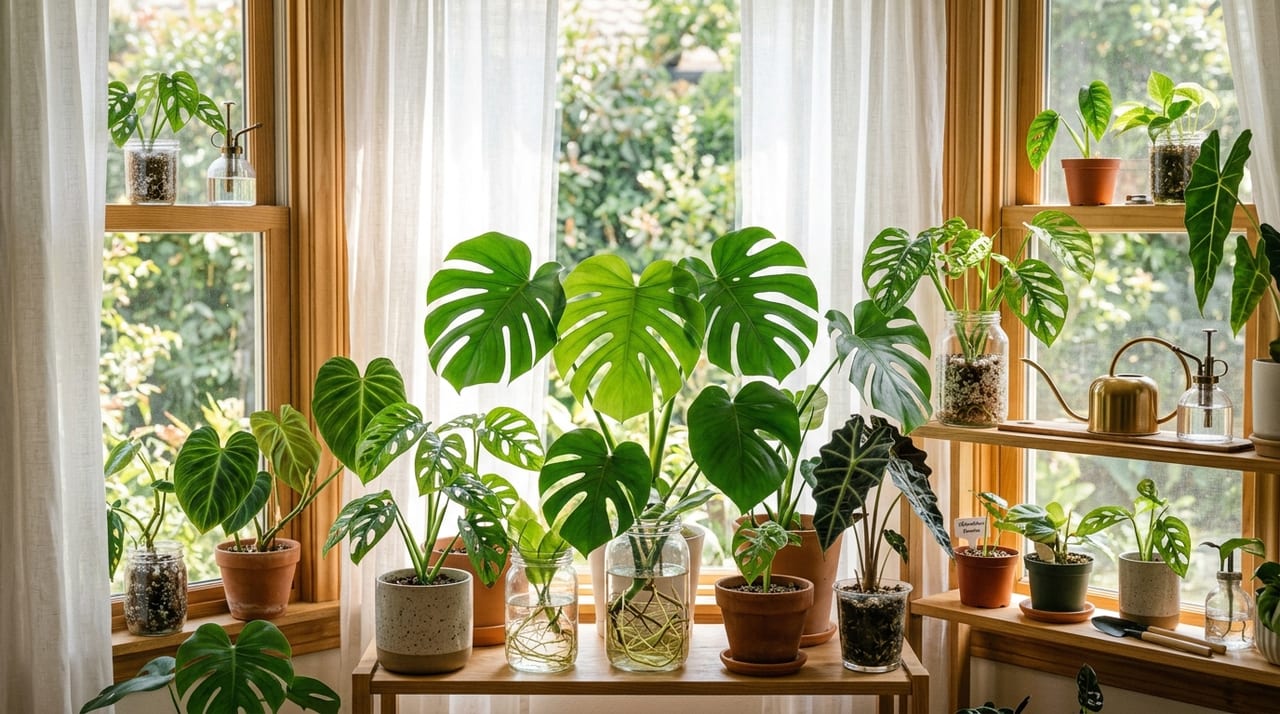
Water propagation involves filling a transparent jar or container with water and positioning the cutting so the nodes are submerged. You can visually monitor root growth, so you won't miss the rooting stage. Change the water every 2–3 days and keep it clean at all times. Place the container in a location where the water temperature stays between 20–25°C, avoiding direct sunlight. Adding a small amount of activated charcoal to the container helps prevent water decay. When roots reach approximately 5 centimeters in length, it is time to transplant into soil.
Soil propagation involves inserting cuttings directly into soil medium from the start, avoiding the transplanting stress that follows water propagation. A mixture of akadama and pumice soil in a 1:1 ratio, or commercial cutting mix, works well. After insertion, water thoroughly, then maintain the soil so it does not dry out completely. Covering with a clear plastic bag increases humidity and accelerates rooting, but complete sealing can cause excessive moisture and rot, so ventilate for a few minutes once a day.
With soil propagation, rooting cannot be visually confirmed, so judge it by two signs: new growth begins to emerge, or gentle tugging reveals resistance. As a guideline, rooting typically takes about 1 month, and new shoot development takes about 2 months.
Post-Rooting Care and Management
Once roots have developed, pot the cutting and enter the main growing stage. An initial pot size of 3–4 (small pots) is appropriate, and gradually repot into larger containers as roots fill out. For the soil medium, an ideal mix is commercial foliage plant potting soil combined with 20–30% perlite or pumice to balance drainage and water retention.
Choose a bright location that avoids direct sunlight. While Monstera tolerates shade, excessive darkness causes the plant to become spindly and weak. A windowsill with filtered light through a sheer curtain, or a brightly lit shaded area, works best.
The basic watering rule is to water thoroughly when the soil surface dries out. Young plants still have underdeveloped root systems, so take special care to avoid overwatering. Water until it drains from the pot bottom, and empty any water that collects in the saucer immediately.
Begin fertilizing once new growth starts to emerge. Apply diluted liquid fertilizer at recommended strength every 2 weeks, or apply slow-release solid fertilizer as top dressing in spring and autumn. During winter when growth slows, you can reduce or stop fertilizing altogether without harm.
Monstera prefers humid conditions. During dry periods, mist the foliage or use a humidifier to maintain humidity around 50–60%, which brings out the beauty of the leaves. The key is to mist both the upper and lower leaf surfaces in the cool hours of morning or evening.
Troubleshooting and Tips for Encouraging Growth
Let us review common propagation problems and their causes and solutions.
Cuttings rot: This is the most common failure. Causes include overwatering, unsanitary conditions, or insufficient drying of the cut surface. Cut away decayed portions back to healthy tissue and try again in a clean environment.
Slow or no rooting: The main causes are low temperature (below 15°C) or cuttings lacking nodes. Check the location's temperature and recut the material to ensure nodes are included. Applying rooting hormone to the cut surface increases the rooting rate.
Yellowing or leaf drop: Suspect a water balance issue. With water propagation, water quality degradation is usually the cause; with soil propagation, overwatering or underwatering is typically responsible. Review the environment and watering practices.
New growth appears but then stops: Root-bound conditions or nutrient deficiency may be the cause. Check the root condition and repot if necessary; wait 2 weeks after repotting before resuming fertilizer application.
Propagation from cuttings is one of the greatest pleasures of plant cultivation, as it allows you to create multiple new plants from a single parent. While results may not be perfect at first, adhering to the fundamentals—cuttings with nodes, a clean environment, and proper temperature and moisture management—will greatly increase your success rate. There is a special joy in watching a carefully grown new plant develop roots and unfold new leaves. We encourage you to try propagating Monstera and experience the deep satisfaction of plant cultivation.