Complete Monstera Care Guide | In-Depth Explanation of Leaf Fenestration, Aerial Roots, and Training Methods
Complete guide to caring for Monstera, a popular foliage plant. We explain in detail the conditions for leaf fenestration, how to utilize aerial roots, how to set up stakes and moss poles, managing variegated varieties, and propagation methods.
Key Takeaways
Complete guide to caring for Monstera, a popular foliage plant. We explain in detail the conditions for leaf fenestration, how to utilize aerial roots, how to set up stakes and moss poles, managing variegated varieties, and propagation methods.
Why Monstera is the #1 Most Popular Foliage Plant
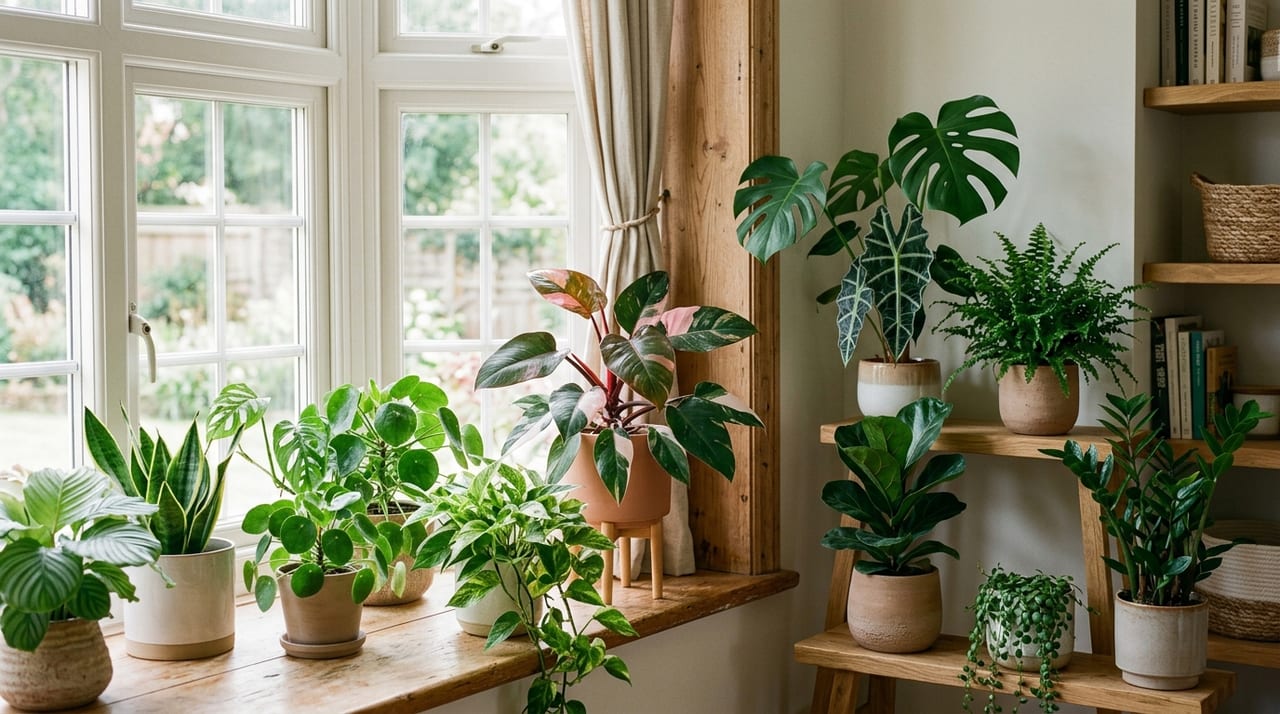
Monstera (Monstera deliciosa) is a tropical plant in the Araceae family native to Central and South America, and is currently one of the most popular foliage plants. Its distinctive leaf fenestration (splits and holes) and wild appearance are loved worldwide as an interior accent.
In its native habitat, it grows on the forest floor of tropical rainforests, climbing to over 10 meters in height while wrapping its aerial roots around trees. This vigorous vitality and high adaptability are among the reasons it is so easy to grow indoors. As it matures, the leaves can grow to over 1 meter in size, and placing just one pot creates an overwhelming presence in a room. Even in 2026, it remains a staple of botanical interior design, appearing everywhere from cafes and offices to Instagram photo spots. If you'd like to learn about different varieties, check out our Monstera Varieties and Cultivar Guide as well.
Key Care Points for Developing Leaf Fenestration
Monstera's leaf fenestration and holes (technically called "leaf lobes" and "fenestration") naturally increase as the plant grows. However, in conditions of insufficient light, poor nutrition, or root-bound soil, many plants continue growing with round leaves without fenestration, and beginners often wonder "Why do the leaves stay round?" The mechanism of fenestration formation is explained in detail in Conditions for Monstera Leaf Fenestration Development.
Specific Care Points for Developing Fenestration:
- Ensure sufficient indirect light: While direct sunlight can cause leaf burn, fenestration won't develop in dim locations either. Bright light filtered through sheer curtains is ideal, with south- or east-facing windowsills being optimal. Aim for around 1,000–2,000 lux. In winter, move the plant closer to windows as indoor spaces become darker.
- Proper fertilization during the growing season: Apply a balanced liquid fertilizer (containing nitrogen, phosphorus, and potassium) at standard concentration once or twice monthly from May to September. Be careful not to over-fertilize, as this can damage roots. You can also use slow-release solid fertilizer placed around the pot's edge as an alternative.
- Review pot size: Root-bound conditions severely inhibit growth. If roots are protruding from the drainage holes or water flows straight through after watering, it's time to repot. Move to a pot that's one size larger (3–5 cm larger in diameter).
- Leaf orientation and light exposure: Regularly rotate the pot so the leaf surface faces the light source directly, ensuring even light distribution.
Watering and Humidity Management
Monstera thrives with a "slightly dry" management approach. Water thoroughly about 2–3 days after the soil surface dries, pouring until water flows from the drainage holes. Always empty any water collected in the saucer. The primary causes of root rot are overwatering and water stagnation. For fundamentals of plant watering, see our Foliage Plant Watering Guide.
Seasonal Watering Frequency:
- Spring to Summer (growing season): Once or twice weekly
- Fall to Winter (dormant season): Once every 2–3 weeks
Monstera also prefers high humidity. In winter when indoor air is dry, misting the leaves is effective. This also removes dust and helps prevent pests and diseases. Placing the plant near a humidifier or setting the pot on a tray with water and pebbles to indirectly raise humidity is also effective.
Training Methods: Growing Beautiful Plants with Moss Poles and Stakes
Monstera's defining feature is its aerial roots. White, string-like roots emerge from the stem nodes and extend into the air; in nature, they climb by wrapping around trees. Indoors, training the plant using these aerial roots is the key to developing large, beautiful leaves. Detailed information on stake types and selection is available in our Foliage Plant Stakes and Moss Pole Guide.
How to Use Moss Poles: A moss pole is typically a tree fern stem processed into a pole shape, or a stake wrapped with sphagnum moss. When aerial roots attach to the moss pole, the plant reproduces its natural growth pattern, and the leaves tend to become larger with deeper fenestration. Install the pole securely in the center of the pot and gently guide the aerial roots to attach to it. Misting the moss pole to keep it moist promotes better aerial root attachment.
Training Directions: There are two approaches: "vertical training" (upright growth) and "wild style" (horizontal spread). Vertical training saves space and displays large leaves beautifully at height. Wild style creates a natural appearance but requires ample space as the plant spreads with growth.
Repotting and Propagation
The timing for repotting is when roots emerge from drainage holes, water drains immediately after watering, or growth noticeably slows. May to June, before the growing season, is optimal. Mix 20–30% perlite or volcanic rock into foliage plant potting soil to improve drainage. Detailed instructions are in our Foliage Plant Repotting Guide.
There are two main propagation methods:
- Stem cuttings: Cut a section of stem including a node with aerial roots to 10–15 cm length, allow the cut to dry, then insert into water or moist sphagnum moss. Keep in bright shade; roots develop in 1–2 months. This is the easiest method.
- Air layering: Lightly wound the stem (just below a node with aerial roots), wrap moist sphagnum moss around it with plastic wrap, and secure. After 1–2 months, white roots appear; cut and plant. Since rooting occurs before detachment, this method has a high success rate and is popular with experienced growers for propagating large plants reliably. See our Foliage Plant Air Layering Guide for details.
Pests, Diseases, and Precautions
Monstera is relatively hardy, but the following problems can occur.
Common Problems:
- Spider mites: Often appear in dry environments, clustering densely on the leaf undersides. Regular misting and rinsing with a shower spray in early stages are effective.
- Scale insects: White, cottony masses appear on stems and leaf undersides. Scrub off with a toothbrush or cotton swab; use scale-specific pesticides if needed.
- Root rot: Darkened leaves and soft stems indicate root rot. Remove the plant from soil, cut away blackened roots, dry it out, and repot in fresh, clean soil.
For detailed pest identification and control methods, see our Foliage Plant Pest Control Guide. Additionally, Monstera sap contains calcium oxalate, which can cause itching or irritation on contact. Always wear rubber gloves when repotting or pruning. Pets (cats, dogs) may experience toxic symptoms (vomiting, oral irritation) if they eat the leaves, so place the plant out of their reach.
Summary: Tips for Growing Monstera Large and Beautiful
To summarize the key points for growing beautiful Monstera: Focus on these four essentials—bright indirect light, moderate watering that allows drying, regular fertilization during growth season, and guiding aerial roots with a moss pole—and you'll enjoy large leaves with deep fenestration. In slower-growing winter months, reduce watering; in spring, perform repotting and training as part of the seasonal cycle.
Monstera is hardy and long-lived; with proper care, it can grow for 10 or even 20 years. Enjoy watching the leaves grow larger each year, and take your time nurturing a single plant for years to come.