Complete Guide to Growing Hoya (Wax Plant) | Management and Training of Popular Varieties like Carnosa and Curly
A guide to growing Hoya (wax plant), a vining foliage plant. We provide detailed information on watering, potting soil, and flowering techniques for popular varieties like Hoya Carnosa and Hoya Curly, as well as training methods and propagation by cuttings.
Key Takeaways
A guide to growing Hoya (wax plant), a vining foliage plant. We provide detailed information on watering, potting soil, and flowering techniques for popular varieties like Hoya Carnosa and Hoya Curly, as well as training methods and propagation by cuttings.
Related Species
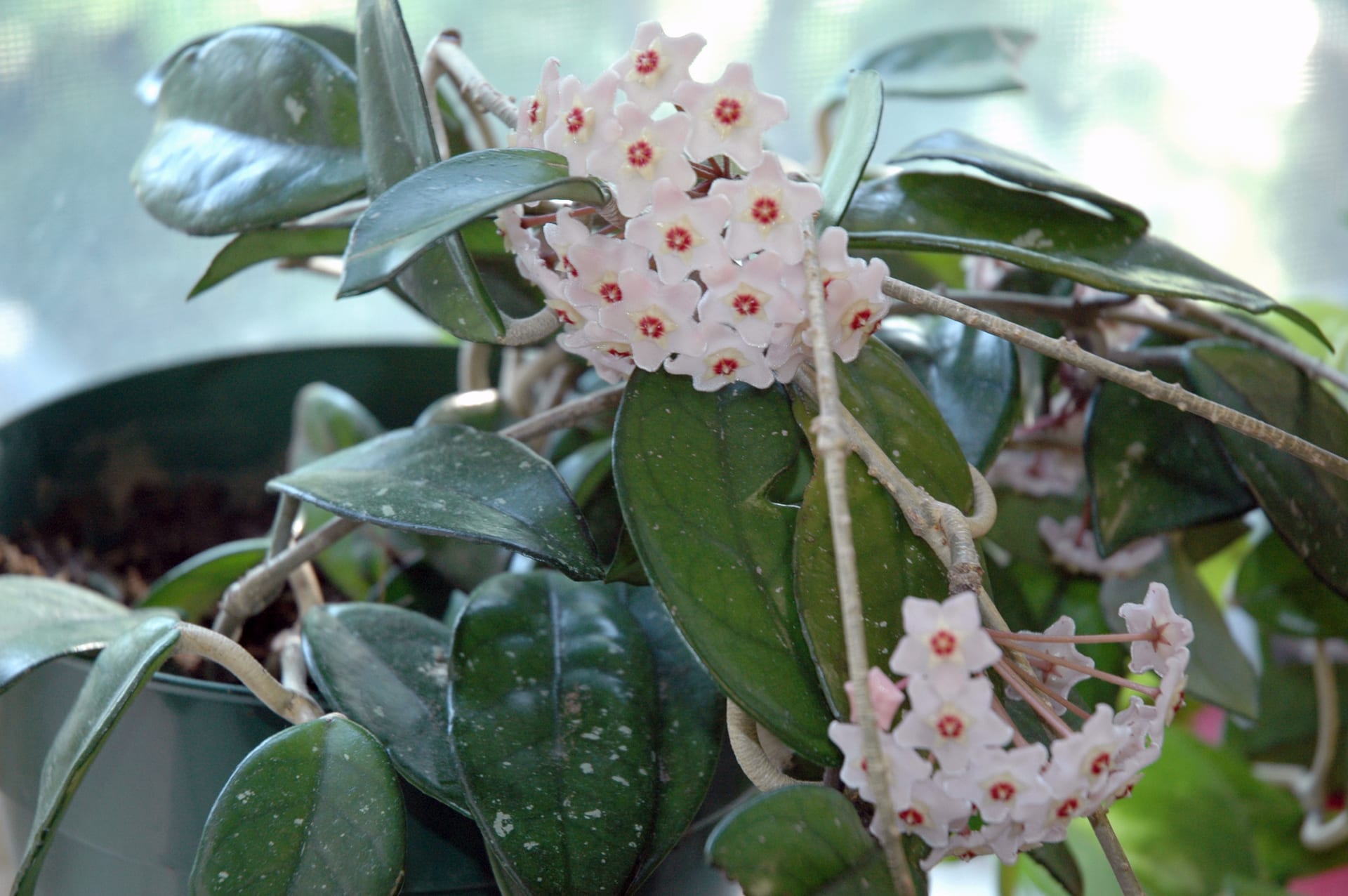
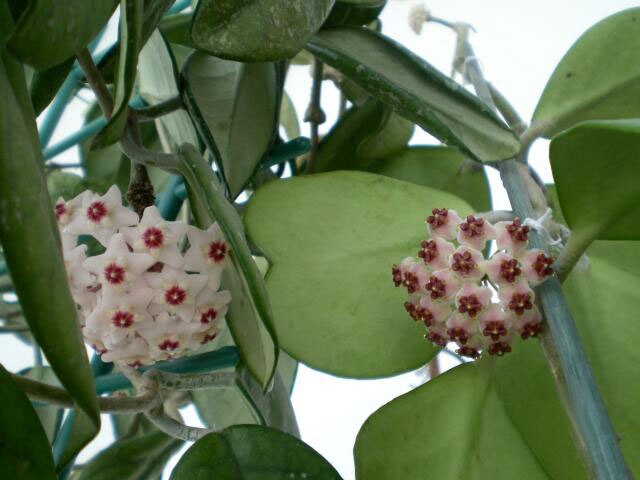
Hoya is a vining foliage plant that has been gaining in popularity recently. It is characterized by thick, glossy leaves and star-shaped flowers that bloom in spherical clusters, with many varieties having a sweet, honey-like fragrance. Because it is drought-tolerant and requires minimal care, it is widely appreciated by everyone from beginners to epiphytic plant enthusiasts.
Basic Properties of Hoya
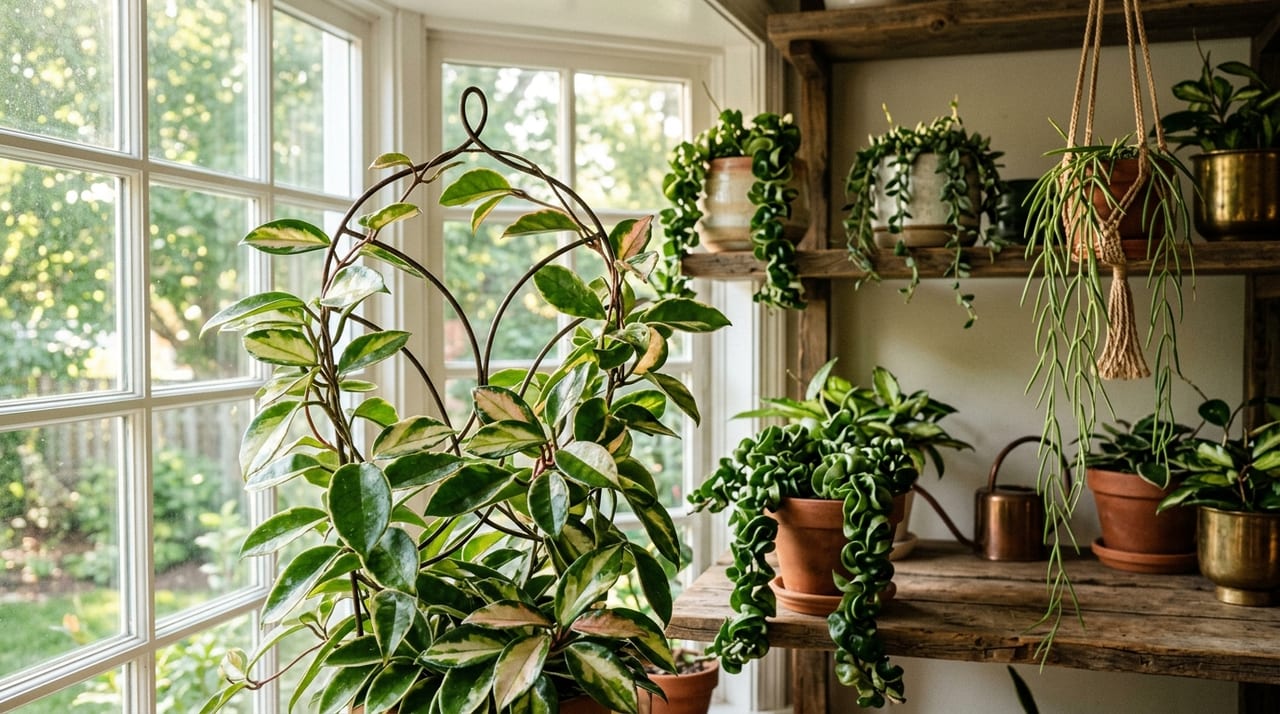
Hoya is a member of the epiphytic plant family, primarily distributed in Southeast Asia and northern Australia, with thick, succulent leaves that store water. As a vining plant, it offers great flexibility in how it can be trained—it can be trained on stakes or cork bark, or displayed in hanging baskets. Representative varieties have the following characteristics:
| Variety | Characteristics |
|---|---|
| Hoya Carnosa | A classic variety with thick, rounded leaves that has been cherished for many years |
| Hoya Curly | A species gaining in popularity recently, characterized by thick, heart-shaped leaves |
Because growth is slow, the plant size at purchase is easy to maintain over time, and it is a plant that can be easily arranged in a room as interior décor.
Potting Soil and Pot Selection
Since Hoya is an epiphytic plant, it prefers potting soil that prioritizes drainage and air circulation. Mix general-purpose foliage plant soil with 20–30% perlite or pumice, or use an orchid bark-based mixture as a base. Because Hoya prefers to be somewhat root-bound, choosing a pot that is slightly small relative to the plant size will make it easier to manage. Repotting does not need to be frequent—the plant grows sufficiently by moving it to a pot one size larger only after the roots are well-established.
Watering and Seasonal Management
Watering methods differ by season.
- Spring to autumn (growing season): Water thoroughly when the soil surface is dry. Because the thick succulent leaves can store water, the plant does not dry out easily even if there is a gap between waterings. However, frequent watering that keeps the soil constantly moist will cause root rot.
- Winter: Because growth slows, water only after the soil has dried completely and a few days have passed. The roots remain more stable when managed on the dry side.
When the leaves lose their firmness, it is a sign of underwatering, so adjust the watering timing slightly earlier in such cases.
Light and Placement
It prefers bright light filtered through sheer curtains. Too strong direct sunlight can cause leaf burn, while insufficient light will result in leaves losing their luster and flowers becoming difficult to bloom. A location in semi-shade to a bright windowsill indoors is easiest to manage. In winter, keep it indoors where temperatures do not fall below 10°C, and take care to prevent leaf damage from cold. Avoid locations where air conditioning drafts blow directly on the plant, as they will cause excessive drying. Choose a location that maintains air circulation while avoiding direct air drafts.
Tips for Enjoying the Flowers
Mature plants will produce spherical flower clusters from early to mid-summer. The flowers often bloom repeatedly from the same flower stem (the stem where buds develop) in subsequent years, so the key is to leave the flower stem in place even after the flowers fade rather than cutting it off. If you accidentally cut off the flower stem, it will take longer for the next bloom to appear. Flowering is influenced by sufficient sunlight and growing the plant in a pot of appropriate size that is not excessively root-bound. During the flowering period, a sweet fragrance often wafts through the room, and arranging the placement thoughtfully can make the fragrance more enjoyable.
Training and Propagation
By taking advantage of its vining nature and training it on ring-shaped stakes or cork bark, you can create a beautiful plant form that showcases both leaves and flowers. Excessively long vines can be pruned back; the cut branches can be easily rooted through water or soil propagation and multiplied. By arranging propagated plants together, you can enjoy them as a voluminous hanging plant. Hoya, which is hardy and rarely fails, and whose appearance changes greatly depending on how it is trained, is worthwhile to add to your collection of foliage plants. It is also a plant that makes it easy to share the pleasure of cultivation, such as by giving propagated plants to friends.
Pest Management and Mindset for Long-term Enjoyment
Although Hoya is relatively resistant to pests and diseases, in poorly ventilated environments, scale insects and spider mites may appear on the undersides of leaves and nodes of vines. Observe the undersides of leaves regularly, and if you find any abnormalities, wipe them away early or treat them with appropriate pesticides. Because growth is slow, there is no need to worry if there are no major changes immediately after purchase—the key to caring for Hoya is to patiently observe the growth of new shoots and the luster of leaves throughout the seasons. The sight of vines gradually growing along trained stakes or cork bark, and the flower clusters displayed by a plant that has grown significantly over several years, become a charm that can only be appreciated by cultivating it over time. By patiently working with the plant over the long term, you can develop it into a treasured pot plant that lasts for many years. When you continue growing the plant in the same location, the plant adapts to the rhythm of that environment, and observing it bloom stably year after year is also an enjoyable aspect of care. Although changes may seem sparse when you first start growing it, over time the vines will grow to cover shelves or cork bark, and the plant will gain a presence that can greatly change the impression of your room. Including how the plant's appearance changes depending on where you grow it and how you train it, it is a plant that teaches you the joy of engaging with it over a long time frame.