Complete Guide to Growing Anthuriums (Red Flowers) | Optimal Light, Water, and Humidity Conditions
A complete guide to cultivation methods for producing red spathes (bracts) on Anthuriums every month. Detailed explanations of reproducing the native habitat environment, optimal lighting (no direct sun), maintaining 60%+ humidity, soil design to prevent root rot, and seasonal management.
Key Takeaways
A complete guide to cultivation methods for producing red spathes (bracts) on Anthuriums every month. Detailed explanations of reproducing the native habitat environment, optimal lighting (no direct sun), maintaining 60%+ humidity, soil design to prevent root rot, and seasonal management.
Related Species
Anthuriums (red flowers) are epiphytic plants native to the tropical rainforests of Central America. With their glossy spathes (bracts)—technically called spathes—they have become a staple of indoor foliage plants for interior greenery. However, without proper growing conditions, the spathes fail to emerge, and the plant tends to weaken. In this article, we explain how to recreate the natural habitat of Anthuriums and manage light, water, and humidity to produce spathes year after year.
Native Habitat and Basic Cultivation of Anthuriums
Anthuriums are native to tropical rainforests spanning from Costa Rica to Panama. In their native climate, the average annual temperature is 22–28°C, with winter lows maintained above 18°C. Annual rainfall exceeds 2,000 mm, and high humidity (60–80%) is maintained year-round.
In this environment, Anthuriums grow as epiphytes on trees, with roots constantly exposed to air while maintaining high humidity without drying out. Strong direct sunlight is blocked by the surrounding canopy, and dappled light filters through to the forest floor. Replicating this environment in your cultivation space is key to enjoying Anthuriums long-term.
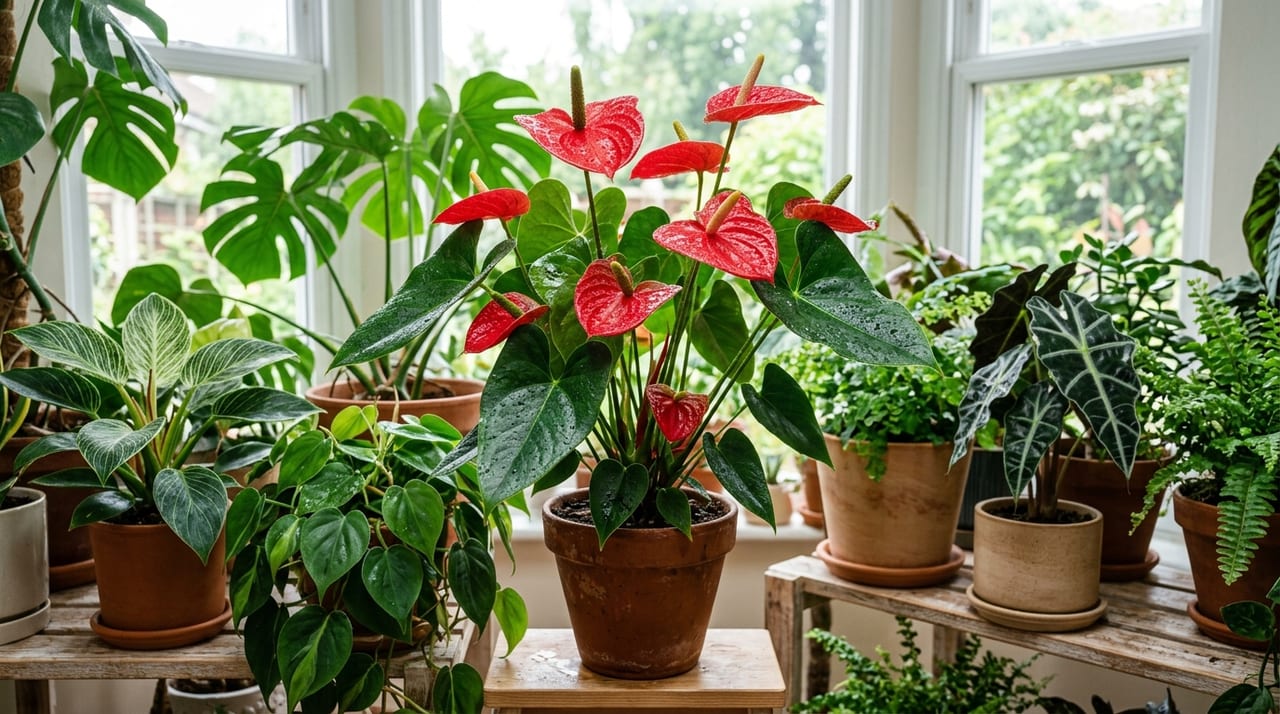
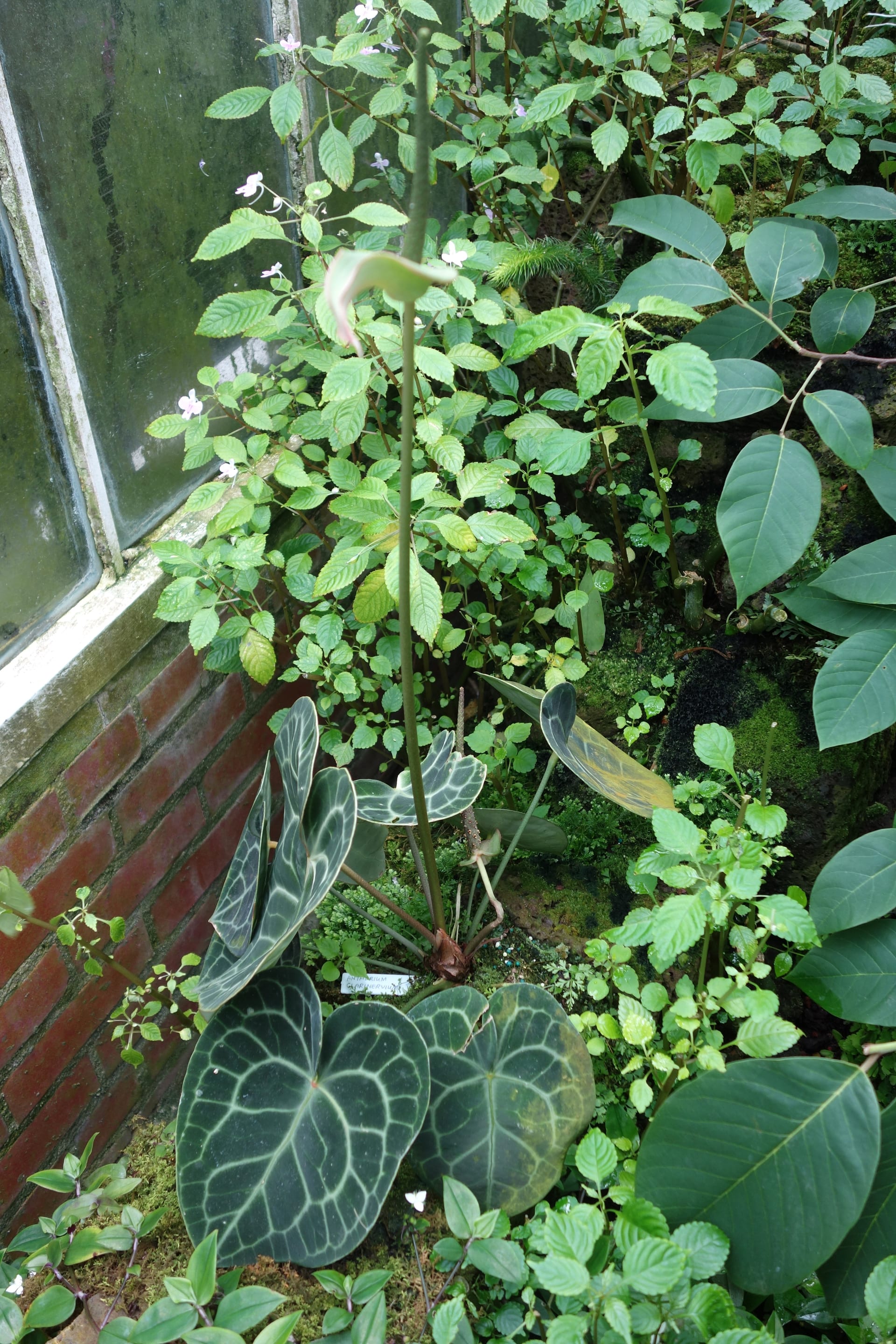
A representative cultivated variety is Anthurium andreanum, which bears red spathes and is a standard type suited to beginners with relatively broad growing conditions. In contrast, Anthurium clarinervium is a more delicate variety that is sensitive to low light and stops producing spathes if humidity drops. Understanding the environmental differences among varieties is crucial.
Lighting: No Direct Sun—the Importance of Bright Shade
Light is crucial for spathe formation in Anthuriums, but direct sunlight is forbidden. This balance is difficult, and it is a common cause of failure among beginners.
Light Requirements:
Anthuriums need 3–4 hours of indirect light daily (filtered light from a window) or all-day dappled light (simulating the forest floor environment). In a location with direct southern sunlight, leaves will yellow and spathes will not form. Conversely, in a north-facing window only environment, insufficient light also prevents spathe formation.
Optimal Placement:
- East-facing window: Soft morning sun with filtered light during midday—optimal placement.
- North-facing window + sheer curtain: Filtered light maintained all day; good except in summer.
- South-facing window: Use sheer curtains to block 50–70% of direct sun and position deep indoors.
When using LED lighting, 1,000–1,500 lux with 10–12 hours daily is recommended. Fluorescent lights lack sufficient light spectrum and promote etiolation, so they should be avoided.
Seasonal light variation must also be considered. Effective management involves moving the plant to a brighter indoor location in winter and gradually moving it to a less sunny spot from spring through autumn.
Watering and Humidity Management: Why Anthuriums Love High Humidity and How to Achieve It
Anthuriums are plants that greatly prefer high humidity. This factor separates success from failure.
The Importance of Humidity:
In the native habitat, humidity is maintained at 60–80% year-round. When cultivation humidity drops below 50%, leaf margins brown and spathe formation stops. To consistently produce spathes monthly, maintaining at least 60% humidity is essential—ideally 70%.
Methods to Increase Humidity:
- Misting: Spray both sides of the leaves with a mister every morning and evening. Avoid misting at night; perform this during the day.
- Humidifier: Place a small humidifier on a desk or shelf to maintain surrounding humidity above 70%.
- Humidity tray: Set the pot on a saucer and maintain 1–2 cm of water in the saucer daily, checking water level to prevent it from drying.
- Group placement: Arrange multiple foliage plants close together so transpired water vapor increases humidity collectively.
Watering Method:
Water only after the surface soil dries. Check with your finger—if it feels dry, water thoroughly until it drains from the pot's bottom. Empty standing water from the saucer after 30 minutes; avoid constant wetness. Adjust seasonally: in winter, reduce watering to once weekly as growth slows; in summer, water daily to every other day.
Soil and Repotting: Drainage-First Soil Design to Prevent Root Rot
As epiphytic plants, Anthuriums require well-draining soil.
Soil Mix:
- Bark chips (orchid bark): 50%
- Coconut fiber: 20%
- Perlite: 15%
- Peat moss: 15%
This ratio balances water retention and drainage, preventing root rot while maintaining adequate moisture. Standard flower potting soil (based on red clay balls) retains too much water and causes root rot, so avoid it.
Repotting Timing:
Repot in spring (March–May). Replace all soil every 1–2 years. When repotting, handle roots gently and carefully remove old soil. Check that roots are not brown and rotted; remove any rotted roots.
What to Do When Spathes Won't Appear
"I'm growing Anthuriums, but the flowers (technically spathes) won't bloom" is a common question. Causes are usually multifactorial, with several elements involved.
Troubleshooting by Cause:
- Insufficient light: The first factor to suspect. Prioritize moving to a brighter location.
- Low humidity: Start daily misting and use a humidifier together.
- Temperature drop: Winter is too long or heating is insufficient. Maintain 22°C during day and above 18°C at night.
- Nutrient deficiency: Begin applying dilute liquid fertilizer twice monthly during the growing season (spring–autumn).
- Plant too young: It is normal for new plants to not produce spathes within 3 months of purchase. Address if none appear after 6 months.
Comprehensive improvement is key. Only when all four elements—light, humidity, temperature, and fertilization—are optimized can consistent monthly spathe formation occur.
Seasonal Management and Annual Schedule
Seasonal management is essential for successful Anthurium cultivation.
Spring (March–May): Growth Initiation
As temperatures rise, new leaf and spathe growth accelerates. Water daily to every other day and maintain 70% humidity. Apply liquid fertilizer twice monthly at approximately N:P:K = 5:10:5. Perform repotting during this period if needed.
Early Summer to Early Autumn (June–August): Peak Growing Season
This is the season of most vigorous growth for Anthuriums. Water daily and increase humidity to 75–80%. Increase fertilization to three times monthly to boost nutrition. Avoid direct sunlight; use sheer curtains on south-facing windows.
Autumn to Winter (September–February): Slowdown Period
As temperatures drop, growth slows. Reduce watering to once every 3–4 days and aim for 60–65% humidity. Reduce fertilization to once or twice monthly. Combat drying from winter heating with a humidifier and misting.
Summary: Tips for Enjoying Anthuriums Long-Term
With proper environmental conditions, Anthuriums form new spathes nearly every month, bringing color to indoor spaces. The red spathes of Anthurium andreanum and the refined appearance of Anthurium clarinervium are varieties worth sourcing from GrowerDirect.
The key to success is adjusting four environmental factors—light, water, humidity, and temperature—seasonally. Humidity management, especially, is an element beginners often overlook, but for Anthurium cultivation it is a top priority. Through daily misting and humidifier use, you can cultivate Anthuriums as true "living works of art."